The onion softens first, then garlic and red pepper flakes perfume the oil; once the wine hits the pot, the kitchen smells like the start of a serious seafood dinner. I build this Zuppa di Pesce Italian Seafood Soup around a tomato-and-seafood-stock broth that has time to simmer before any fish or shellfish goes in. That means the broth gets depth without asking delicate seafood to sit in the pot for too long.
Cooking the seafood in stages is what keeps the finished bowls balanced. Clams and mussels open on their own schedule, while cod and shrimp need only a short finish in the simmering broth. I transfer each shellfish to a bowl as it opens, then add the fish and shrimp afterward. The broth stays rich and savory, with tender seafood and a bright squeeze of lemon at the table.

Kitchen Note
Bake, Serve, Wear the Vibe 👕
Editor-picked tees our Oven To Fork readers love.



We may earn from qualifying purchases at no extra cost to you.
Give the onion its full 5 to 7 minutes over medium heat. It should look soft and translucent, not browned; that gentle start keeps the garlic from having to cook long enough to turn bitter.
Save this Zuppa di Pesce for a generous pot of tomato-rich broth, tender fish, and shellfish that stays just right.
Why Zuppa di Pesce Needs Two Seafood Timings
Shellfish and fish don’t give you the same signal when they’re ready. Clams and mussels need to steam until their shells open, and each one may open at a slightly different moment. Cod and shrimp, on the other hand, cook quickly in hot broth. If everything goes in together, the fish can turn dry and the shrimp can become tough while you wait for the last shell to open.
Cooking in stages lets each ingredient finish at the right pace without complicating the pot. The shellfish season the broth as they open, and their juices go back in before serving. The fish and shrimp finish in that now more savory broth. Keep the heat at a gentle simmer once seafood is in the pot; a hard boil can batter delicate pieces and make the shrimp firm up fast. You’ll get a bowl with distinct, tender pieces instead of seafood that’s all been cooked for the longest ingredient’s timing.
Why Seafood Stock and Crushed Tomatoes Make This Broth Taste Complete
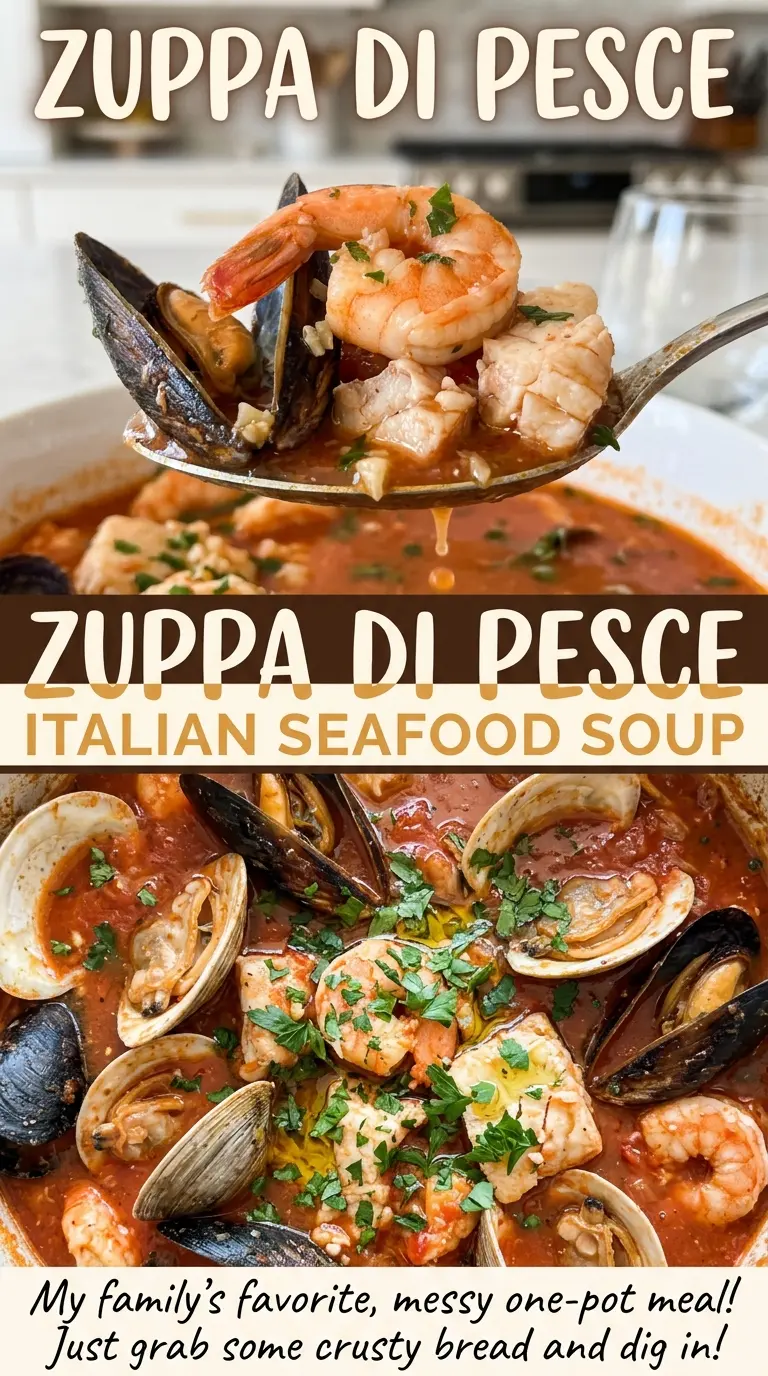
- Littleneck clams and mussels — Live shellfish bring briny flavor to the broth as they open. Buy them from a seafood counter with a good turnover, and scrub them well under cold running water; grit left on the shells can end up in your soup.
- Cod or another firm white fish — Firm fish holds together in the simmering broth better than a delicate, thin fillet. Cod is a dependable choice, while another firm white fish gives you the same kind of substantial, flaky bite.
- Large shrimp — Peeled and deveined shrimp are easy to eat in a soup bowl and cook quickly. Choose shrimp that are evenly sized so they finish at about the same time.
- Seafood stock — This is the backbone of the broth, adding a savory seafood note that water can’t provide. A good-quality stock matters here because it’s one of the main flavors; the crushed tomatoes add body and a gentle tartness without needing a roux or cream.
- Dry white wine — A dry wine brings acidity and aroma to the tomato base. Use one you’d be happy to drink, but there’s no need for an expensive bottle; a simple, crisp dry white works well.
- Fresh parsley and lemon — Parsley gives the finished soup a fresh herbal lift, while lemon wedges let everyone brighten their own bowl. Fresh lemon is worth using here; bottled juice won’t give you the same clean, lively finish.
- Garlic, oregano, and red pepper flakes — These season the broth without covering up the seafood. The red pepper flakes add a light warmth rather than turning the soup into a spicy dish.
The Stages That Keep the Broth Deep and the Seafood Tender
Soften the Onion Before Adding Garlic
Heat the olive oil in a 6-quart Dutch oven over medium heat, then add the finely chopped onion. Cook for 5 to 7 minutes, stirring occasionally, until softened; keep the heat moderate so the onion doesn’t brown before it has time to turn sweet. Add the minced garlic and red pepper flakes and stir for 30 seconds, just until fragrant. Garlic can go from aromatic to bitter quickly, so don’t walk away during this short step.
Give the Tomato Broth Time to Simmer
Pour in the dry white wine and bring it to a boil for 2 minutes. Stir in the crushed tomatoes, seafood stock, bay leaf, oregano, kosher salt, and black pepper, then bring the broth to a boil. Reduce the heat and simmer uncovered for 20 minutes. It should look like a cohesive tomato broth, not a pot of thin stock; this simmer gives the base time to come together before the seafood goes in.
Move Each Open Shellfish Out of the Pot
Add the scrubbed clams and mussels to the broth and cover the pot. Cook for 5 to 8 minutes, lifting out each clam or mussel as soon as its shell opens and placing it in a bowl. Don’t leave the first ones in the pot while waiting for the rest; that extra cooking makes them chewy. Discard any shellfish that remain closed after cooking.
Finish the Fish and Shrimp in the Broth
Add the fish pieces and shrimp, cover, and simmer for 3 to 5 minutes. The shrimp should turn opaque, and the thickest piece of fish should flake and reach 145°F. Return the opened clams and mussels along with any juices collected in the bowl, stir in the parsley, and simmer for 1 minute to heat everything through. Serve with lemon wedges.
Three Useful Ways to Adjust This Pot Without Losing Its Balance
Choose a Different Firm White Fish
Use another firm white fish in place of cod, keeping the pieces about the same size. The soup stays substantial and flaky; a very delicate fish is more likely to break apart in the hot broth.
Make a Milder Broth
Leave out the red pepper flakes for a gentler bowl. You’ll lose their background warmth, but the tomato, herbs, and seafood still give the broth plenty of character.
Keep It Gluten-Free
The soup needs no flour or pasta. Choose seafood stock labeled gluten-free, since packaged stock is the ingredient most likely to vary; the broth stays full-bodied without a thickener.
Storage and Reheating
- Refrigerator: Store leftovers in a covered container for 3 to 4 days. The seafood will firm up as it chills, then soften again as it warms.
- Freezer: Freeze in airtight freezer-safe containers for up to 2 months for best quality. The soup remains usable, though the shellfish and fish may be softer after thawing.
- Reheating: Warm gently on the stovetop, stirring carefully, until the soup reaches 165°F throughout. Avoid a rolling boil; it can toughen the seafood before the broth is hot.
Questions I Get Asked About Zuppa di Pesce
Zuppa di Pesce Italian Seafood Soup
Ingredients
Equipment
Method
- Scrub the clams and mussels under cold running water, discarding any with cracked shells or shells that remain open after tapping.
- Heat the olive oil in a 6-quart Dutch oven over medium heat. Add the onion and cook for 5-7 minutes, stirring occasionally, until softened.
- Add the garlic and red pepper flakes and cook for 30 seconds, stirring, until fragrant.
- Pour in the wine and bring to a boil for 2 minutes.
- Stir in the crushed tomatoes, seafood stock, bay leaf, oregano, salt, and black pepper.
- Bring the broth to a boil.
- Reduce the heat and simmer uncovered for 20 minutes.
- Add the clams and mussels, cover, and cook for 5-8 minutes, transferring each one to a bowl as it opens; discard any that remain closed.
- Add the fish and shrimp to the broth, cover, and simmer for 3-5 minutes, until the shrimp are opaque and the fish flakes and reaches 145°F in the thickest piece.
- Return the opened clams and mussels and any juices from the bowl to the pot.
- Stir in the parsley and simmer for 1 minute to heat through.
- Serve with the lemon wedges.