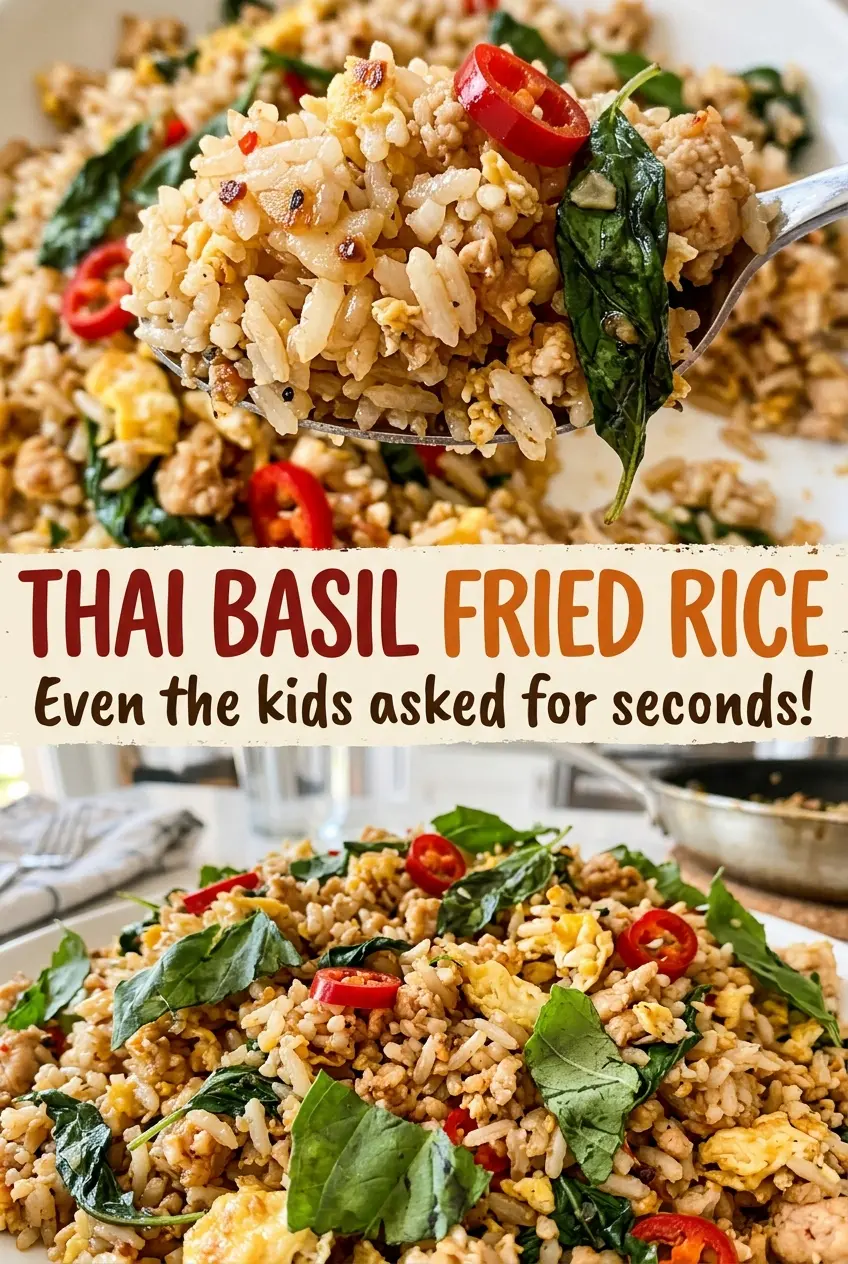
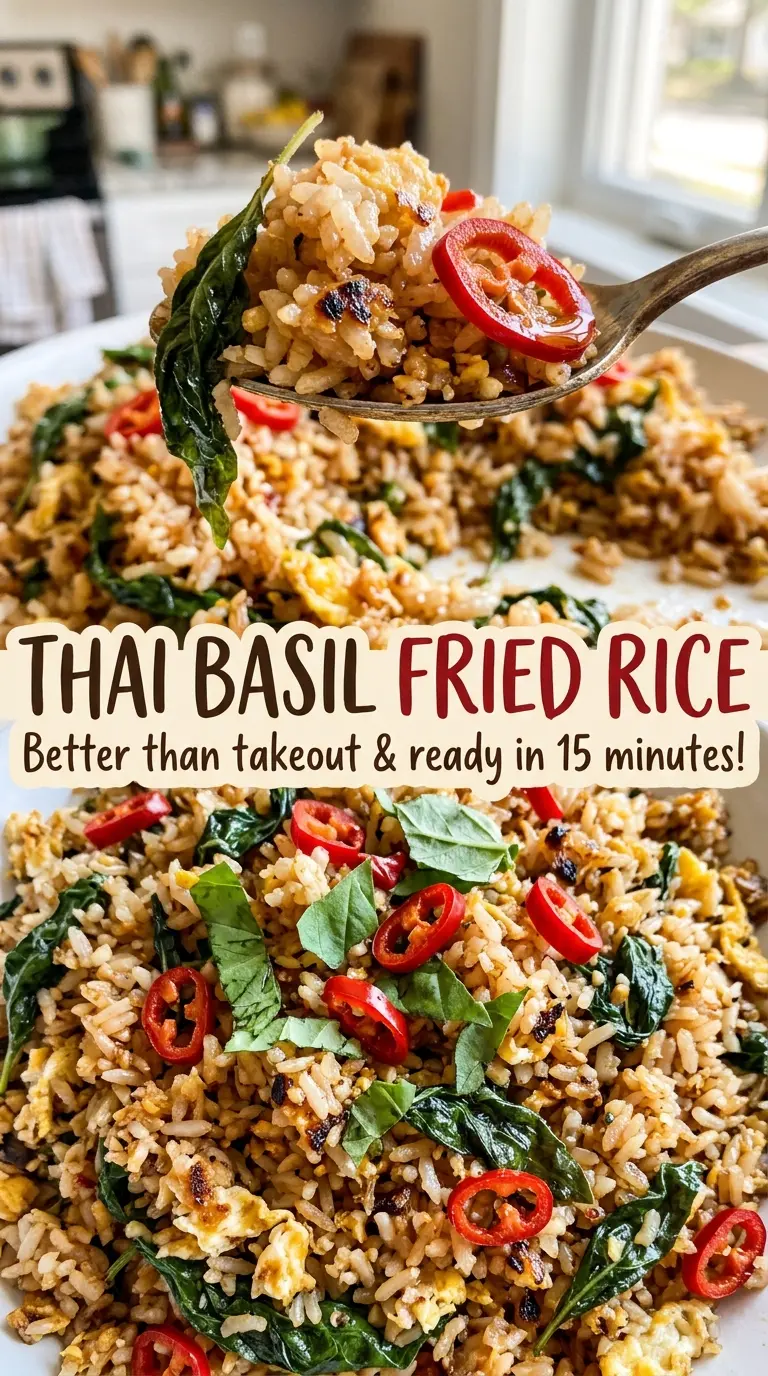
The ground chicken sizzles first, then garlic and Thai chile hit the skillet and the kitchen smells sharp and savory. That quick change is what makes Thai Basil Fried Rice feel like more than a way to use up cooked rice: the chicken browns, the sauce clings to the grains, and fresh basil softens right at the end.
I keep the sauce mixed in a small bowl before I turn on the heat. Once the rice goes into the skillet, there isn’t much time to stop and measure; it needs a steady toss so the sauce coats the grains instead of pooling at the bottom. Chilled jasmine rice stays distinct as it heats, and ground chicken makes the whole skillet hearty without weighing it down. The finished rice is savory, lightly sweet, and fragrant with basil.
Kitchen Note
Bake, Serve, Wear the Vibe 👕
Editor-picked tees our Oven To Fork readers love.



We may earn from qualifying purchases at no extra cost to you.
Set the plate for the eggs beside the skillet before you start cooking. They scramble in as little as 30 seconds, and having a landing spot ready means you can get them out while they’re still soft.
Save Thai Basil Fried Rice for a quick skillet dinner with savory chicken, fragrant basil, and grains that stay separate.
Why the sauce belongs on the rice, not the chicken
The sauce combines oyster sauce, fish sauce, soy sauce, and a little sugar, so it brings plenty of savory intensity in a small amount. If you pour that mixture over the chicken while it’s browning, the meat takes on most of the seasoning and the rice can taste plain by comparison. Adding the sauce with the rice spreads it through the whole skillet.
That order also gives the sauce time to coat the grains while they heat. Keep the skillet over medium-high heat and toss for 2 to 3 minutes, rather than letting the rice sit in one layer. You’re looking for hot rice with a light sheen and no puddle of sauce at the bottom. The sugar rounds out the salty sauces; it shouldn’t make the rice taste sweet. This is a small sequencing choice, but it’s what keeps every forkful balanced.
What the rice, basil, and sauces each bring to the skillet
- Chilled jasmine rice — Jasmine rice gives the dish its tender, fragrant base. Chilling firms the grains so they’re easier to toss without turning mushy; break up any clumps before they go in the pan. Freshly cooked, warm rice is softer and more likely to stick together, so use rice that has been cooked and chilled.
- Thai basil — Its peppery, anise-like aroma is distinct from the softer sweetness of other basil varieties. Choose leaves that look fresh rather than wilted, and remove any tough stems so the leaves can be tossed through the rice evenly. Another kind of basil will work as a leafy herb, but it won’t give the same recognizable Thai basil fragrance.
- Oyster sauce, fish sauce, and soy sauce — These sauces do different jobs: oyster sauce brings body and savoriness, fish sauce adds a salty, fermented depth, and soy sauce rounds out the seasoning. Use the three together for the intended balance; leaving one out changes more than just the salt level. Standard grocery-store versions are fine here, and there’s no need to seek out a specialty brand.
- Ground chicken — The small crumbles brown quickly and spread through the rice in every bite. Break the meat into small pieces as it cooks instead of leaving it in large clumps. Buy fresh ground chicken and keep it refrigerated until you’re ready to cook.
- Garlic and red Thai chile — Finely chopped garlic distributes its aroma quickly, while thin chile slices bring heat throughout the skillet. The chile’s heat varies, so leaving it out is the simplest way to make a milder version. Handle the sliced chile carefully and wash your hands afterward.
- Eggs and vegetable oil — The eggs add soft, savory curds, and neutral vegetable oil lets the garlic, chile, and basil come through. The eggs don’t need to brown; pulling them as soon as they’re just set keeps them tender when they return to the hot rice.
Build the skillet in stages, then finish fast
Mix the sauce before the skillet gets hot
Stir the oyster sauce, fish sauce, soy sauce, and granulated sugar together in a small bowl. The sugar should be distributed through the sauces before they hit the pan, rather than sitting in a concentrated spot on the rice. Keep the bowl within reach of the stove. Once the chicken and aromatics are cooked, the rice goes in and the skillet moves quickly.
Scramble the eggs just until set
Heat one tablespoon of vegetable oil in a 12-inch skillet over medium-high heat. Add the lightly beaten eggs and scramble for 30 to 60 seconds, stopping when they’re just set rather than dry or browned. Transfer them to a plate; they’ll go back into the skillet at the finish. A little softness now is welcome because the eggs will heat again with the rice.
Brown the chicken, then wake up the aromatics
Add the remaining tablespoon of oil and the ground chicken, breaking it into small pieces as it cooks. Brown it for 4 to 5 minutes, cooking ground chicken to 165°F for food safety. Add the chopped garlic and sliced Thai chile, then stir for 30 seconds, just until fragrant. Don’t let the garlic sit unattended; it can scorch quickly in the hot skillet.
Toss the rice and fold in basil at the end
Add the chilled rice and sauce mixture, then toss over medium-high heat for 2 to 3 minutes, until the rice is hot throughout. Break apart any remaining clumps as you toss, but avoid mashing the grains. Return the eggs to the skillet, add the Thai basil, and toss for about 30 seconds. Take the pan off the heat once the basil has just wilted; it should smell fresh, not cooked down.
Two simple ways to change the skillet
A milder chile-free batch
Leave out the red Thai chile and keep the garlic, sauces, and basil as they are. You’ll lose the direct heat, but the rice will still have plenty of savory flavor and the basil will remain prominent.
An egg-free skillet
For an egg-free version, omit the eggs and the tablespoon of oil used to scramble them; cook the chicken in the remaining tablespoon of oil. The rice will have fewer soft curds and a less rich finish, but the chicken, sauce, and basil still make a complete skillet meal.
Storage and Reheating
- Refrigerator: Refrigerate leftovers within 2 hours and eat them within 3 to 4 days. The rice will firm up as it chills, and the basil will lose some of its fresh aroma.
- Freezer: Freeze cooled portions in airtight containers for up to 2 months for the best texture. The basil may darken and soften after thawing, though the rice will still be useful for a quick meal.
- Reheating: Reheat a portion in the microwave, covered, stirring once partway through until steaming hot throughout. Don’t leave it uncovered for the whole reheating time; the rice can dry out around the edges.
Questions that come up when making Thai basil fried rice
Thai Basil Fried Rice
Ingredients
Equipment
Method
- Stir together the oyster sauce, fish sauce, soy sauce, and sugar in a small bowl.
- Heat 1 tablespoon of the oil in a 12-inch skillet over medium-high heat.
- Add the eggs and scramble for 30 to 60 seconds until just set.
- Transfer the eggs to a plate.
- Add the remaining 1 tablespoon oil and the ground chicken to the skillet, breaking it into small pieces as it cooks for 4 to 5 minutes until browned and it reaches 160°F.
- Add the garlic and Thai chile and cook for 30 seconds, stirring, until fragrant.
- Add the rice and sauce mixture and toss over medium-high heat for 2 to 3 minutes, until the rice is hot throughout.
- Return the eggs to the skillet.
- Add the Thai basil and toss for about 30 seconds until the basil just wilts.