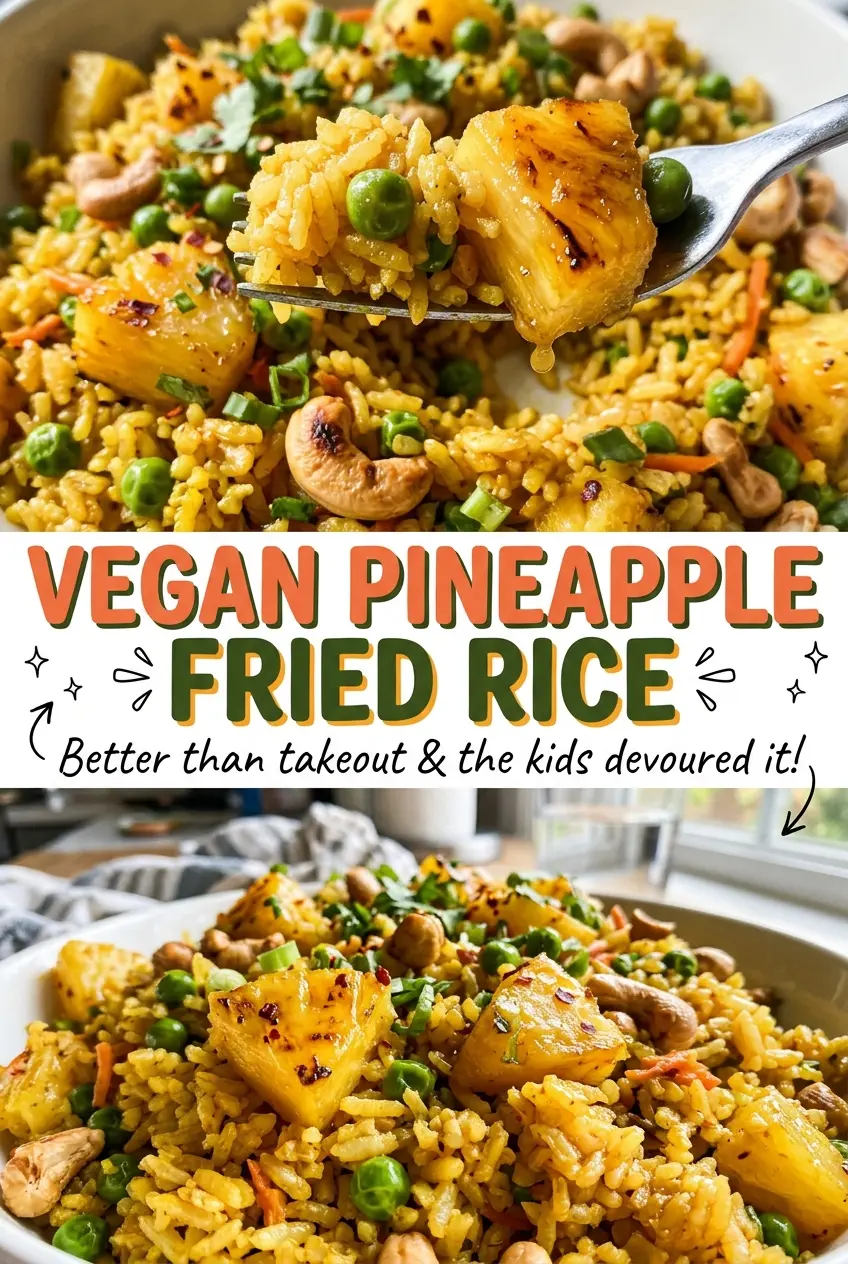
When the rice goes into the skillet, you want to hear a steady sizzle—not watch it turn soft and steamy. Cold rice and a hot pan give this vegan pineapple fried rice its distinct, separate grains, while juicy pineapple brings a bright little contrast to the savory curry and soy sauce.
I like this as a one-skillet dinner because the vegetables soften first, then the rice gets a few minutes of direct heat before the sauce goes in. That order keeps the carrots and bell pepper tender without letting them disappear into the rice. The peas warm through alongside the grains, and cashews go in at the end so they keep their crunch.
The finished skillet has a gentle curry warmth, sweet-tart pineapple, and a squeeze of lime that keeps everything from tasting heavy. It’s filling without feeling weighed down, and the different textures make every forkful interesting.
Kitchen Note
Bake, Serve, Wear the Vibe 👕
Editor-picked tees our Oven To Fork readers love.



We may earn from qualifying purchases at no extra cost to you.
Drain the pineapple and pat the chunks dry before they hit the skillet. Wet fruit releases extra moisture, and that can soften the rice instead of letting it fry.
Save this vegan pineapple fried rice for its sweet-tart fruit, warm curry, and crunchy cashews.
The Brown Sugar Isn’t There to Make the Rice Sweet
Fried rice with fruit can tip into a sugary, almost dessert-like dish if the sweet notes don’t have anything to push against. Here, the brown sugar is a small supporting note: it rounds out the pineapple and softens the sharper edge of the soy sauce without taking over the skillet. The result should still read as savory rice first.
Lime juice does the balancing work at the other end. Its acidity lifts the soy sauce and curry, so the pineapple tastes fresh rather than syrupy. Add those ingredients together near the end, once the grains have had time to fry; the sauce coats the rice instead of soaking into it while the vegetables cook.
That contrast is why I keep the curry powder in the mix, too. It gives the dish a warm, savory backbone that makes the pineapple feel at home rather than like an extra tossed into plain rice. If you taste a forkful with pineapple, rice, and a little sauce together, none of those notes should crowd out the others.
What the Rice, Pineapple, and Aromatics Bring to the Skillet
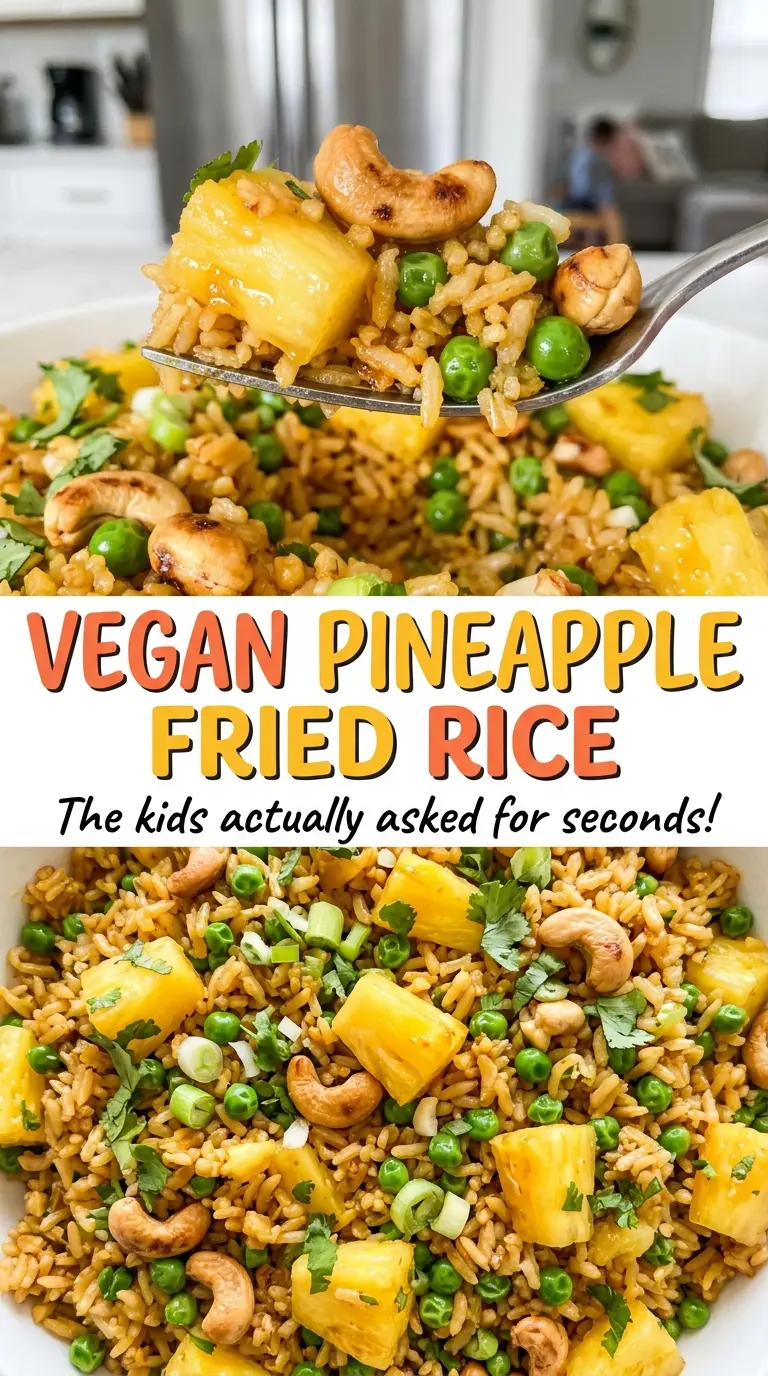
- Cold cooked rice — Day-old rice is especially useful because the grains are firm and less prone to clumping. Break apart the clumps as they go into the skillet; a wooden spoon or spatula works well without crushing the grains.
- Pineapple chunks — Chunks give you distinct bites of fruit instead of distributing sweetness through every grain. The fruit doesn’t need to be fancy, but choose pieces that hold their shape rather than crushed pineapple.
- Curry powder, garlic, and ginger — These are the aromatic base, not a curry sauce. Fresh ginger has a brighter, livelier aroma than dried seasoning, and curry powder that still smells fragrant in the jar will come through more clearly in the finished rice.
- Soy sauce, brown sugar, and lime juice — Together they season and balance the rice. The soy sauce brings savory depth, brown sugar rounds it out, and lime provides a clean finish; bottled lime juice is fine if that’s what you have.
- Frozen peas — There’s no need to thaw them first. They warm in the skillet with the rice, and frozen peas are a practical choice here; the short cooking time keeps them from turning mushy.
- Roasted cashews and scallions — Roasted cashews add crunch and a buttery note, while scallions give the finished dish a fresh, oniony lift. Use cashews that still have a crisp bite, and slice the scallions shortly before serving for the freshest flavor.
Build the Fried Rice in Stages, Not All at Once
Soften the Vegetables Without Browning Them
Heat the first tablespoon of neutral oil in a 12-inch skillet over medium-high heat. Add the diced onion, carrot, and red bell pepper, stirring often for 3 to 4 minutes. You’re looking for vegetables that are beginning to soften but still hold their shape. If the onion starts browning quickly, lower the heat slightly so the garlic and ginger won’t burn when they go in.
Let the Aromatics Turn Fragrant
Stir in the minced garlic, grated ginger, and curry powder. Keep them moving for 30 seconds, just until the warm, savory smell rises from the pan. This short moment wakes up the curry powder in the oil and distributes the ginger and garlic through the vegetables. Don’t leave them unattended; garlic can go from fragrant to bitter fast over a hot skillet.
Warm the Pineapple, Then Fry the Rice
Add the pineapple chunks and cook, stirring occasionally, for 2 minutes. Then add the remaining tablespoon of oil, the cold rice, and the frozen peas. Use your spatula to break up any clumps, then stir-fry for 3 to 4 minutes so the rice heats and the peas lose their frozen chill. Keep the rice moving around the skillet rather than pressing it into a dense layer.
Season Thoroughly and Finish Off the Heat
Stir in the soy sauce, brown sugar, and lime juice, then stir-fry for 1 to 2 minutes. Toss from the bottom of the pan so the seasoning reaches the rice evenly; streaks of sauce left in one spot make some bites saltier than others. The rice should be hot throughout and reach 165°F. Take the skillet off the heat before stirring in the roasted cashews and sliced scallions.
Easy Changes for a Different Take on Pineapple Fried Rice
Make It Gluten-Free with Tamari
Use gluten-free tamari in place of the soy sauce, keeping the same amount. The savory flavor stays close to the original, though the exact saltiness varies by brand, so taste a bite before serving.
Skip the Cashews for a Nut-Free Skillet
Leave out the roasted cashews and finish with the scallions as usual. The rice will still have plenty of flavor, but you’ll lose the buttery crunch that makes the topping stand out.
Turn It into Savory Pineapple-Free Fried Rice
For a more straightforward savory skillet, leave out both the pineapple and brown sugar. You’ll lose the sweet-tart bites, but the curry, soy sauce, and lime still give the rice a rounded, lively finish.
Storage and Reheating
- Refrigerator: Refrigerate leftovers within 2 hours and keep them in an airtight container for 3 to 4 days. The rice will firm up in the fridge, and the cashews will soften.
- Freezer: Freeze portions in airtight containers for up to 2 months. Thaw overnight in the refrigerator for the most even reheating; the vegetables may be a little softer afterward.
- Reheating: Warm the rice in a skillet over medium heat, stirring until steaming hot throughout. Take it off the heat as soon as it’s hot; prolonged cooking dries out the grains.
Questions That Come Up When Making This Fried Rice
Vegan Pineapple Fried Rice
Ingredients
Equipment
Method
- Heat 1 tablespoon of the oil in a 12-inch skillet over medium-high heat.
- Add the onion, carrot, and bell pepper and cook, stirring often, for 3 to 4 minutes, until the vegetables begin to soften.
- Stir in the garlic, ginger, and curry powder and cook for 30 seconds, until fragrant.
- Add the pineapple and cook, stirring occasionally, for 2 minutes.
- Add the remaining 1 tablespoon oil, rice, and peas; break up any rice clumps and stir-fry for 3 to 4 minutes.
- Add the soy sauce, brown sugar, and lime juice and stir-fry for 1 to 2 minutes, until the rice is hot throughout and reaches 165°F.
- Remove the skillet from the heat and stir in the cashews and scallions.