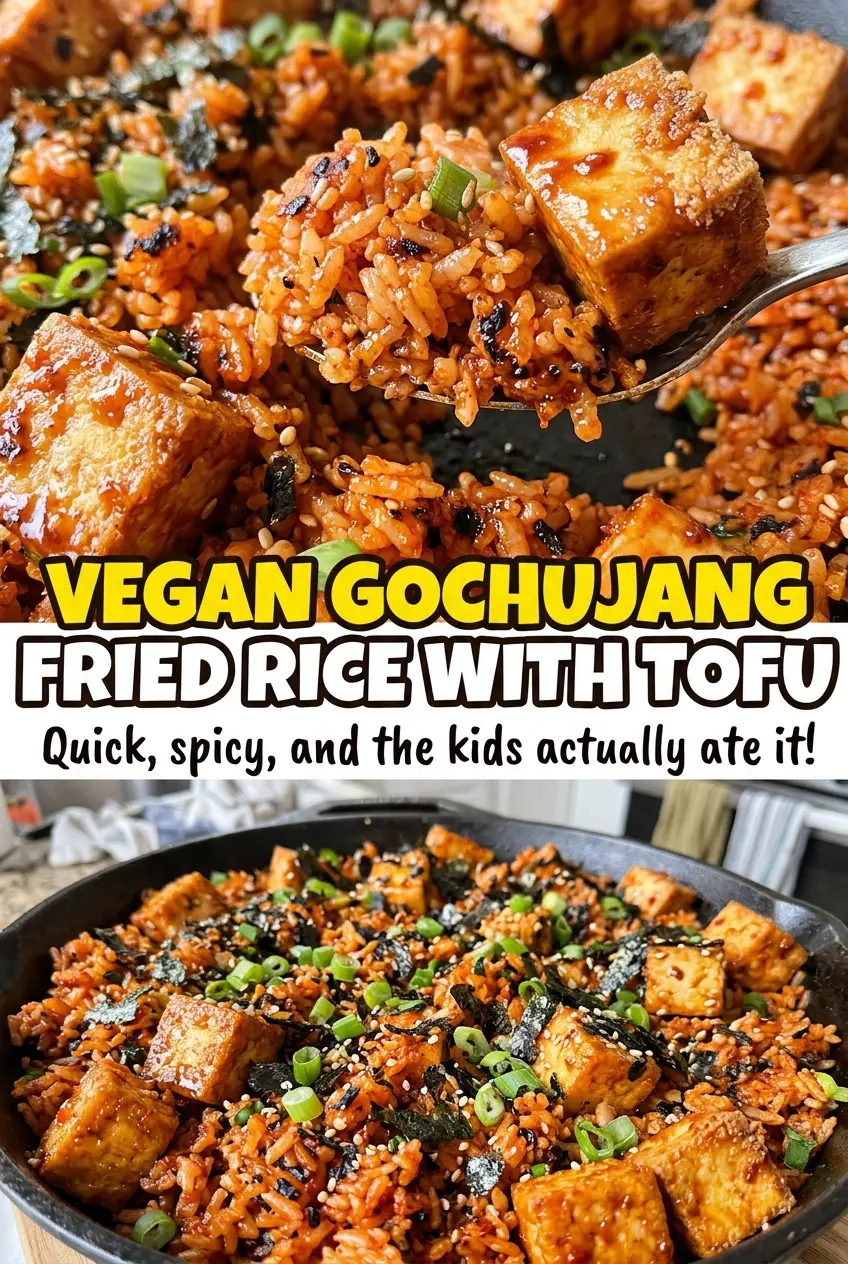
The tofu should sizzle as soon as it hits the skillet, then turn golden in patches as you leave it room to brown. If the pan is crowded, the cubes steam instead, and you miss that firm, savory bite that makes this Vegan Gochujang Fried Rice with Tofu satisfying. A 12-inch skillet or wok gives the tofu space, and cooking it first means you can brown it without rushing the vegetables or rice.
The sauce comes together in a small bowl while the tofu cooks: gochujang, soy sauce, toasted sesame oil, sugar, and water whisk into a smooth, pourable mixture. Cold rice goes into the skillet after the vegetables, so the grains heat through without turning soft and sticky. A quick toss with the sauce coats everything in a spicy, savory glaze, while scallions and sesame seeds finish the pan with a fresh, nutty edge.
Kitchen Note
Bake, Serve, Wear the Vibe 👕
Editor-picked tees our Oven To Fork readers love.



We may earn from qualifying purchases at no extra cost to you.
Whisk the sauce until the sugar dissolves and the gochujang has no stubborn lumps. It pours over the rice much more evenly when it’s smooth before it reaches the hot skillet.
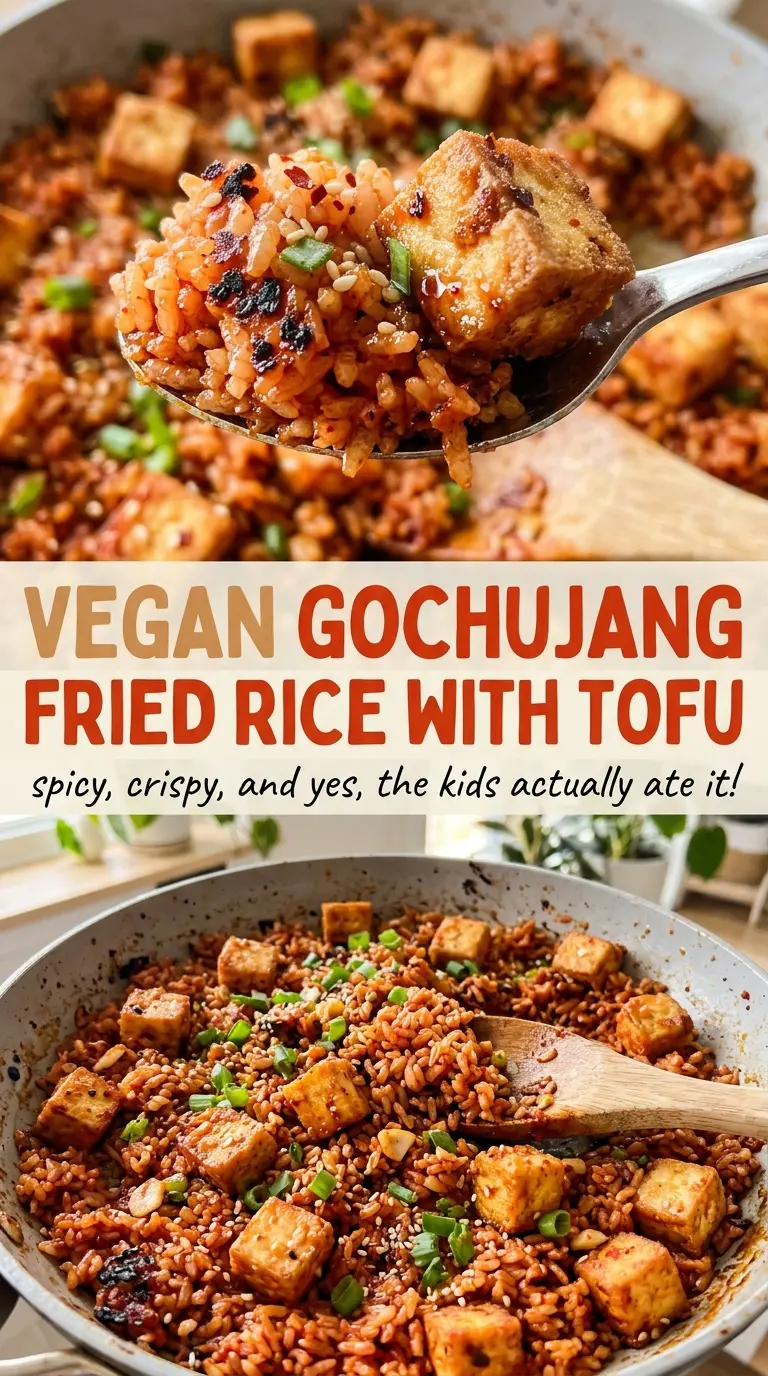
Save this Vegan Gochujang Fried Rice with Tofu for a quick, spicy skillet dinner with golden tofu and a glossy gochujang sauce.
Why Cold Rice Keeps This Gochujang Fried Rice From Turning Soft
Freshly cooked rice holds more moisture, and the grains tend to cling together when they hit a hot pan. That extra moisture makes it harder to fry the rice: instead of separating and picking up the sauce, a damp mass can soften further as it heats. Cold cooked rice, preferably day-old, starts out firmer and gives the skillet a better chance to heat each grain quickly.
That doesn’t mean you need to chase perfectly separate grains before cooking. Break up the larger clumps as you stir-fry, and let the rice move around the pan for several minutes before adding the sauce. Once the sauce goes in, the rice only needs a short toss to warm and coat; leaving it to cook much longer can make the finished texture heavy. The result should be distinct, tender grains with a little chew, not a wet pile of rice.
If you’re planning this meal ahead, cook the rice earlier and chill it so it’s cold when it goes into the skillet. The tofu and vegetables cook quickly, so having cold rice ready makes the timing feel calm rather than rushed.
What Gives the Sauce Its Heat, Savory Depth, and Gloss
- Vegan gochujang — This fermented chile paste brings the dish’s heat, savory depth, and signature red color. Its spice level varies by brand, so choose one you already enjoy; check that it’s vegan, since the ingredient lists aren’t identical across brands.
- Toasted sesame oil — A small amount gives the sauce a distinct roasted aroma that neutral oil won’t replicate. Toasted sesame oil is best used as a seasoning here, rather than as the oil for browning the tofu.
- Extra-firm tofu — Its dense texture helps the cubes stay intact through browning and tossing. Pat the drained tofu dry before cutting; excess surface moisture makes it harder to get the golden sides this dish needs.
- Cold cooked rice — Day-old rice is especially convenient because it’s chilled and less moist than freshly cooked rice. Any variety of cooked rice works, as long as it’s cold and ready to be broken into clumps in the skillet.
- Frozen peas and fresh vegetables — The onion and carrot make a savory base, while frozen peas add little sweet bites. The peas go straight into the pan from frozen, so there’s no need to thaw them first.
Brown the Tofu First, Then Let the Rice Take the Sauce
Whisk a Smooth, Pourable Sauce
Whisk the vegan gochujang, soy sauce, toasted sesame oil, sugar, and water together in a small bowl. Keep whisking until the sugar dissolves and the paste loosens into a smooth sauce. Set it beside the stove before you start frying the rice, since the final toss moves quickly. A smooth mixture is easier to distribute across the pan than thick pockets of gochujang.
Give the Tofu Room to Brown
Heat 1 tablespoon of neutral oil in a 12-inch skillet or wok over medium-high heat. Add the patted-dry tofu cubes in a single layer and sprinkle them with the kosher salt. Cook for 8 to 10 minutes, turning occasionally, until several sides are golden; frequent stirring won’t give the surfaces as much time against the pan. Transfer the browned tofu to a plate while you cook the vegetables.
Soften the Vegetables Without Scorching the Garlic
Add the remaining 2 tablespoons of neutral oil to the same skillet, then stir in the diced onion and carrot. Cook for 4 to 5 minutes, stirring often, until the onion looks softened and the carrot is beginning to tenderize. Add the minced garlic and frozen peas, and cook for 1 minute. Keep the garlic moving so it becomes fragrant without taking on dark, bitter spots.
Fry the Rice, Then Coat Everything
Add the cold cooked rice and stir-fry for 3 to 4 minutes, breaking apart clumps as they loosen. The rice should be hot throughout before the tofu and sauce go back into the skillet. Return the tofu, pour in the sauce, and toss for about 1 minute, until the rice and tofu are evenly coated and steaming hot. Take the skillet off the heat before stirring in the scallions, then finish with the sesame seeds.
Three Practical Ways to Adapt This Tofu Fried Rice
Use Brown Rice for a Chewier, Nuttier Bowl
Swap in cold cooked brown rice for the cooked rice. Its grains have a firmer bite and a nuttier taste, which stand up well to the spicy sauce; break apart any packed clumps as they warm in the skillet.
Make the Sauce Gluten-Free
Replace the soy sauce with the same amount of gluten-free tamari, and choose a vegan gochujang labeled gluten-free. Tamari keeps the sauce savory, though the exact balance may vary by brand; checking both products matters because gochujang can contain wheat.
Keep the Scallions Fresh on Top
For a sharper, crunchier finish, reserve the sliced scallions and scatter them over the fried rice instead of stirring them in off the heat. You’ll trade the gentler, wilted-onion flavor for a brighter bite in each serving.
Storage and Reheating
- Refrigerator: Refrigerate leftovers within 2 hours and keep them for 3 to 4 days. The rice and tofu soften as they sit, but the flavors remain savory and spicy.
- Freezer: Freeze cooled portions in airtight containers for up to 1 to 2 months for best quality. Thaw overnight in the refrigerator; the vegetables and rice may be softer after freezing.
- Reheating: Microwave a portion in a covered, microwave-safe dish, stirring halfway through, until it reaches 165°F. Reheating uncovered or for too long can dry out the rice.
Questions That Come Up With Gochujang Fried Rice
Vegan Gochujang Fried Rice with Tofu
Ingredients
Equipment
Method
- Whisk the gochujang, soy sauce, sesame oil, sugar, and water in a small bowl until smooth.
- Heat 1 tablespoon of the oil in a 12-inch skillet or wok over medium-high heat, add the tofu in a single layer, and sprinkle with the salt.
- Cook for 8 to 10 minutes, turning occasionally, until golden on several sides, then transfer to a plate.
- Add the remaining 2 tablespoons oil to the skillet, then add the onion and carrot and cook for 4 to 5 minutes, stirring often, until softened.
- Stir in the garlic and peas and cook for 1 minute.
- Add the rice and stir-fry for 3 to 4 minutes, breaking up clumps, until hot throughout.
- Return the tofu to the skillet, pour in the sauce, and toss until the rice and tofu are evenly coated and steaming hot, about 1 minute.
- Remove the skillet from the heat and stir in the scallions.
- Sprinkle with the sesame seeds.