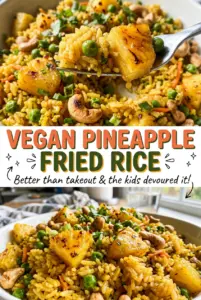
The vegetables should still have a little bite when the rice goes in; if they’ve softened all the way, they’ll disappear into the pan. I cook the carrots and onion first, then give the garlic and ginger just enough time to turn fragrant before the rice takes over. That order keeps the vegetables distinct and the aromatics from scorching.
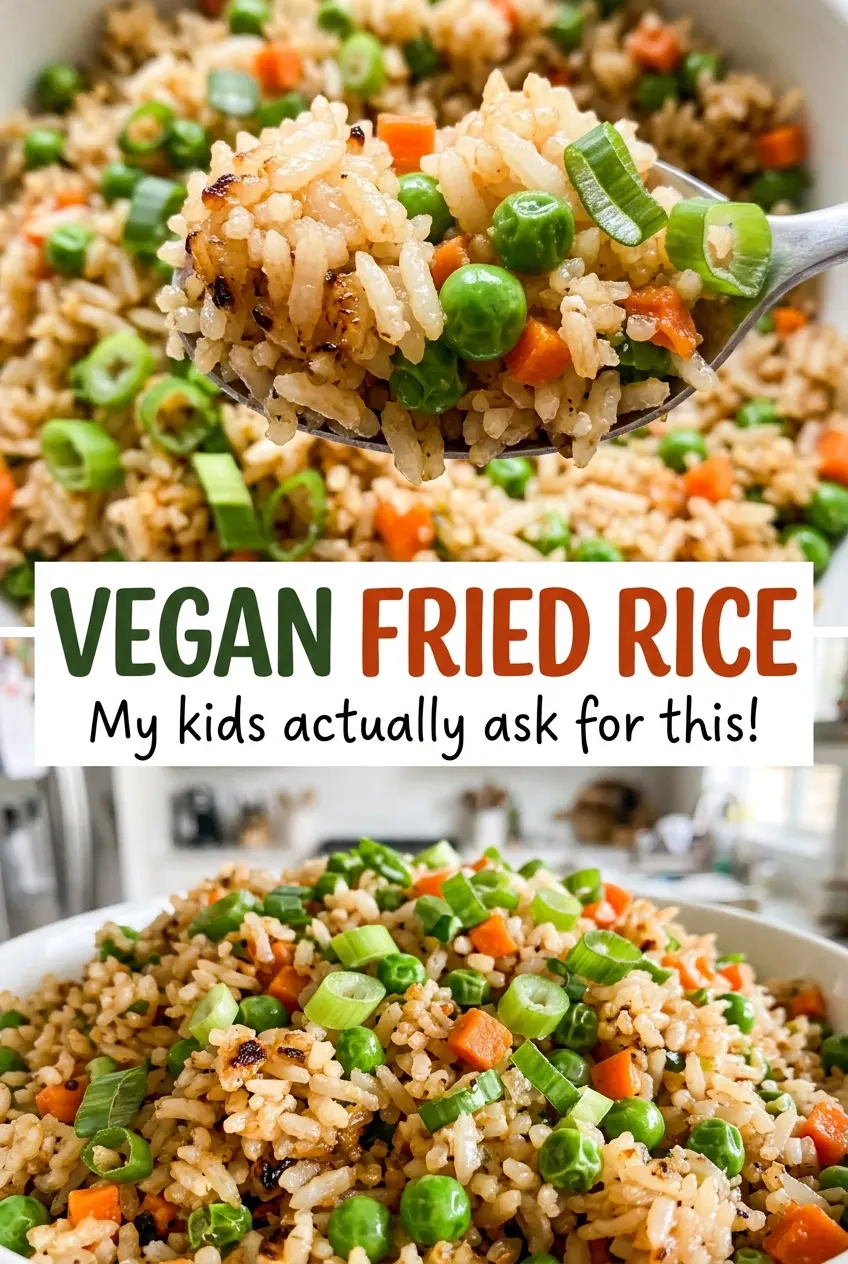
For this vegan fried rice, cold cooked rice matters as much as the hot skillet. Chilled grains break apart more easily and stay separate as they heat, instead of turning soft and sticky. Once everything is in the pan, the soy sauce seasons the rice while the peas warm through, and toasted sesame oil brings a nutty finish. The result is savory rice with tender-crisp carrots, sweet peas, and scallions that stay fresh and bright.
Kitchen Note
Bake, Serve, Wear the Vibe 👕
Editor-picked tees our Oven To Fork readers love.



We may earn from qualifying purchases at no extra cost to you.
Garlic and ginger need only 30 seconds in the hot skillet. I stir constantly and move straight to the rice as soon as they smell fragrant; even a little browning here can make the aromatics taste bitter.
Save this vegan fried rice for a quick, savory meal with tender-crisp vegetables and a nutty sesame finish.
Why the Rice Needs Room to Fry, Not Just Heat
A hot pan alone won’t give fried rice its separate, lightly toasted grains. If the rice is piled into a tight mound, its moisture has nowhere to go and the grains steam against each other. A large 12-inch skillet gives the rice room to spread across the cooking surface, so it can heat through while you toss and break up the remaining clumps.
That’s also why I add the rice after the onion and carrots have had their own time in the skillet. The vegetables soften without being buried, and the rice gets direct contact with the pan instead of sitting beneath a heap of ingredients. Stir often, but give the rice a moment spread across the skillet between stirs. You’re looking for loose grains that are steaming hot, not a damp, compact layer.
If the grains are still stuck together when you add them, break them up as you stir rather than pressing down hard with the spatula. A little patience here makes the finished pan feel like fried rice instead of a block of rice with vegetables mixed through it.
What the Rice, Aromatics, and Sauces Each Bring
- Long-grain white rice — Its relatively distinct grains are a good fit for stir-frying. Use cooked rice that’s chilled and broken up before it goes into the skillet; freshly cooked, moist rice is more likely to clump. Ordinary long-grain white rice works well here, so there’s no need for a specialty brand.
- Yellow onion and carrots — Onion gives the base a mellow savory sweetness, while small, even carrot dice cook quickly and stay pleasantly firm. A uniform cut matters more than choosing a particular carrot variety.
- Garlic and fresh ginger — These bring the sharp, fragrant notes that make the rice taste lively rather than flat. Freshly minced garlic and freshly grated ginger have a brighter aroma than dried versions, and their fine texture helps them spread through the pan.
- Frozen peas — Peas add little pockets of sweetness and color, and they’re convenient straight from the freezer. Add them near the end so they heat through without getting lost among the longer-cooking vegetables.
- Soy sauce and toasted sesame oil — Soy sauce seasons the rice and gives it savory depth; toasted sesame oil contributes a distinct nutty aroma. The toasted oil is potent, so keep it as a finishing seasoning rather than using it as the main frying oil.
- Scallions — Thinly sliced scallions bring a fresh, mild onion flavor at the end. Add them after the skillet comes off the heat so they keep their color and a little bite.
The Skillet Timing That Keeps Every Part Distinct
Soften the Carrots and Onion First
Heat a large 12-inch skillet over medium-high heat for 1 to 2 minutes, then add 1 tablespoon of neutral oil. Stir in the onion and carrots and cook for 4 to 5 minutes, stirring often. The carrots should be tender-crisp, not soft enough to mash against the side of the pan. If the vegetables are browning before the carrots have that little bit of give, keep them moving as they finish.
Let the Garlic and Ginger Turn Fragrant
Stir the minced garlic and grated ginger into the vegetables and cook for 30 seconds. Keep them moving so they warm evenly in the oil instead of sitting in one hot spot. You’ll smell the garlic and ginger before they have time to brown. Add the rice promptly once that fragrance comes up.
Spread the Rice Across the Pan
Add the remaining tablespoon of neutral oil, followed by the chilled rice. Spread it around the skillet, then stir-fry for 4 to 5 minutes, breaking apart any clumps as you go. Look for steam rising from the rice and loose grains throughout; a stubborn clump should be teased apart with the spatula rather than crushed. Keep stirring often so rice at the edges doesn’t sit too long against the hot pan.
Warm the Peas and Season the Rice
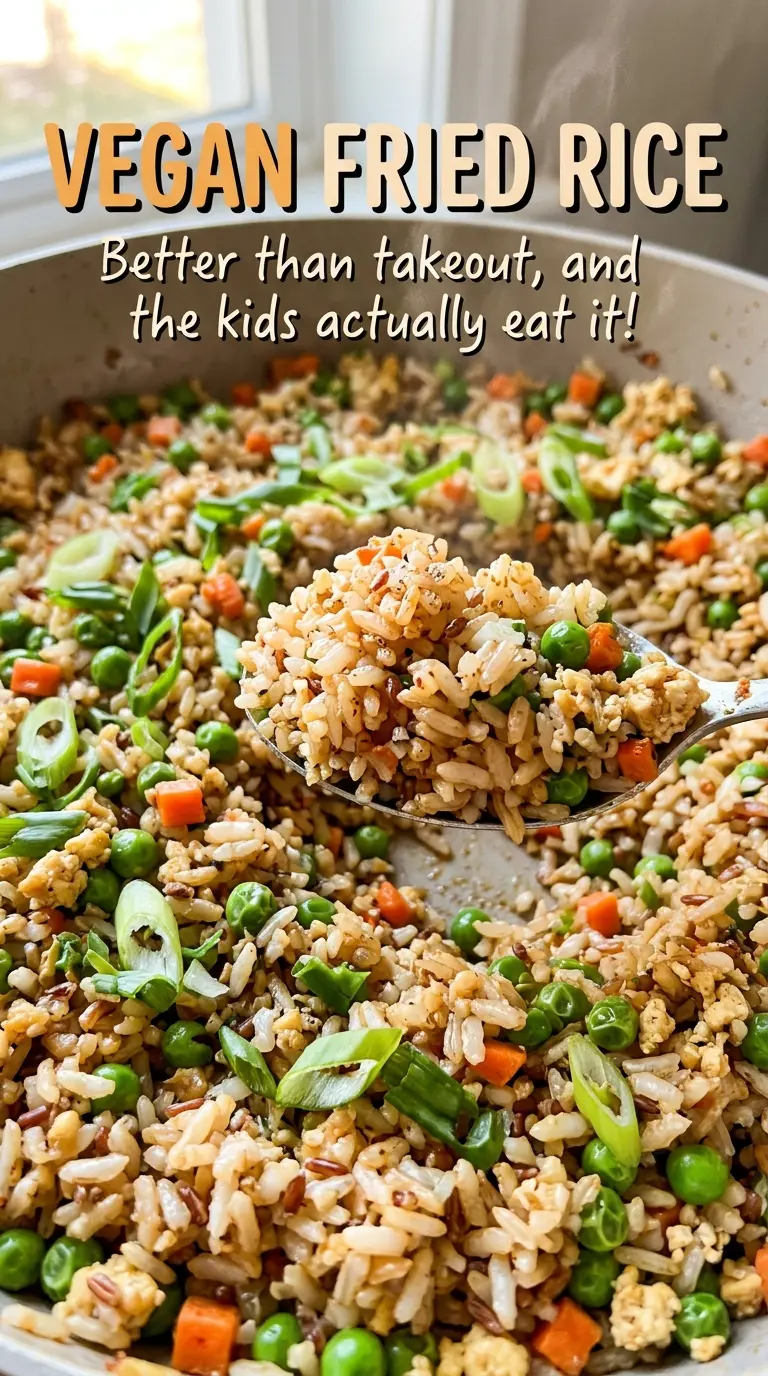
Add the peas, soy sauce, toasted sesame oil, and black pepper. Stir-fry for 2 to 3 minutes, until the peas are hot and the rice reaches 165°F. Scrape and turn the rice so the sauce coats it evenly instead of pooling in one part of the skillet. Stir in the sliced scallions and serve hot.
Easy Changes That Still Let the Rice Shine
Make It Gluten-Free With Tamari
Replace the soy sauce with the same amount of certified gluten-free tamari. The result stays savory, with a slightly rounder, less sharp soy flavor; the rice method and timing don’t need to change.
Leave Out the Peas
For a pea-free version, omit the frozen peas and keep the rest of the ingredients and cooking method the same. The rice will have less sweetness and fewer soft bites, while the carrots still give the pan color and a little crunch.
Skip the Toasted Sesame Oil
Leave out the toasted sesame oil if you want a less nutty finish. The dish will still get its savory seasoning from the soy sauce, but it will lose the warm, toasted aroma that sets this version apart.
Storage and Reheating
- Refrigerator: Refrigerate leftovers in an airtight container within 2 hours and use within 3 days. The rice firms up as it chills, but loosens as it heats.
- Freezer: Freeze portions in airtight containers; they keep their best texture for about 1 month. Thaw overnight in the refrigerator before reheating.
- Reheating: Warm the rice in a skillet over medium heat, stirring often until it’s steaming throughout. Avoid high heat, which can dry the rice or scorch the soy sauce before the middle warms.
Questions That Come Up When Making Vegan Fried Rice
Vegan Fried Rice
Ingredients
Equipment
Method
- Heat a large 12-inch skillet over medium-high heat for 1 to 2 minutes.
- Add 1 tablespoon of the neutral oil.
- Add the onion and carrots and cook for 4 to 5 minutes, stirring often, until the carrots are tender-crisp.
- Stir in the garlic and ginger and cook for 30 seconds, until fragrant.
- Add the remaining 1 tablespoon neutral oil and the rice. Spread the rice in the skillet and stir-fry for 4 to 5 minutes, breaking up any remaining clumps, until steaming hot.
- Add the peas, soy sauce, sesame oil, and black pepper. Stir-fry for 2 to 3 minutes, until the peas are hot and the rice reaches 165°F.
- Stir in the scallions and serve hot.