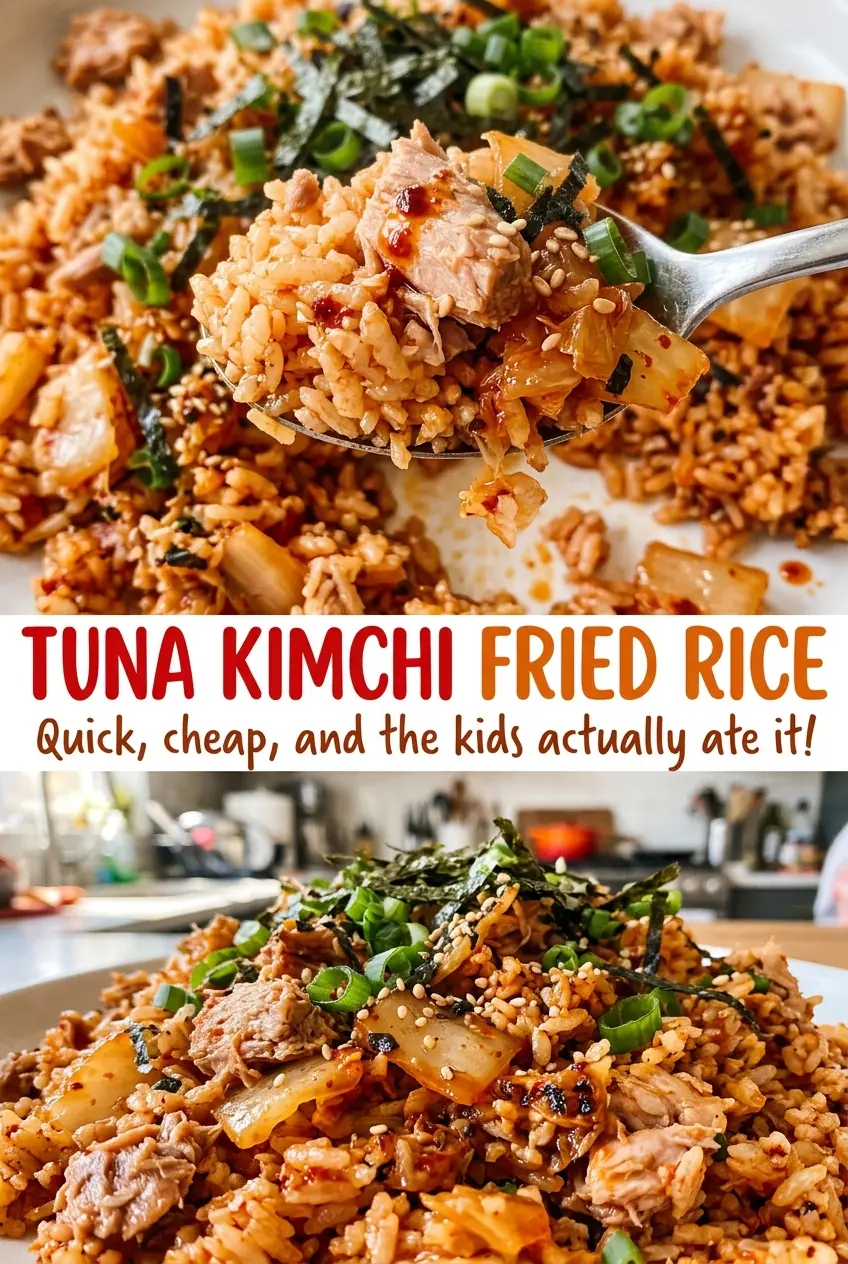
The tuna is easy to miss if it goes into the skillet in one big piece. I break it into bite-size flakes while it’s still separate from the rice, so it gets spread through the whole pan instead of clumping in one spot. That little bit of attention is what makes Tuna Kimchi Fried Rice feel like a complete meal, not just rice with a few toppings.
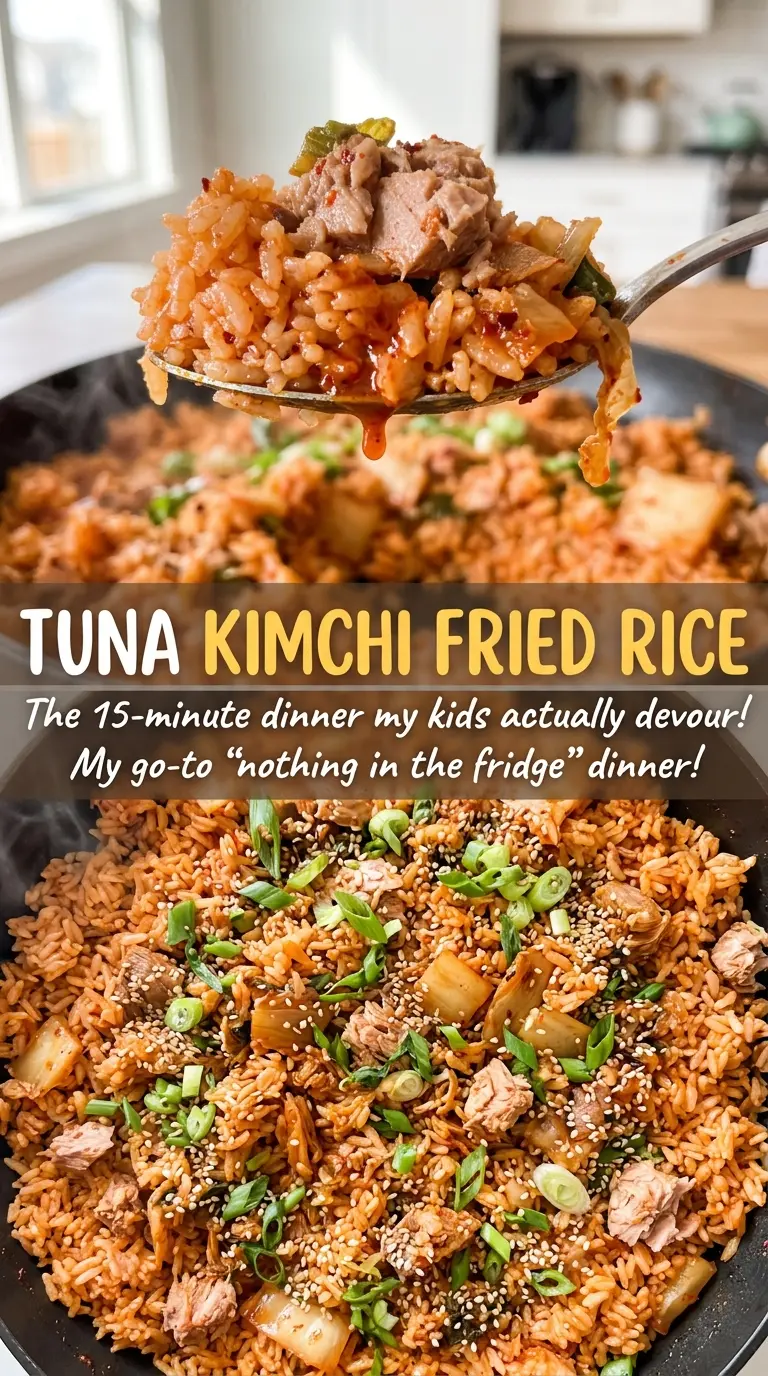
I like the way the mild tuna and softly scrambled eggs take the edge off the kimchi’s tang and the gochujang’s heat. Cold cooked rice keeps the grains easier to separate as they warm, and the final spoonful of toasted sesame oil gives the skillet a fragrant finish. The result is savory, gently spicy fried rice with tender bites of tuna and egg throughout.
Kitchen Note
Bake, Serve, Wear the Vibe 👕
Editor-picked tees our Oven To Fork readers love.



We may earn from qualifying purchases at no extra cost to you.
Let the eggs cook in the center of the skillet until they’re fully set before folding them through the rice. They’ll stay in soft, distinct pieces instead of disappearing into the grains.
Save this Tuna Kimchi Fried Rice for a fast skillet dinner with savory tuna, tangy kimchi, and softly scrambled eggs.
Why the Kimchi Needs a Head Start Before the Rice
Kimchi brings plenty of flavor, but it also carries liquid into the skillet. If the rice goes in while that liquid is still pooling, the grains cook in moisture instead of getting a chance to heat through and pick up the savory kimchi mixture. That’s when fried rice can turn soft and heavy rather than distinct and satisfying.
Giving the chopped kimchi a few minutes in the hot skillet lets it soften while most of its liquid evaporates. It’s a small pause that makes a difference later: the rice can be stirred and pressed against the pan without swimming in kimchi juice. Cold cooked rice helps, too, because it starts out with firmer grains than warm, freshly cooked rice. Together, those choices give you a skillet where the tangy kimchi is worked through the rice, rather than wet patches concentrated in a few bites.
What Kimchi, Cold Rice, and Tuna Each Bring to the Skillet
- Napa cabbage kimchi — It’s the source of the dish’s tang, fermented depth, and much of its heat. Chopped pieces distribute more evenly than large leaves. The kimchi juice adds a direct hit of that same flavor, so keep it rather than draining it away.
- Cold cooked rice — Chilled grains are easier to break apart and move around the skillet. Use rice that’s already cooked and cold; warm rice is more likely to clump and turn soft as it fries. Any neutral-tasting cooked rice works, so there’s no need for a specialty variety.
- Tuna in water — Water-packed tuna keeps the skillet from becoming too oily, while still adding savory, tender flakes. Drain it well, then break it into bite-size pieces before the rice goes in. Oil-packed tuna works in a pinch, but it makes the finished rice richer and heavier.
- Gochujang — This fermented chile paste brings both warmth and a rounded savory note. It’s not interchangeable with plain hot sauce, which won’t give the same depth. Stir it in with the garlic so it coats the kimchi before the rice is added.
- Eggs, scallions, and toasted sesame oil — Eggs add soft, filling bites; scallions bring a fresh onion note; and toasted sesame oil is best saved for the finish, where its aroma stays noticeable. Use toasted sesame oil, not plain sesame oil, for that distinct nutty finish.
Building the Skillet Without Steaming the Rice
Soften the Kimchi and Let the Liquid Cook Away
Heat a 12-inch skillet over medium-high heat, add the neutral oil, then stir in the chopped kimchi. Cook for 3 to 4 minutes, stirring often, until the cabbage softens and most of its liquid has evaporated. If liquid is still collecting in the bottom, give it another moment before adding anything else. The skillet should look moist from the kimchi, not flooded.
Coat the Kimchi with Garlic and Gochujang
Add the minced garlic and gochujang, then cook for 30 seconds. Keep stirring so the garlic and paste mingle with the kimchi rather than sitting in one spot. Garlic can go from fragrant to scorched quickly in a hot skillet, so don’t leave it unattended. Stir in the drained tuna and break it into bite-size pieces.
Warm and Separate the Rice
Add the cold rice, kimchi juice, and soy sauce. Break up clumps as you stir, then press some of the rice against the skillet before folding it back through the mixture. Cook for 4 to 6 minutes, stirring and pressing, until the rice is hot and steaming. If you leave a clump intact, its center can stay cool while the outside warms.
Scramble the Eggs and Finish the Rice
Push the rice out toward the edges of the skillet and pour the lightly beaten eggs into the open center. Scramble for 1 to 2 minutes, until fully set, then fold the eggs through the rice. Stir in the sliced scallions and toasted sesame oil just before serving. The scallions stay fresh-tasting, and the sesame oil’s aroma comes through clearly.
Three Practical Ways to Adapt Tuna Kimchi Fried Rice
Make It Gluten-Free with Tamari
Replace the soy sauce with the same amount of gluten-free tamari, and use kimchi and gochujang that are labeled gluten-free. The savory balance stays close to the original, though tamari can taste a little rounder and less sharp than some soy sauces.
Leave Out the Eggs
For an egg-free version, skip the eggs and the scrambling stage, then stir the scallions and toasted sesame oil into the hot rice. You’ll lose the soft, rich egg pieces, but the tuna and kimchi still make a savory, satisfying skillet.
Make a Vegetarian Skillet
Leave out the tuna and choose kimchi made without fish sauce for a vegetarian version. The result is lighter and more focused on the tangy cabbage and rice, without the tuna’s savory, flaky bites.
Storage and Reheating
- Refrigerator: Store leftovers in a covered container for 3 to 4 days. The rice and eggs soften a little as they sit.
- Freezer: Freeze cooled portions in airtight containers for up to 2 months. The rice may be softer after thawing, but the flavor holds up well.
- Reheating: Reheat in a skillet over medium heat or in the microwave until the rice is steaming throughout and reaches 165°F. Avoid heating it repeatedly, which dries out the tuna and eggs.
Questions That Come Up When Making This Kimchi Fried Rice
Tuna Kimchi Fried Rice
Ingredients
Equipment
Method
- Heat a 12-inch skillet over medium-high heat, add the neutral oil and kimchi, and cook for 3 to 4 minutes, stirring often, until softened and most of the liquid has evaporated.
- Add the garlic and gochujang and cook for 30 seconds.
- Stir in the tuna, breaking it into bite-size pieces.
- Add the rice, kimchi juice, and soy sauce, breaking up any clumps.
- Cook for 4 to 6 minutes, stirring and pressing the rice against the skillet until hot and steaming.
- Push the rice to the edges of the skillet and pour the eggs into the center.
- Scramble for 1 to 2 minutes until fully set, then fold the eggs into the rice.
- Stir in the scallions and toasted sesame oil and serve.