The curry powder hits the hot skillet and suddenly the whole kitchen smells warm and savory, while the pineapple brings a bright, juicy sweetness to every bite. That contrast is what I love about Thai pineapple fried rice: it’s hearty from the shrimp and egg, but the lime and herbs keep it from feeling heavy.
I cook the ingredients in stages, then bring them together at the end, so the shrimp stays tender and the egg keeps its soft curds. Cold jasmine rice gives the grains a chance to stay distinct instead of collapsing into a sticky clump. Cashews add a buttery crunch, and a squeeze of lime wakes up the curry and pineapple. You get a colorful skillet of sweet, salty, tangy rice with plenty of texture.
Kitchen Note
Bake, Serve, Wear the Vibe 👕
Editor-picked tees our Oven To Fork readers love.



We may earn from qualifying purchases at no extra cost to you.
I drain canned pineapple until it stops dripping before it goes into the skillet. Juice clinging to the chunks can make the rice damp just as the fruit warms through.
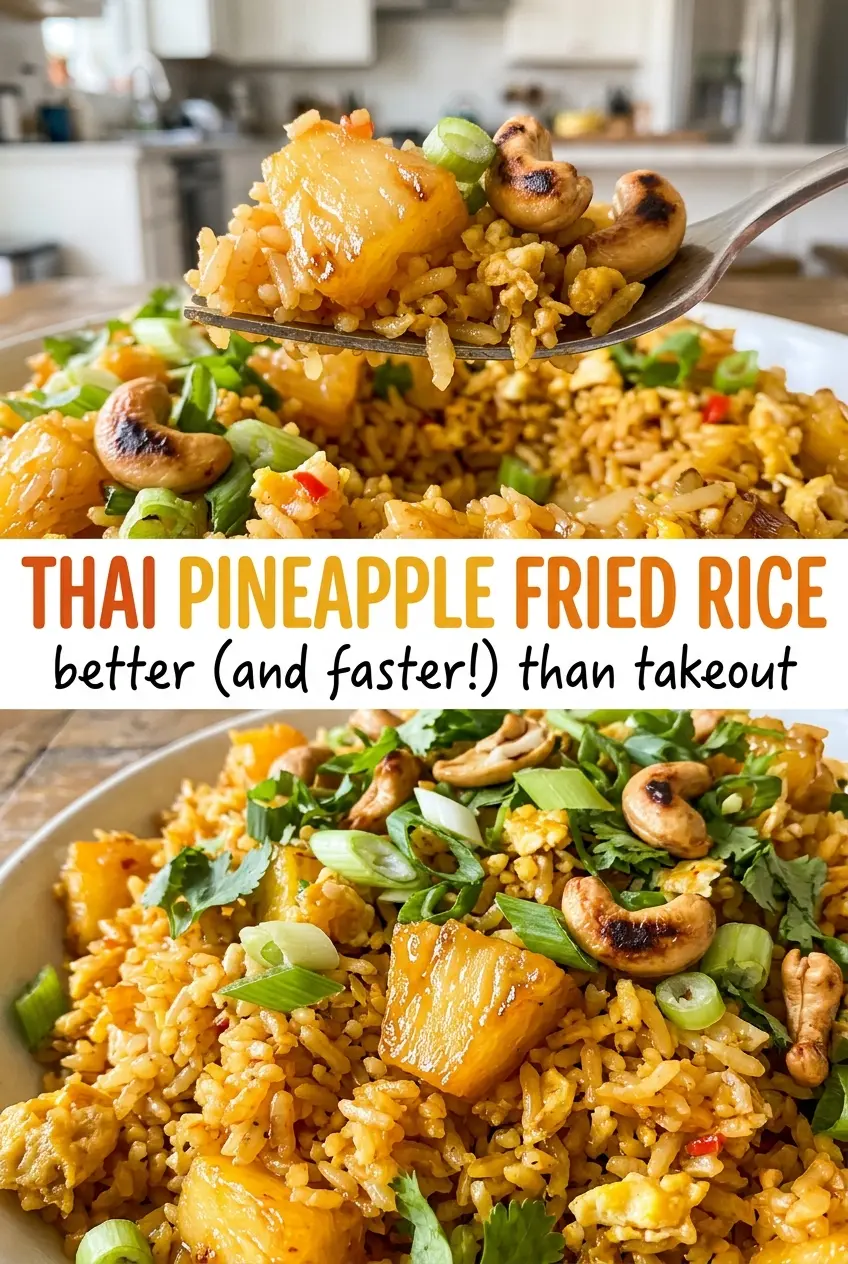
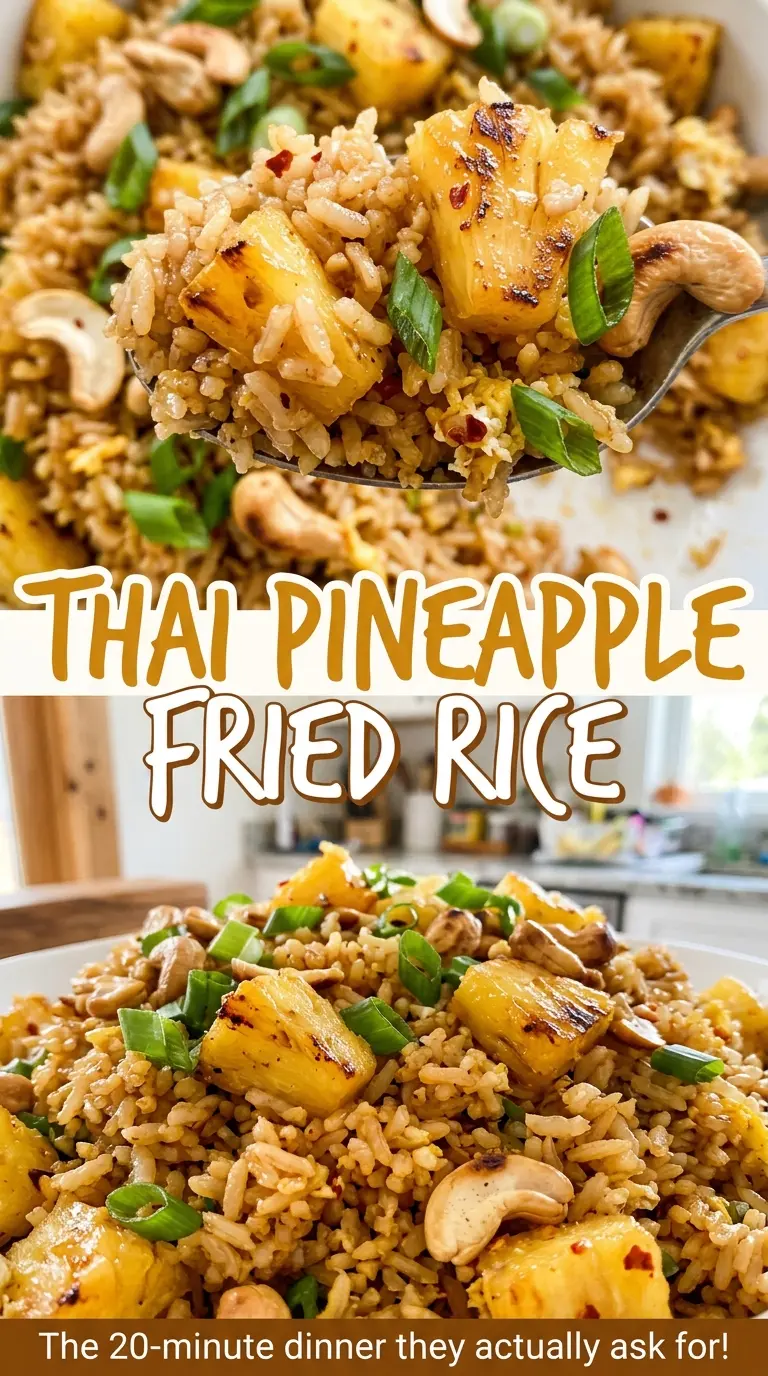
Save this Thai pineapple fried rice for its sweet pineapple, curry-scented rice, tender shrimp, and cashew crunch.
Why the Rice Goes Into the Skillet in Two Batches
Four cups of rice sound manageable until they hit a skillet with shrimp, egg, and pineapple waiting nearby. If all the rice goes in at once, it forms a thick layer that’s harder to stir and less of it stays in contact with the hot pan. The grains warm unevenly, and the bottom can start to stick before the middle is hot.
Frying two cups at a time gives each batch room to move across the pan. The seasonings get tossed through the grains while they’re still spread out, rather than pooling in one spot. I transfer each finished batch to the bowl with the other cooked ingredients, then fold everything together at the end. That order also keeps the shrimp and egg from taking extra time in the skillet while the rice cooks. The payoff is rice that tastes evenly seasoned, with pieces of pineapple and cashew still easy to spot in the finished dish.
What the Rice, Fish Sauce, and Pineapple Each Bring
- Jasmine rice — Its fragrance is part of what makes this dish taste distinct. Cold cooked rice, preferably chilled overnight, is easier to stir-fry into separate grains; long-grain white rice works if jasmine isn’t available, though you’ll lose some of that floral aroma.
- Shrimp — Medium shrimp cook quickly and are easy to mix through the rice without overwhelming the other ingredients. Peeled and deveined shrimp save prep time; fresh or thawed shrimp both work, and there’s no need to buy a premium size for this skillet.
- Pineapple — Fresh chunks bring a brighter, firmer bite, while canned pineapple is convenient and softer. Either works here. Choose pieces that aren’t overly ripe or mushy so they keep their shape when warmed with the rice.
- Curry powder, onion, and garlic — Curry powder gives the skillet its warm spice, while onion and garlic make that flavor taste rounded rather than dusty. Use a blend that still smells fragrant when you open the jar; an old, flat curry powder won’t bring the same aroma. There isn’t a direct one-ingredient swap for the blend.
- Fish sauce, soy sauce, sugar, and white pepper — Together they balance salty, savory, lightly sweet, and peppery notes. Fish sauce adds a deeper fermented savoriness than soy sauce alone, so keep both if you can. For a gluten-free version, use tamari in place of the soy sauce; it changes the finish slightly but keeps the savory backbone.
- Egg and roasted cashews — The egg adds soft, savory curds, and roasted unsalted cashews bring a rich crunch. A basic egg is fine, but cashews taste best when they’re fresh and crisp rather than stale. Roasted unsalted peanuts make a practical stand-in, with a sharper, more pronounced nut flavor.
- Scallions, cilantro, lime, and neutral oil — These finish the skillet with freshness and brightness; use fresh herbs and a juicy lime if possible. Canola or vegetable oil works just as well as another neutral oil, since a strongly flavored oil would compete with the curry and herbs.
Cook Each Part Briefly, Then Bring the Skillet Together
Sear the Shrimp Just Until Opaque
Heat a 12-inch skillet over medium-high heat and add 2 teaspoons of the oil. Season the shrimp with the kosher salt, then cook them for 1 to 2 minutes per side, until opaque and at an internal temperature of 145°F. Move them to a large bowl as soon as they’re cooked. Leaving them in the hot skillet while you work on the other ingredients can make them tough.
Set the Egg and Wake Up the Aromatics
Add 1 teaspoon oil to the skillet and pour in the beaten egg. Scramble until just set, about 30 seconds to 1 minute, then transfer it to the bowl with the shrimp. Add another 1 teaspoon oil, followed by the onion, garlic, and curry powder. Stir for 1 to 2 minutes, then scoop the fragrant mixture into the bowl too.
Season the First Rice Batch
Add 1 teaspoon oil and 2 cups of rice to the skillet. Stir-fry for 2 to 3 minutes, moving the rice around so it heats evenly. Stir in 1 1/2 teaspoons fish sauce, 1 teaspoon soy sauce, 1/2 teaspoon sugar, and 1/8 teaspoon white pepper. Transfer that seasoned rice to the large bowl.
Finish the Second Batch and Fold Everything Together
Add the remaining 1 teaspoon oil and the remaining 2 cups rice to the skillet. Stir-fry for 2 to 3 minutes, then mix in the remaining fish sauce, soy sauce, sugar, and white pepper. Add the pineapple and cook for 1 to 2 minutes, just until warmed through, then transfer the rice and fruit to the bowl. Fold in the cashews, scallions, and cilantro, and serve with lime wedges.
Three Easy Ways to Adapt This Pineapple Fried Rice
Make It Vegetarian with Tofu
Replace the shrimp with pressed extra-firm tofu, browned in the skillet and transferred to the bowl. Use vegetarian fish sauce in place of regular fish sauce, keeping the same amount. The tofu makes the dish heartier, while the seasoning stays savory without seafood.
Keep It Gluten-Free with Tamari
Swap the soy sauce for the same amount of gluten-free tamari. It brings a similar savory note, though the taste is a little rounder. Choose a fish sauce that’s labeled gluten-free as well, since formulations can vary.
Make It Nut-Free with Pumpkin Seeds
Use roasted unsalted pumpkin seeds in place of the cashews. They add a crisp finish without the buttery flavor of the nuts, and their earthy taste fits the curry and pineapple nicely.
Storage and Reheating
- Refrigerator: Refrigerate leftovers within 2 hours in a covered container and eat within 3 days. The rice will soften a little as it sits.
- Freezer: Freeze in an airtight container for up to 2 months. Thaw overnight in the refrigerator; the pineapple and herbs will be softer after thawing.
- Reheating: Warm in a skillet over medium heat, stirring until the leftovers reach 165°F. Avoid keeping the pan on low heat for a long time, which can dry out the shrimp and rice.
Questions That Come Up When Making Thai Pineapple Fried Rice
Thai Pineapple Fried Rice
Ingredients
Equipment
Method
- Heat a 12-inch skillet over medium-high heat and add 2 teaspoons oil.
- Season the shrimp with the salt and cook for 1 to 2 minutes per side, until opaque and 145°F.
- Transfer the shrimp to a large bowl.
- Add 1 teaspoon oil to the skillet.
- Pour in the egg and scramble until just set, about 30 seconds to 1 minute.
- Transfer the egg to the bowl with the shrimp.
- Add 1 teaspoon oil, the onion, garlic, and curry powder to the skillet.
- Cook for 1 to 2 minutes, stirring.
- Transfer the onion mixture to the bowl.
- Add 1 teaspoon oil and 2 cups rice to the skillet.
- Stir-fry for 2 to 3 minutes.
- Stir in 1 1/2 teaspoons fish sauce, 1 teaspoon soy sauce, 1/2 teaspoon sugar, and 1/8 teaspoon white pepper.
- Transfer the rice to the bowl.
- Add the remaining 1 teaspoon oil and 2 cups rice to the skillet.
- Stir-fry for 2 to 3 minutes.
- Stir in the remaining fish sauce, soy sauce, sugar, and white pepper.
- Add the pineapple and cook for 1 to 2 minutes.
- Transfer everything to the bowl.
- Fold the cashews, scallions, and cilantro into the rice mixture.
- Serve with the lime wedges.