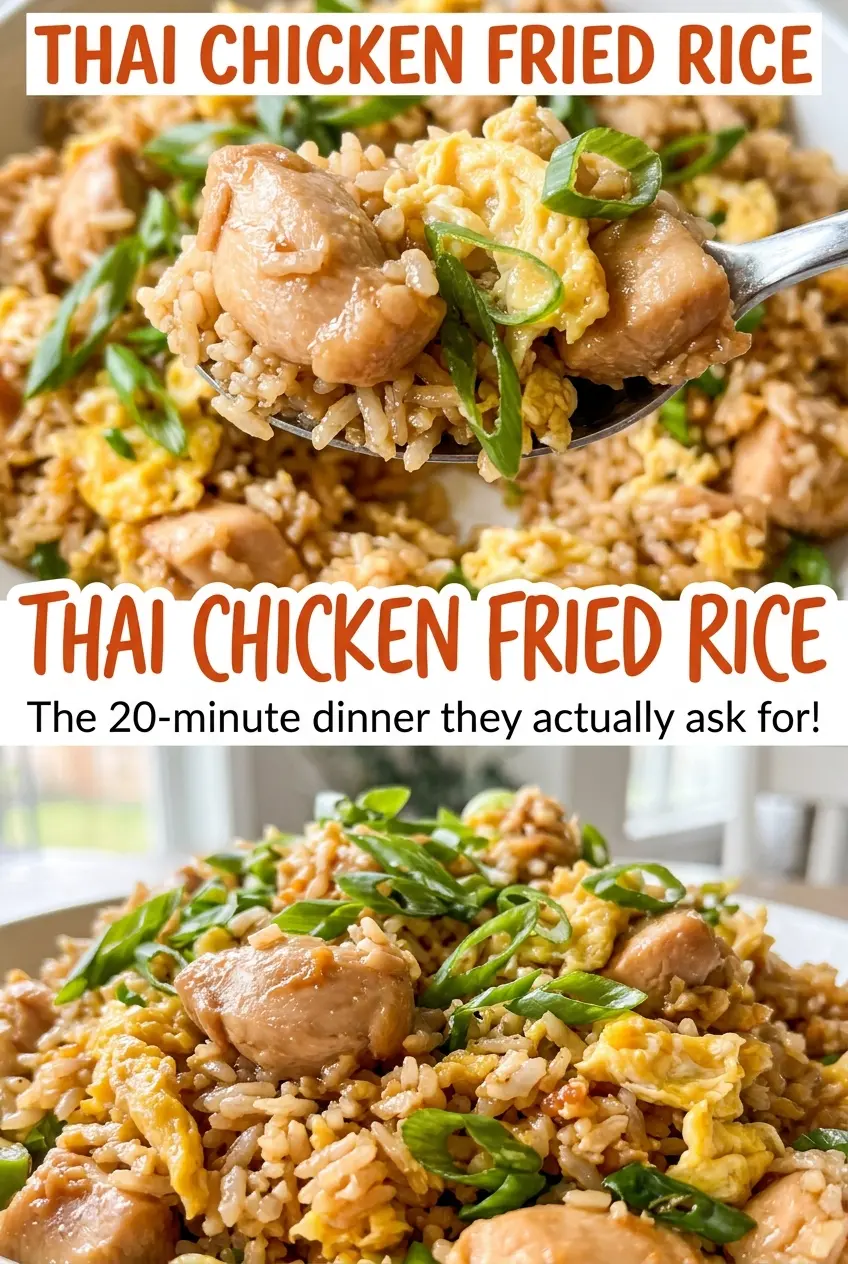
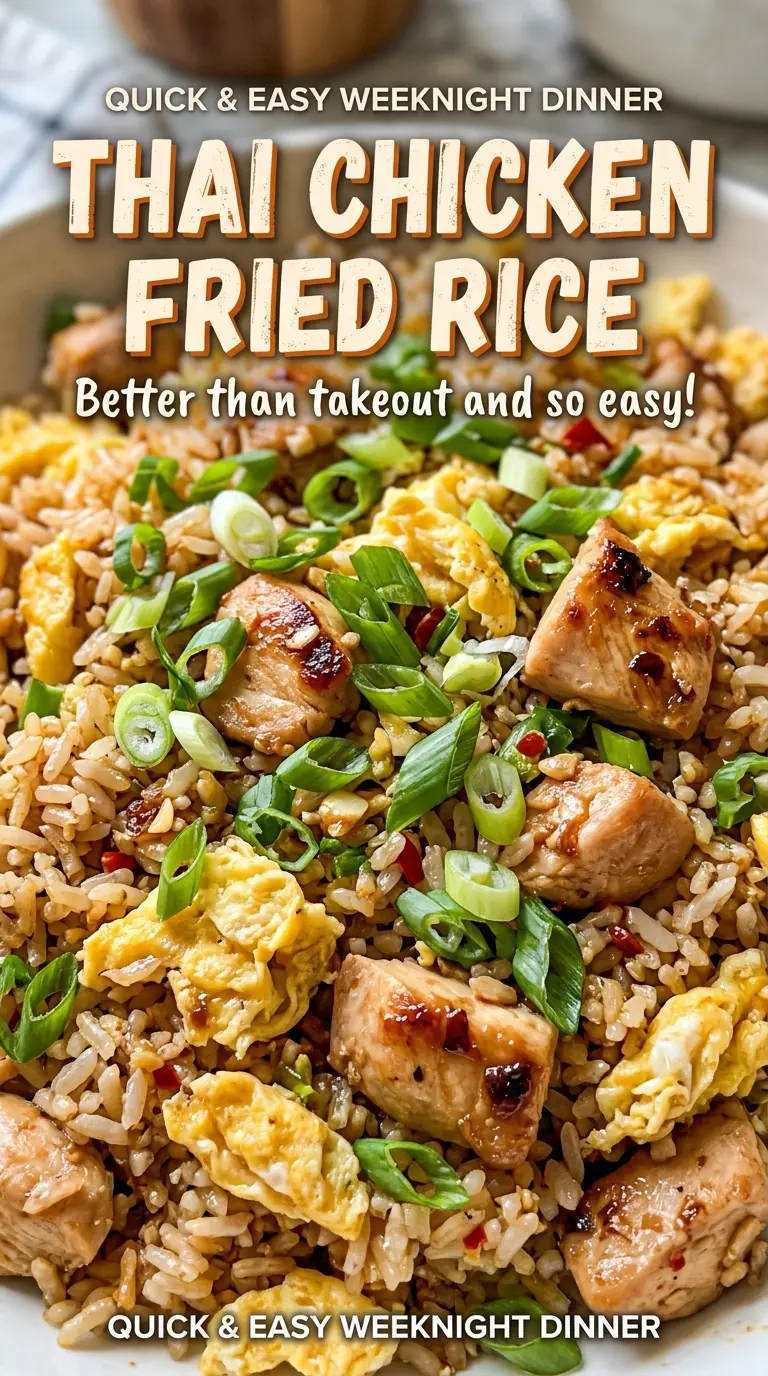
The chicken should hiss as soon as it hits the skillet, then pick up golden spots before it goes back into the rice. I cook Thai chicken fried rice in a wide 12-inch skillet so the pieces have room to brown instead of crowding together. Getting that first sear right gives the finished rice more savory depth without adding another step or ingredient.
The sauce is mixed before the cooking starts, which matters once everything moves quickly. Fish sauce and oyster sauce bring savory richness, soy sauce rounds them out, and a little sugar softens the edges. Cold jasmine rice keeps the grains easier to separate in the pan, while a squeeze of lime at the end brightens the whole skillet. The result is tender chicken, softly set egg, and savory rice with a fresh, tangy finish.
Kitchen Note
Bake, Serve, Wear the Vibe 👕
Editor-picked tees our Oven To Fork readers love.



We may earn from qualifying purchases at no extra cost to you.
Give the chicken room in the skillet rather than piling it up. A single layer helps it brown, and transferring it to a plate keeps it from overcooking while the rice gets its turn.
Save this Thai chicken fried rice for a fast, savory skillet dinner with browned chicken, jasmine rice, and a bright lime finish.
Why the Sauce Tastes Balanced Without Making the Rice Heavy
Fried rice can go from well-seasoned to salty and flat in a hurry, especially when several savory sauces are poured straight into the skillet. I stir the fish sauce, oyster sauce, soy sauce, sugar, and white pepper together first. That gives the sugar time to dissolve and lets the seasonings combine before they meet the rice, so each spoonful gets a more even coating.
The sauces have different jobs. Fish sauce brings a fermented, savory edge, oyster sauce adds rounded richness, and soy sauce contributes familiar saltiness. A small amount of sugar smooths those strong flavors rather than making the dish sweet, while white pepper adds a gentle warmth without calling attention to itself. Lime juice goes in after the skillet comes off the heat, where its fresh acidity cuts through the savory finish instead of disappearing into the cooking.
There isn’t a single sauce in that bowl doing all the work. Keeping the mixture together also makes the quick stir-fry easier: you can add the sauce and rice at the same time, then keep the grains moving while they heat through.
What Gives Thai Chicken Fried Rice Its Savory-Sweet Finish
- Fish sauce, oyster sauce, and soy sauce — Together they create the dish’s savory base; none is an exact stand-in for the others. Use the sauces you enjoy and measure them carefully, since adding extra of one can make the whole pan taste unbalanced. For a gluten-free adaptation, use gluten-free tamari in place of soy sauce and a gluten-free oyster sauce, checking both product labels.
- Granulated sugar and white pepper — The sugar rounds out the salty sauces, while white pepper gives a subtle warmth. Granulated sugar dissolves easily in the mixed sauce. Black pepper has a sharper, more noticeable taste, so it won’t give quite the same finish.
- Jasmine rice — Cold cooked rice is easier to separate and stir-fry than warm, freshly cooked rice. Break up the clumps before they go into the skillet; that way you won’t need to crush the grains as you stir. Cold cooked brown rice also works as a variation, though it makes the dish chewier and less fragrant.
- Chicken breast and eggs — The chicken is cut small so it cooks quickly, and the eggs add soft, tender curds through the rice. Boneless, skinless chicken thighs can replace the breast; keep the pieces the same size and cook them until the thickest pieces reach 165°F. Thigh meat tastes richer, and its cooking time may differ.
- Garlic, yellow onion, scallions, and lime — Garlic and onion make a quick aromatic base, while scallions and lime bring a fresher finish after cooking. Fresh lime juice has a brighter taste than bottled juice here. Slice the scallions thinly so they distribute through the rice instead of landing in large bites.
- Neutral oil — A neutral-tasting oil lets the sauces and aromatics lead. Choose one that can handle the high heat needed to brown the chicken; strongly flavored oil would change the taste of the whole pan.
The Fast Skillet Sequence That Keeps Each Part Distinct
Mix the Sauce Before the Skillet Gets Hot
Stir the fish sauce, oyster sauce, soy sauce, sugar, and white pepper together in a small bowl before cooking. Set it within reach, along with the prepared chicken, garlic, onion, eggs, rice, scallions, and lime juice. Once the skillet is hot, the next stages move quickly, so having everything ready keeps the garlic from sitting in the pan while you search for the sauce.
Brown the Chicken in a Single Layer
Heat one tablespoon of neutral oil in a 12-inch skillet over high heat until it shimmers. Add the chicken in one layer and cook, stirring occasionally, for 4 to 6 minutes, until browned and 165°F in the thickest pieces. If the pan is crowded, the chicken won’t brown as readily, so use the wide skillet called for here. Transfer the cooked pieces to a plate.
Soften the Aromatics, Then Set the Eggs
Add the remaining oil to the skillet, then stir in the garlic and finely chopped onion. Cook for about 30 seconds, just until fragrant; garlic that darkens quickly can turn bitter, so keep it moving. Pour in the lightly beaten eggs and scramble for 30 to 60 seconds, stopping when they’re softly set. They’ll continue cooking briefly when the rice is stirred through.
Stir-Fry the Rice and Finish Off the Heat
Add the cold rice and prepared sauce, breaking up any remaining clumps as you stir-fry for 2 to 3 minutes. The grains should be hot and separated, not sitting in a pool of sauce. Return the chicken and any juices from the plate, then stir until everything is combined. Take the skillet off the heat before stirring in the scallions and lime juice, so those fresh flavors stay distinct.
Swaps That Change the Bowl Without Losing Its Fried-Rice Character
Make It Gluten-Free
Use gluten-free tamari in place of soy sauce and gluten-free oyster sauce in place of regular oyster sauce, one-for-one. Check the fish sauce and both replacements for gluten-containing ingredients, since brands vary. The savory balance stays close, though the exact saltiness depends on the products you choose.
Use Cold Brown Rice
Swap in cold cooked brown rice for the jasmine rice, breaking up its clumps before it goes into the skillet. The grains will be chewier, and the rice won’t have jasmine’s floral aroma, but it still takes well to the sauce and chicken.
Choose Chicken Thighs for a Richer Bite
Boneless, skinless chicken thighs make a slightly richer version. Cut them into the same small pieces and cook until browned and 165°F in the thickest pieces; the timing can vary from breast meat, so use the temperature and browned exterior as your cues.
Storage and Reheating
- Refrigerator: Store leftovers in an airtight container for up to 3 days. Refrigerate them within 2 hours; the rice will firm up as it chills.
- Freezer: Freeze portions in airtight containers for up to 2 months. The rice may be a little softer after thawing, but the chicken and sauce freeze well.
- Reheating: Reheat in a skillet over medium heat, stirring until steaming hot throughout. Avoid high heat or leaving the pan untouched, which can dry the chicken and make the rice stick.
Questions That Come Up When Making Thai Chicken Fried Rice
Thai Chicken Fried Rice
Ingredients
Equipment
Method
- Stir together the fish sauce, oyster sauce, soy sauce, sugar, and white pepper in a small bowl.
- Heat 1 tablespoon of the oil in a 12-inch skillet over high heat until shimmering, then add the chicken in a single layer and cook, stirring occasionally, for 4 to 6 minutes, until browned and 165°F in the thickest pieces; transfer to a plate.
- Add the remaining 1 tablespoon oil to the skillet, then stir in the garlic and onion and cook for about 30 seconds, until fragrant.
- Pour in the eggs and scramble for 30 to 60 seconds, until softly set.
- Add the rice and sauce and stir-fry for 2 to 3 minutes, breaking up any remaining clumps, until the rice is hot; return the chicken and any juices to the skillet and stir until combined.
- Remove the skillet from the heat, then stir in the scallions and lime juice and serve.