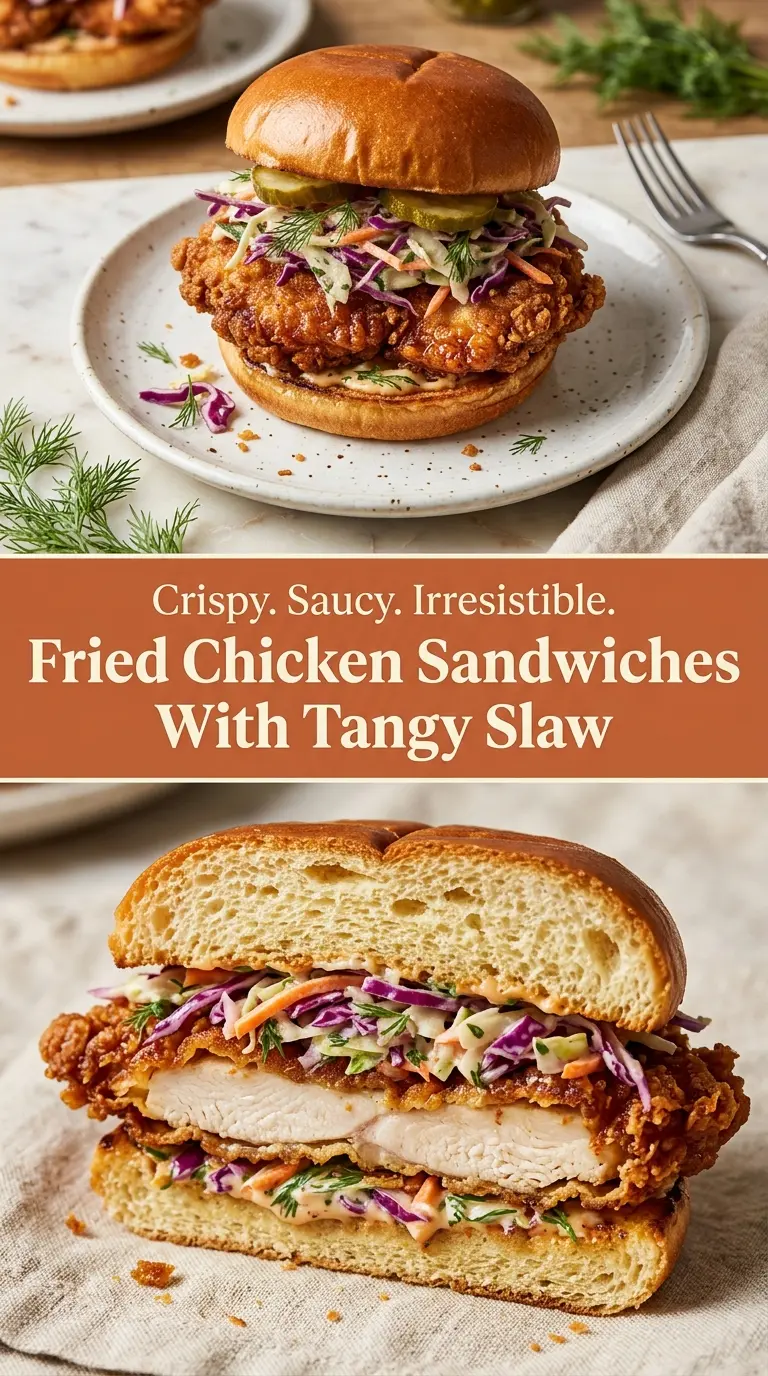
Crispy fried chicken, a toasted brioche bun, and a cold tangy slaw are the kind of combination that disappears fast once it hits the table. The chicken stays shatteringly crisp on the outside while the inside stays juicy, and the slaw brings just enough vinegar sharpness to cut through the richness without turning the sandwich soggy. It’s the balance that makes this one feel special, not heavy.
The coating gets its crunch from a smart mix of flour and cornstarch, which fries up lighter and craggier than flour alone. Buttermilk gives the seasoning something to cling to, and the hot sauce in the soak doesn’t make the chicken spicy so much as it wakes up the whole sandwich. The slaw is dressed separately before assembly, so it keeps that creamy, punchy bite instead of watering down the bun.
Below, I’ll walk through the little things that matter here: how to keep the breading attached, how to tell when the oil is at the right temperature, and how to keep the slaw crisp until the moment you stack everything together.
Bake, Serve, Wear the Vibe 👕
Editor-picked tees our Oven To Fork readers love.



We may earn from qualifying purchases at no extra cost to you.
The chicken came out super crisp and stayed crunchy even after I added the slaw. I also liked that the buns held up, and the tangy cabbage mix balanced the fried chicken perfectly.
Save these crispy fried chicken sandwiches with tangy slaw for the next time you want a crunchy, juicy handheld dinner.
The Coating Needs Cornstarch More Than It Needs More Flour
A lot of fried chicken sandwich recipes load up on flour and wonder why the crust turns dense. Cornstarch changes the texture. It interrupts the gluten structure and gives you that thin, crisp shell with little crunchy ridges instead of a heavy breading that feels bready after a few bites.
The other trap is oil temperature. If it drops too low, the coating drinks up oil and softens before it can set. If it runs too hot, the crust browns before the chicken cooks through. For thighs, 350°F is the sweet spot: hot enough to crisp, gentle enough to cook the meat all the way through without scorching the outside.
- Boneless skinless chicken thighs — Thighs stay juicier than breasts and hold up better to frying. If you use chicken breast, pound it to even thickness so it cooks before the crust over-browns.
- Buttermilk — This tenderizes the chicken and helps the flour mixture cling. If you don’t have buttermilk, use plain milk mixed with a spoonful of vinegar or lemon juice, but the coating won’t grip quite as well.
- Cornstarch — This is what gives the crust its crisp, delicate snap. Don’t skip it unless you want a heavier, more floury finish.
- Smoked paprika and cayenne — These season the crust all the way through, so the chicken tastes good even before you add slaw and pickles. The cayenne stays background heat unless you push it higher.
- Brioche buns — Soft, slightly rich buns work best here because they cushion the crunch. Toast them in butter or the bottom will turn soggy fast.
Building the Sandwich in the Right Order
Soaking the chicken
Submerge the thighs in buttermilk and hot sauce for at least an hour, or leave them overnight if you want the most tender texture. The buttermilk should coat every side, not sit in a shallow puddle. If you rush this step, the chicken will still fry well, but the interior won’t be as juicy or seasoned.
Mixing the Dry Coating
Whisk the flour, cornstarch, and spices together until the color looks even from top to bottom. You want every spoonful of dredge to taste the same, because any pocket of plain flour turns into a bland patch on the crust. A wide bowl helps here since you can press the chicken into the mix without knocking the coating off as you turn it.
Frying to a Deep Golden Finish
Use enough oil for the thighs to fry with at least some space around them, then keep the heat steady at 350°F. The chicken should sound lively when it hits the oil, not violently sputter from a too-hot pan. Fry until the crust is deep golden and the internal temperature reaches 165°F; if the outside is browning too quickly, lower the heat a touch and give the chicken time to catch up in the center.
Making the Slaw and Stacking Fast
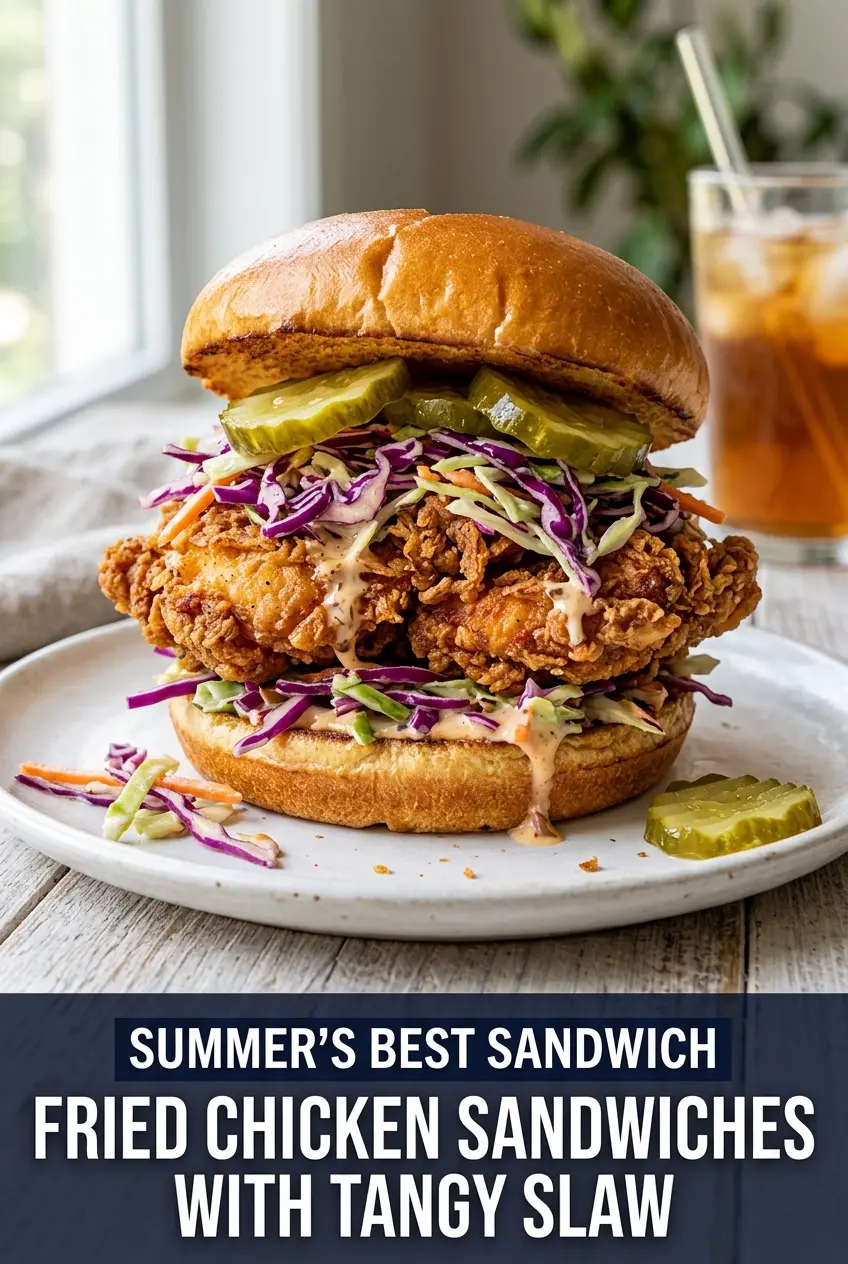
Stir the mayo, vinegar, Dijon, honey, and celery salt into the cabbage and carrots, then let it sit just long enough for the flavors to marry. You want the slaw creamy but still crisp, not wilted and watery. Toast the buns in butter, then assemble immediately: bottom bun, chicken, a generous heap of slaw, pickles, and the top bun. Waiting too long to build the sandwich is how you lose that contrast between hot chicken and cold slaw.
Three Ways to Make This Sandwich Work for Different Nights
Gluten-Free Fried Chicken Sandwich
Swap the all-purpose flour for a good 1:1 gluten-free baking blend and keep the cornstarch. The crust still fries up crisp, though it can be a little more delicate, so let the chicken rest on a wire rack instead of paper towels.
Dairy-Free Version
Use unsweetened plain dairy-free yogurt thinned with a splash of water and a little vinegar in place of the buttermilk, and swap the mayonnaise for a dairy-free mayo. The chicken still gets a good soak, and the slaw keeps its creamy tang without any dairy at all.
Make It a Little Spicier
Increase the cayenne in the dredge and add a few dashes of hot sauce to the slaw. That gives you heat in both the crust and the creamy topping, which keeps the sandwich from tasting one-note.
Storage and Reheating
- Refrigerator: Store the fried chicken and slaw separately for up to 3 days. The crust will soften in the fridge, but a quick reheat can bring some of it back.
- Freezer: The fried chicken freezes well. Cool completely, wrap tightly, and freeze for up to 2 months. Don’t freeze the slaw; it turns watery and loses its crunch.
- Reheating: Reheat the chicken on a wire rack in a 400°F oven or air fryer until hot and crisp again. Skip the microwave if you want the coating to stay crunchy, because it steams the crust and makes it limp.
Answers to the Questions Worth Asking
Summertime Fried Chicken Sandwiches With Tangy Slaw
Ingredients
Equipment
Method
- Combine buttermilk and hot sauce in a bowl. Add chicken thighs, submerge fully, cover, and refrigerate for at least 1 hour (or overnight).
- While the chicken chills, whisk together flour, cornstarch, garlic powder, onion powder, smoked paprika, cayenne, salt, and black pepper in a large bowl.
- In a separate bowl, whisk mayonnaise, apple cider vinegar, Dijon mustard, honey, and celery salt. Toss with shredded green cabbage, shredded purple cabbage, and shredded carrots, then season with salt and pepper to taste; refrigerate until ready to use.
- Heat 2 inches of vegetable oil in a deep skillet or Dutch oven to 350°F. Keep the oil at temperature for the next steps by adjusting burner heat as needed.
- Remove chicken from buttermilk, letting excess drip off. Dredge each piece in the flour mixture, pressing firmly to coat all sides.
- Fry chicken for 5–6 minutes per side until deep golden brown and internal temperature reaches 165°F. Transfer to a wire rack to drain and stay crisp.
- Butter and toast brioche burger buns in a skillet over medium heat until golden, about 1–2 minutes. Keep warm while you finish the chicken.
- Assemble sandwiches with bun bottom, fried chicken, a generous heap of tangy slaw, dill pickles, and bun top. Serve immediately while the chicken is hot and crisp.