Creamy Marry Me Chicken Pasta lands on the table with that rich, glossy sauce that clings to every piece of pasta instead of pooling at the bottom of the bowl. The chicken stays tender, the sun-dried tomatoes bring a little sweetness and tang, and the Parmesan ties everything together with a salty finish that tastes like it took a lot more effort than it did.
What makes this version work is the order of operations. The chicken gets a good sear first, then the same skillet picks up the garlic, tomatoes, broth, and cream so none of that browned flavor goes to waste. Parmesan goes in off the heat of a hard boil, which keeps the sauce smooth instead of grainy, and the spinach folds in at the end so it stays bright instead of disappearing into the sauce.
Below, you’ll find the small details that keep the sauce creamy, the best way to cut the chicken so it cooks evenly, and a few smart swaps if you need to change the pasta or make it a little lighter.
Bake, Serve, Wear the Vibe 👕
Editor-picked tees our Oven To Fork readers love.



We may earn from qualifying purchases at no extra cost to you.
The sauce came together smooth and glossy, and the chicken stayed juicy even after simmering in it. My husband kept going back for “just one more bite” until the skillet was empty.
Save this creamy Marry Me Chicken Pasta for the nights when you want a silky garlic-Parmesan sauce with almost no cleanup.
The Trick Is Not Letting the Parmesan See a Rolling Boil
This dish lives or dies by how you handle the cheese. Parmesan wants gentle heat and a little patience. If the sauce is bubbling hard when it goes in, the fat can separate and you’ll get that sandy, broken texture nobody wants in a cream sauce.
The fix is simple: build the sauce at a low simmer, then reduce the heat before stirring in the cheese. The sauce should look slightly loose when the Parmesan hits the pan, because it thickens as it sits and again once the pasta goes in. If it looks perfect in the skillet before the pasta is added, it usually ends up too thick by the time it reaches the plate.
What Each Ingredient Is Actually Doing in This Dish
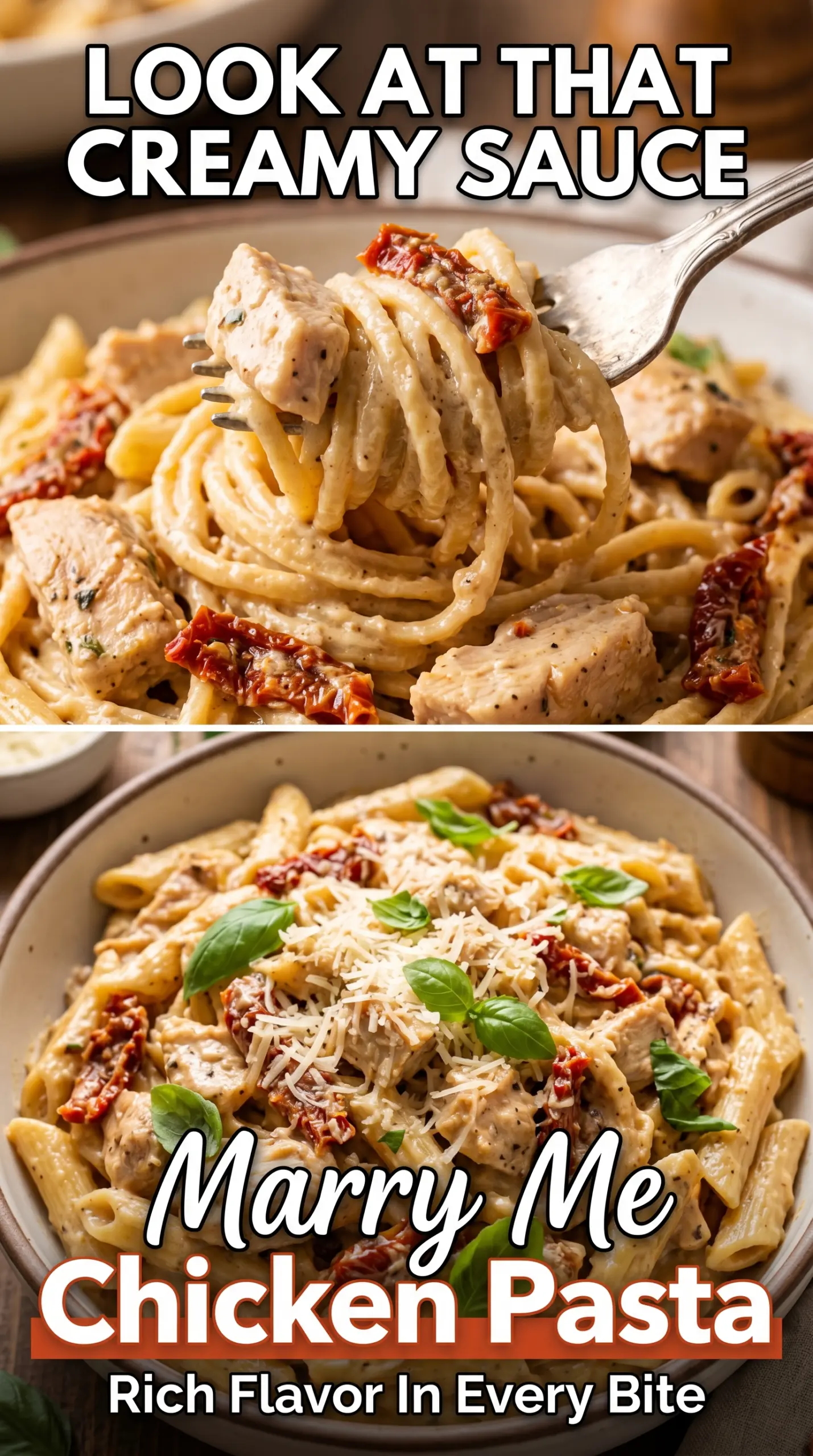
- Chicken breasts — Slicing them into thinner cutlets helps them cook quickly and evenly, which keeps the outside from drying out before the center is done. Chicken thighs work too if you want a richer result and don’t mind a slightly longer cook time.
- Sun-dried tomatoes — These bring concentrated tomato flavor and a little tang that cuts through the cream. If yours are packed in oil, drain them well so the sauce doesn’t turn greasy.
- Heavy cream — This gives the sauce its body and keeps it from splitting when you add the cheese. Half-and-half can work in a pinch, but the sauce will be thinner and less stable.
- Freshly grated Parmesan — Freshly grated cheese melts into the sauce much more smoothly than the shelf-stable shredded kind. Pre-grated Parmesan often has anti-caking agents that can leave the sauce grainy.
- Spinach — It adds color and a little freshness without changing the character of the dish. Baby spinach wilts fastest; larger leaves should be roughly chopped so they disappear into the pasta evenly.
How to Keep the Sauce Creamy From the First Stir to the Last Bite
Seasoning and Searing the Chicken
Pat the chicken dry before seasoning it with paprika, Italian seasoning, salt, and pepper. Moist chicken steams instead of browns, and you want a deep golden crust because that’s where the flavor starts. Cook it in a hot skillet until it releases easily from the pan and the center reaches 165°F, then set it aside while it finishes carrying over slightly.
Building the Sauce in the Same Pan
Garlic and sun-dried tomatoes go into the drippings left behind after the chicken comes out. Stir them for just about a minute, until the garlic smells fragrant but not sharp, then add the broth and cream. Scrape up the browned bits from the bottom of the pan; that’s where the best savory flavor lives, and it keeps the sauce from tasting flat.
Finishing With Cheese, Spinach, and Pasta
Let the sauce simmer gently until it starts to thicken, then lower the heat before adding Parmesan. Stir until it melts into a smooth sauce, then add the spinach and pasta. If the pan looks too tight, loosen it with a splash of reserved pasta water or extra broth. The sauce should coat the noodles in a silky layer, not turn into a paste.
How to Adapt This for Different Needs Without Losing the Good Part
Gluten-Free Pasta That Still Holds Up
Use a sturdy gluten-free penne or rotini and cook it just shy of done so it doesn’t fall apart when tossed with the sauce. The texture will be a little softer than regular pasta, but the sauce still clings well if you serve it right away.
A Lighter Version With Half-and-Half
Swap the heavy cream for half-and-half if you want a lighter sauce, but keep the heat low and expect a thinner finish. Add the Parmesan gradually and pull the pan off the burner if the sauce starts to bubble hard, since reduced-fat dairy breaks more easily.
Chicken Thighs for a Richer, More Forgiving Texture
Boneless skinless thighs bring extra flavor and stay juicier if they simmer a little longer in the sauce. They brown beautifully, but they do need an extra minute or two in the skillet before you pull them out, so use the same visual cue: deep color outside, no pink in the center.
Storage and Reheating
- Refrigerator: Store in an airtight container for up to 3 days. The sauce thickens as it chills, and the pasta absorbs some of the cream.
- Freezer: It freezes, but the sauce may separate a little when thawed. For the best texture, freeze the chicken and sauce without the pasta, then cook fresh pasta when you’re ready to serve.
- Reheating: Warm it gently on the stove over low heat with a splash of broth or cream, stirring often. High heat is what turns the sauce oily and causes the cheese to clump.
Answers to the Questions Worth Asking
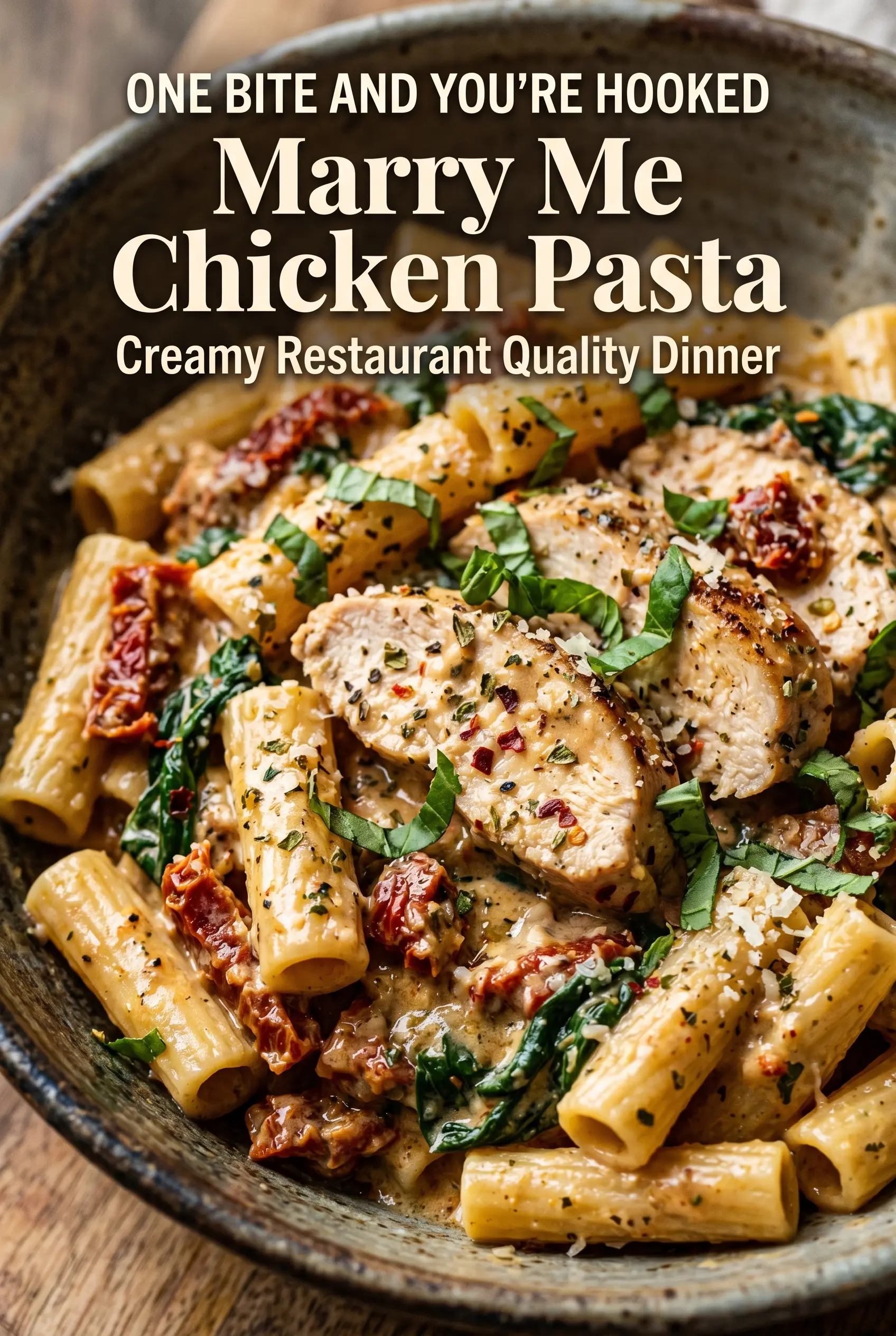
Creamy Marry Me Chicken Pasta
Ingredients
Equipment
Method
- Bring a large pot of salted water to a boil and cook the penne according to package directions until al dente.
- Drain the pasta and set it aside so it can be tossed into the sauce later.
- Season the sliced chicken breasts evenly with paprika, Italian seasoning, salt, and black pepper.
- Heat the olive oil in a large skillet over medium-high heat until shimmering.
- Cook the chicken until golden and fully cooked, about 5–6 minutes per side, then remove and set aside.
- Add the garlic and sun-dried tomatoes to the skillet and sauté for 1 minute until fragrant.
- Pour in the chicken broth and heavy cream, then simmer for 3–4 minutes to thicken slightly.
- Stir in the Parmesan cheese until melted and smooth.
- Add the spinach and cook until wilted.
- Return the cooked chicken to the skillet.
- Add the cooked pasta and toss to coat the pasta in the creamy sauce.
- Simmer for 2 minutes to heat through and help the sauce cling to the penne.
- Garnish with fresh basil and extra Parmesan before serving.