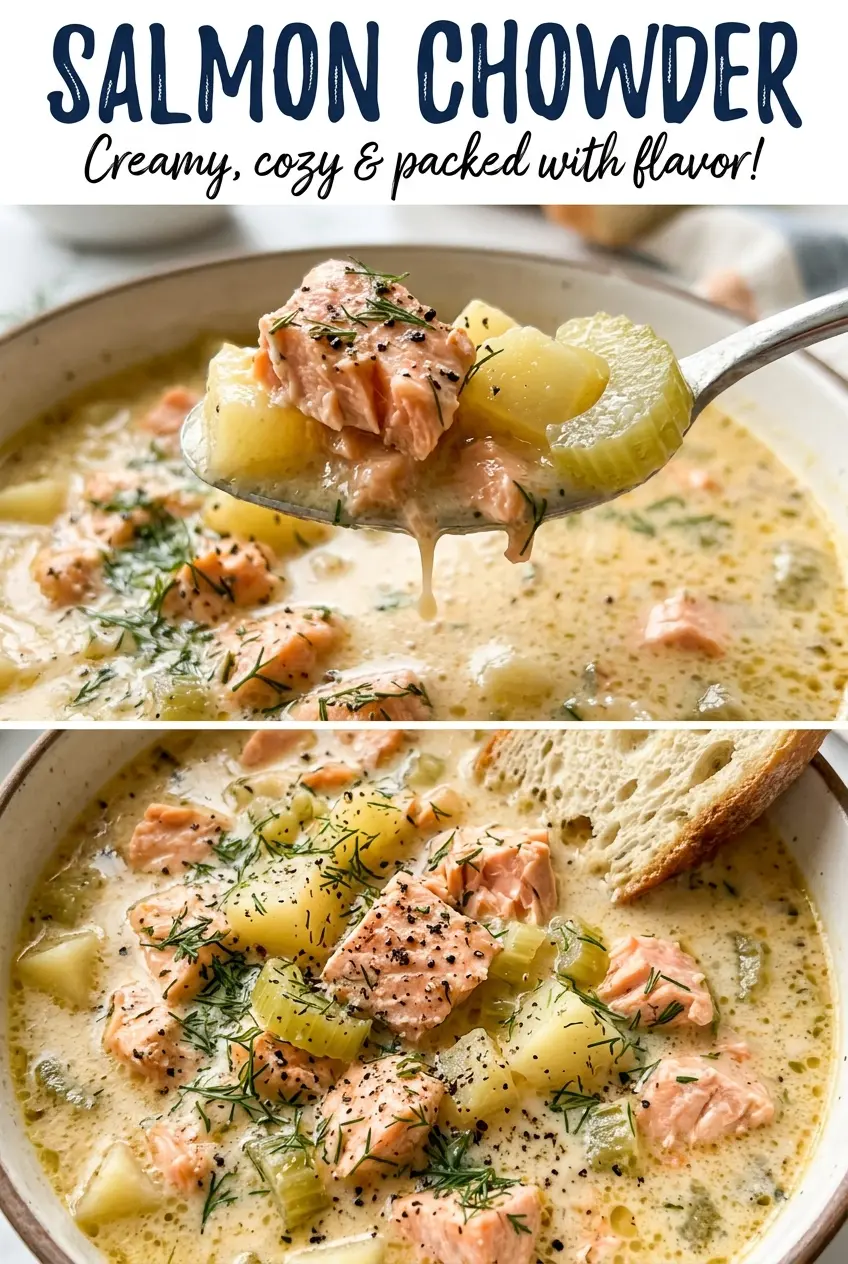
Bacon starts snapping in the Dutch oven, then leaves behind the smoky drippings that give every spoonful a savory backbone. I build this salmon chowder in that same pot, so the onion and celery pick up all of that flavor before the potatoes go in. The finished bowl is creamy without feeling heavy, with tender chunks of salmon and potatoes rather than a thick, pasty base.
Yukon Gold potatoes are a good fit here because they turn tender but keep their shape through simmering and serving. I cut them into even cubes so they cook at the same pace, then wait until a fork slides through before adding the salmon and half-and-half. The fish needs just a gentle simmer to turn opaque and stay moist. A little parsley and the reserved crisp bacon bring the chowder together in the bowl.
Kitchen Note
Bake, Serve, Wear the Vibe 👕
Editor-picked tees our Oven To Fork readers love.



We may earn from qualifying purchases at no extra cost to you.
Cut the potatoes into even half-inch cubes. Pieces that are close in size become tender together, so you won’t be waiting on a few firm chunks while the rest soften.
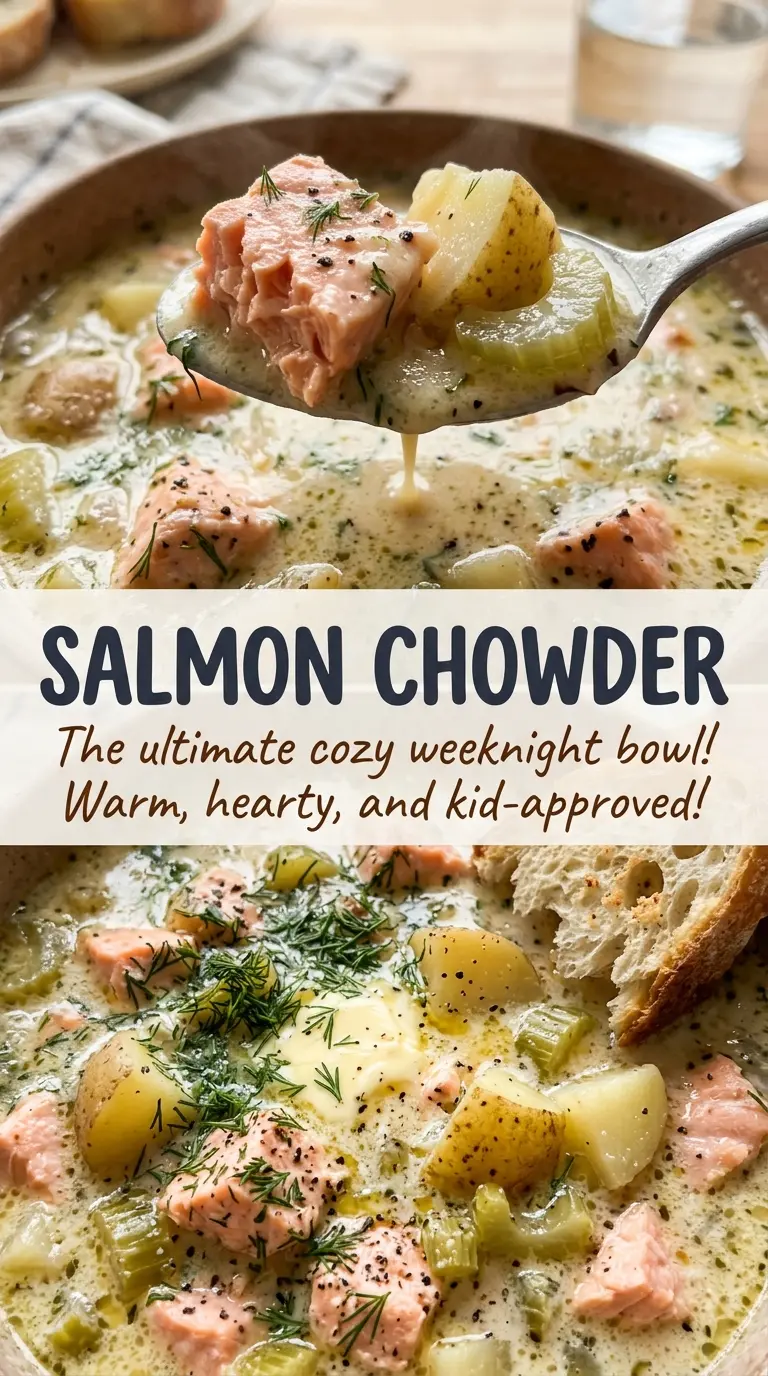
Save this salmon chowder for a cozy supper, with tender salmon, creamy potatoes, and crisp bacon in every bowl.
Why the Flour Has to Cook Before the Broth Goes In
The flour gets stirred into the softened onion and celery before any broth is added. That brief minute of cooking disperses it through the vegetables and bacon fat, so it can thicken the liquid evenly instead of forming little dry clumps. Once the broth goes in, add it gradually and whisk as you pour; the mixture should look smooth before the potatoes are added.
A rushed pour is the most common way to end up with flour lumps. If you see them, keep whisking while the liquid is still coming together rather than waiting until the chowder is full of potatoes. The flour gives this broth enough body to cling to the salmon and vegetables, while the half-and-half added later brings the creamy finish. It isn’t meant to become a stiff, spoon-standing-thick soup. A smooth, lightly thickened base lets the pieces of salmon stay distinct and makes the chowder feel satisfying without masking them.
The Ingredients That Give Salmon Chowder Its Creamy, Hearty Texture
- Bacon — It contributes both the crisp topping and the drippings that flavor the vegetables. Use bacon you enjoy eating on its own; a basic grocery-store pack works well. For a no-pork bowl, leave it out and soften the vegetables in the listed butter, knowing the chowder will lose its smoky edge and crunchy finish.
- Yukon Gold potatoes — Their creamy centers soften while the pieces remain intact, which gives each serving a hearty texture without turning the pot into mashed potatoes. Red potatoes are a useful one-for-one swap; cut them to the same size and expect a slightly firmer bite.
- Skinless salmon — A fresh, mild-smelling fillet is worth choosing because its clean flavor is the centerpiece of the chowder. Remove any pin bones before cutting the fish into pieces. Skinless trout can stand in for salmon in the same cut size, with a similar tender texture and a slightly different, richer fish flavor.
- Half-and-half — It adds creaminess without making the broth as rich as heavy cream would. Whole milk can replace it in the same volume for a lighter, thinner chowder; heavy cream makes the bowl richer. For a dairy-free version, use unsweetened oat cooking cream as described below.
- Chicken broth — Low-sodium broth leaves room for the bacon and measured salt to season the pot without making it overly salty. A low-cost carton is fine here, since the vegetables and bacon add plenty of character; vegetable broth works as a substitute but gives the chowder a less savory, less chicken-forward base.
From Crisp Bacon to Tender Salmon: The Order Matters
Render the Bacon and Save the Drippings
Set a 5-quart Dutch oven over medium heat and cook the chopped bacon for 6 to 8 minutes, stirring occasionally, until crisp. Transfer it to a paper towel-lined plate so it stays ready for the topping. Leave about 2 tablespoons of drippings in the pot; those will carry the bacon flavor into the vegetables. If the bacon isn’t crisp yet, give it a little more time rather than moving on while it is still soft.
Soften the Vegetables and Cook the Flour
Add the butter, diced onion, and celery to the drippings over medium heat. Cook for 5 to 7 minutes, stirring occasionally, until the vegetables have softened but haven’t browned heavily. Stir in the flour and cook for 1 minute, letting it coat the vegetables. Keep stirring so the flour doesn’t scorch on the bottom of the Dutch oven.
Whisk the Broth Until Smooth
Pour in the chicken broth gradually while whisking, and pause if needed to smooth out any floury patches before adding more. Add the potatoes, bay leaf, salt, and black pepper once the broth is smooth. Bring the pot to a boil over medium-high heat. Keep an eye on it as it heats so the bottom doesn’t catch.
Simmer Until the Potatoes Give Easily
Lower the heat to maintain a gentle simmer, then cover the pot. Cook for 10 to 15 minutes, until a fork pierces the potatoes easily. A steady, quiet simmer is what you want; a vigorous boil can knock the potato pieces around. Check a few pieces, since one tender cube doesn’t tell you whether the whole pot is ready.
Cook the Salmon Gently and Finish the Bowls
Stir in the salmon and half-and-half, then simmer gently, uncovered, for 5 to 8 minutes. The thickest salmon pieces should be opaque and reach 145°F; don’t let the chowder boil. Remove the bay leaf and stir in the parsley. Ladle the chowder into bowls and scatter the reserved bacon over the top.
Simple Swaps for a Different Take on Salmon Chowder
Make the Chowder Gluten-Free
Replace the all-purpose flour with the same amount of a gluten-free measure-for-measure flour blend. Cook it with the softened vegetables for the same minute before gradually whisking in the broth. The texture stays close to the original when the blend is made for one-to-one baking and thickening swaps.
Make It Dairy-Free
Use unsweetened oat cooking cream in place of the half-and-half, keeping the same volume and adding it with the salmon. Choose an unflavored product so it doesn’t bring sweetness to the broth. The chowder will be creamy, though it won’t have quite the same dairy richness.
Storage and Reheating
- Refrigerator: Store the chowder in an airtight container for 3 to 4 days. It will thicken as it chills.
- Freezer: I don’t recommend freezing the finished chowder; the cream can separate and the potatoes can turn grainy after thawing.
- Reheating: Warm it slowly in a saucepan over low heat, stirring often. Avoid high heat, which can make the creamy broth separate.
Questions That Come Up When Making Salmon Chowder
Salmon Chowder
Ingredients
Equipment
Method
- In a 5-quart Dutch oven over medium heat, cook the bacon for 6 to 8 minutes, stirring occasionally, until crisp.
- Transfer the bacon to a paper towel-lined plate and leave about 2 tablespoons of drippings in the pot.
- Add the butter, onion, and celery to the pot and cook over medium heat for 5 to 7 minutes, stirring occasionally, until softened.
- Stir in the flour and cook for 1 minute.
- Gradually whisk in the broth until smooth.
- Add the potatoes, bay leaf, salt, and pepper, then bring to a boil over medium-high heat.
- Reduce the heat to maintain a gentle simmer, cover, and cook for 10 to 15 minutes, until the potatoes are tender when pierced with a fork.
- Stir in the salmon and half-and-half, then simmer gently, uncovered, for 5 to 8 minutes, until the salmon is opaque and reaches 145°F in the thickest pieces; do not let the chowder boil.
- Remove the bay leaf and stir in the parsley.
- Serve the chowder topped with the reserved bacon.