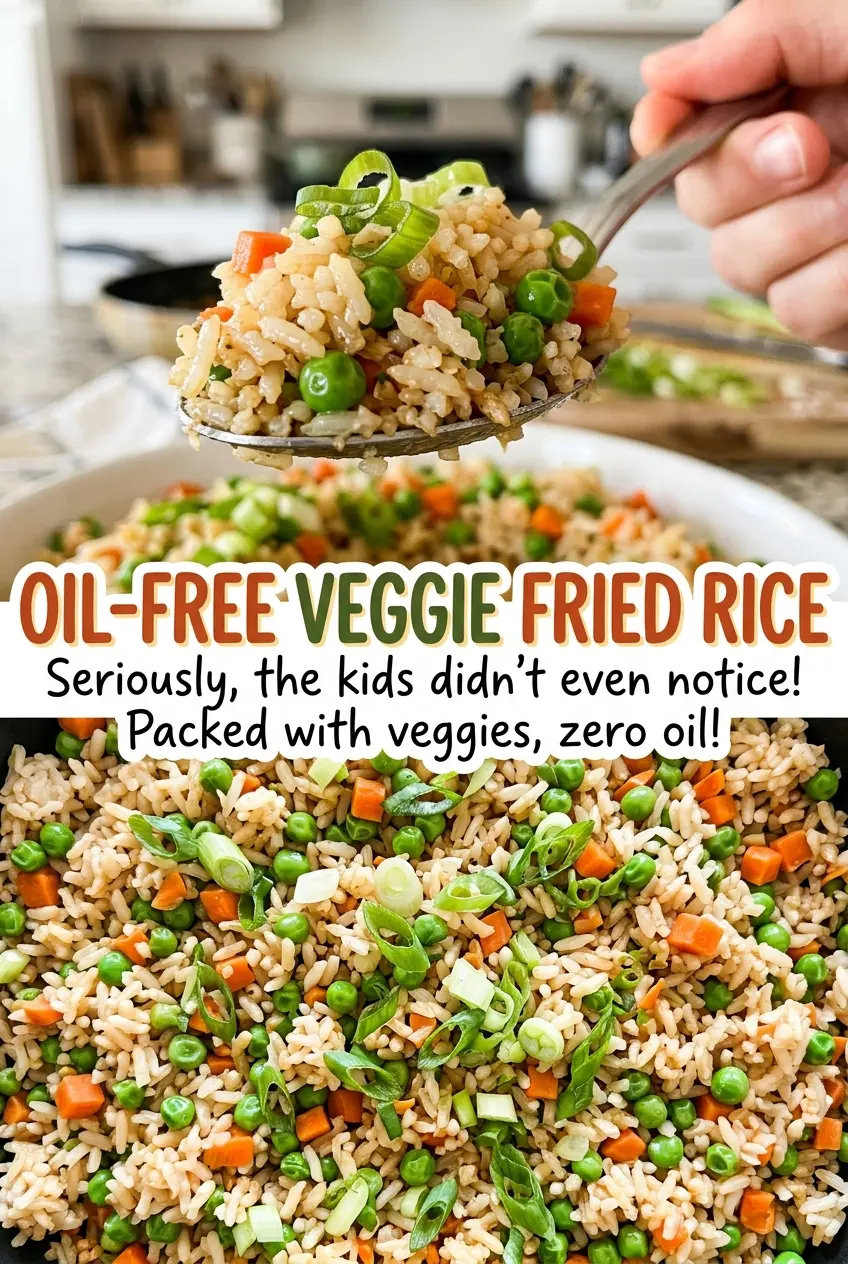
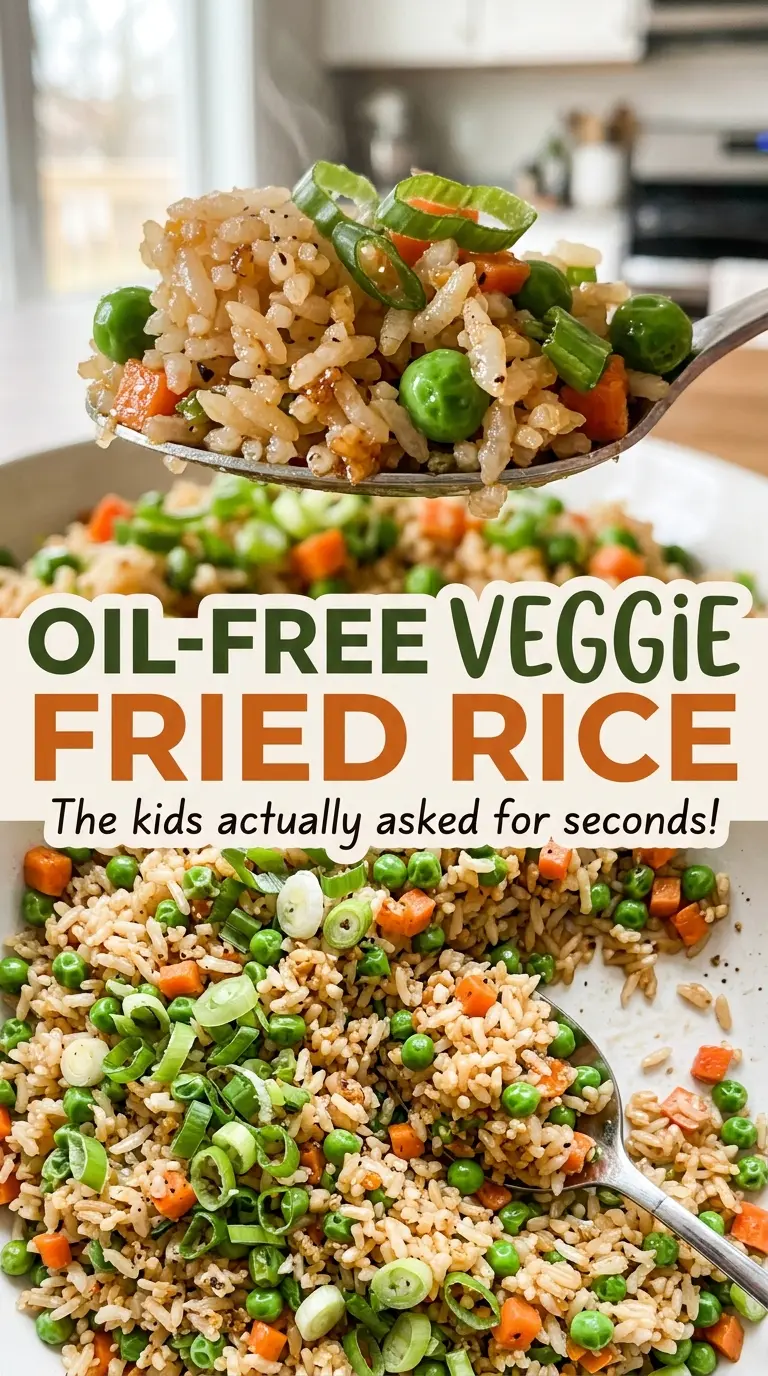
The carrots soften differently when there’s no oil in the skillet: they need a little water and a lid before they’re ready to meet the rice. I use that covered steam to cook the vegetables, then let the rice spend a few minutes over higher heat so some grains pick up a light toast. That balance gives this oil-free veggie fried rice separate grains and tender-crisp carrots instead of a damp, heavy skillet.
Cold cooked long-grain rice makes the biggest difference in the finished texture. It’s firm enough to stir without breaking apart, and it doesn’t bring extra heat and moisture into the pan. I also cook the eggs first and set them aside, so they stay in soft pieces rather than disappearing into the rice. The finished skillet has bright peas, warm ginger and garlic, and just enough soy sauce to bring everything together.
Kitchen Note
Bake, Serve, Wear the Vibe 👕
Editor-picked tees our Oven To Fork readers love.



We may earn from qualifying purchases at no extra cost to you.
Break up any packed rice clumps before they go into the skillet. A large cold clump takes longer to warm through than the loose grains around it, so a quick check now makes the final stir much easier.
Save this oil-free veggie fried rice for a weeknight when you want crisp-tender vegetables and a quick way to use cold cooked rice.
Why the Quarter Cup of Water Is Split in Two
Without oil, the water does two jobs: it helps the carrots soften under the lid, then gives the peas a brief covered cook with the garlic and ginger. Using it in two additions keeps the first vegetables from sitting in more liquid than they need. The carrots get their own short steam, and the peas join later so they warm through without being cooked alongside the carrots for the full time.
Once the rice goes in, the method changes. The skillet is uncovered and the heat goes up to medium-high, giving moisture a chance to evaporate while you stir. That’s when the grains can begin to brown lightly. Don’t expect a deep, crisp sear like oil-fried rice; the goal here is hot, distinct grains with a little color, not a crunchy crust. If the rice still looks wet, keep stirring over the stated cooking time and let the steam escape rather than adding more water.
What Cold Rice, Fresh Ginger, and Low-Sodium Soy Sauce Bring
- Cold cooked long-grain rice — The firm, separate grains stand up to frequent stirring better than warm, freshly cooked rice. Break up the clumps before cooking; long-grain rice is the best fit here because it’s less likely to turn sticky as it heats.
- Fresh ginger and garlic — Minced garlic and grated fresh ginger release their aroma quickly in the hot skillet, so add them for the brief stir before the peas. Fresh ginger has a brighter, sharper character than dried ginger, and freshly minced garlic gives this short-cooked dish a more direct savory flavor.
- Frozen peas and diced carrots — Frozen peas are convenient and go straight into the skillet; there’s no need to thaw them first. Dice the carrots evenly so they become tender-crisp in the covered cooking time rather than leaving a mix of firm and soft pieces.
- Low-sodium soy sauce — It seasons the rice without making the finished skillet too salty. Regular soy sauce works as a swap, but it tastes saltier, so keep the amount the same and don’t add extra seasoning before tasting.
- Eggs and scallions — Beaten eggs make soft, distinct pieces when cooked separately and folded back in at the end. Thinly sliced scallions add a fresh, mild onion note; use the whole scallions rather than leaving them in the skillet for the full cooking time.
The Skillet Sequence That Keeps the Rice From Getting Soggy
Scramble the Eggs Until Just Set
Heat a 12-inch nonstick skillet over medium heat, add the beaten eggs, and scramble for 1 to 2 minutes. They’re ready when there’s no liquid egg left and the curds hold their shape. Transfer them to a plate instead of leaving them in the pan while the vegetables cook. The eggs will warm through during the final minute, so they don’t need to be browned now.
Steam the Carrots Until Tender-Crisp
Add the carrots and 2 tablespoons of water to the skillet, cover, and cook over medium heat for 3 to 4 minutes. Lift the lid and check a piece: it should give when you bite it but still have a little firmness. If the carrots are already soft, don’t leave them covered longer while you prepare the next ingredients. The short cook keeps their texture noticeable in the finished rice.
Give the Aromatics a Brief Stir
Add the garlic and ginger and stir for 30 seconds, just until fragrant. They cook quickly, so keep them moving rather than letting them sit on the hot pan. Add the peas and the remaining 2 tablespoons of water, cover, and cook for 1 to 2 minutes. The peas should be heated through, not dull or collapsed.
Let the Rice Heat and Finish the Dish
Add the cold rice and soy sauce, breaking up any remaining clumps as you stir. Cook over medium-high heat for 4 to 6 minutes, stirring frequently, until the rice is steaming hot and some grains begin to brown lightly. Stir in the cooked eggs, scallions, and black pepper, then cook for 1 minute until heated through. Frequent stirring keeps the rice moving across the skillet so it warms evenly without sticking in one spot.
Two Easy Changes for Different Needs
Make It Gluten-Free With Tamari
Replace the low-sodium soy sauce with the same amount of gluten-free tamari. It keeps the savory, salty seasoning in place, though tamari can taste a little richer, so the finished rice may come across as more deeply seasoned.
Leave Out the Eggs
For an egg-free skillet, skip the egg step and begin with the carrots and water. The rice will have less richness and fewer soft bites, but the peas, carrots, garlic, ginger, and scallions still give it plenty of texture and savory flavor.
Storage and Reheating
- Refrigerator: Refrigerate promptly in an airtight container and use within 3 to 4 days. The rice softens a little as it sits.
- Freezer: Freeze in airtight, meal-size portions for up to 2 months for the best texture. Thaw overnight in the refrigerator.
- Reheating: Warm it in a covered skillet with a small splash of water, stirring until steaming hot and 165°F. Avoid prolonged heating, which dries out the rice.
Questions That Come Up When Making Oil-Free Fried Rice
Oil Free Veggie Fried Rice
Ingredients
Equipment
Method
- Heat a 12-inch nonstick skillet over medium heat.
- Add the eggs and scramble for 1 to 2 minutes, until set.
- Transfer the eggs to a plate.
- Add the carrots and 2 tablespoons of the water to the skillet.
- Cover and cook over medium heat for 3 to 4 minutes, until the carrots are tender-crisp.
- Add the garlic and ginger and stir for 30 seconds.
- Add the peas and remaining 2 tablespoons water.
- Cover and cook for 1 to 2 minutes.
- Add the rice and soy sauce, breaking up any clumps and stirring to combine.
- Cook over medium-high heat for 4 to 6 minutes, stirring frequently, until steaming hot and some grains begin to brown lightly.
- Stir in the cooked eggs, scallions, and black pepper.
- Cook for 1 minute, until heated through.