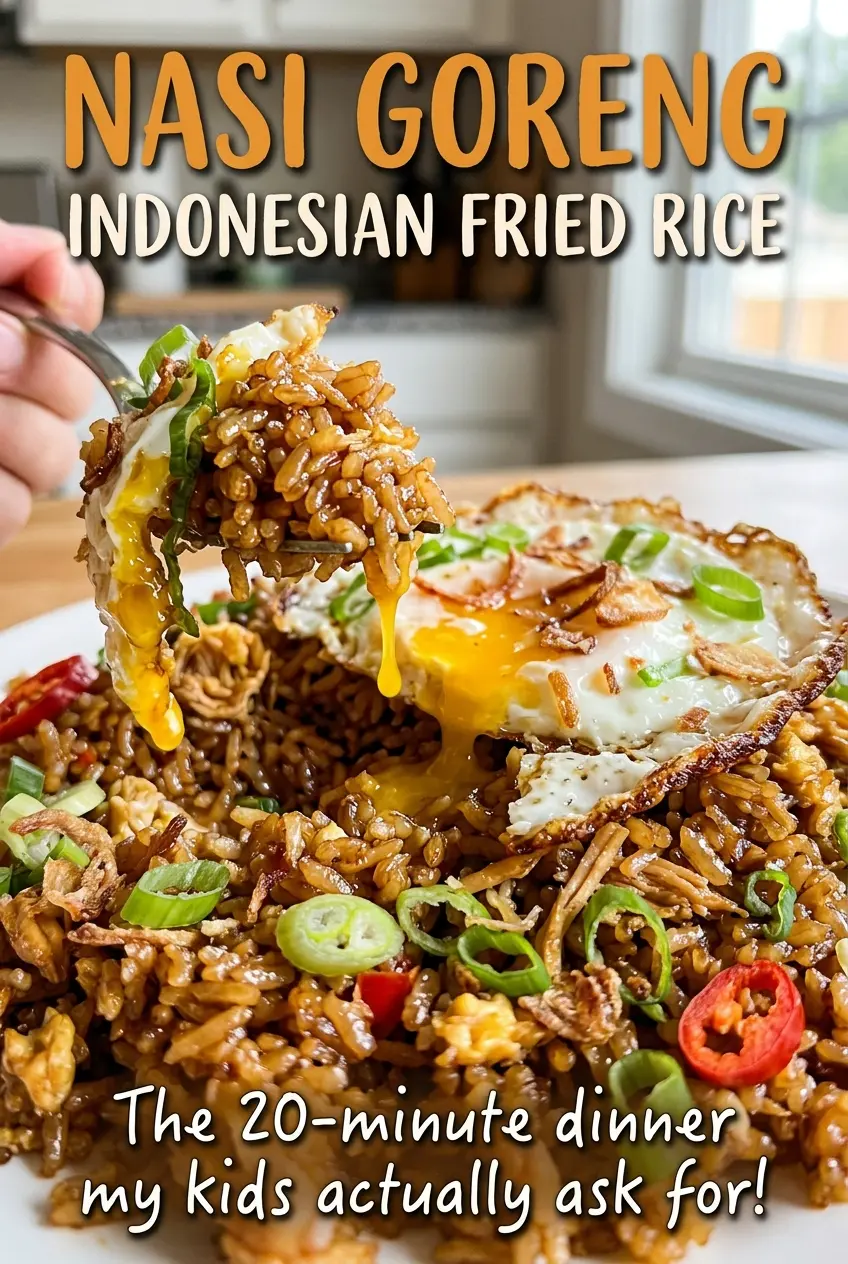
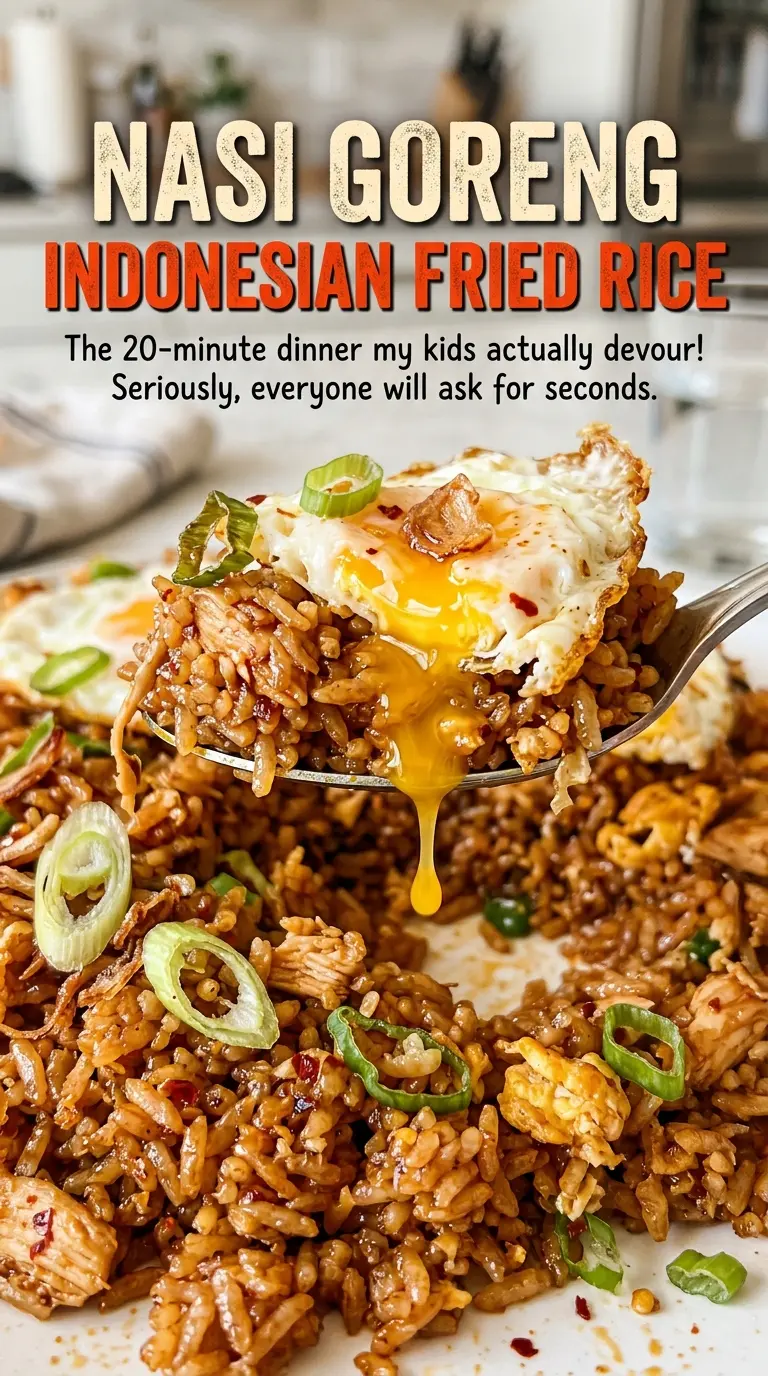
When the shallot, garlic, and Fresno chile hit the skillet, the smell turns sharp and savory in seconds. That quick burst sets up the whole pan of nasi goreng Indonesian fried rice, while browned chicken and a sweet-salty sauce make it satisfying enough to serve as dinner.
I like how the finished rice balances contrasting flavors: kecap manis brings sweetness, soy sauce adds savory depth, and sambal oelek gives the sauce a lively kick. Scallions go in at the end, so their fresh, mild onion flavor doesn’t disappear into the pan. It’s a full, colorful meal from one skillet, with tender chicken and bits of egg tucked through glossy grains of rice.
Kitchen Note
Bake, Serve, Wear the Vibe 👕
Editor-picked tees our Oven To Fork readers love.



We may earn from qualifying purchases at no extra cost to you.
Scramble the eggs only until they’re just set, then fold them through the rice. If you cook them until fully firm in the center of the pan, they’ll turn dry as they get tossed with everything else.
Save this nasi goreng for a skillet dinner with tender chicken, glossy kecap manis rice, and a little chile heat.
Why Nasi Goreng Needs Cold Rice Before It Needs More Heat
Freshly cooked rice still holds plenty of moisture. Put it straight into a hot skillet and the grains are more likely to steam together than fry separately, even if you turn up the burner. Cold cooked rice gives this dish a head start: the grains are firmer and easier to toss apart, so the sauce can coat them instead of pooling around a soft clump.
Use rice that was refrigerated promptly after cooking, and break up any compacted sections as it goes into the pan. A few clumps are normal; crush them gently with the edge of a spatula rather than pressing down hard and mashing the grains. Give the rice a few minutes in the skillet before the sauce goes in. Once it’s hot and separated, the kecap manis and soy sauce can cling to the grains without making the whole pan wet.
Kecap Manis Brings More Than Sweetness to the Pan
- Kecap manis — This thick, sweet Indonesian soy sauce gives the rice its characteristic dark gloss and sweetness. It’s worth buying for this dish; ordinary soy sauce won’t create the same coating. Store-bought kecap manis works well, and there’s no need for an expensive bottle.
- Soy sauce and sambal oelek — Soy sauce keeps the sweet sauce savory, while sambal adds chile heat and a little tang. Tamari can stand in for the soy sauce in the same amount, though you’ll still need kecap manis for the signature sweet coating. Sriracha can replace sambal in the same amount, with a slightly sweeter, garlickier finish.
- Cold cooked rice — The recipe depends on cooked rice that has been chilled, not warm rice from the pot. Use rice that was refrigerated promptly; any compact clumps can be loosened in the skillet. The exact rice variety isn’t specified, so use a type you already enjoy.
- Chicken thighs — Boneless, skinless thighs stay juicy through the hot skillet time and are easy to cut into even pieces. Trim away any large pieces of excess fat, then cut the chicken into 1/2-inch pieces so it cooks evenly. Thighs are usually an affordable choice here.
- Shallots and garlic — These form the fragrant base beneath the sauce. Fresh garlic has a brighter bite than jarred garlic; if that’s what you have, use it in place of the minced cloves. Finely chop the shallots so they soften quickly in the skillet.
- Fresno chile — Removing the seeds keeps the chile’s heat in check while its fresh flavor still comes through. If you can’t find a Fresno, omit it rather than adding a large, unpredictable chile; the sambal still brings some heat.
- Eggs and scallions — Eggs add soft, savory pieces throughout the rice, and the scallions bring a fresh finish. For an egg-free pan, leave out the eggs; the rice will be less rich but the sauce still seasons it well. Slice the scallions shortly before serving for the freshest flavor.
- Neutral oil — Canola or vegetable oil works in place of another neutral oil. Save olive oil for a different dish; its stronger flavor can compete with the kecap manis and chile.
Build the Chicken and Rice in the Same Hot Skillet
Brown the Chicken First
Heat a 12-inch skillet over medium-high heat, then add 1 tablespoon of the neutral oil. Add the chicken in an even layer and cook, stirring occasionally, for 5–7 minutes. Look for browned edges rather than pale, wet-looking pieces. Check the thickest pieces with an instant-read thermometer; they need to reach 165°F before you move on.
Let the Aromatics Turn Fragrant
Add the shallots, garlic, and seeded, finely chopped Fresno chile with 2 teaspoons of oil. Stir for about 1 minute, just until the garlic and chile smell fragrant and the shallots begin to soften. Keep the mixture moving so the garlic doesn’t scorch against the hot pan. If the garlic starts to darken quickly, stir it through the chicken and aromatics rather than leaving it in one spot.
Toss Until the Rice Grains Separate
Add the cold cooked rice and stir-fry for 3–4 minutes. Break up clumps with the spatula and keep tossing so the rice heats evenly rather than sitting in a compact layer. The grains should look separate and feel hot as you move them around. If a stubborn clump remains, press it gently against the pan with the spatula edge.
Scramble the Eggs, Then Coat Everything
Push the rice to the edges of the skillet and add the remaining 1 teaspoon of oil to the center. Crack in the eggs and scramble until just set, then stir them through the rice. Add the kecap manis, soy sauce, and sambal oelek, tossing for 1 minute until the grains are evenly coated. Stir in the sliced scallions and serve the nasi goreng hot.
Two Simple Ways to Adapt This Nasi Goreng
Make It Vegetarian With Extra-Firm Tofu
Replace the chicken with 8 ounces of extra-firm tofu, pressed dry and cut into 1/2-inch cubes. Brown the tofu in the first tablespoon of oil, then continue with the shallots, garlic, and chile. You’ll get a meat-free version with a softer, more delicate bite than the browned chicken.
Turn Down the Chile
For a milder pan, leave out both the seeded Fresno chile and the sambal oelek. The rice will still have the dark, sweet-savory flavor of kecap manis and soy sauce, but without the chile heat. This is a good adjustment when you want the aromatics and sauce to take the lead.
Storage and Reheating
- Refrigerator: Refrigerate leftovers within 2 hours in a shallow, airtight container and eat within 3–4 days. The rice will firm up as it chills.
- Freezer: Freeze in airtight portions for up to 2 months for the best texture. The thawed rice may be a little softer than freshly cooked nasi goreng.
- Reheating: Reheat in a skillet over medium heat, tossing often until steaming hot throughout. Avoid high heat, which can dry the rice before the center warms.
Questions That Come Up When Making Nasi Goreng
Nasi Goreng Indonesian Fried Rice
Ingredients
Equipment
Method
- Heat a 12-inch skillet over medium-high heat.
- Add 1 tablespoon of the oil.
- Add the chicken and cook, stirring occasionally, for 5–7 minutes, until browned and it reaches 165°F in the thickest pieces.
- Add the shallots, garlic, and chile with 2 teaspoons of the oil.
- Cook for about 1 minute, stirring, until fragrant.
- Add the cold cooked rice, refrigerated promptly, and stir-fry for 3–4 minutes, breaking up clumps and tossing until the grains are hot and separated.
- Push the rice to the edges of the skillet.
- Add the remaining 1 teaspoon oil to the center.
- Crack in the eggs and scramble until just set.
- Stir the eggs into the rice.
- Add the kecap manis, soy sauce, and sambal oelek, and toss for 1 minute until evenly coated.
- Stir in the scallions and serve hot.