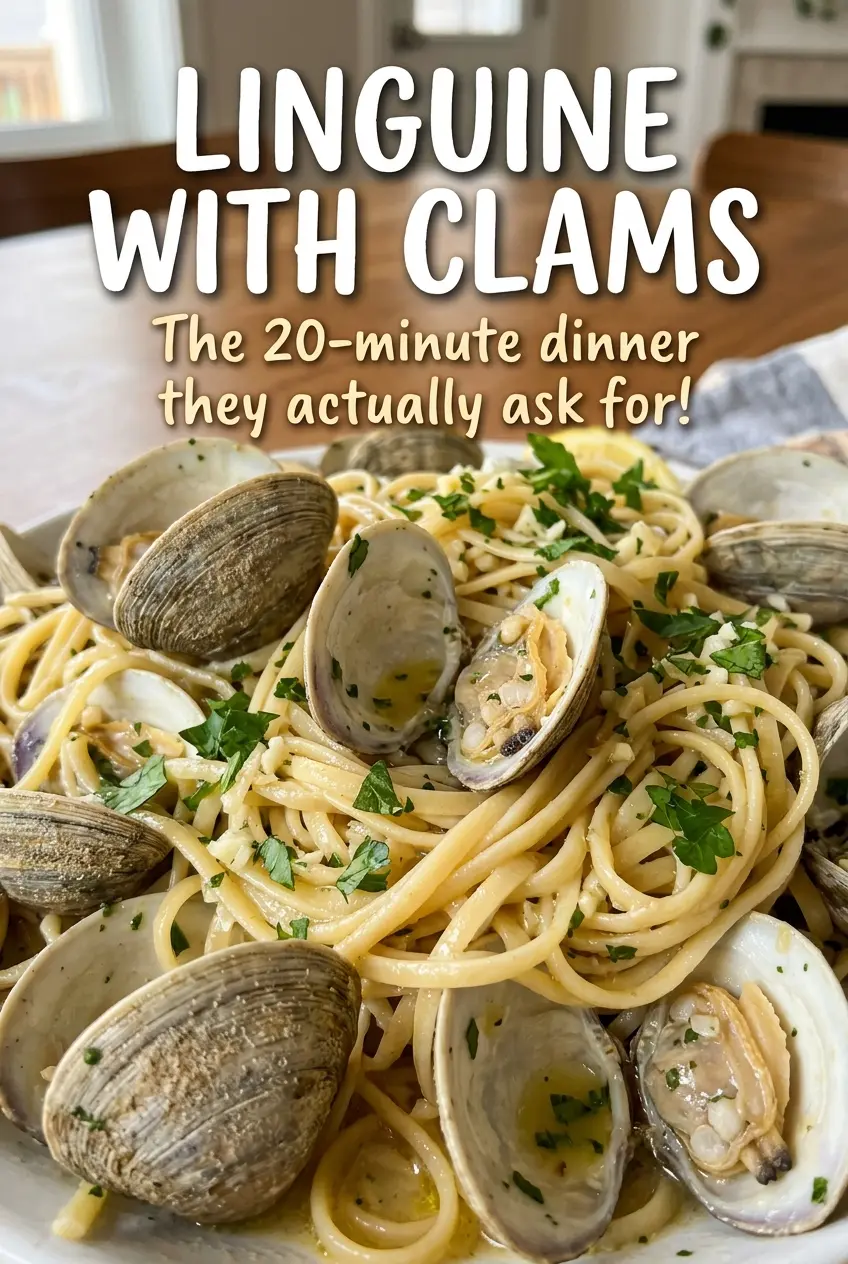
The clams give a soft clatter as they hit the skillet, then the wine starts to steam under the lid. A few minutes later, the shells gape open and leave a salty, fragrant broth behind. That’s the part that makes Linguine with Clams feel like more than pasta tossed with seafood.
I cook the linguine while the clams steam, so everything comes together in one quick finish. The timing takes a little attention, but the visual cues are clear: garlic should smell fragrant, not turn brown, and the clams are ready when their shells open.
What lands in the bowl is bright with lemon and parsley, gently warm from red pepper flakes, and full of that briny clam liquor. It’s a simple dinner, but the sauce tastes like the best part of the pan.
Kitchen Note
Bake, Serve, Wear the Vibe 👕
Editor-picked tees our Oven To Fork readers love.



We may earn from qualifying purchases at no extra cost to you.
Use a 12-inch lidded skillet for the clams. A roomy pan makes it easier to shake the shells as they steam and gives them space to open.
Save this Linguine with Clams for a briny, wine-kissed pasta dinner finished with fresh parsley and lemon.
Why the Linguine Finishes in the Clam Pan, Not in the Pot
Clam broth on its own is thin, and drained pasta won’t cling to it the way you want. The fix is to stop cooking the linguine just before it’s fully tender, then let it finish for a minute or two in the skillet with the clams’ wine broth. The pasta releases a little starch as it finishes, which helps the liquid coat each strand instead of pooling at the bottom of the bowl.
That’s also why I reserve pasta water before draining. A quarter cup goes into the skillet to start; if the pan looks dry while you toss, add more a splash at a time. The goal is a light coating, not a watery sauce. Hold back the parsley and lemon until the pan is off the heat, so their fresh, sharp notes don’t get cooked away.
Starting with linguine that’s still a touch firm gives you room for this final toss. If you boil it fully tender first, those last minutes in the skillet can leave it soft and limp.
Why Littleneck Clams and Dry White Wine Matter Here

- Littleneck clams — Their liquor is the foundation of the sauce, so fresh, live clams matter more here than a fancy brand of pasta. Scrub them under cold running water, and discard cracked clams or any that don’t close when tapped. Larger clam varieties aren’t a direct swap for this timing.
- Linguine — Its broad, flat strands catch the light clam broth well. A standard grocery-store linguine works; there’s no need to seek out an expensive brand. Spaghetti is the closest easy swap if that’s what you have, though the strands won’t have quite the same width.
- Olive oil, garlic, and red pepper flakes — These build the savory, gently spicy base without covering up the clams. Everyday olive oil is right for the pan. Use fresh garlic for its clean aroma; pre-minced garlic tends to soften quickly and won’t give quite the same fragrant result.
- Dry white wine — It brings acidity and liquid for the clams to steam in. Choose a dry wine rather than a sweet one; an expensive bottle isn’t necessary. There isn’t a direct replacement in this ingredient list that gives the sauce the same balance.
- Fresh parsley and lemon — Parsley gives the finished pasta a fresh, herbal edge, while lemon juice lifts the briny sauce. Fresh lemon juice tastes brighter than bottled here. Both go in after the skillet leaves the heat.
Four Moves That Keep the Clams Tender and the Linguine Al Dente
Get the Linguine Started
Bring a large pot of water to a boil, add the kosher salt, and cook the linguine according to the package directions until it’s 1 to 2 minutes shy of al dente. Before draining, reserve 1 cup of the pasta water; it’s easy to forget once you’re juggling the skillet. Drain the pasta and keep it nearby while the clams finish. If the pasta reaches full tenderness in the pot, it can turn too soft during the skillet toss.
Warm the Garlic Without Browning It
Heat the olive oil in a 12-inch lidded skillet over medium heat, then add the thinly sliced garlic and red pepper flakes. Cook for about 30 seconds, just until the garlic smells fragrant. Watch the slices closely; browned garlic can taste bitter and will carry that bitterness into the broth. Add the wine while the garlic is still pale.
Steam Until the Shells Open
Bring the wine to a simmer over medium-high heat, then add the clams and cover the skillet. Cook for 5 to 8 minutes, shaking the skillet once or twice as the clams steam. The shells open at different moments, so look for open shells rather than waiting for every clam to move at once. Discard any clams that remain closed.
Toss, Then Finish Off the Heat
Add the drained linguine and 1/4 cup of reserved pasta water to the skillet. Toss over medium heat for 1 to 2 minutes, adding more pasta water a splash at a time if the strands look dry, until the pasta is coated and al dente. Take the skillet off the heat before stirring in the parsley and lemon juice. Serve the linguine immediately.
Three Simple Ways to Adapt Linguine with Clams
Make It Gluten-Free
Use gluten-free linguine in place of regular linguine, cooking it according to its package directions and stopping just shy of al dente. Gluten-free pasta can shed starch differently, so add the reserved pasta water gradually as you toss and stop when the sauce coats the strands. The clams and wine sauce stay the same.
Use Spaghetti Instead
Swap in spaghetti if that’s the pasta you have. Follow the package timing and pull it from the pot while it’s still 1 to 2 minutes shy of al dente, then finish it in the clam pan. You’ll get the same briny sauce, with a rounder, thinner strand.
Keep the Heat Mild
Leave out the red pepper flakes for a gentler version that puts the clams, garlic, and lemon in the foreground. The sauce loses its little spark of heat but keeps its briny, bright character. No other change to the cooking method is needed.
Storage and Reheating
- Refrigerator: Refrigerate leftovers in an airtight container within 2 hours and use them within 3 to 4 days. The linguine will absorb some broth and soften as it sits.
- Freezer: I don’t recommend freezing the assembled dish; the pasta softens and the clam meat turns tough when thawed and reheated.
- Reheating: Warm leftovers gently in a covered skillet over low heat with a small splash of water, stirring until they reach 165°F. High heat can toughen the clams before the pasta is warmed through.
The Questions That Come Up While the Clams Steam
Linguine with Clams
Ingredients
Equipment
Method
- Bring a large pot of water to a boil and add the kosher salt.
- Cook the linguine according to package directions until 1 to 2 minutes shy of al dente.
- Reserve 1 cup pasta water, then drain the linguine.
- While the pasta cooks, heat the olive oil in a 12-inch lidded skillet over medium heat.
- Add the garlic and red pepper flakes and cook for about 30 seconds, until fragrant but not browned.
- Add the white wine and bring it to a simmer over medium-high heat.
- Scrub the littleneck clams under cold running water and discard any cracked clams or any that do not close when tapped.
- Add the clams to the skillet and cover; cook for 5 to 8 minutes, shaking the skillet once or twice, until the shells open.
- Discard any clams that remain closed.
- Add the drained linguine and 1/4 cup reserved pasta water to the skillet.
- Toss over medium heat for 1 to 2 minutes, adding more pasta water a splash at a time if needed, until the pasta is coated and al dente.
- Remove the skillet from the heat and stir in the parsley and lemon juice.
- Serve immediately.