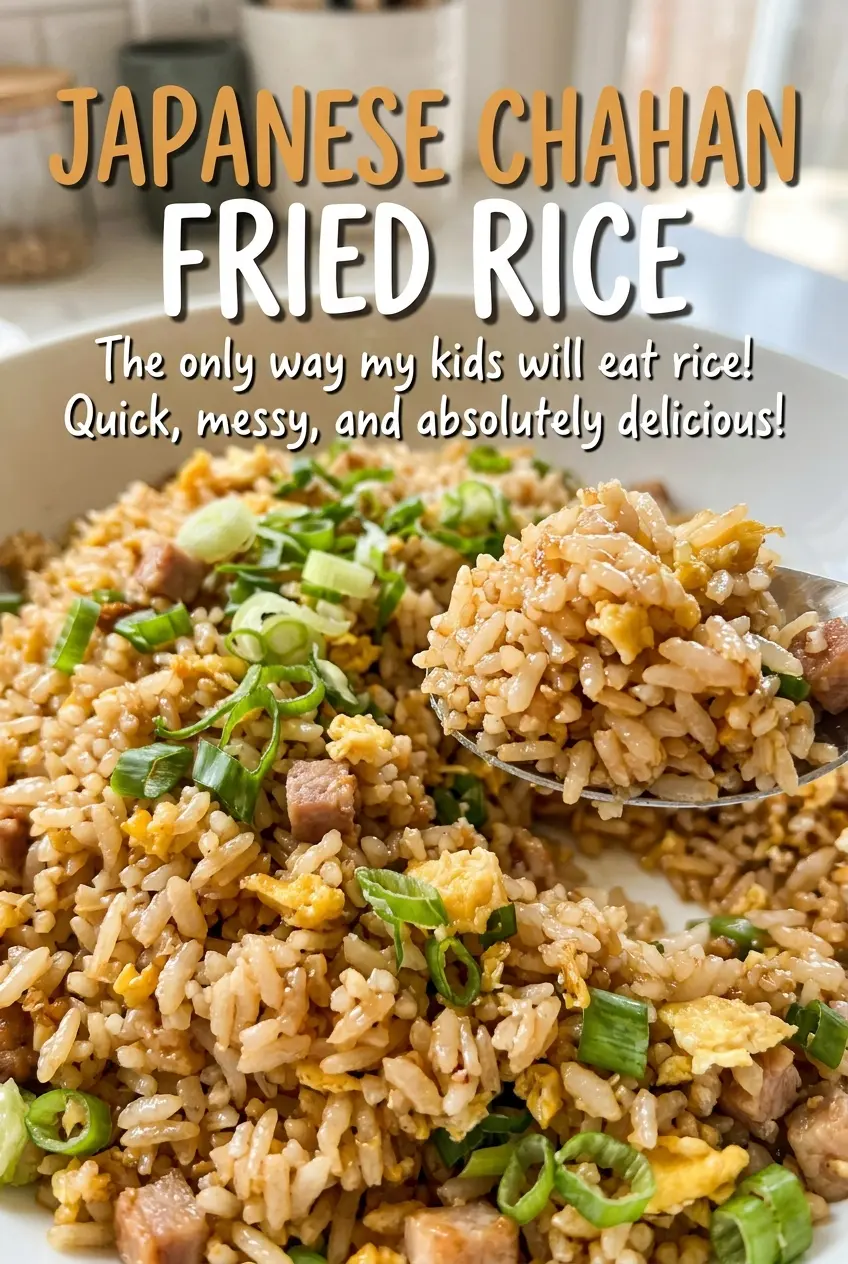
The first thing I notice is the quick sizzle when the rice hits the skillet. A few clumps need loosening, but once they move through the oil, the grains heat evenly and pick up a faint toast. That little contrast—tender rice with lightly toasted edges—is what makes Japanese Chahan Fried Rice feel like more than a way to use up leftovers.
I make this version with cooked chashu or ham, softly scrambled eggs, and a measured amount of soy sauce. The rice stays the center of the dish instead of getting buried under sauce. Sake seasons it gently, while sesame oil and scallions go in at the end, when their aroma is easiest to notice. It’s a fast skillet dinner with savory bites, warm egg, and a fresh onion finish.
Kitchen Note
Bake, Serve, Wear the Vibe 👕
Editor-picked tees our Oven To Fork readers love.



We may earn from qualifying purchases at no extra cost to you.
I add the sesame oil and scallions in the final toss, not while the rice is frying. That short time in the hot skillet warms them through and keeps the sesame aroma and scallion bite easy to pick out.
Save Japanese Chahan Fried Rice for a quick skillet meal with savory pork, tender egg, and a lightly toasted rice finish.
Why Japanese Short-Grain Rice Clumps—and Why That Isn’t a Problem
Japanese short-grain rice is naturally more cohesive than long-grain rice. It won’t fry into a pile of perfectly separate, dry grains, and trying to force it there can break the rice apart. The better goal for chahan is rice that stays tender, moves easily around the pan, and gets lightly toasted as it heats. A few small clumps are fine; large cold centers are not.
Starting with cold cooked rice gives the grains enough firmness to handle the skillet. Break apart the visible clumps before cooking, then work through any that remain as the rice warms. Don’t mash or stir constantly. Give the rice a chance to sit against the hot skillet between turns so it can heat through and develop those lightly toasted spots. The result is cohesive in the way short-grain rice should be, but not gummy or wet.
The Rice, Pork, and Finish That Give Chahan Its Character

- Japanese short-grain rice — Its tender, slightly cohesive texture is part of this dish, not something to correct. Use cooked rice that’s cold, and break up the clumps before it goes into the skillet. Freshly cooked rice is softer and harder to stir-fry without squashing.
- Chashu or ham — Both bring savory, meaty bites, but chashu gives the rice a pork-forward character while ham keeps the flavor familiar and straightforward. Dice it small so it warms quickly during its brief turn in the skillet.
- Eggs — Lightly beaten eggs make soft pieces that can be folded back through the rice at the end. They cook quickly, so moving them to a plate once just set prevents them from sitting in the skillet through the longer rice-frying stage.
- Soy sauce and sake — Together they season the rice without requiring a heavy pour of soy sauce. Add both around the skillet’s edge, then toss so the seasoning reaches the rice evenly.
- Toasted sesame oil and scallions — These are finishing ingredients rather than the base for frying. The sesame oil brings a distinct toasted aroma, and thinly sliced scallions give the final bites a fresh onion note.
The Fast Skillet Sequence That Keeps Eggs Tender and Rice Toasted
Set the Eggs, Then Get Them Out of the Pan
Heat 1 teaspoon of neutral oil in a 12-inch skillet over medium-high heat. Add the lightly beaten eggs and scramble until just set, about 1 minute, then transfer them to a plate. They should look soft rather than browned. Taking them out now keeps them from cooking through while the rice fries.
Warm the Pork Before Adding the Rice
Add the remaining neutral oil to the skillet and stir-fry the diced chashu or ham for 30 seconds. Add the cold rice and break apart any clumps that remain. Cook for 3 to 4 minutes, turning the rice so it heats evenly and becomes lightly toasted. If you leave large clumps intact, their centers stay cooler than the grains around them.
Season Around the Skillet’s Edge
Sprinkle the rice with the kosher salt and pepper. Pour the soy sauce and sake around the edge of the skillet, then toss the rice to coat it evenly. Keep turning until you no longer see a concentrated patch of seasoning. The rice should look evenly seasoned, not wet with sauce.
Fold the Eggs Back in at the Finish
Return the eggs to the skillet, then add the toasted sesame oil and sliced scallions. Toss everything together for about 1 minute, until combined and hot. Break up any large pieces of egg as you toss, but don’t keep cooking after the rice is hot. The finished skillet should smell savory with a clear sesame-and-scallion note.
Two Small Choices That Change the Bowl
Use Chashu for a Pork-Forward Version
Choose cooked pork chashu when you want the pork to be the most noticeable savory element. Ham makes a milder, familiar-tasting skillet; either works in the same amount and gets the same brief stir-fry before the rice goes in.
Choose White or Black Pepper for a Different Finish
White pepper keeps the pepper note subtle, while black pepper gives it a more familiar, visible edge. Use either one in the same measured amount; this is a small flavor shift, not a change to the skillet timing.
Storage and Reheating
- Refrigerator: Refrigerate leftovers within 2 hours in a covered, airtight container and use within 3 to 4 days. The rice firms up as it chills.
- Freezer: Freeze in airtight portions for up to 1 month for the best texture. Thaw a portion in the refrigerator before reheating.
- Reheating: Reheat in a skillet over medium heat, tossing until hot throughout and 165°F. Avoid stopping when only the edges are hot; the center of the rice needs to heat through too.
What Can Go Wrong in a Chahan Skillet?
Japanese Chahan Fried Rice
Ingredients
Equipment
Method
- Heat 1 teaspoon of the neutral oil in a 12-inch skillet over medium-high heat, add the eggs, and scramble until just set, about 1 minute; transfer to a plate.
- Add the remaining neutral oil to the skillet, stir-fry the chashu or ham for 30 seconds, then add the rice and cook, breaking up any remaining clumps, until hot and lightly toasted, 3 to 4 minutes.
- Sprinkle the rice with the salt and pepper, then add the soy sauce and sake around the edge of the skillet and toss to coat evenly.
- Return the eggs to the skillet, add the sesame oil and scallions, and toss until combined and hot, about 1 minute.