
The shrimp turn from gray to opaque fast, and squid goes from tender to rubbery just as quickly. With a pot of seafood on the stove, it’s easy to assume everything can cook together; here, separate batches let each piece get only the heat it needs. That’s what gives Italian Seafood Salad its mix of plump shrimp, tender squid, and briny mussels instead of one overcooked pile.
I like how the lemon-and-olive-oil dressing keeps the seafood tasting bright without hiding it. Celery adds a fresh crunch, while garlic and flat-leaf parsley give the bowl a little more depth. The salad is meant to be served cold, so there’s a short cooling pause before the seafood meets the dressing, followed by a longer rest in the refrigerator. The finished bowl is cool, lightly dressed, and full of distinct seafood textures.
Kitchen Note
Bake, Serve, Wear the Vibe 👕
Editor-picked tees our Oven To Fork readers love.



We may earn from qualifying purchases at no extra cost to you.
Let the seafood chill until it’s cold before you dress it, then give the finished salad at least an hour in the refrigerator. That second rest gives the lemon, garlic, and parsley time to settle into the seafood.
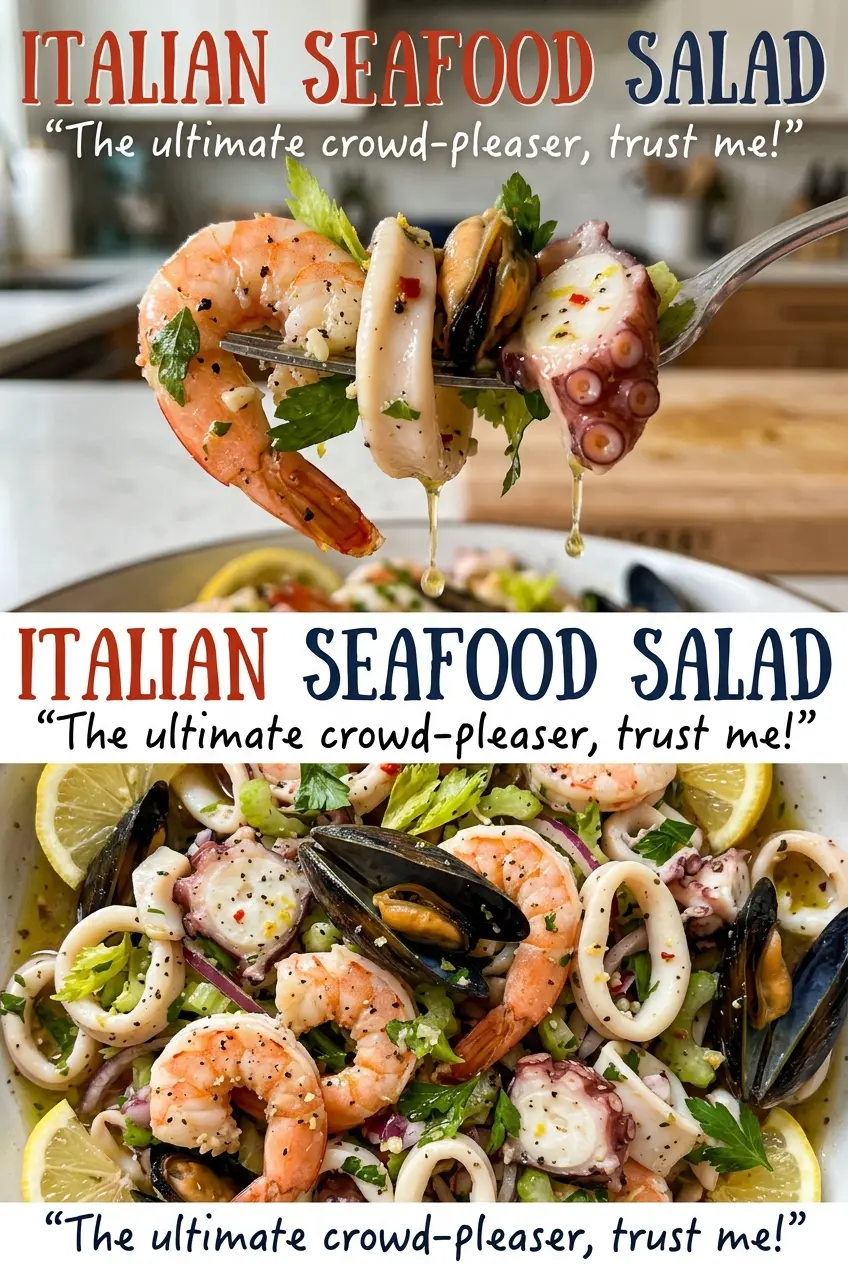
Save this Italian Seafood Salad for a cold, lemony seafood supper with tender shrimp, squid, and mussels.
Why These Three Seafood Cook Times Can’t Be Combined
Shrimp, squid, and mussels don’t reach their best texture at the same pace. Shrimp need a brief simmer until opaque and firm; squid needs even less time; mussels steam separately until their shells open. Putting everything into one pot at once would leave you waiting on the mussels while the shrimp and squid keep cooking.
Cooking in stages also gives you a clear cue for each kind of seafood. Watch the shrimp for opacity and firmness, then check the thickest piece with an instant-read thermometer. The squid should turn opaque quickly, while mussels tell you they’re ready by opening. The water used for shrimp and squid is discarded before the mussels go into the pot with white wine, so each stage has its own liquid and its own job. It takes a little more attention than one-pot cooking, but you get seafood that stays tender rather than asking one cooking time to suit three very different ingredients.
What Each Seafood and Dressing Ingredient Brings to the Bowl
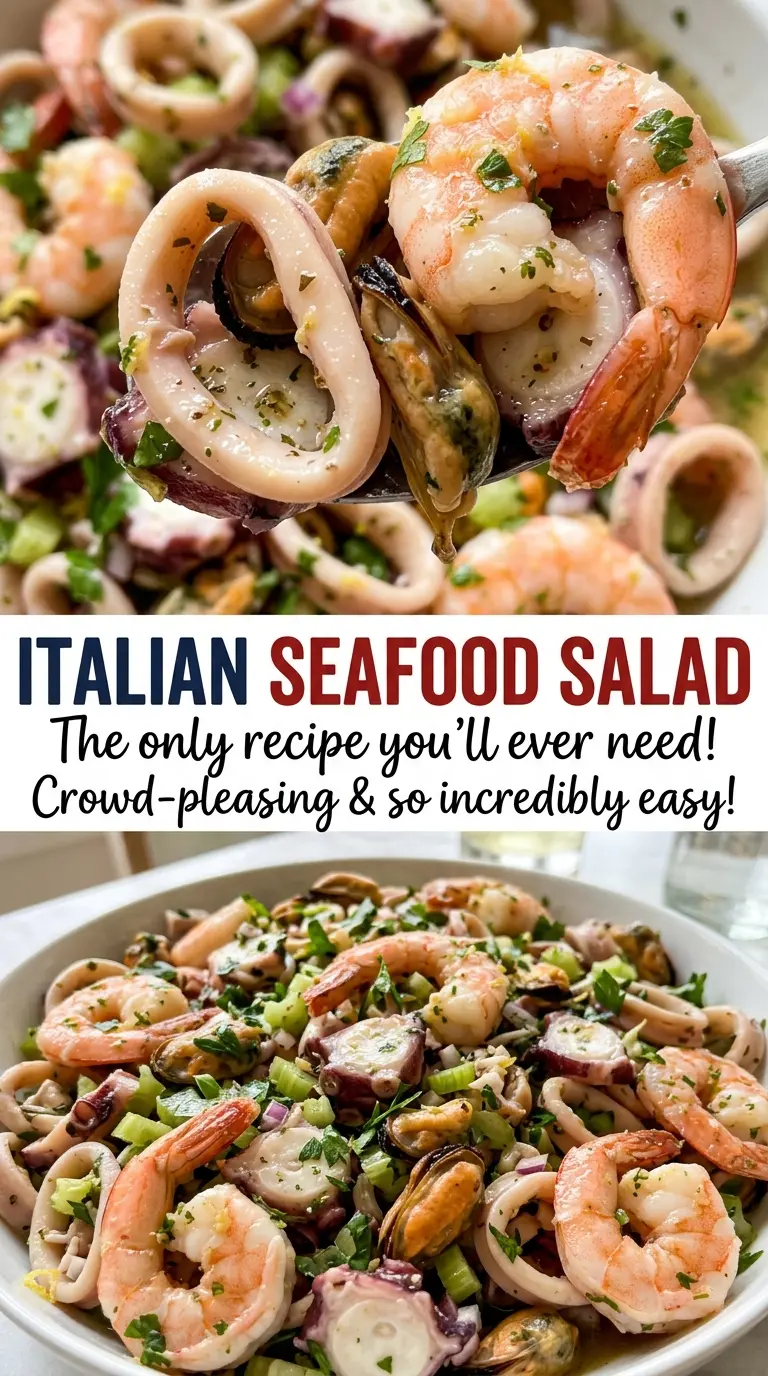
- Shrimp, squid, and mussels — The combination gives the salad its varied, briny character. Buy shrimp raw and peeled and deveined, and start with cleaned squid so you can cut the bodies into rings without extra prep. The mussels should be scrubbed and debearded before they go into the pot.
- Lemon — One lemon is thinly sliced for the poaching water, while another is juiced for the dressing. Fresh juice matters here because it’s a main part of the uncooked dressing; the sliced lemon perfumes the seafood as it cooks.
- Dry white wine — The wine steams the mussels and adds a light aroma to their cooking liquid. A modestly priced dry white wine is fine; there’s no need to use an expensive bottle.
- Extra-virgin olive oil — Since the oil isn’t cooked into a sauce, its taste comes through clearly alongside the lemon. Use an oil you enjoy tasting on its own, rather than one that smells stale or flat.
- Garlic and flat-leaf parsley — Finely minced garlic spreads through the dressing, and fresh parsley keeps its flavor clean and green. Dried parsley won’t give the same fresh finish in this cold salad.
- Celery — Thin slices bring a crisp contrast to the tender seafood. Ordinary fresh celery works well; the useful detail is slicing it thinly so it blends into each forkful.
Cook Each Seafood in Its Own Short, Clear Stage
Poach the Shrimp Until Opaque
Bring the water, 2 teaspoons of kosher salt, and thinly sliced lemon to a boil in a 6-quart pot. Add the raw shrimp and simmer for 2 to 3 minutes, watching for flesh that has turned opaque and feels firm. Check the thickest shrimp and take it to 145°F. Transfer the shrimp to a shallow dish so it can cool without staying in the hot pot.
Give the Squid Just a Brief Simmer
Return the poaching water to a boil before adding the squid rings and whole tentacles. Simmer for 1 to 2 minutes, until the squid is opaque and the thickest piece reaches 145°F. The short cooking time matters: leaving squid in the simmering water longer risks a chewy texture. Move it to the dish with the shrimp as soon as it’s ready.
Steam the Mussels Until Their Shells Open
Discard the poaching liquid, then add the scrubbed, debearded mussels and dry white wine to the pot. Cover and steam over high heat for 5 to 7 minutes. The shells should open; remove the mussel meat from the shells and discard any mussels that remain closed. Add the mussel meat to the other seafood.
Chill the Seafood Before Tossing
Refrigerate the seafood until cold, about 30 minutes. In a 4-quart bowl, whisk the minced garlic, lemon juice, olive oil, remaining 1/2 teaspoon kosher salt, and black pepper. Add the thinly sliced celery, chopped parsley, and cold seafood, then toss gently until coated. Cover and refrigerate for at least 1 hour before serving.
Two Ways to Change the Serving Style Without Losing the Seafood
A squid-free version
Leave out the squid if you don’t want to prepare it. The salad will have less variety in texture, but the shrimp and mussels still give you a full seafood bowl; keep their separate cooking stages unchanged.
Serve it as a seafood platter
For a more composed presentation, arrange the chilled shrimp, squid, and mussel meat on a platter with the celery and parsley, then spoon the whisked dressing over the top. You keep the same ingredients and get a less-tossed, more distinct presentation.
Making Ahead and Keeping It Cold
- Refrigerator: Keep the covered salad refrigerated and use it within 3 to 4 days. The celery will soften somewhat as it sits.
- Freezer: This salad doesn’t freeze well once dressed. The celery loses its crunch, and the chilled olive-oil dressing can separate as it thaws.
- Serving: Serve it cold. If the olive oil looks cloudy after refrigeration, that’s a normal effect of chilling; toss the salad gently to redistribute the dressing.
Questions That Come Up When Making Italian Seafood Salad
Italian Seafood Salad
Ingredients
Equipment
Method
- Combine the water, 2 teaspoons of the salt, and the sliced lemon in a 6-quart pot and bring to a boil.
- Add the shrimp and simmer for 2 to 3 minutes, until opaque and firm and the thickest shrimp reaches 145°F; transfer to a shallow dish.
- Return the water to a boil, add the squid, and simmer for 1 to 2 minutes, until opaque and the thickest piece reaches 145°F; transfer to the dish with the shrimp.
- Discard the poaching liquid, add the mussels and wine to the pot, cover, and steam over high heat for 5 to 7 minutes, until the shells open.
- Remove the mussel meat from the shells and discard any mussels that did not open.
- Add the mussel meat to the dish and refrigerate the seafood until cold, about 30 minutes.
- In a 4-quart bowl, whisk together the garlic, lemon juice, olive oil, remaining 1/2 teaspoon salt, and black pepper.
- Add the celery, parsley, and chilled seafood, then toss gently to coat.
- Cover and refrigerate for at least 1 hour before serving.