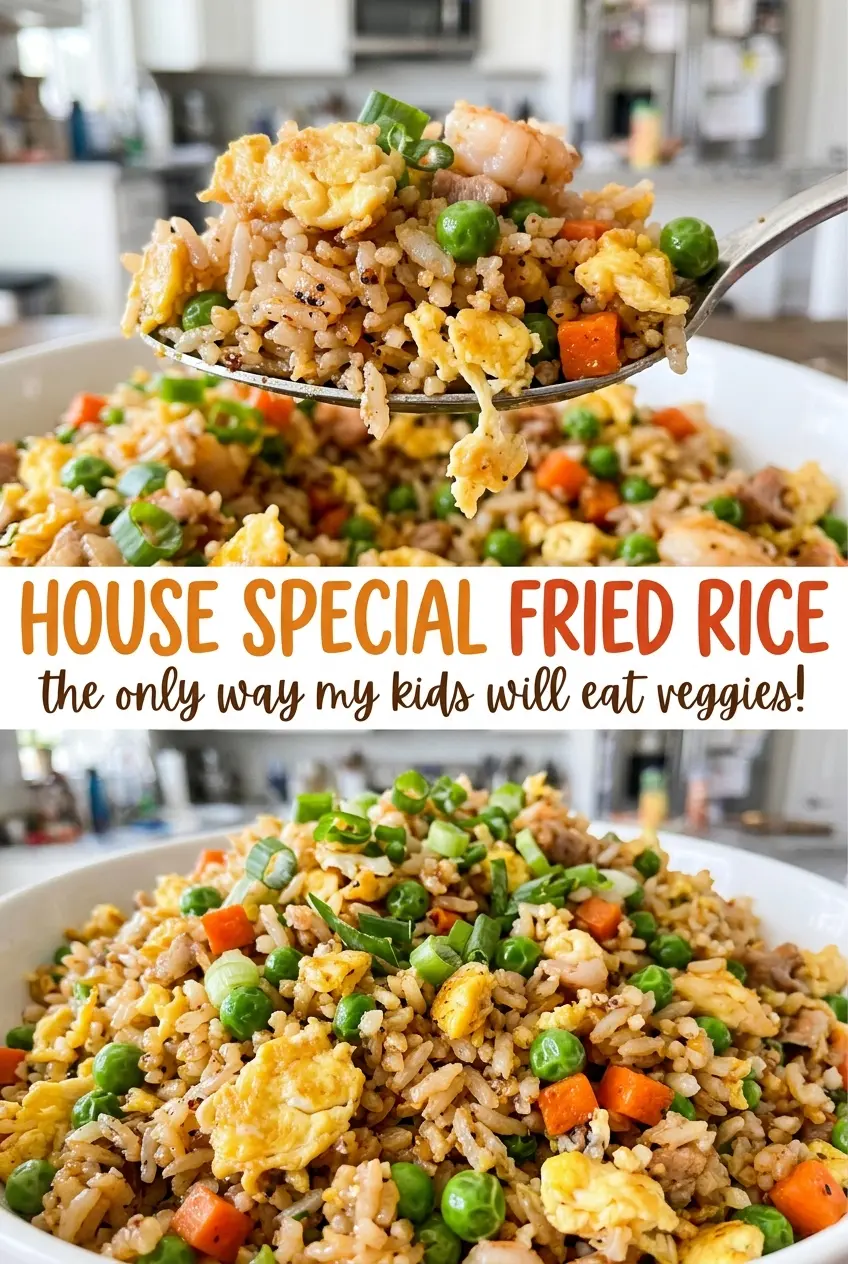
When cold rice hits a hot skillet, the clumps loosen one by one instead of turning into a soft, sticky mass. That’s the difference I notice first in House Special Fried Rice: each grain gets coated in sauce, with chicken, pork, shrimp, egg, and vegetables tucked through the pan rather than buried in a heavy pile.
I cook the proteins in separate rounds because chicken, pork, and shrimp each need a different amount of time. Then I set them aside while the eggs and vegetables cook, and bring everything together at the end. The order keeps the shrimp from sitting in the skillet while the chicken finishes, and gives the rice space to fry. The result is a full, savory skillet with distinct bites of protein and rice that stays pleasantly loose.
Kitchen Note
Bake, Serve, Wear the Vibe 👕
Editor-picked tees our Oven To Fork readers love.



We may earn from qualifying purchases at no extra cost to you.
I whisk the soy sauce, oyster sauce, sesame oil, and white pepper before I heat the skillet. Once the rice starts frying, there isn’t a good moment to stop and measure; having the sauce ready lets me keep the grains moving.
Save House Special Fried Rice for a night when you want chicken, pork, and shrimp in one savory, hot skillet.
Cold Rice Is What Keeps This Fried Rice From Turning Soft
Fried rice needs cooked rice that’s cold, with the clumps broken apart before it goes into the skillet. Day-old rice is especially handy because it has had time to dry out in the refrigerator. The grains separate more easily, so the sauce can coat them instead of collecting around a dense lump.
Freshly cooked rice carries more steam and moisture. Put a lot of it straight into a hot pan and it’s more likely to soften and stick together before it gets a chance to fry. That doesn’t mean you need a special variety or a complicated prep routine: plain cooked white rice is right at home here. The useful distinction is its condition when it reaches the skillet—cold, with any packed clumps loosened.
Break up the rice before cooking, not after the skillet is full. A fork or clean fingers can separate stubborn pieces without crushing the grains. Once it’s in the pan, keep stirring and turning the rice for the full cooking time so the sauce reaches the whole batch.
Why the Three Proteins Need Different Attention
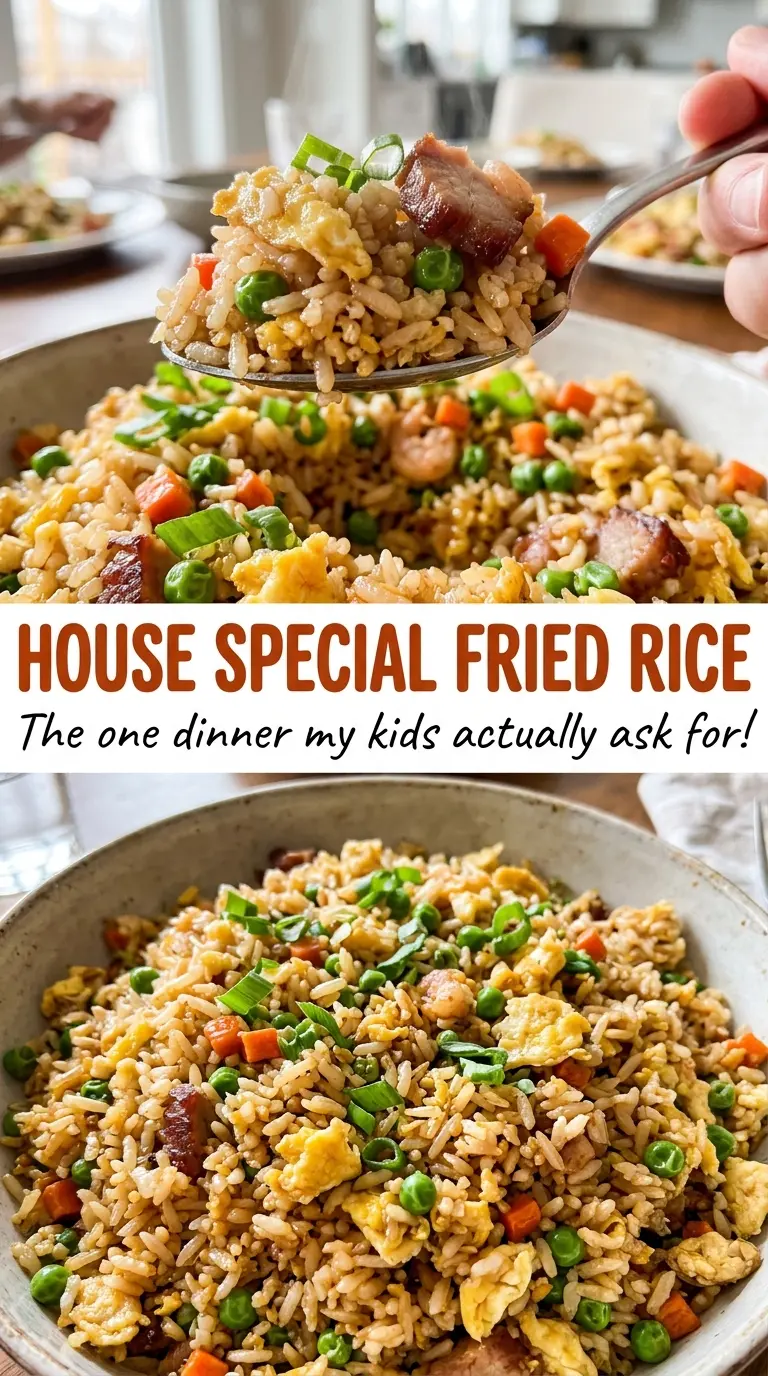
- Chicken, pork, and shrimp — The trio gives the skillet a mix of mild, savory meat and sweet, tender seafood. Cut the chicken and pork into even 1/2-inch pieces so they cook at a similar pace within each batch. Medium shrimp are a good fit for the short cook; peeled, deveined shrimp with the tails removed are easier to stir through the rice.
- Cold cooked white rice — This is the base that carries the sauce. Day-old rice is preferable, but the important prep detail is to break up clumps before frying. There’s no need to seek out specialty rice; use plain white rice that’s already cooked and cold.
- Soy sauce and oyster sauce — Soy sauce brings the familiar salty, savory base, while oyster sauce adds a deeper, rounded note that soy sauce alone won’t quite match. Everyday versions work well here; there’s no need to spend extra on a premium bottle for a quick skillet dinner. For a gluten-free adaptation, use tamari and gluten-free oyster sauce in the variations below.
- Toasted sesame oil and white pepper — A little toasted sesame oil lends a nutty aroma, and white pepper adds a gentle, warm edge without changing the sauce’s color. Keep the sesame oil toasted, rather than substituting a neutral cooking oil, since its aroma is part of what distinguishes this sauce.
- Frozen peas and carrots, garlic, eggs, and scallions — Frozen peas and carrots are convenient and go straight into the skillet; cooking off their excess moisture prevents a wet base. Mince the garlic before heating the pan so it’s ready to add with the vegetables. Thinly sliced scallions go in at the finish, and the eggs are scrambled separately so they stay in soft, distinct pieces.
The Order That Gets Chicken, Pork, Shrimp, and Rice Done Together
Whisk the Sauce Before the Skillet Gets Hot
Stir the soy sauce, oyster sauce, toasted sesame oil, and white pepper together in a small bowl until combined. Set the bowl near the stove, along with the prepared rice and vegetables. High heat moves the cooking along quickly, so having everything ready keeps you from leaving the skillet unattended.
Cook Each Protein on Its Own Clock
Heat a 12-inch skillet over high heat and add 2 teaspoons of canola oil. Stir-fry the chicken for 3–4 minutes, checking the largest piece for 165°F before transferring the chicken to a plate. Add another 2 teaspoons of oil and cook the pork for 3–4 minutes, until the largest piece reaches 145°F; transfer it to the plate and let it rest for 3 minutes. Add 1 teaspoon of oil and stir-fry the shrimp for 1–2 minutes, until opaque and firm, then move it to the plate too. Keeping the batches separate gives each protein the time it needs without leaving the shrimp in the pan while the chicken cooks.
Set the Eggs, Then Cook Off the Vegetable Moisture
Add 2 teaspoons of oil to the skillet and pour in the beaten eggs. Scramble for 1–2 minutes, stopping when they’re just set, then transfer them to the plate with the proteins. Add the remaining 2 teaspoons of oil, the peas and carrots, and the minced garlic. Stir-fry for 2–3 minutes; the vegetables should be hot, and any excess moisture should have evaporated before the rice goes in.
Coat the Rice, Then Return Everything to the Pan
Add the cold rice and whisked sauce to the skillet. Stir-fry for 3–4 minutes, breaking up any clumps and turning the rice until it’s hot and evenly coated. Return the chicken, pork, shrimp, and eggs to the skillet, then add the sliced scallions. Stir-fry for 1–2 minutes, just until everything is heated through.
Easy Ways to Adapt the Protein Mix or Sauce
Make It Chicken-and-Shrimp Fried Rice
Leave out the pork and cook the chicken and shrimp in their separate rounds. The pan will have a lighter mix of proteins, while the chicken still gives each serving a substantial bite.
Skip the Shrimp
Omit the shrimp and keep the chicken and pork. Cook those proteins in their own rounds as usual; without the shrimp, the finished rice has a more meat-forward taste and no seafood.
Make the Sauce Gluten-Free
Replace the soy sauce with tamari and use gluten-free oyster sauce, keeping the same proportions. The sauce stays savory, though tamari can taste a little different from the soy sauce in the original version.
Storage and Reheating
- Refrigerator: Refrigerate leftovers in shallow, airtight containers within 2 hours and use them within 3–4 days. The rice will firm up as it chills.
- Freezer: Freeze in airtight, meal-size portions for up to 2 months for the best texture. Thaw overnight in the refrigerator before reheating.
- Reheating: Microwave in a covered dish, stirring halfway through, until the center reaches 165°F. Skipping the stir can leave a cold pocket even when the edges are hot.
Questions I Get Asked About House Special Fried Rice
House Special Fried Rice
Ingredients
Equipment
Method
- Whisk the soy sauce, oyster sauce, sesame oil, and white pepper in a small bowl.
- Heat a 12-inch skillet over high heat.
- Add 2 teaspoons of the canola oil and the chicken.
- Stir-fry for 3–4 minutes, until the largest piece reaches 165°F.
- Transfer the chicken to a plate.
- Add 2 teaspoons of the oil to the skillet and add the pork.
- Stir-fry for 3–4 minutes, until the largest piece reaches 145°F.
- Transfer the pork to the plate and let rest for 3 minutes.
- Add 1 teaspoon of the oil and the shrimp to the skillet.
- Stir-fry for 1–2 minutes, until opaque and firm.
- Transfer the shrimp to the plate.
- Add 2 teaspoons of the oil to the skillet and pour in the eggs.
- Scramble for 1–2 minutes, until just set.
- Transfer the eggs to the plate with the proteins.
- Add the remaining 2 teaspoons of oil, the peas and carrots, and the garlic to the skillet.
- Stir-fry for 2–3 minutes, until the vegetables are hot and any excess moisture has evaporated.
- Add the rice and sauce to the skillet.
- Stir-fry for 3–4 minutes, breaking up any clumps, until the rice is hot and evenly coated.
- Return the proteins and eggs to the skillet and add the scallions.
- Stir-fry for 1–2 minutes, until everything is heated through.