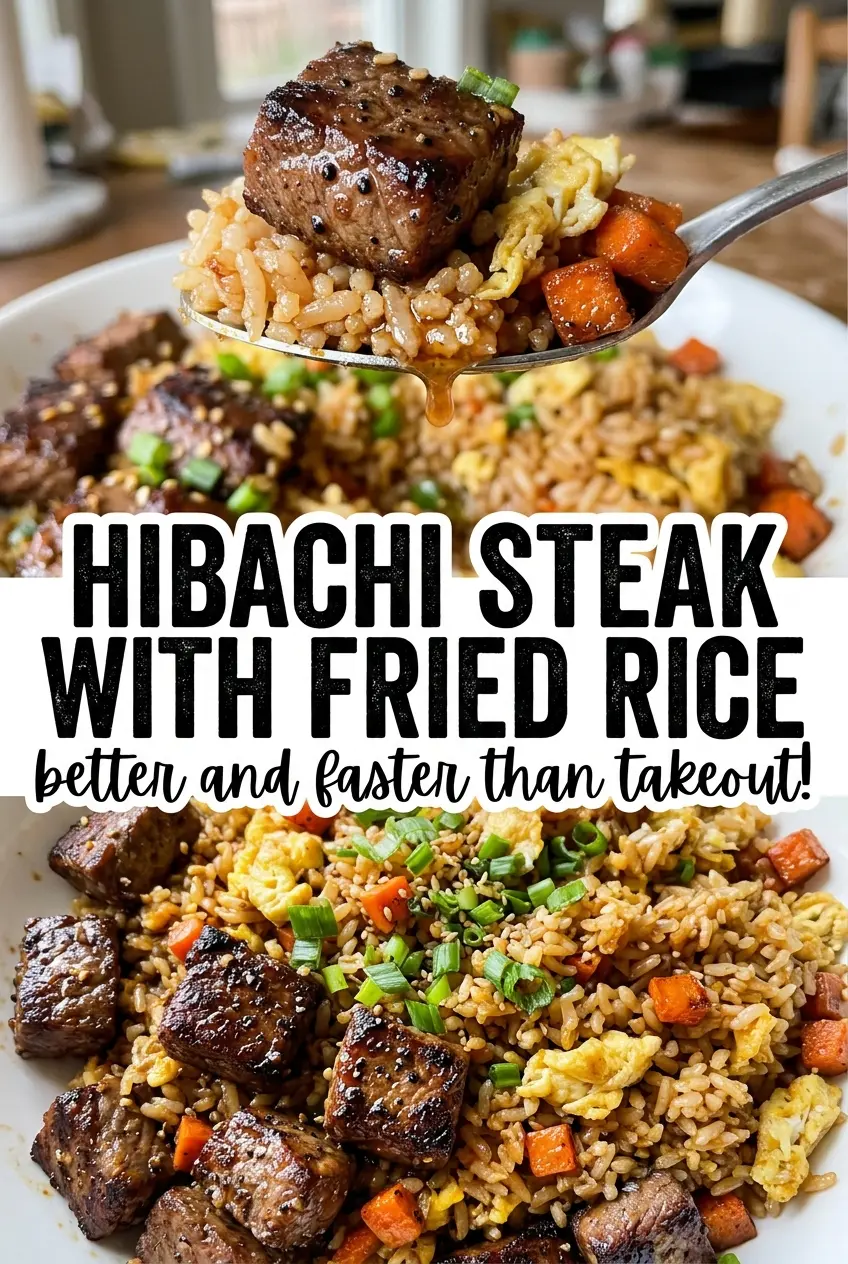
The first steak cubes that hit a hot skillet should sizzle right away. If they sit in a puddle instead, the pan is crowded, and the meat steams before it can brown. I cook Hibachi Steak with Fried Rice in two parts: first the rice, then the steak in batches, finishing everything with butter and garlic.
That order keeps the rice warm while the steak gets the skillet’s full attention. Cold cooked rice also behaves better than warm, freshly cooked rice: the grains are easier to stir through the vegetables without turning sticky. The steak comes off the heat to rest while the garlic butter coats each cube. You get savory rice with tender, browned steak and a buttery finish.
Kitchen Note
Bake, Serve, Wear the Vibe 👕
Editor-picked tees our Oven To Fork readers love.



We may earn from qualifying purchases at no extra cost to you.
Cold cooked rice is much easier to stir through the vegetables than warm rice straight from the pot. Have it ready before the skillet gets hot, and the grains stay distinct instead of clumping together.
Save this hibachi steak and fried rice for a skillet dinner with browned steak bites and a warm, savory rice side.
Why the Steak Needs Its Own Turn in the Skillet
Steak cubes need contact with a hot cooking surface to brown. Add too many at once and their moisture collects in the pan; instead of searing, the cubes simmer in that liquid. Cooking one-third of the steak at a time keeps each piece in a single layer and gives the skillet room to recover between batches.
It’s worth waiting until the skillet is very hot before the first batch goes in. Use the avocado oil in measured portions, and turn the cubes occasionally so more than one side gets color. A busy pan can look like it’s cooking quickly, but browning is the cue that gives these bites their savory, seared edges. The rice is already warm by then, so there’s no reason to rush the steak into one crowded batch.
Keep each finished batch on a clean plate while the next one cooks. Once all the steak is browned, the butter and garlic go into the skillet at medium heat, and the steak returns only for a brief toss. That short finish coats the cubes without leaving them in the pan through the whole garlic-butter step.
What Makes the Rice and Steak Taste Like a Complete Hibachi Plate
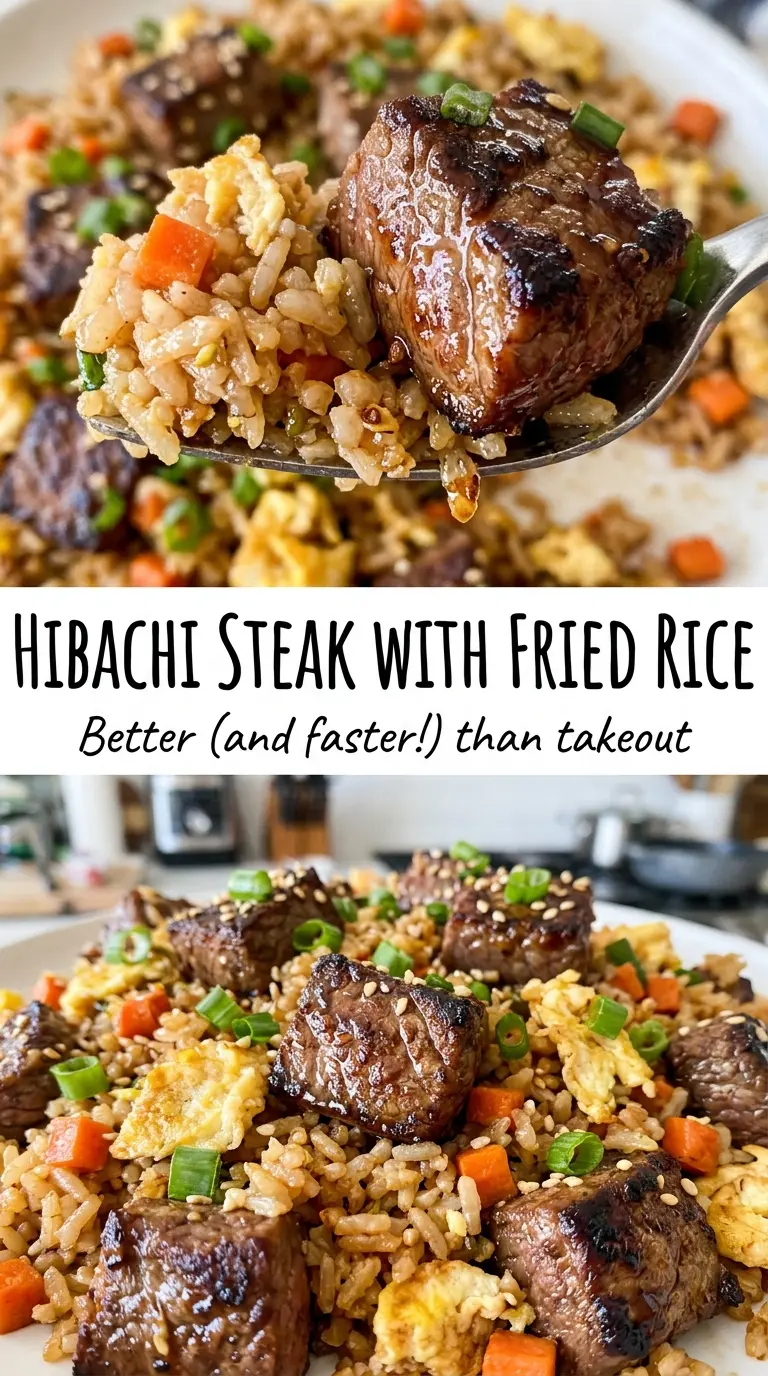
- Top sirloin — Its tender, beefy texture suits quick cooking in cubes. Choose a piece that’s evenly thick so the pieces are easy to cut to a consistent size, then pat the cubes dry before they go into the skillet.
- Long-grain white rice — The grains stay more separate when stir-fried than short-grain rice. Use cooked rice that’s cold, rather than warm rice fresh from the pot, for a less clumpy result. Cold cooked brown rice can work as a variation, though it will be chewier.
- Scallions — The whites cook with the peas and carrots, while the greens go in at the end for a fresher onion note. Keeping the two parts separate gives both a place in the finished rice.
- Soy sauce and toasted sesame oil — Soy sauce brings salt and savory depth; toasted sesame oil contributes a distinct nutty aroma. Add both near the end so their flavor stays clear among the rice, egg, and vegetables.
- Avocado oil, canola oil, and butter — Canola oil is used for the rice, while avocado oil handles the very hot steak sear. Butter goes in only for the final garlic finish, where its richness coats the steak. Each has a different job, so don’t treat them as interchangeable in the method.
The Skillet Sequence: From Soft Scrambled Egg to Garlic-Butter Steak
Set the Eggs, Then Soften the Vegetables
Heat a 12-inch skillet over medium-high heat with 1 tablespoon of canola oil. Add the lightly beaten eggs and scramble until just set, about 30 to 60 seconds, then move them to a plate. They should look softly set rather than browned. Add the remaining canola oil, peas and carrots, and scallion whites, and cook for 2 to 3 minutes.
Stir-Fry the Rice Until Hot
Add the cold cooked rice to the vegetables and stir for 3 to 4 minutes, breaking up any clumps as you work. Keep the rice moving so it heats through without catching on the skillet. Stir in the soy sauce, toasted sesame oil, scallion greens, and reserved eggs. Cook for 1 minute, transfer the rice to a serving bowl, and cover it to keep warm.
Sear the Steak in Three Uncrowded Batches
Toss the steak cubes with kosher salt and black pepper while the skillet heats over high heat until very hot. Add 1 teaspoon of avocado oil and one-third of the steak in a single layer. Cook for 4 to 6 minutes, turning occasionally, until the thickest cubes reach 145°F; transfer them to a clean plate and repeat with the remaining steak and oil in two batches. If the cubes aren’t browning, give them space rather than piling more into the skillet.
Coat the Steak in Garlic Butter
Reduce the heat to medium and add the butter and minced garlic. Stir for 30 seconds, watching the garlic closely so it doesn’t darken. Return the steak to the skillet and toss for about 1 minute, just long enough to coat the cubes. Take the pan off the heat and let the steak rest for 3 minutes before serving with the warm fried rice.
Easy Ways to Adjust the Rice and Steak Without Losing Their Balance
Make the soy-sauced rice gluten-free
Replace the soy sauce with the same amount of gluten-free tamari. It keeps the rice’s savory, salty base, though the taste may be a little deeper and less bright. Check that the tamari itself is labeled gluten-free.
Swap in cold cooked brown rice
Use cold cooked brown rice in place of the white rice, keeping the same amount. The finished fried rice will have a chewier bite and a nuttier taste, and the grains may need a little extra stirring to break apart.
Keep the scallion greens on top
Instead of stirring the scallion greens into the rice, hold them back and scatter them over the plated rice. The onion flavor will be fresher and more noticeable, while the cooked scallion whites still season the vegetables underneath.
Storage and Reheating
- Refrigerator: Store the steak and rice in a covered container for 3 to 4 days. The rice will firm up as it chills, and the steak may be less tender after reheating.
- Freezer: Freeze portions in airtight containers for up to 3 months for best quality. Thaw overnight in the refrigerator; the rice may be softer after thawing.
- Reheating: Microwave in short bursts, stirring the rice between bursts and turning the steak so it warms evenly. Heat leftovers to 165°F, and avoid a long, high-heat reheat that can toughen the steak.
Questions That Come Up When Making Hibachi Steak and Fried Rice
Hibachi Steak with Fried Rice
Ingredients
Equipment
Method
- Heat a 12-inch skillet over medium-high heat and add 1 tablespoon of the canola oil.
- Add the eggs and scramble until just set, about 30 to 60 seconds, then transfer to a plate.
- Add the remaining 1 tablespoon canola oil to the skillet, then add the peas and carrots and scallion whites; cook for 2 to 3 minutes.
- Add the rice and cook, stirring, for 3 to 4 minutes until hot.
- Stir in the soy sauce, sesame oil, scallion greens, and reserved eggs, then cook for 1 minute.
- Transfer the fried rice to a serving bowl and cover to keep warm.
- Toss the steak cubes with the kosher salt and black pepper.
- Heat the skillet over high heat until very hot.
- Add 1 teaspoon avocado oil and one-third of the steak in a single layer; cook for 4 to 6 minutes, turning occasionally, until the thickest cubes reach 145°F.
- Transfer the steak to a clean plate and repeat with the remaining steak and oil in two batches.
- Reduce the heat to medium and add the butter and garlic; cook, stirring, for 30 seconds.
- Return the steak to the skillet and toss for about 1 minute to coat.
- Remove the skillet from the heat and let the steak rest for 3 minutes before serving with the fried rice.