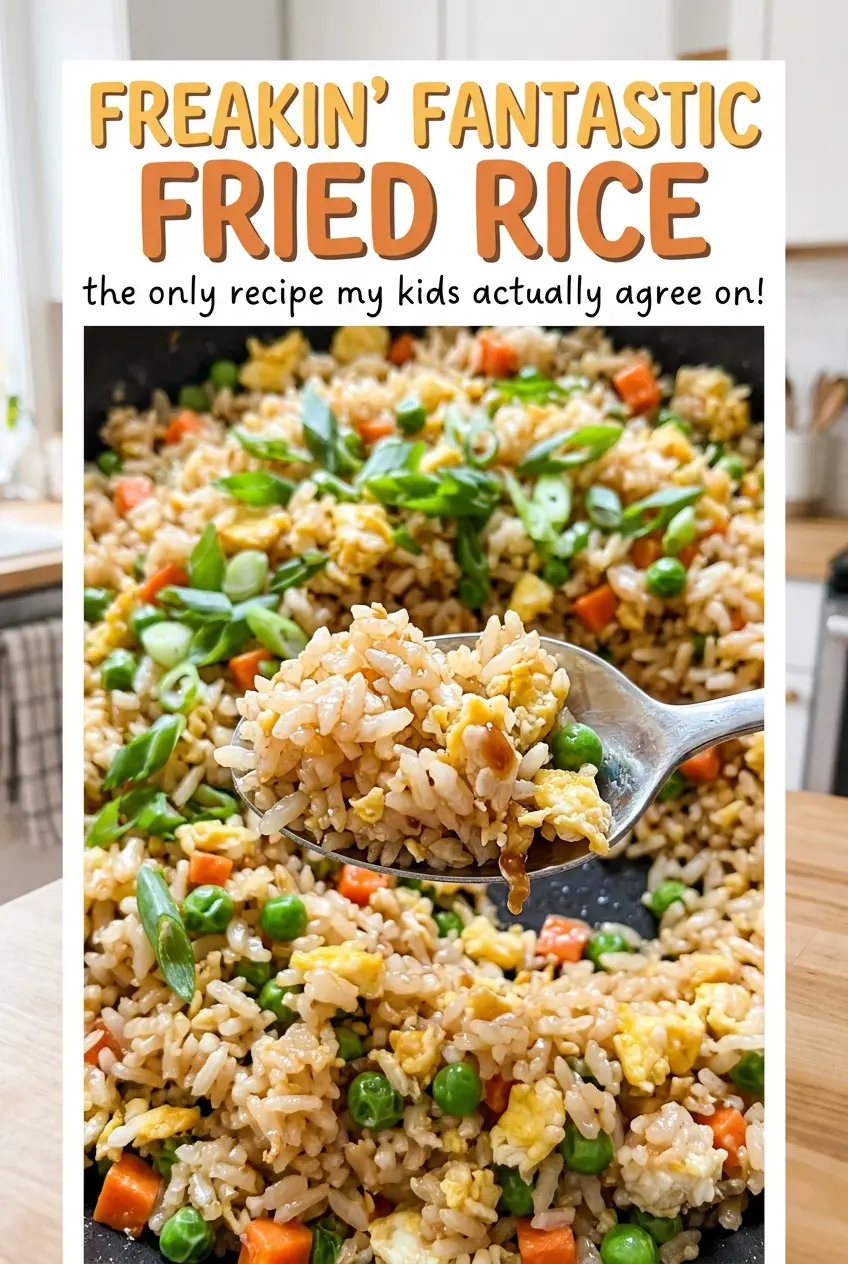
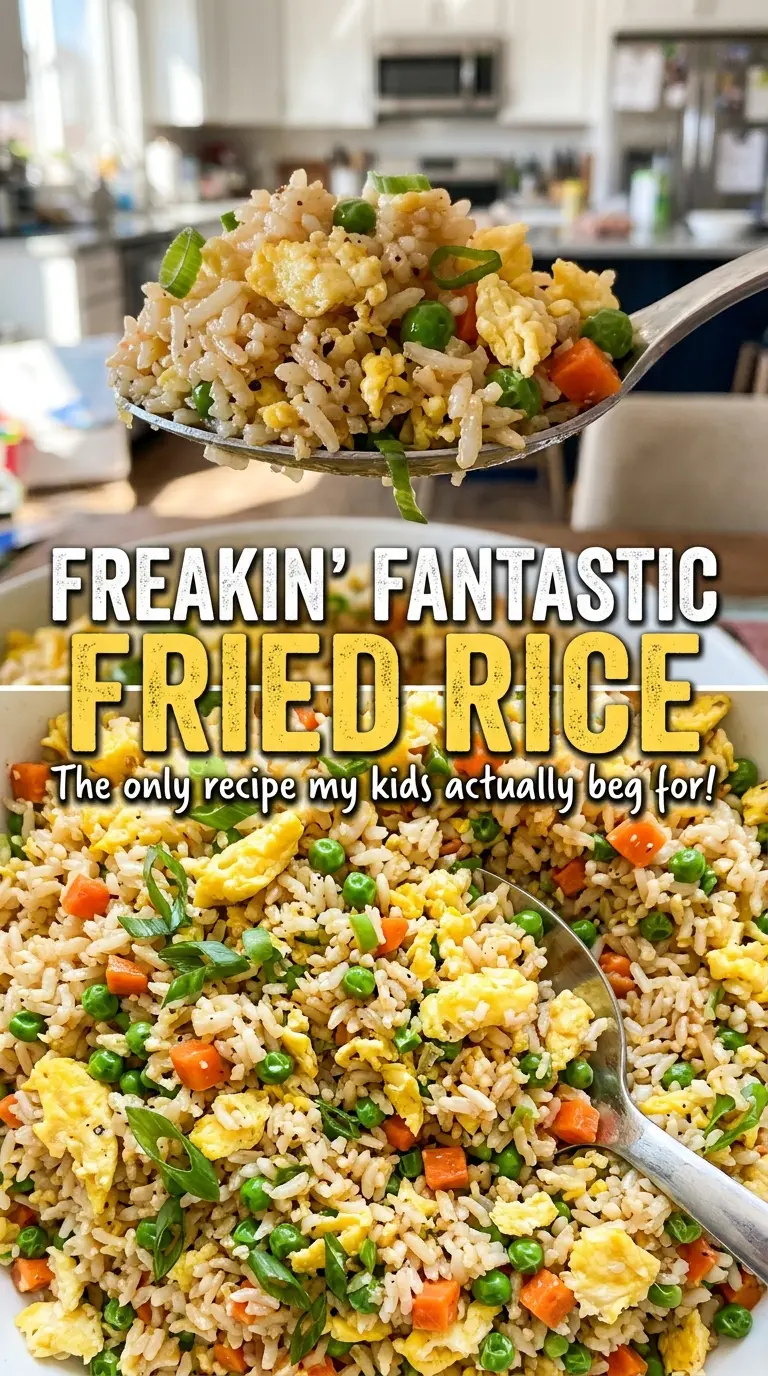
The rice should tumble across the skillet, not land in one heavy clump. Cold, cooked rice gives you a head start: the grains are easier to separate before they hit the pan, and they stay distinct as you toss them with the vegetables. That’s the difference I look for when I make Freakin Fantastic Fried Rice.
I start by breaking up the rice, then cook the eggs separately and set them aside. This keeps the eggs tender while the vegetables and rice get their time in the hot skillet. The steps move quickly, so I have everything ready before I start cooking.
Low-sodium soy sauce seasons the rice without overwhelming the toasted sesame oil and scallions. The finished skillet is savory, colorful, and ready to bring straight to the table.
Kitchen Note
Bake, Serve, Wear the Vibe 👕
Editor-picked tees our Oven To Fork readers love.



We may earn from qualifying purchases at no extra cost to you.
I move the eggs to a plate while they’re still softly set, rather than waiting for browned edges. They’ll be tossed back through the rice at the end, and this keeps them from getting tough while the other ingredients cook.
Save Freakin Fantastic Fried Rice for a night when you want a hot skillet dinner with tender eggs, crisp-tasting scallions, and grains that stay separate.
Cold Rice Is What Keeps the Grains from Turning Clumpy
Fried rice needs grains that can move around the skillet instead of sticking together in a soft mass. Chilling cooked long-grain rice gives it a firmer texture, which makes it easier to break apart and toss. Overnight chilling is my preference, but the important starting point is cold cooked rice—not a bowl that’s still warm from cooking.
Even cold rice can have a few tight clumps. Break those apart with your fingers or a fork before heating the skillet, while you can see and separate them without pressing hard. Once the rice is in the pan, the goal is to toss and loosen it, not mash it against the skillet.
The wide 12-inch skillet gives the rice room to spread out as it heats. If it’s piled up, the grains don’t make as much contact with the hot pan, and tossing becomes awkward. Working in that skillet lets you move the rice around while keeping the eggs and vegetables in the mix.
Why Long-Grain Rice and Toasted Sesame Oil Matter Here
- Long-grain white rice — Its grains stay more distinct when tossed, which suits this quick skillet method. Chilled overnight is ideal, and breaking up clumps before cooking makes the biggest difference to an even finish.
- Vegetable oil — This is the neutral cooking oil for the eggs and vegetables. Its mild taste lets the soy sauce and toasted sesame oil come through without adding another strong flavor.
- Eggs — They add soft, savory pieces throughout the rice. Lightly beating them first helps them cook evenly; fresh eggs are fine, and there’s no need for a specialty variety.
- Frozen peas and carrots — The ready-to-use mix adds color and vegetable bites without extra chopping. The frozen vegetables go straight into the skillet, so there’s no need to thaw them first.
- Garlic — Minced garlic releases its aroma quickly, so have it ready before it goes into the skillet. Freshly minced cloves give a brighter aroma than prepared garlic.
- Low-sodium soy sauce — It brings salty, savory seasoning while keeping the rice from tasting too heavily seasoned. Regular soy sauce will make the finished dish saltier, so low-sodium is the better fit for this balance.
- Toasted sesame oil — Its nutty aroma is more pronounced than that of a neutral cooking oil, so use the toasted kind for the finishing toss. It gives the rice its characteristic fragrance.
- Scallions — Thin slices distribute their mild onion flavor through the rice. Slice them before cooking so they’re ready to go in with the final ingredients.
The Fast Skillet Sequence That Keeps Each Part in Good Shape
Loosen the Cold Rice Before the Skillet Heats
Break up the cold rice with your fingers or a fork before you start cooking. Look for compacted patches and separate them until the grains can move freely. Avoid crushing the rice; you want to loosen the clumps, not turn the grains into a paste. Having this done first keeps the quick cooking stages from feeling rushed.
Cook the Eggs Until Just Set
Heat a 12-inch skillet over medium-high heat and add 1 tablespoon of vegetable oil. Pour in the lightly beaten eggs and stir for 1 to 2 minutes, until they’re softly set. Transfer them to a plate rather than leaving them in the skillet for the vegetables and rice. If they’re already browned, they’ve cooked longer than this stage needs.
Give the Vegetables a Head Start, Then Add Garlic
Add the remaining 1 tablespoon of vegetable oil to the skillet, followed by the frozen peas and carrots. Cook them for 2 to 3 minutes, stirring as they heat. Stir in the minced garlic and cook for 30 seconds. Garlic can take on a bitter taste if it stays over the heat too long, so keep that short interval in mind.
Toss the Rice Until It’s Hot
Add the loosened rice and stir-fry for 3 to 5 minutes. Toss it with the vegetables, breaking apart any clumps that remain as the rice heats. Keep the rice moving through the skillet so it warms evenly. The grains should be hot before you add the final ingredients.
Finish with the Seasonings and Eggs
Stir in the soy sauce, cooked eggs, toasted sesame oil, and sliced scallions. Toss everything together for 1 to 2 minutes, until the rice reaches 165°F throughout. Check more than one spot if the skillet has hot and cool pockets. Once it’s evenly hot, take it off the heat and serve.
Two Simple Ways to Change the Finish
Make It Vegan by Leaving Out the Eggs
Omit the eggs and follow the same skillet sequence with the rice, vegetables, soy sauce, sesame oil, and scallions. The result is a lighter, fully plant-based fried rice without the soft egg pieces; the other ingredients still provide the savory finish.
Skip the Sesame Oil for a Milder Finish
Leave out the toasted sesame oil if you prefer a less nutty aroma. The rice will still get its savory seasoning from the soy sauce, while the finished dish will taste simpler and less fragrant.
Storage and Reheating
- Refrigerator: Refrigerate leftovers in an airtight container within 2 hours and use them within 3 to 4 days. The rice will firm up as it chills.
- Freezer: Freeze cooled portions in airtight freezer-safe containers for up to 3 months. Thaw in the refrigerator before reheating for more even warming.
- Reheating: Warm the rice in a skillet over medium heat, tossing often, or microwave it in a covered microwave-safe dish and stir partway through. Heat until steaming throughout; don’t leave a cold center under a hot surface.
Questions That Come Up While Making Fried Rice
Freakin Fantastic Fried Rice
Ingredients
Equipment
Method
- Break up any clumps in the cold rice with your fingers or a fork.
- Heat a 12-inch skillet over medium-high heat.
- Add 1 tablespoon of the vegetable oil to the skillet.
- Pour in the eggs and cook, stirring, for 1 to 2 minutes until softly set.
- Transfer the eggs to a plate.
- Add the remaining 1 tablespoon vegetable oil to the skillet.
- Add the frozen peas and carrots and cook for 2 to 3 minutes.
- Stir in the garlic and cook for 30 seconds.
- Add the rice and stir-fry for 3 to 5 minutes, breaking up clumps and tossing until hot.
- Stir in the soy sauce, cooked eggs, sesame oil, and scallions.
- Cook for 1 to 2 minutes, tossing until the rice reaches 165°F throughout.