Dandelion greens pesto pasta has that rare combination of bold and balanced: grassy, garlicky, a little bitter, and rich enough to cling to every strand of pasta. The greens give the sauce a sharper edge than basil alone, which keeps the dish from tasting flat or overly sweet. When it’s done right, the pesto turns glossy in the pan and coats the noodles in a way that looks as good as it tastes.
The trick is treating the dandelion greens like an assertive herb, not a delicate one. Their bitterness needs something rounder beside it, which is why the basil, Parmesan, lemon, and toasted nuts matter. The nuts soften the bite, the cheese adds salt and body, and the lemon keeps the pesto bright instead of heavy. Once the sauce hits the warm pasta with a splash of pasta water, it loosens just enough to emulsify and cling.
Below, I’ve included the one step that matters most for texture, plus a few swaps that make this work if your pantry or diet needs a small adjustment.
Bake, Serve, Wear the Vibe 👕
Editor-picked tees our Oven To Fork readers love.



We may earn from qualifying purchases at no extra cost to you.
The pesto came out silky and clung to the pasta instead of turning oily, and the little bit of lemon kept the dandelion greens from tasting too bitter. I used walnuts and it still tasted rich and fresh.
Save this dandelion greens pesto pasta for the night you want a bright, garlicky sauce that tastes fresh and clings beautifully.
The Fastest Way to Lose the Bright Green Color is Overcooking the Sauce
Dandelion greens are sturdier and more bitter than basil, so they need only a quick blend. If you process them too long or drown them in oil before the nuts and cheese are incorporated, the pesto can turn muddy and loose. The goal here is a sauce that still tastes alive: grassy, sharp, and glossy.
Another common mistake is skipping enough salt in the pasta water and then trying to fix everything at the end. Pesto needs the pasta itself to be seasoned, because the sauce is concentrated and shows every weak spot. That reserve pasta water is not just there to thin things out; it helps the pesto emulsify so it coats instead of pooling.
There’s also a timing issue. If the pasta cools before the pesto goes on, the sauce won’t meld as well and you’ll end up stirring in extra oil just to bring it back. Toss it while the noodles are still hot and the pan is warm enough to loosen the pesto without cooking it further.
What Each Ingredient Is Actually Doing in This Dish
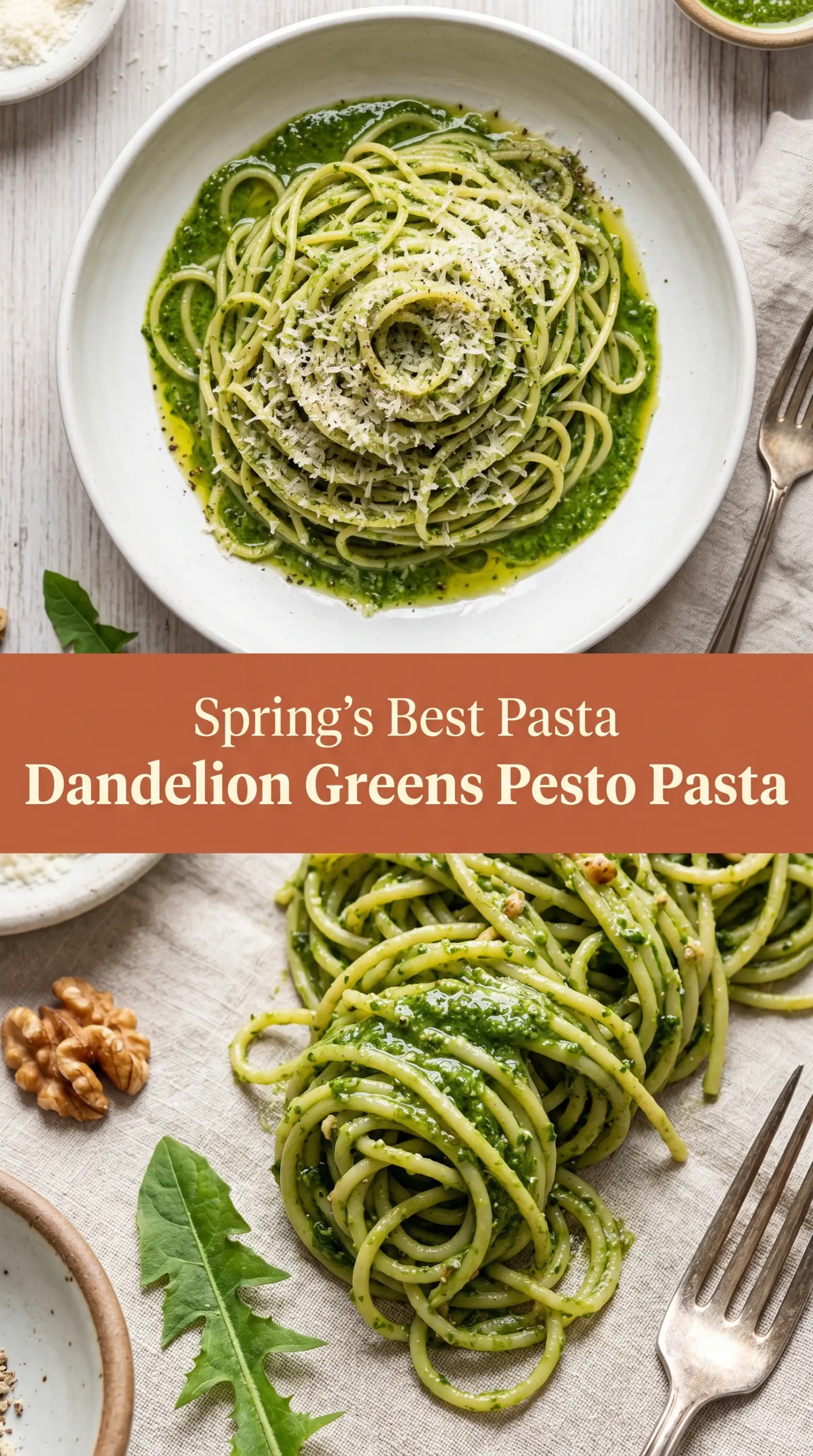
- Dandelion greens — These bring the distinct bitter, earthy backbone that makes the pasta taste different from standard pesto. Remove the tough stems so the sauce blends smoothly; if the leaves are older and extra sharp, a quick blanch and squeeze can soften the bite, but raw gives the best color and punch.
- Basil — Basil rounds out the greens and keeps the pesto from tasting too stern. You can replace part of it with parsley if needed, but don’t drop it entirely unless you want a much more assertive, bitter sauce.
- Walnuts or pine nuts — Either nut adds body and helps the sauce emulsify. Pine nuts taste more classic and buttery; walnuts are cheaper, a little earthier, and work especially well with the bitterness of dandelion greens.
- Parmesan — The cheese gives salt, savoriness, and thickness. Use the real stuff if you can, because finely grated Parmesan melts into the pesto better than a dry shaker cheese.
- Lemon juice and zest — These brighten the greens and keep the sauce from reading heavy. The zest matters more than it looks on paper; it gives the pesto a fresher top note that stands up to the bitter greens.
- Olive oil — This carries the flavor and makes the pesto silky. Use a good extra-virgin oil here because it’s one of the main flavors in the dish, not just a cooking medium.
- Pasta water — The starch in the water is what helps the pesto cling. Add it gradually; too much at once can make the sauce thin instead of glossy.
Building the Sauce So It Stays Glossy, Not Oily
Blending the greens first
Start by pulsing the dandelion greens, basil, nuts, garlic, Parmesan, lemon, and seasonings until everything looks finely chopped but not puréed. That first stage keeps the sauce textured enough to taste fresh. If you run the processor too long before adding the oil, the greens can paste up and darken.
Streaming in the oil
With the processor running, drizzle in the olive oil slowly so it has time to emulsify. A fast pour can leave the pesto looking separated or greasy. Stop once the mixture turns smooth and spoonable; you want a sauce, not a loose herb dressing.
Tossing it with hot pasta
Return the drained pasta to the warm pot, add the pesto, then loosen it with reserved pasta water a little at a time. Toss hard enough that the sauce turns glossy and coats every strand. If it looks tight or clumpy, add another spoonful of pasta water and keep tossing until it relaxes.
Finishing on the plate
Serve it right away with extra Parmesan, a drizzle of olive oil, and a few toasted nuts. Pesto waits for nobody; the color and aroma are best in the first few minutes after mixing. If it sits too long, the sauce will dull and tighten up.
How to Adapt This for Different Pantries and Diets
Make it dairy-free
Swap the Parmesan for 2 to 3 tablespoons of nutritional yeast plus an extra pinch of salt. You’ll lose some of the savory depth and the sauce won’t taste as round, but the lemon and nuts still keep it satisfying.
Use walnuts for a more affordable pesto
Walnuts are the best budget swap here and they play nicely with the bitterness of the greens. Toast them first if you can; the flavor gets deeper and the pesto tastes less flat.
Make it gluten-free
Use your favorite gluten-free spaghetti or linguine and cook it just until tender. GF pasta can go from firm to mushy fast, so pull it early and toss it immediately with the pesto before it gets sticky.
Tone down the bitterness
If your dandelion greens taste extra sharp, blanch them for 20 to 30 seconds, then squeeze them dry before blending. That softens the bite and gives you a gentler pesto without losing the green color.
Storage and Reheating
- Refrigerator: Store leftovers for up to 3 days. The pesto may darken a bit, but the flavor stays strong.
- Freezer: The pesto itself freezes well for up to 2 months. Freeze it in small portions without the pasta, then thaw in the fridge and loosen with a splash of warm water or pasta water.
- Reheating: Warm leftovers gently over low heat with a spoonful of water or olive oil. High heat can make the sauce look oily and dull, so keep it soft and slow.
Questions I Get Asked About This Recipe
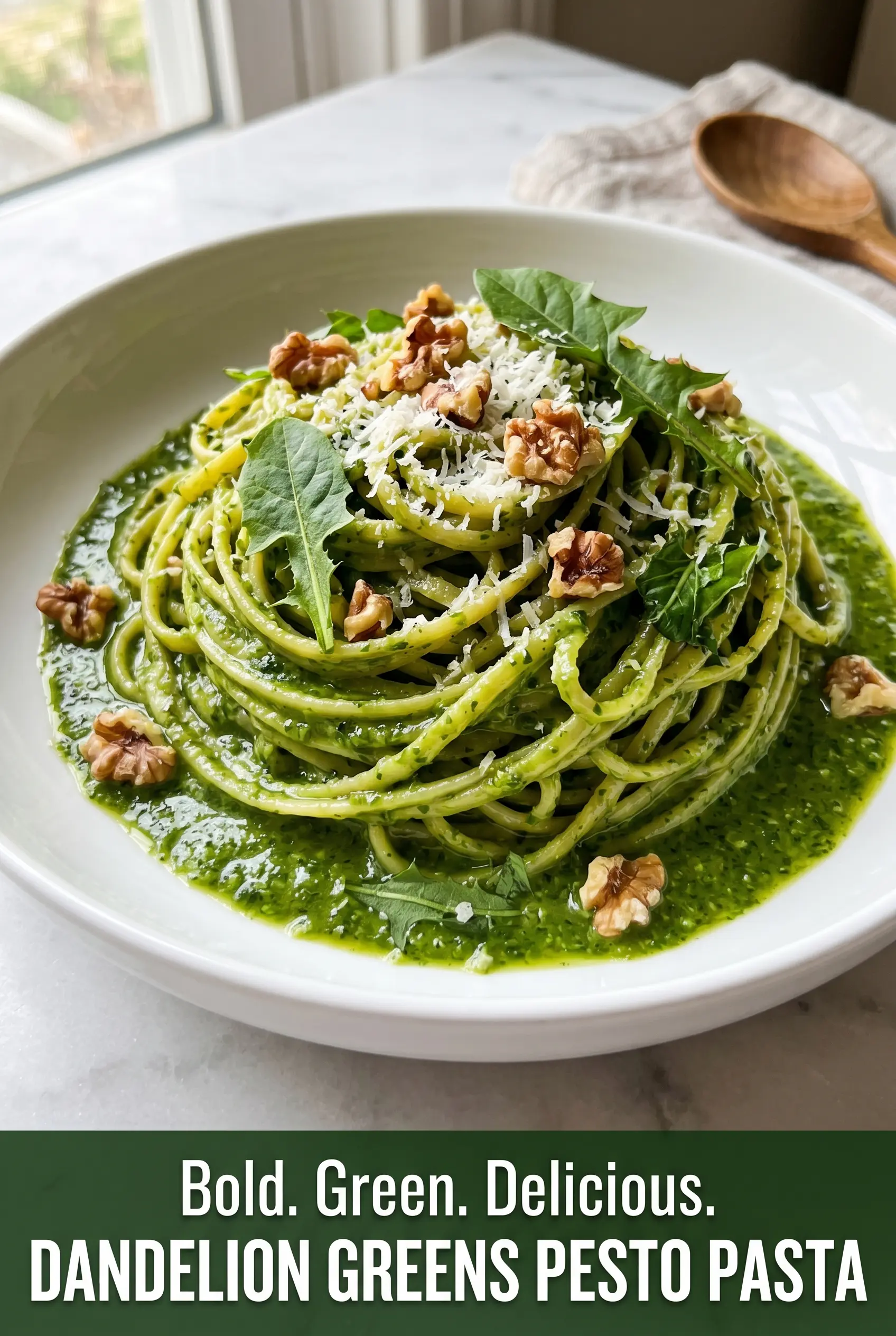
Dandelion Greens Pesto Pasta
Ingredients
Equipment
Method
- Bring a large pot of salted water to a boil, then cook pasta according to package directions until al dente. Reserve 1/2 cup pasta water before draining.
- Add dandelion greens, basil, toasted walnuts or pine nuts, garlic, Parmesan, lemon juice, lemon zest, salt, black pepper, and red pepper flakes to a food processor. Pulse 5–6 times until coarsely chopped.
- With the processor running, slowly drizzle in the extra-virgin olive oil and blend until smooth, about 30 seconds.
- Taste the pesto and adjust salt and lemon juice as needed.
- Transfer drained pasta back to the pot over low heat. Add pesto and 1/4 cup reserved pasta water.
- Toss vigorously until pasta is evenly coated and the sauce looks glossy, adding more pasta water 1 tbsp at a time if needed to loosen.
- Plate immediately and top with extra Parmesan, a drizzle of olive oil, and a few toasted walnuts. Serve hot.