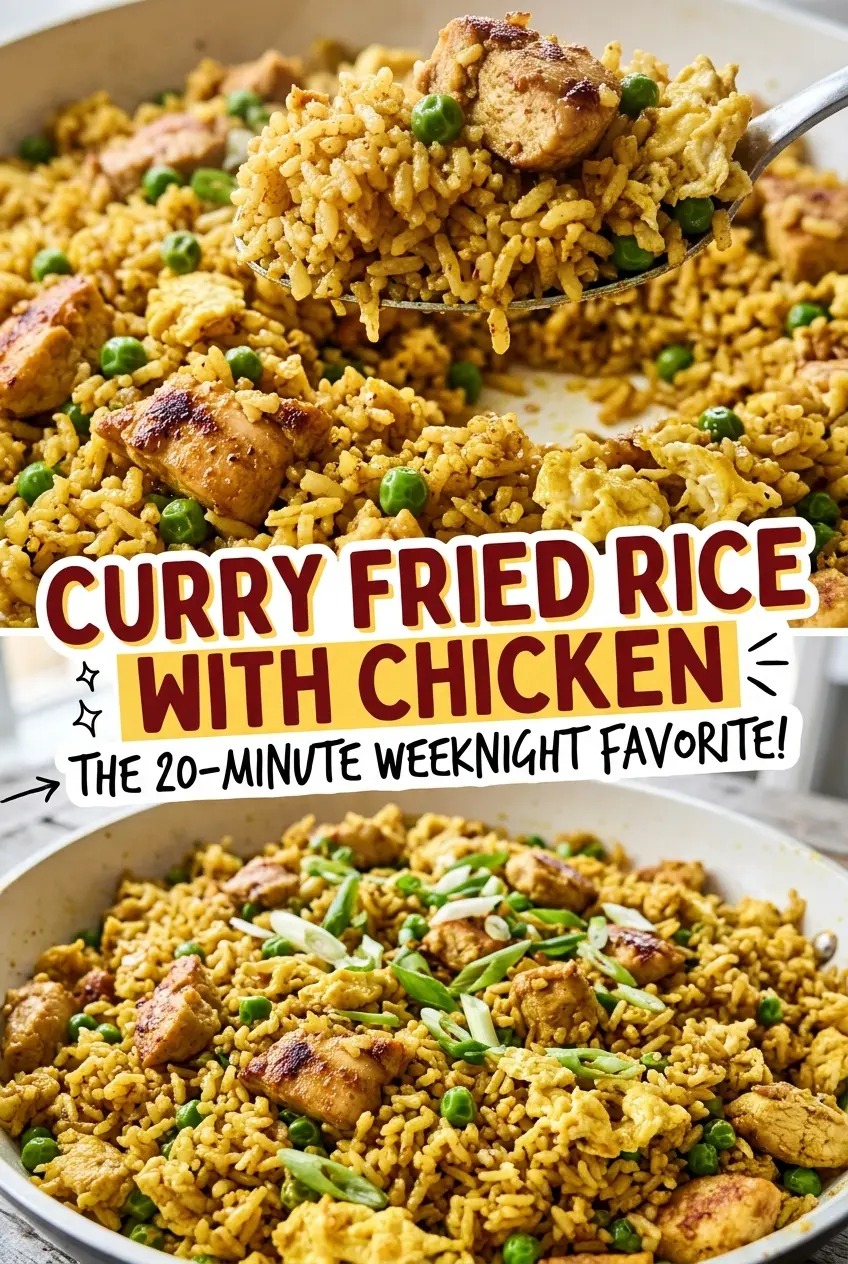
The rice starts to sizzle as soon as it hits the hot wok, and a warm curry aroma follows once the spices meet the pan. That quick shift is what makes this feel like a planned dinner rather than a way to use up cold rice. I make Curry Fried Rice with Chicken when I want a complete meal that comes together in one wok, with browned chicken and separate grains instead of a soft, stirred-together scramble.
Cooking the chicken and eggs first, then setting them aside, gives the onion and vegetables room to soften before the rice goes in. The curry powder gets a brief turn in the hot oil, so its aroma comes through without lingering raw or scorching. Once everything returns to the wok, a toss with soy sauce and sesame oil brings the savory, fragrant finish that makes each forkful taste like more than plain fried rice.
Kitchen Note
Bake, Serve, Wear the Vibe 👕
Editor-picked tees our Oven To Fork readers love.



We may earn from qualifying purchases at no extra cost to you.
Give the empty 14-inch wok its full 2 minutes over medium-high heat before the oil goes in. That preheat helps the chicken brown instead of sitting in a lukewarm pan.
Save this Curry Fried Rice with Chicken for a quick dinner built around cold rice, browned chicken, and a fragrant curry finish.
Why This Fried Rice Gets Cooked in Separate Passes
Fried rice needs room to meet the hot surface of the pan. If the chicken, eggs, vegetables, and rice all go in together, the wok gets crowded before the rice has a chance to heat through. The ingredients release moisture as they cook, and that steam can leave the grains soft and clumped instead of lightly toasted.
Cooking the chicken first gives it contact with the hot wok while it browns. The eggs get their own short turn, too, so they set into tender pieces rather than disappearing into the rice. After those are moved to a plate, the onion and frozen vegetables have space to soften, and the rice can be tossed across the wok on its own. Returning the chicken and eggs at the end warms them through without making them sit through every stage of cooking. That sequence is especially useful with four cups of rice: each ingredient gets a chance to cook properly, and the finished wokful still has distinct bites of chicken, egg, and vegetables.
Cold Long-Grain Rice and Curry Powder Set the Dish Up for Success
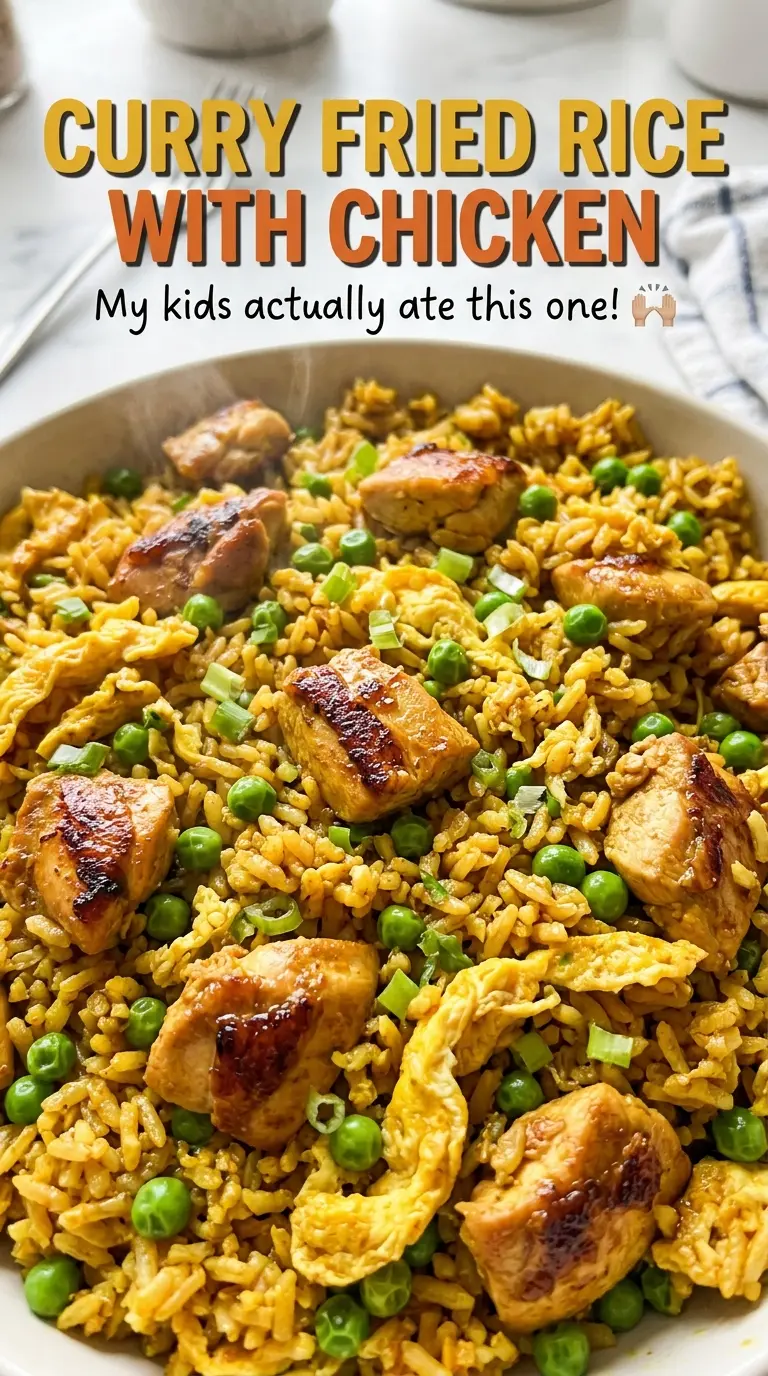
- Long-grain white rice — Chilled cooked rice is firm enough to break apart and toss without turning pasty. Freshly cooked, warm rice carries more moisture, so it tends to clump in the wok. I stick with long-grain white rice for the loose, separate texture here; a shorter, stickier grain won’t behave the same way.
- Chicken thighs — Boneless, skinless thighs stay juicy through browning and the final toss back into the wok. Cut the pieces evenly so they cook at a similar pace. Thighs are a good place to choose the fresh, well-trimmed option, but you don’t need a specialty cut.
- Eggs — Lightly beaten eggs cook quickly and add soft, savory bites throughout the rice. There’s no exact substitute that gives the same texture; for an egg-free version, leave them out rather than replacing them with another ingredient.
- Frozen peas and carrots — The frozen mix is convenient, and cooking it straight from frozen avoids an extra thawing step. It also gives the wok a small amount of moisture as the vegetables heat, so keep them to their brief cooking stage before the rice goes in.
- Curry powder — This is the defining warm spice in the dish. Fresh, fragrant curry powder makes a noticeable difference, while a familiar grocery-store blend works well. Curry pastes aren’t a direct swap: their moisture and concentration change how the seasoning behaves in the wok.
- Soy sauce and toasted sesame oil — Soy sauce seasons the rice and adds savory depth; toasted sesame oil brings its nutty aroma at the end. Low-sodium soy sauce can stand in at the same quantity if you prefer a gentler salt level. Keep the toasted sesame oil for finishing rather than using it as the cooking oil.
- Yellow onion, garlic, and green onions — The yellow onion softens into the base, garlic adds a sharper note, and sliced green onions bring a fresh finish. Mince the garlic before it goes into the wok, since it has only a short time to cook and can scorch if you’re still chopping.
Build the Curry Base Before the Rice Goes In
Brown the Chicken, Then Set the Eggs
Add a tablespoon of neutral oil to the hot wok, then add the chicken with the kosher salt and black pepper. Cook for 5 to 7 minutes, stirring occasionally, until the pieces are browned and the thickest ones reach 165°F. Move the chicken to a plate so it won’t overcook while the vegetables cook. Add another tablespoon of oil, pour in the beaten eggs, and stir for 1 to 2 minutes until just set, then transfer them to the same plate.
Soften the Onion and Wake Up the Curry
Add the remaining tablespoon of neutral oil and the diced yellow onion. Stir often for 2 minutes, watching for the onion to soften without taking on too much color. Add the frozen peas and carrots and cook for 2 minutes. Stir in the minced garlic and curry powder and cook for 30 seconds; the curry should smell fragrant, not scorched.
Toss the Rice Until Hot, Then Finish the Wok
Add the cold rice and break up any clumps as you toss it through the vegetables. Cook for 3 to 5 minutes, moving the rice often so it heats evenly rather than sticking in one layer. Return the chicken and eggs to the wok, then add the soy sauce and toasted sesame oil. Toss for 1 to 2 minutes until everything is hot, stir in the sliced green onions, and serve.
Two Easy Ways to Change the Chicken-and-Egg Mix
Make It Egg-Free
Leave out the eggs and skip the step where they cook in the wok. The chicken, rice, vegetables, and curry remain the same, but the finished dish loses the soft egg pieces and tastes a little more focused on the chicken and curry.
Make It Vegetarian by Leaving Out the Chicken
Omit the chicken and the oil used to brown it, then cook the eggs in their allotted oil and continue with the onion and vegetables. The result is a lighter fried rice with egg as its only protein; it won’t have the same meaty, browned bites as the original.
Storage and Reheating
- Refrigerator: Refrigerate leftovers within 2 hours in a shallow, airtight container and eat them within 3 to 4 days. The rice will soften a little as it sits.
- Freezer: Freeze cooled portions in airtight, freezer-safe containers for up to 2 months. Thaw a portion in the refrigerator before reheating for the most even texture.
- Reheating: Warm a portion in the microwave, covered, stirring partway through, or heat it in a skillet while stirring until steaming hot throughout. Avoid a blast of high heat, which can dry out the rice before the middle warms.
Questions That Come Up When Making Curry Fried Rice
Curry Fried Rice with Chicken
Ingredients
Equipment
Method
- Heat a 14-inch wok over medium-high heat for 2 minutes.
- Add 1 tablespoon neutral oil.
- Add the chicken, salt, and black pepper, and cook for 5 to 7 minutes, stirring occasionally, until browned and the thickest pieces reach 165°F.
- Transfer the chicken to a plate.
- Add 1 tablespoon neutral oil to the wok and pour in the eggs.
- Cook for 1 to 2 minutes, stirring until just set.
- Transfer the eggs to the plate with the chicken.
- Add the remaining 1 tablespoon neutral oil and the onion, and cook for 2 minutes, stirring often, until softened.
- Add the peas and carrots and cook for 2 minutes.
- Stir in the garlic and curry powder and cook for 30 seconds.
- Add the rice, breaking up any clumps, and cook for 3 to 5 minutes, stirring and tossing until hot.
- Return the chicken and eggs to the wok, add the soy sauce and sesame oil, and toss for 1 to 2 minutes until everything is hot.
- Stir in the green onions and serve.