The rice should hit the wok cold and separate into grains, not land in a sticky mound. That’s the difference I notice first when making beef fried rice: cold cooked rice moves easily through the pan, while warm rice tends to clump as you toss it. With ground beef, eggs, and frozen peas and carrots, this is a full meal from one wok, and the ingredients cook in a quick sequence.
I brown the beef first, then move it out of the way while the eggs and vegetables cook. That gives each ingredient a turn against the hot wok instead of crowding everything into the pan at once. The soy sauce and oyster sauce coat the rice near the end, and a little toasted sesame oil goes in after the heat is off. You get savory, separate grains with browned beef and little bites of egg throughout.
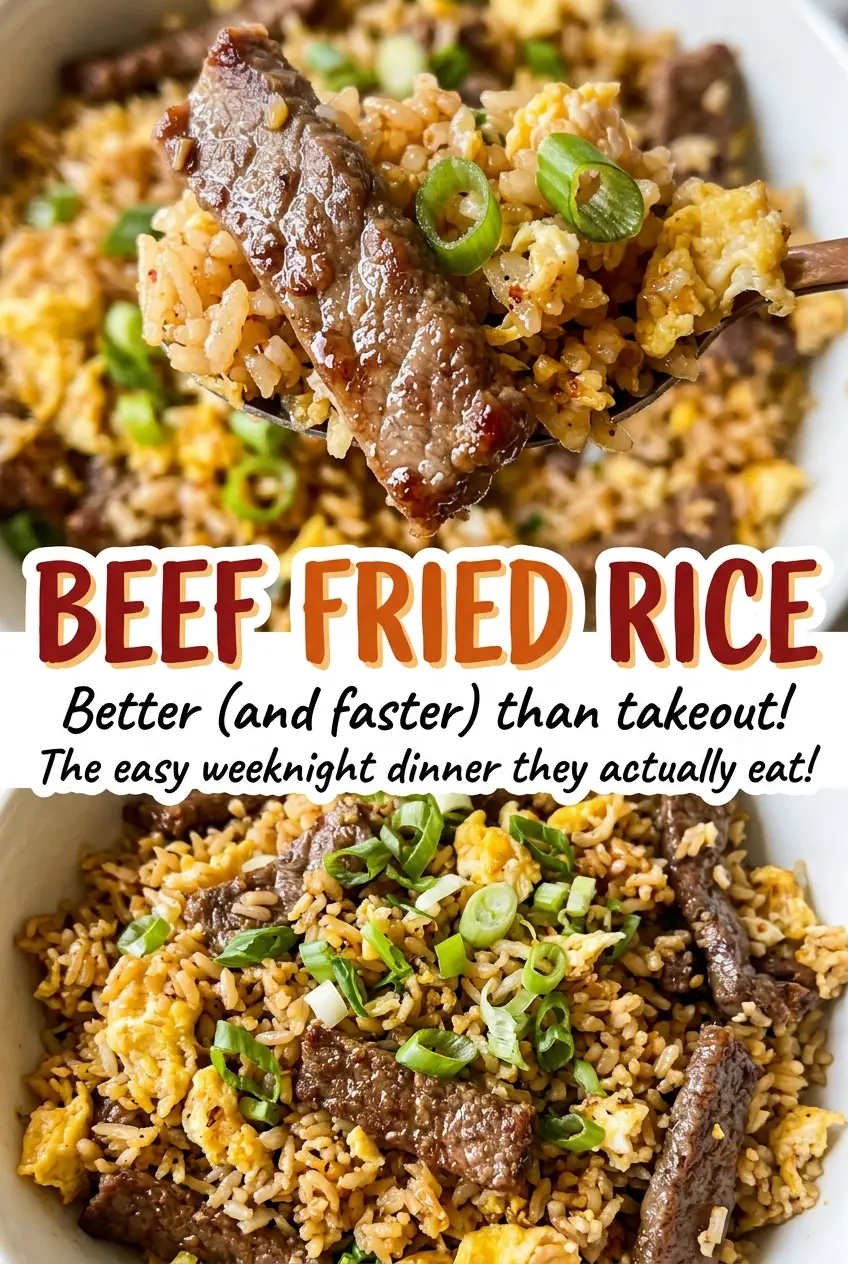
Kitchen Note
Bake, Serve, Wear the Vibe 👕
Editor-picked tees our Oven To Fork readers love.



We may earn from qualifying purchases at no extra cost to you.
Add the toasted sesame oil after the wok comes off the heat. It keeps its nutty aroma instead of disappearing into the high-heat cooking.
Save this beef fried rice for a fast, savory dinner with separate grains, browned beef, and tender vegetables.
Cold Rice Is What Keeps This Beef Fried Rice From Turning Mushy
Rice that has cooled firms up, so the grains are easier to break apart and toss around the wok. That matters here because the rice goes into the pan after the vegetables have already started cooking. If it’s warm and damp, it can stick together in clumps and take longer to heat through; the vegetables may soften before the rice has a chance to separate.
Long-grain white rice is a good fit because its cooked grains tend to stay distinct. Start with cold rice and loosen any clumps as you add it to the wok. Then give it a few minutes of direct heat before the sauces go in. You’re looking for hot rice with separated grains, not a soft, compact layer. This small bit of planning makes the quick stir-fry easier to manage from the first toss to the last.
Why the Rice, Sauces, and Beef Each Need a Different Moment
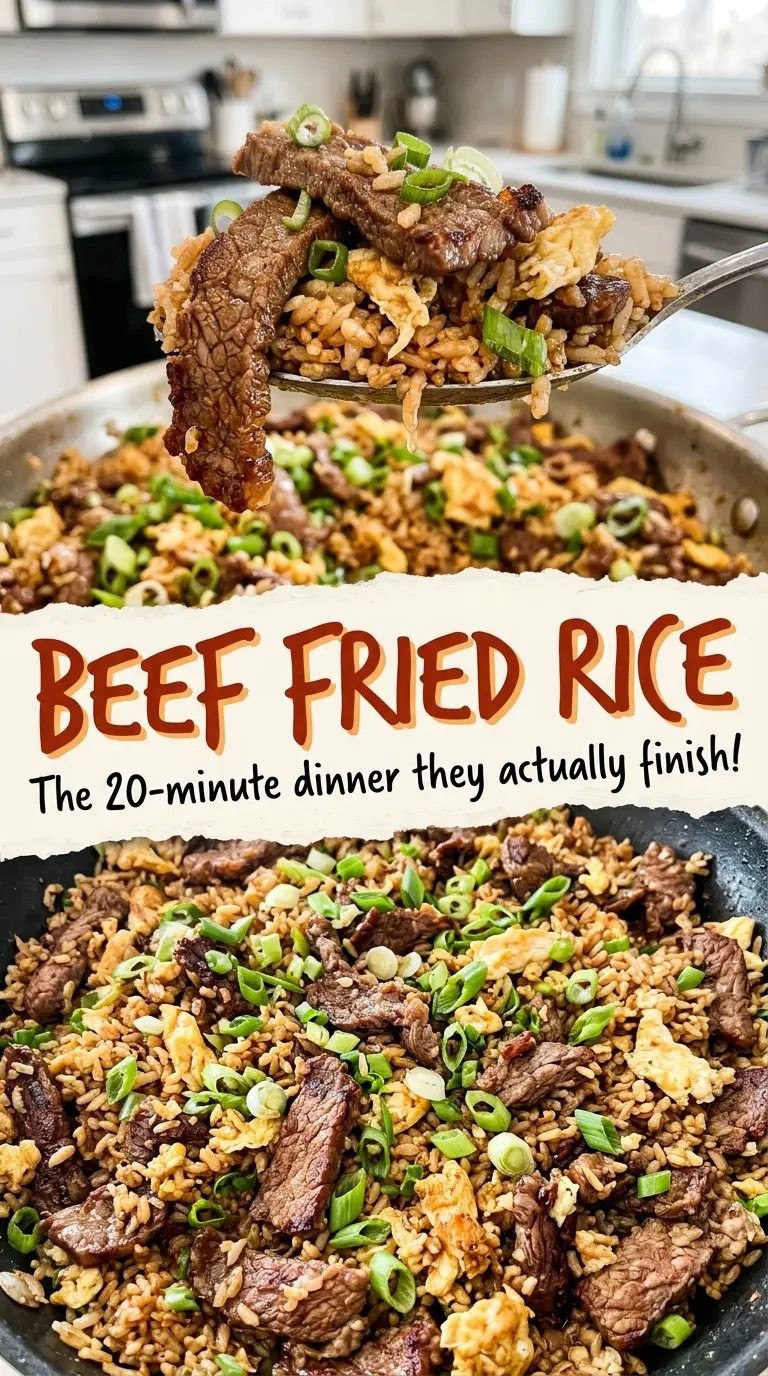
- Ground beef — Breaking it into small pieces as it cooks gives you browned beef in each serving rather than a few large chunks. Regular ground beef works well; there’s no need to buy a premium grind for a stir-fry.
- Cold cooked long-grain rice — Its distinct grains are easier to separate in the wok. Short-grain rice tends to be stickier, so it won’t give quite the same loose, fried-rice texture. Use rice that’s already cold rather than making a fresh pot for this meal.
- Eggs — Lightly beaten eggs cook into soft, small curds that spread through the rice. They need only a short time in the hot wok; cooking them until firm and dry at this stage makes them less tender after they go back in with the beef.
- Frozen peas and carrots — They’re convenient, already cut to a useful size, and can go straight into the wok. The frozen mixture is a practical choice here; fresh vegetables would need cutting and may cook at a different pace.
- Scallions and garlic — Keeping the scallion whites separate from the greens gives the whites time to soften with the vegetables while the greens stay fresh for the finish. Mince the garlic before you start cooking, since it needs only a brief turn in the wok.
- Soy sauce and oyster sauce — Soy sauce brings the familiar salty, savory seasoning; oyster sauce adds a deeper rounded savoriness. Both coat the rice, so toss thoroughly once they’re added rather than pouring them over one spot and leaving that patch dark.
- Neutral oil and toasted sesame oil — Neutral oil handles the high-heat cooking without competing with the other ingredients. Toasted sesame oil has a stronger aroma, so it works best as a finishing touch rather than the oil used to brown the beef.
Build the Wok in Stages So the Rice Stays Separate
Brown the Beef Before the Other Ingredients
Heat one tablespoon of neutral oil in a 14-inch wok over high heat. Add the ground beef and break it into small pieces as it cooks for 5–7 minutes. Look for browned bits throughout, not just beef that has lost its pink color. Cook it to 160°F, then transfer it to a plate.
Scramble the Eggs Until Just Set
Add another tablespoon of oil to the wok, then pour in the lightly beaten eggs. Scramble for 30–60 seconds, moving them around so they form tender curds instead of one solid sheet. Take them out while they’re just set; they’ll return to the wok later. Transfer them to the plate with the beef.
Soften the Vegetables, Then Add the Garlic
Add the remaining oil, frozen peas and carrots, and scallion whites to the wok. Stir-fry for 2 minutes, moving the vegetables across the hot surface so they cook evenly. Add the minced garlic only after that first stretch of cooking, and stir for 30 seconds. Garlic can turn bitter if it sits against high heat too long, so keep it moving.
Toss the Rice With Sauce, Then Return the Beef and Eggs
Add the cold rice and break up clumps as you stir-fry for 3–4 minutes, until the grains are hot and separated. Pour in the soy sauce and oyster sauce, then toss so the rice is evenly coated. Return the beef and eggs and stir-fry for 1–2 minutes, until the rice reaches 165°F. Take the wok off the heat, then toss with the toasted sesame oil and scallion greens.
Simple Swaps That Change the Bowl Without Losing the Wok-Fried Texture
Make It Gluten-Free
Replace the soy sauce with the same amount of gluten-free tamari, and use gluten-free oyster sauce in place of regular oyster sauce, keeping its amount the same. The dish stays savory, though tamari can taste a little less sharp than soy sauce.
Use Brown Rice for a Chewier Bite
Swap in cold cooked long-grain brown rice in the same quantity as the white rice. The grains bring a firmer, nuttier bite, so take an extra moment to break apart any clumps before tossing them with the sauces.
Leave Out the Eggs
For an egg-free version, skip the eggs and the brief scramble stage. The finished rice will have fewer soft curds and a less rich texture, but the beef, vegetables, and seasoned grains still make a complete stir-fry.
Storage and Reheating
- Refrigerator: Divide leftovers into shallow airtight containers and refrigerate within 2 hours. Use within 3–4 days; the rice will firm up as it chills.
- Freezer: Freeze portions in airtight containers for up to 2 months for best quality. Thaw overnight in the refrigerator before reheating.
- Reheating: Warm in a skillet over medium heat, stirring until steaming hot throughout. A small splash of water helps loosen chilled grains; avoid repeatedly warming and cooling the same portion.
Questions That Come Up When Making Beef Fried Rice
Beef Fried Rice
Ingredients
Equipment
Method
- Heat 1 tablespoon of the oil in a 14-inch wok over high heat.
- Add the ground beef and cook, breaking it into small pieces, for 5–7 minutes, until browned and it reaches 160°F; transfer to a plate.
- Add 1 tablespoon of the oil to the wok.
- Add the eggs and scramble for 30–60 seconds, until just set; transfer to the plate with the beef.
- Add the remaining 1 tablespoon oil, the peas and carrots, and the scallion whites, and stir-fry for 2 minutes.
- Add the garlic and cook for 30 seconds.
- Add the rice, breaking up any clumps, and stir-fry for 3–4 minutes, until hot and the grains are separated.
- Add the soy sauce and oyster sauce and toss to coat.
- Return the beef and eggs to the wok and stir-fry for 1–2 minutes, until the rice reaches 165°F.
- Remove from the heat and toss with the sesame oil and scallion greens.