Cold rice comes out of the refrigerator in firm clumps, and those packed spots don’t heat at the same pace as loose grains. I loosen it in the bowl before anything goes onto the pan, so the soy, garlic, and oils can coat the rice instead of gathering in a few spots. Baked fried rice brings those grains together with peas and carrots, then finishes with egg and scallions.
I like this method when I want a full batch without standing over a skillet and cooking in rounds. The rice turns out savory and tender, with distinct egg curds and a fresh hit of scallion at the end. It’s a practical way to use cold cooked rice, and the oven does most of the work while the flavors come together.
Kitchen Note
Bake, Serve, Wear the Vibe 👕
Editor-picked tees our Oven To Fork readers love.



We may earn from qualifying purchases at no extra cost to you.
Thaw and drain the peas and carrots before they go into the bowl. If water is still clinging to the vegetables, it can end up on the pan instead of the rice.
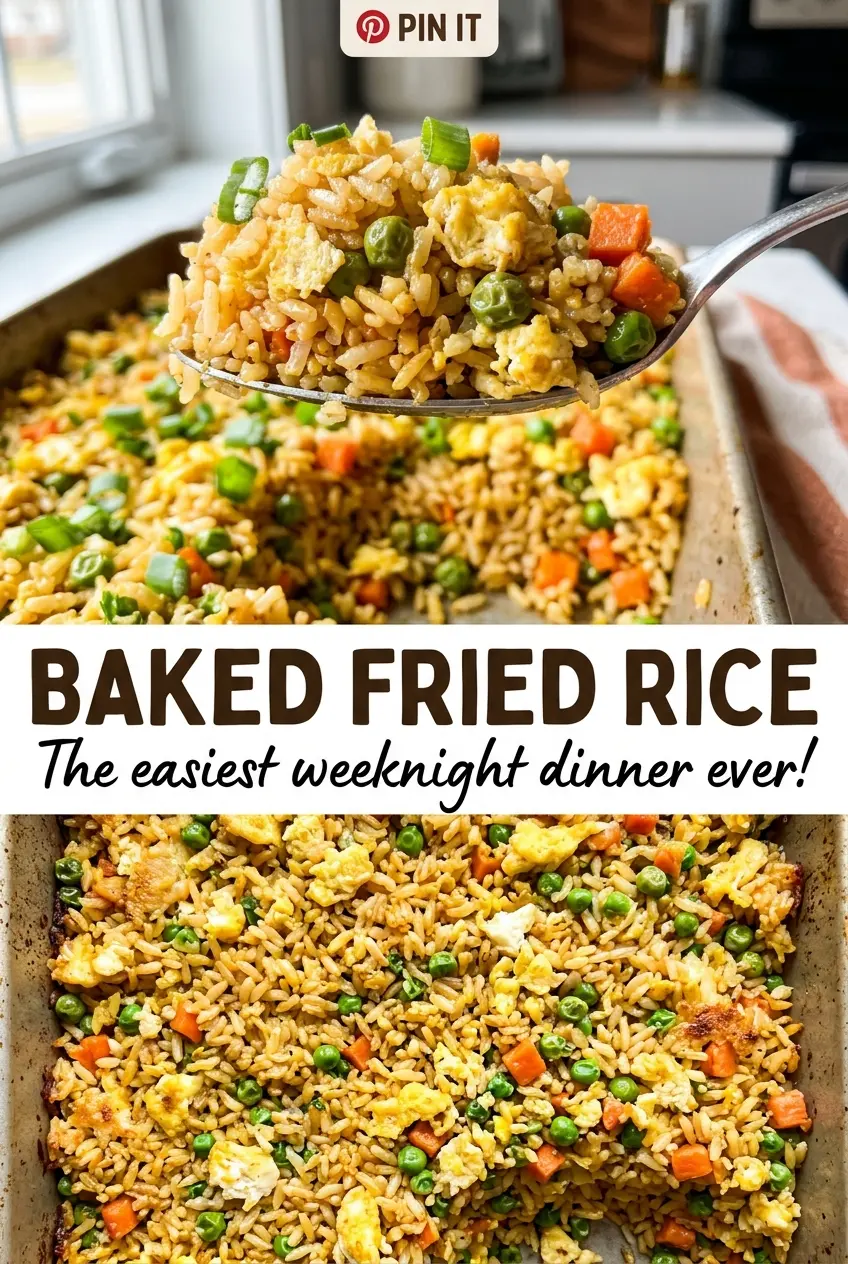
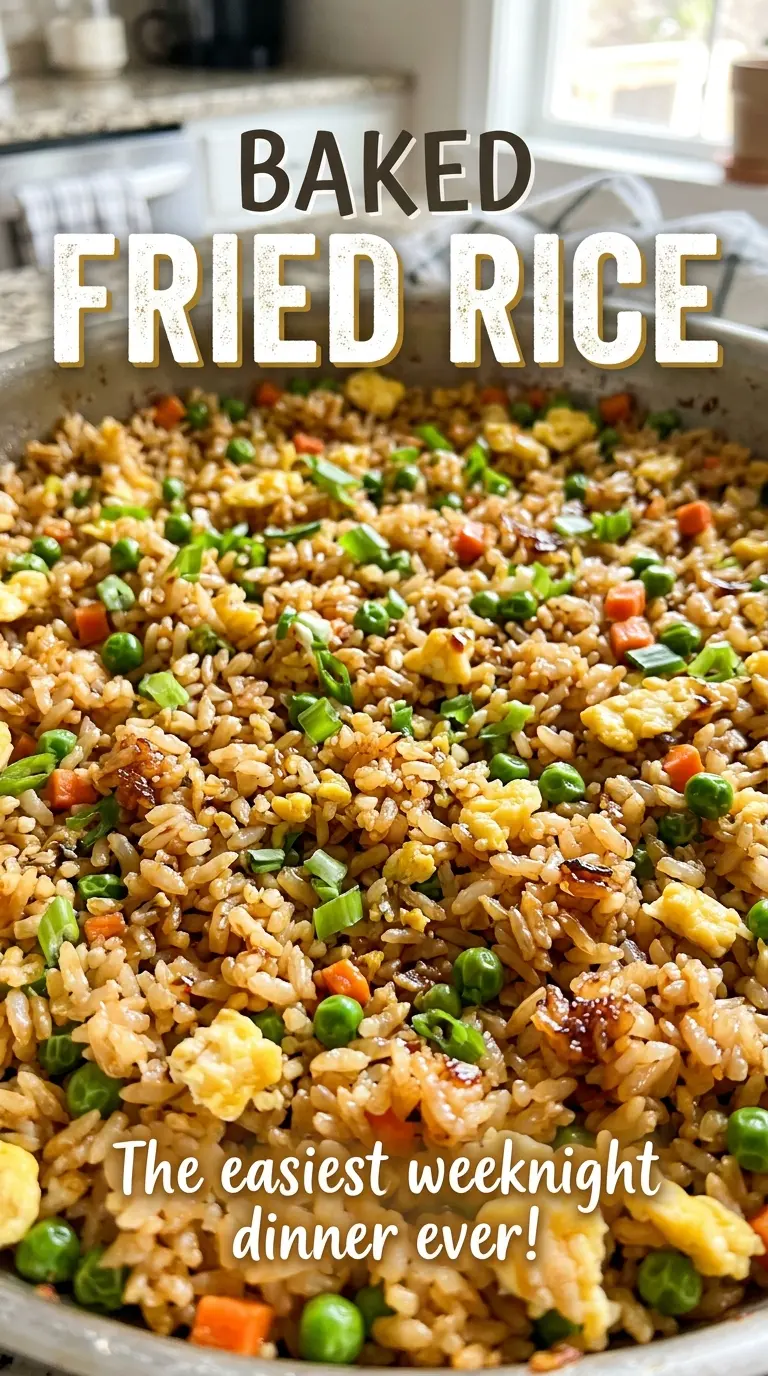
Save Baked Fried Rice for a generous sheet-pan batch of savory rice, tender vegetables, egg, and scallions.
Why the Rice Needs Room More Than a Hotter Oven
Baked fried rice isn’t trying to imitate the smoky, browned edge you get from a wok. The oven gives the whole batch steady heat, so the goal is rice that’s hot and well seasoned rather than a layer of crisped grains. That distinction helps set expectations: this is an easy way to cook six servings together, not a shortcut to wok char.
The 18×13-inch rimmed sheet pan gives the rice space to spread out. When the grains sit in an even layer, heat reaches more of the mixture instead of the middle being buried under a thick mound. Stirring once halfway through redistributes the rice and vegetables, which helps the pan heat more evenly. A smaller or deeper pan would pile the mixture up and change how it bakes, so stick with the broad rimmed pan for this batch. A thin, even layer also makes it easier to clear a space for the eggs later without moving rice off the pan.
How Cold Rice, Toasted Sesame Oil, and Eggs Shape the Pan
- Cold long-grain white rice — Long grains tend to stay distinct as you toss and bake them, while cold cooked rice is firm enough to handle without turning mushy. Use rice that’s already cooked and chilled; freshly cooked, warm rice is softer and more likely to clump. Leftover rice works well, and there’s no need for a premium brand here.
- Frozen peas and carrots — The ready-cut mix keeps prep simple and brings a sweet, tender contrast to the savory rice. Thawed vegetables are easy to distribute through the bowl. If peas and carrots aren’t available, use another thawed, drained frozen vegetable blend; the mix of vegetables will change, but the oven method stays the same.
- Soy sauce and neutral oil — Soy sauce seasons the rice throughout, while canola or another neutral oil coats the grains without adding a strong competing flavor. Standard soy sauce is fine. For a gluten-free version, use gluten-free tamari; that swap is covered below.
- Toasted sesame oil and garlic — Toasted sesame oil brings the recognizable nutty aroma, and minced garlic gives the rice a savory base. Fresh garlic has a brighter flavor than jarred, but jarred minced garlic works when convenience matters. Use a fresh bottle of sesame oil if yours has been open a long time, since its aroma is the point.
- Eggs and scallions — Beaten eggs bake into curds when they’re cooked in their own clear space on the pan. Scallions go in after baking, so their mild onion flavor stays fresh rather than fading in the oven. Choose firm, bright-green scallions; limp ones won’t bring the same crisp finish.
Build the Rice Layer, Then Cook the Eggs Separately
Season the Rice in the Bowl
Toss the cold rice with the thawed peas and carrots, soy sauce, neutral oil, toasted sesame oil, minced garlic, and white pepper in a large bowl. Break apart rice clumps as you mix so seasoning reaches the grains instead of coating only the outside of a packed lump. Keep tossing until the vegetables are spread through the rice and the garlic and sauces look evenly distributed. A large bowl gives you room to do this without crushing the grains.
Spread It Across the Sheet Pan
Coat the 18×13-inch rimmed sheet pan with cooking spray, then spread the rice mixture evenly over it. Bake at 425°F for 12 to 15 minutes, stirring once halfway through. When you stir, bring rice from the edges toward the center and spread it back into an even layer. Don’t leave it gathered in a mound after stirring; the level surface helps the batch heat consistently.
Give the Eggs Their Own Space
Push the rice to one side of the pan and pour the beaten eggs into the cleared area. Return the pan to the oven for 5 to 8 minutes, until the eggs are fully set and reach 160°F. The eggs should look set rather than wet or glossy in the middle. If the open space is too small, shift a little more rice aside before pouring so the eggs can cook in a defined area.
Break Up the Curds and Finish the Rice
Break the set eggs into small curds and stir them through the rice. Bake for another 3 to 5 minutes, until the rice is steaming hot and reaches 165°F. Stir in the thinly sliced scallions after this final bake, while the rice is still hot. The scallions soften slightly from the warmth without spending extra time in the oven.
Three Simple Ways to Adapt Baked Fried Rice
Make It Gluten-Free with Tamari
Replace the soy sauce with the same amount of gluten-free tamari. It seasons the rice with a similar savory depth, though the finished batch may taste a little rounder and less sharp than one made with soy sauce.
Use Cold Brown Rice for a Chewier Bite
Swap in the same volume of cold cooked long-grain brown rice. It has a nuttier taste and a firmer, chewier texture than white rice, so the pan will feel heartier while keeping the same cooking method.
Soften the Sesame Flavor
If you don’t want a toasted sesame aroma, replace the sesame oil with the same amount of neutral oil. The rice will still be coated and bake well, but it will taste more simply savory and lose that nutty finish.
Storage and Reheating
- Refrigerator: Refrigerate leftovers within 2 hours and use within 3 to 4 days. The rice firms up as it chills.
- Freezer: Freeze portions in airtight containers for up to 1 month for the best texture. The grains may be a little softer after thawing.
- Reheating: Reheat a portion in a covered microwave-safe dish with a small splash of water, stirring halfway through, until steaming throughout. Uncovered reheating can dry the rice out.
Questions That Come Up When Baking Fried Rice
Baked Fried Rice
Ingredients
Equipment
Method
- Heat the oven to 425°F.
- Coat an 18x13-inch rimmed sheet pan with cooking spray.
- In a large bowl, toss the rice with the peas and carrots, soy sauce, neutral oil, sesame oil, garlic, and white pepper, breaking up any rice clumps.
- Spread the rice mixture evenly on the pan.
- Bake for 12 to 15 minutes, stirring once halfway through.
- Push the rice to one side of the pan and pour the beaten eggs into the cleared space.
- Bake for 5 to 8 minutes, until the eggs are fully set and reach 160°F.
- Break the eggs into small curds and stir them into the rice.
- Bake for 3 to 5 minutes, until the rice is steaming hot and reaches 165°F.
- Stir in the scallions.