Crispy-edged salmon, fluffy rice, and tender vegetables make this air fryer dinner feel organized and calm instead of rushed. The salmon stays flaky in the center because it cooks hot and fast, and the vegetables pick up just enough char to taste finished without needing a second pan. It’s the kind of meal that looks like you planned ahead, even when you didn’t.
What makes this version work is the separation of jobs. The rice cooks on the stovetop, the salmon gets direct heat in the air fryer, and the vegetables go in just long enough to soften and caramelize at the edges. That keeps the salmon from overcooking while the vegetables stay bright instead of limp. A dry surface on the fish also matters more than people think; moisture is what keeps salmon from developing that lightly crisp top.
Below you’ll find the timing that keeps everything landing at the same moment, plus a few swaps that still keep the meal balanced and weeknight-friendly.
Bake, Serve, Wear the Vibe 👕
Editor-picked tees our Oven To Fork readers love.



We may earn from qualifying purchases at no extra cost to you.
The salmon came out flaky with crisp edges, and the veggies had just enough char without turning mushy. I loved that the rice was done right when everything else finished.
Save this air fryer salmon with rice and veggies for a fast dinner with crisp salmon, tender vegetables, and no extra fuss.
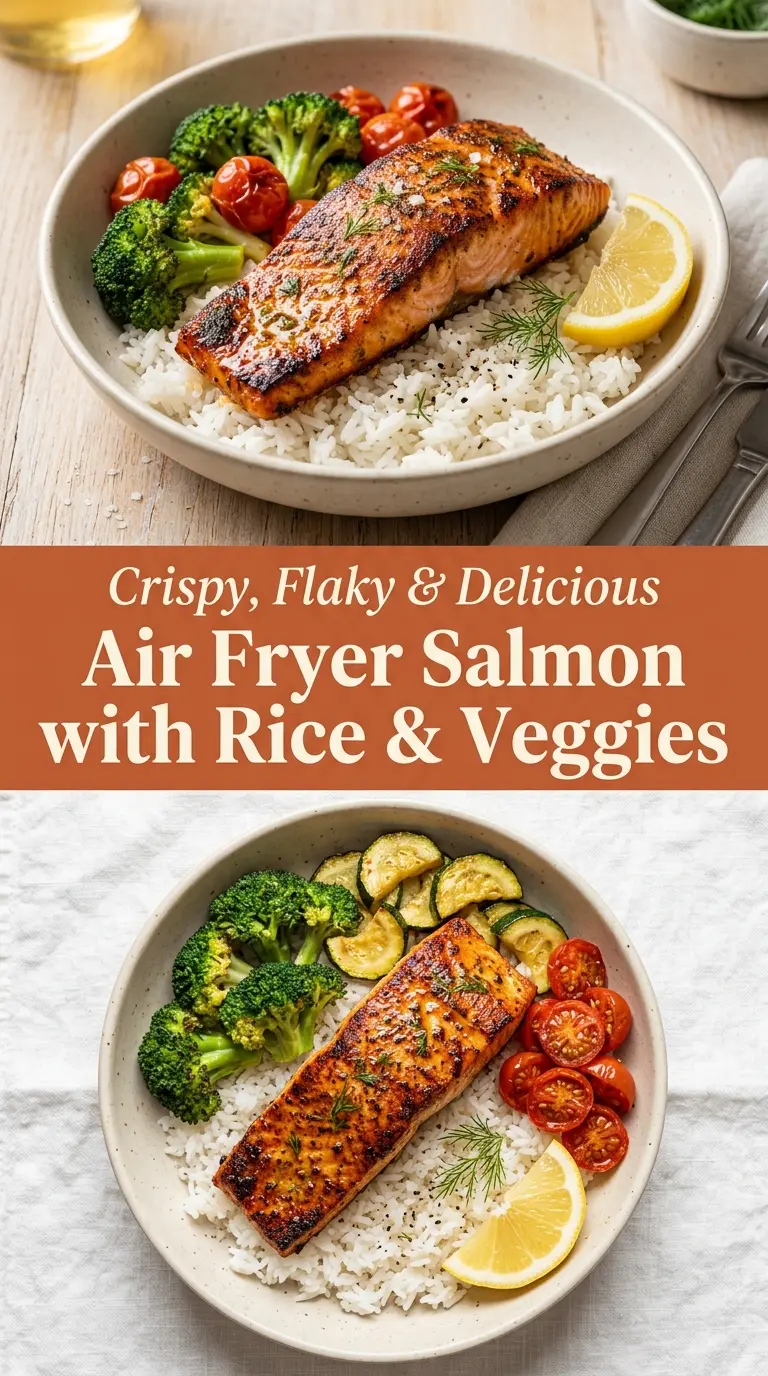
The Trick to Keeping the Salmon Crisp While the Veggies Finish
Salmon and vegetables don’t want the same amount of time, and that’s where a lot of dinners go sideways. If everything goes in together, the salmon usually overcooks before the broccoli and zucchini have a chance to pick up any real color. The fix is to treat the salmon like the fast-cooking main event and the vegetables like a quick finish. That keeps the fish tender and gives the vegetables just enough heat to turn sweet at the edges.
The other thing that matters here is surface moisture. Wet salmon steams before it sears, which is how you end up with soft, pale tops instead of that lightly crisp finish. Patting the fillets dry and oiling them before the seasoning goes on helps the spices cling and helps the outside set before the center is overdone. The rice stays out of the air fryer completely, which is a good thing — it needs steady moisture, not dry heat.
- Salmon fillets — Skin-on fillets hold up best in the air fryer and stay juicier near the bottom. If you use skinless fillets, keep a close eye on the time because they cook a little faster and can dry out at the edges.
- Smoked paprika — This gives the salmon a deeper, slightly savory edge that plain paprika can’t match. If you only have regular paprika, use it, but the flavor will be softer.
- Lemon juice — A little acid wakes up the fish and keeps the seasoning from tasting flat. Add it right before cooking so the salmon doesn’t sit in it long enough to start breaking down on the surface.
- Rice — Long-grain white rice gives you separate, fluffy grains that don’t fight with the salmon. Brown rice works, but it needs more water and a longer cook, so I’d only swap it if you’re already comfortable adjusting stovetop rice.
- Broccoli, zucchini, and cherry tomatoes — This mix gives you something firm, something tender, and something juicy. If you swap vegetables, keep the cut size similar so nothing finishes way ahead of the rest.
The Timing That Gets Dinner on the Plate Together
Starting the Rice First
Get the rice going before anything else, because it needs uninterrupted time on the stove. Once it reaches a boil, drop it to low, cover it, and leave it alone until the liquid is absorbed and the grains are tender. If you keep lifting the lid, you lose steam and end up with uneven rice that’s wet on top and dry underneath.
Seasoning the Salmon the Right Way
Pat the fillets dry, brush them with oil, then season the top generously. The oil helps the spices stick and protects the surface from drying out too fast. Put the fillets skin-side down in the basket so the skin acts as a shield between the heat and the flesh. If the fillets are packed too tightly, the air can’t move and you lose the crisp edges.
Cooking the Vegetables in the Salmon’s Final Minutes
Add the vegetables late, not at the beginning. Broccoli and zucchini need less time than the fish, and cherry tomatoes only need enough heat to slump slightly and burst at the sides. Toss them in oil and seasoning first so they roast instead of drying out. If your air fryer runs hot, check them a minute early — vegetables go from tender to wrinkled faster than people expect.
Knowing When the Salmon Is Done
The salmon is ready when the center turns opaque and flakes with light pressure from a fork. If you use a thermometer, 145°F is the target, but the visual cue matters just as much: the fillet should feel springy, not soft and raw in the middle. Pull it out when it’s just done because carryover heat finishes the job while you plate the rice.
What to Change Without Losing the Balance of the Dish
Dairy-Free and Naturally Gluten-Free
This recipe already lands in a good place for both diets as written. The only thing to watch is your broth if you use it for the rice — choose a gluten-free broth if needed, and you’re set. Nothing about the texture changes, so you still get a clean, balanced plate.
Swap the Rice for Cauliflower Rice
If you want a lower-carb plate, use cauliflower rice and cook it separately in a skillet instead of steaming it with the fish. Cauliflower rice releases a lot of moisture, so it needs a hot pan to stay light instead of soggy. The meal becomes a little lighter and less starchy, but the salmon still carries the dish.
Use Asparagus or Green Beans Instead of Zucchini
Asparagus and green beans both handle the air fryer better than watery vegetables that collapse too fast. Cut asparagus into medium spears or trim the beans so they cook in the same window as the salmon. You’ll get more snap and less moisture pooling in the basket.
Storage and Reheating
- Refrigerator: Store leftovers in an airtight container for up to 3 days. The salmon stays good, but the vegetables soften a bit after chilling.
- Freezer: The salmon and rice freeze fairly well, though the vegetables lose some texture. Freeze in portions for up to 2 months, and keep the lemon garnish off until serving.
- Reheating: Warm the salmon gently at 300°F in the air fryer or oven until just heated through. The biggest mistake is blasting it on high heat, which dries out the fish before the center warms. Reheat the rice with a splash of water, covered, so it steams back to life.
Answers to the Questions Worth Asking
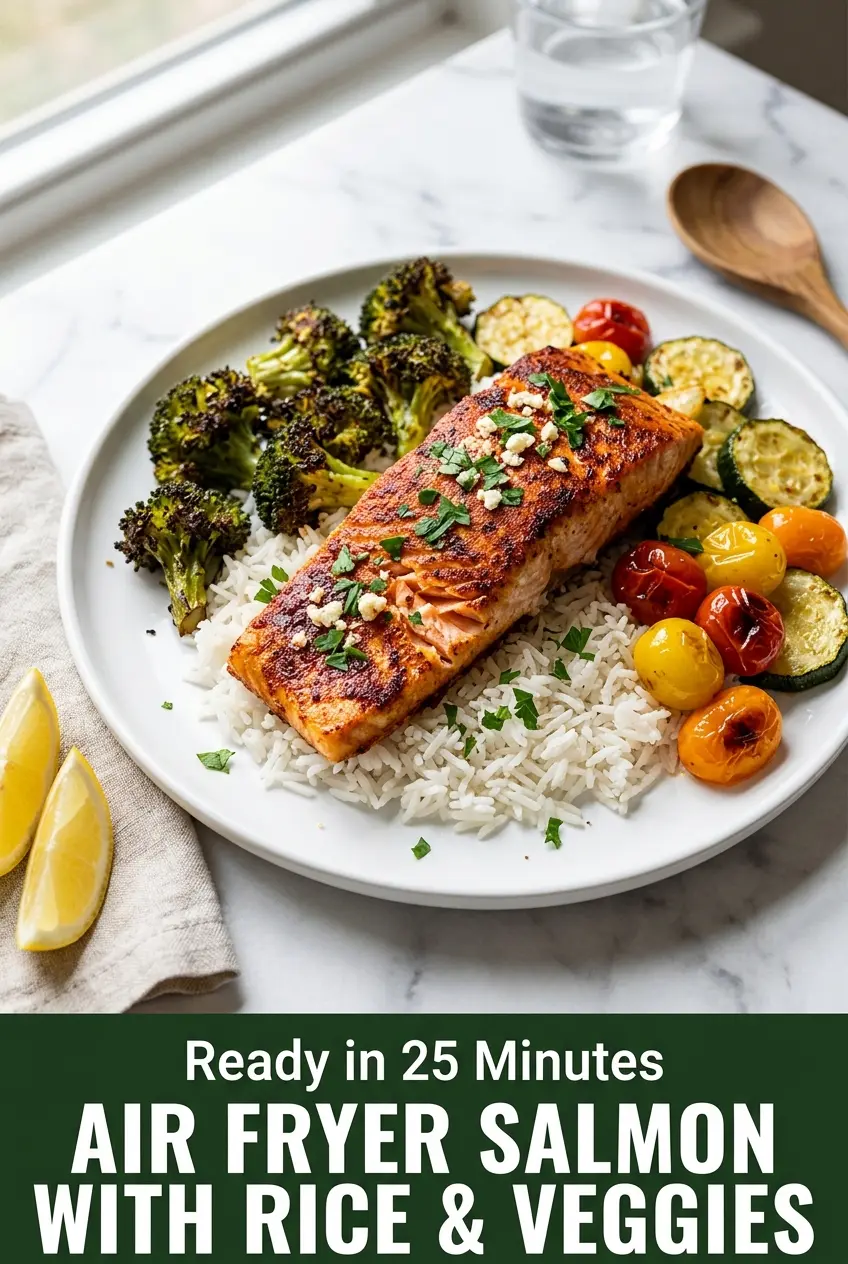
Air Fryer Salmon with Rice & Veggies
Ingredients
Equipment
Method
- Preheat the air fryer to 400°F (200°C) for 3 minutes so it’s hot and ready for quick cooking.
- Pat the salmon fillets dry with paper towels, then brush each fillet with olive oil.
- Mix garlic powder, smoked paprika, onion powder, salt, and black pepper, then rub the spice mix evenly over the top of each fillet.
- Drizzle lemon juice over all fillets.
- Bring 2 cups water or chicken broth with 1/2 tsp salt to a boil, then add the long-grain white rice.
- Reduce heat to low, cover, and simmer for 18 minutes until all liquid is absorbed.
- Fluff the rice with a fork so it stays fluffy and light.
- Toss the broccoli, zucchini, and cherry tomatoes with 1 tbsp olive oil, Italian seasoning, salt, and pepper until evenly coated.
- Place the salmon fillets in the air fryer basket skin-side down.
- Air fry at 400°F for 10–12 minutes until the flesh is opaque and flakes easily with a fork (internal temp 145°F).
- In the last 8 minutes of salmon cooking, add the veggies to a second air fryer rack or cook in a separate batch at 390°F for 8 minutes, shaking halfway, until tender with light char.
- Plate the rice in a bowl or on a plate, then top with a salmon fillet and serve the veggies alongside.
- Garnish with fresh parsley and a lemon wedge, then serve immediately.