Juicy chicken thighs with crisp, seasoned skin and caramelized vegetables make this sheet pan dinner one of those meals that disappears fast and leaves barely any dishes behind. The chicken roasts right alongside the potatoes, broccoli, carrots, and bell pepper, so the vegetables soak up the savory drippings instead of drying out on a separate tray. When everything is done right, you get tender chicken, browned edges on the vegetables, and a pan sauce of sorts built from nothing more than seasoning and rendered fat.
What makes this version work is the balance of timing and spacing. Bone-in, skin-on thighs stay forgiving in a hot oven, and the vegetables are cut so the potatoes and carrots can start cooking without leaving the broccoli limp by the time the chicken is done. A little oil helps the seasoning cling, but the real payoff comes from giving everything enough room on the pan to roast instead of steam.
Below, you’ll find the small details that keep the skin crisp, the vegetables browned, and the whole pan finished at the same time. There’s also a simple way to adjust the vegetables based on what you have, plus the reheating method that keeps leftovers from turning rubbery.
Bake, Serve, Wear the Vibe 👕
Editor-picked tees our Oven To Fork readers love.



We may earn from qualifying purchases at no extra cost to you.
The chicken skin came out crisp and the potatoes were browned underneath, not soggy at all. I tossed the broccoli in halfway through like you suggested and the whole pan finished together perfectly.
Save this sheet pan chicken thighs dinner for a weeknight meal with crisp skin, roasted vegetables, and one-pan cleanup.
The Trick to Keeping the Chicken Crispy While the Vegetables Roast
The biggest mistake with sheet pan chicken is crowding everything onto one tray and expecting it to roast. When the pan is too full, the vegetables give off steam, the potatoes soften instead of browning, and the chicken skin stays pale. Give the ingredients enough space and the heat can move around them, which is what builds those deep browned edges.
Another thing that matters here is where the vegetables land on the pan. The potatoes and carrots need the most time, so they belong where the heat is strongest and where they can touch the pan directly. Broccoli cooks faster and can be added later or placed around the edges if your pan runs hot. If the chicken skin is still soft near the end, a brief broil fixes it fast, but only after the chicken is cooked through.
What the Seasoning Is Doing on the Chicken and Vegetables
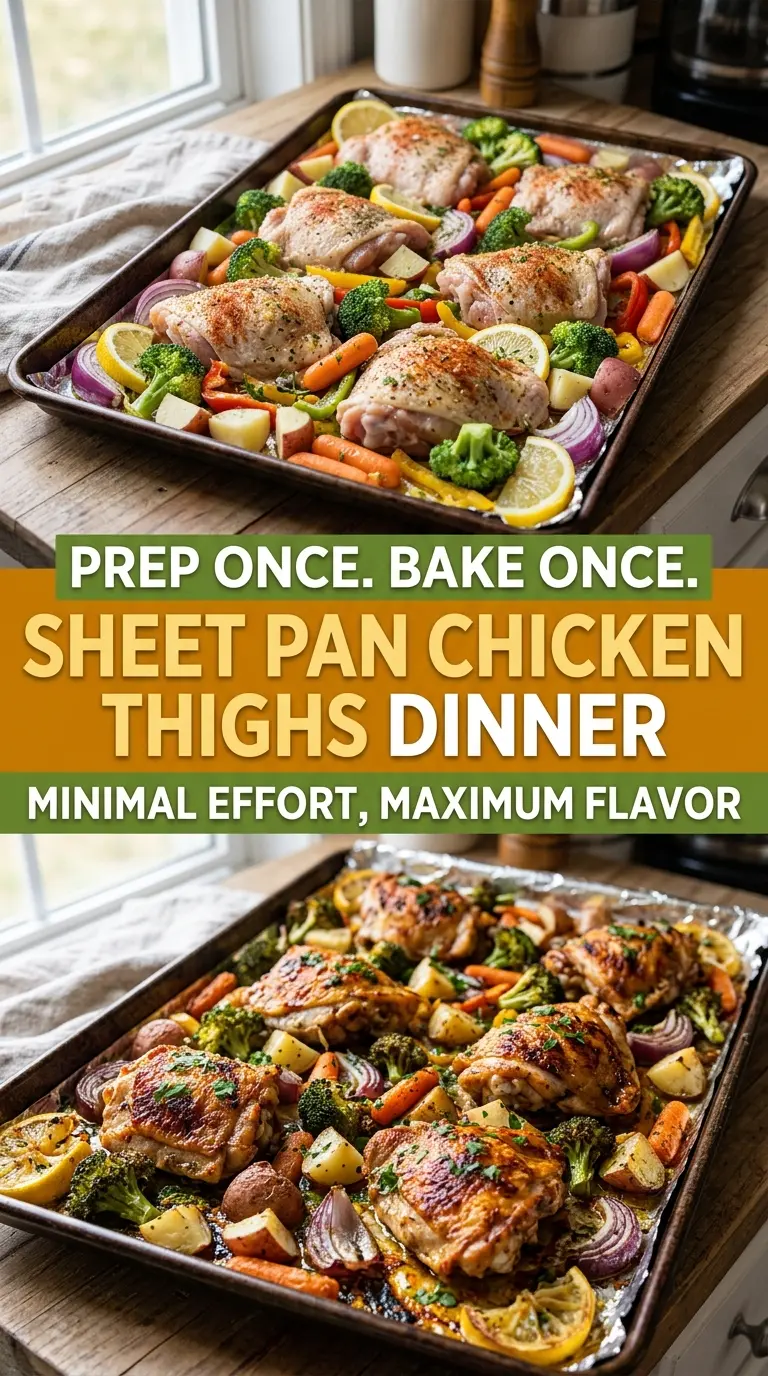
The olive oil carries the spices and helps the skin brown, but it also keeps the vegetables from sticking before they start to caramelize. If you use too little, the carrots and potatoes can catch in dry spots on the pan and the seasoning won’t spread evenly.
- Chicken thighs — Bone-in, skin-on thighs are the right cut here because they stay juicy during a longer roast and the skin gets crisp without drying out the meat. Boneless thighs work in a pinch, but they cook faster and won’t give you the same deep roasted flavor or crackly skin.
- Baby potatoes — These hold their shape and brown well when cut in half. Larger potatoes can be used, but cut them into 1-inch chunks so they finish at the same time as the chicken.
- Broccoli — Broccoli florets bring a bitter, roasted edge that balances the richer chicken. If your broccoli tends to burn, add it halfway through the bake instead of from the start.
- Carrots and bell pepper — The carrots need the full roast for sweetness, while the bell pepper softens and caramelizes around the edges. Slice the carrots thin enough to cook through; thick rounds can still be firm when the chicken is done.
- Paprika and Italian seasoning — Paprika gives the chicken color and a warm base note, while Italian seasoning adds the herbal finish that makes the whole pan taste complete. Fresh herbs can replace part of the dried seasoning, but they won’t cling to the chicken as evenly.
How to Roast Everything So the Pan Finishes at the Same Time
Seasoning the Chicken First
Coat the chicken thighs with oil and spices before anything else goes onto the pan. That gives the seasoning time to stick and keeps the skin dry enough to brown instead of steaming under a wet rub. If the chicken looks wet or glossy, blot it with paper towels first; moisture on the skin is the fastest way to lose crispness.
Building the Pan in the Right Order
Spread the potatoes and carrots out where they can touch the metal, then tuck the chicken beside them rather than piling everything into the center. The vegetables need direct heat for browning, and the chicken drippings help season them as they roast. If the pan looks crowded, use a second sheet pan. Overlap is what turns roasting into steaming.
Finishing With the Broiler
Check the chicken for doneness with a thermometer at the thickest part of the thigh; 165°F is the minimum, but thighs are often better a little higher because the meat gets more tender. If the skin is pale at the end, move the pan close to the broiler for 2 to 3 minutes and watch it closely. Broilers move fast, and the line between crisp and burnt is short.
Use Sweet Potatoes Instead of Baby Potatoes
Sweet potatoes bring a deeper sweetness and soften a little more than baby potatoes, so cut them into even chunks and keep them in a single layer. They brown beautifully, but they can turn mushy if the pan is crowded.
Make It Dairy-Free and Naturally Gluten-Free
This recipe already fits both styles as written, which is part of why it works so well for mixed-diet households. Just check your seasoning blend for hidden additives if you’re using a packaged Italian seasoning mix.
Swap in Boneless Chicken Thighs or Breasts
Boneless thighs cook faster and stay juicy, but they won’t need quite as long in the oven, so start checking them early. Chicken breasts work if that’s what you have, though they dry out faster and need to come off the heat as soon as they hit temperature.
Storage and Reheating
- Refrigerator: Store leftovers in an airtight container for up to 4 days. The skin won’t stay crisp, but the chicken and vegetables reheat well.
- Freezer: The chicken freezes better than the vegetables. If you want to freeze it, pack the chicken separately from the vegetables for up to 2 months.
- Reheating: Warm on a sheet pan in a 375°F oven until hot. The microwave softens the skin and can make the potatoes mealy, so use it only if speed matters more than texture.
Answers to the Questions Worth Asking
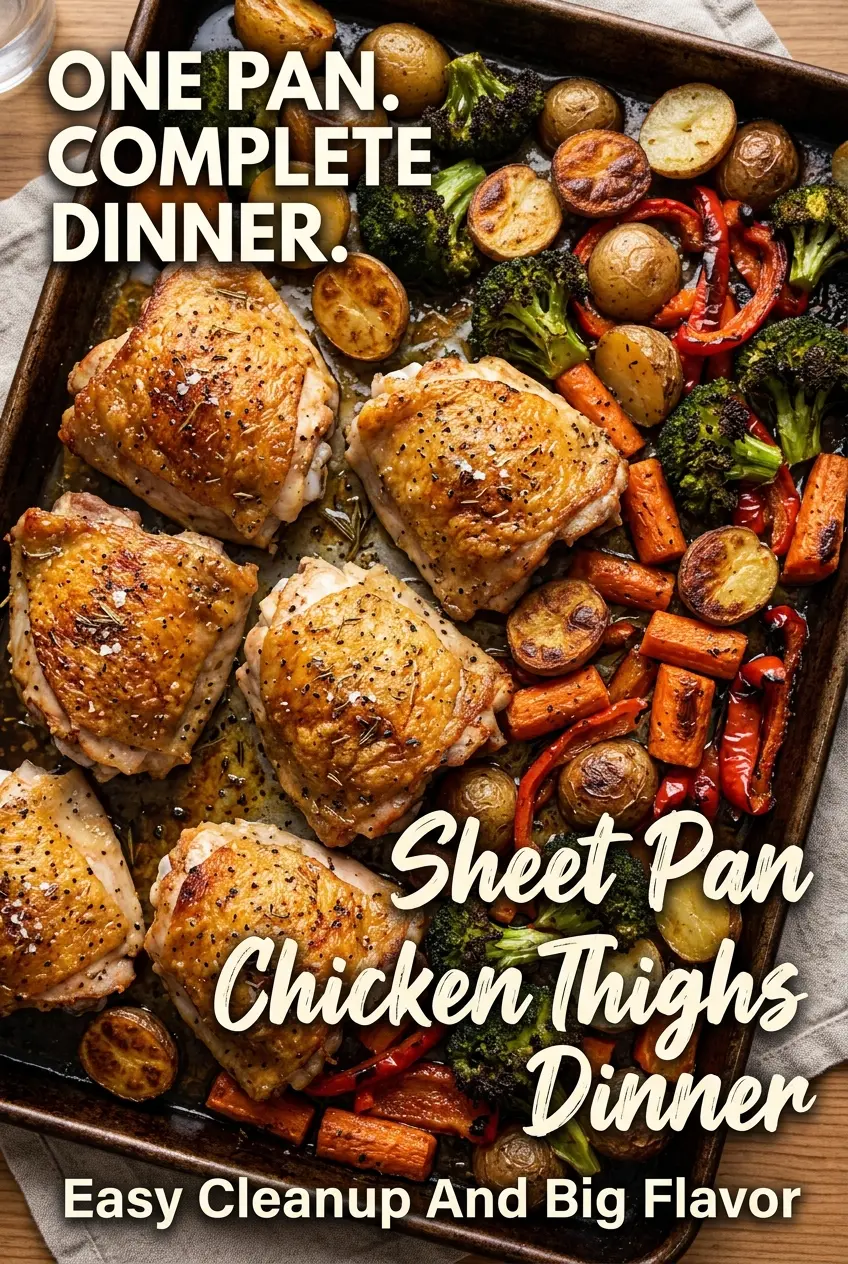
Sheet Pan Chicken Thighs Dinner
Ingredients
Equipment
Method
- Preheat the oven to 425°F (220°C) for even roasting.
- Line a large sheet pan with parchment paper to prevent sticking and simplify cleanup.
- In a bowl, toss the chicken thighs with olive oil, garlic powder, paprika, Italian seasoning, salt, and black pepper until evenly coated.
- In another bowl, toss the potatoes, broccoli florets, carrots, and red bell pepper with olive oil, salt, and black pepper until well combined.
- Arrange the chicken thighs on one side of the sheet pan in a single layer.
- Spread the vegetables evenly around the chicken so they roast at the same time.
- Bake for 35–40 minutes, until the chicken reaches 165°F (74°C) and the vegetables are tender.
- Broil for 2–3 minutes if desired for extra crispy skin, watching closely to avoid burning.
- Let the sheet pan rest for 5 minutes before serving to help the juices settle.