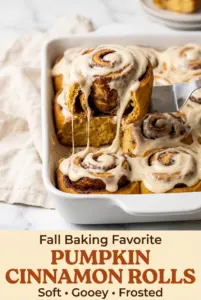
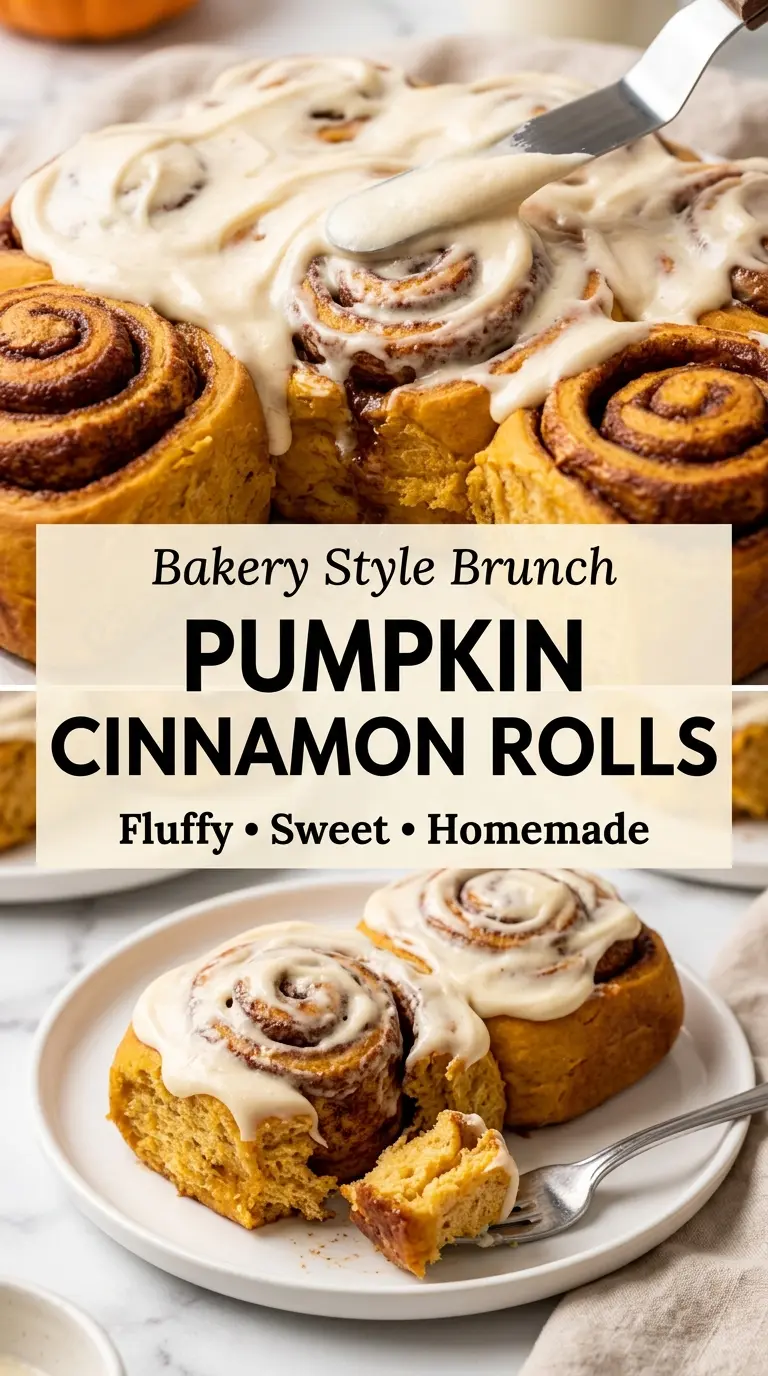
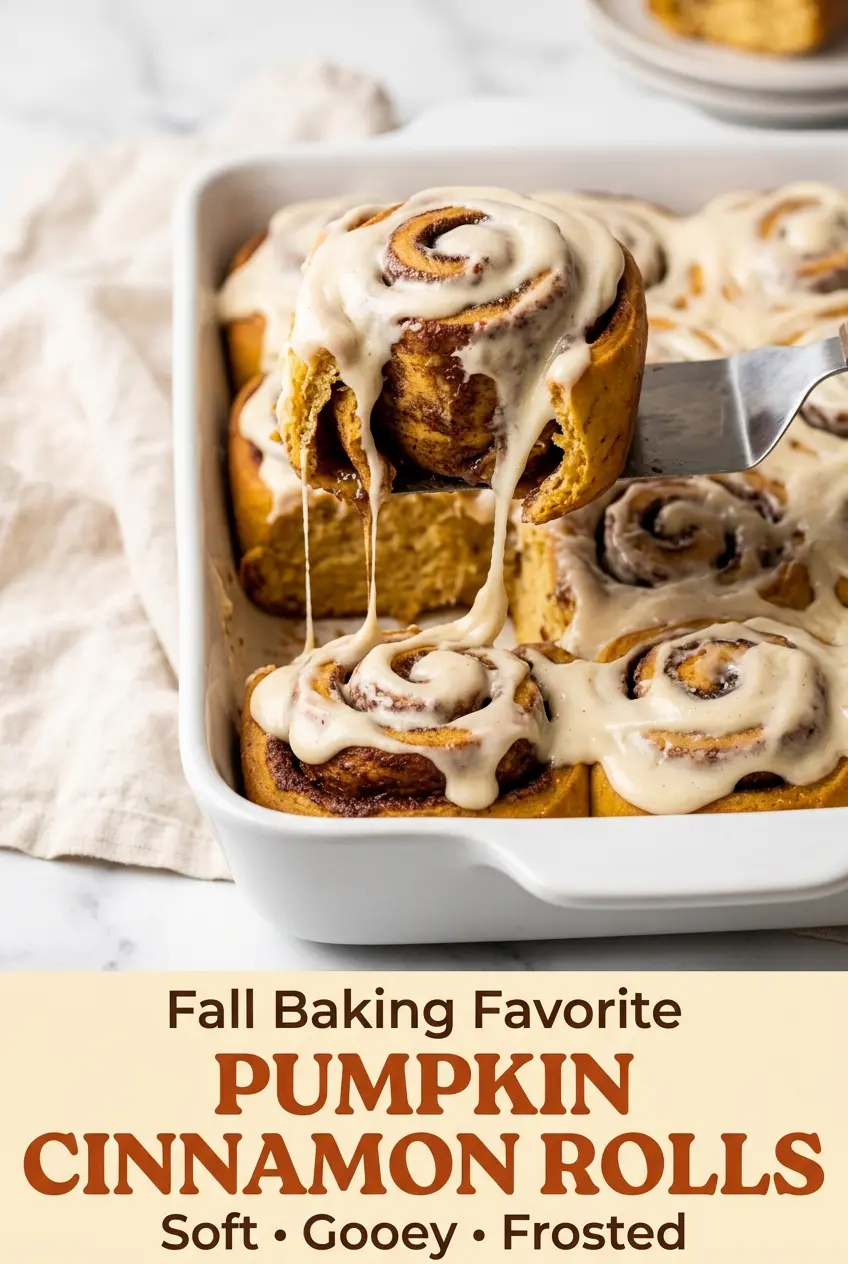
Pumpkin cinnamon rolls bake up with the kind of soft, pillowy center that pulls apart in tender layers and catches every stripe of brown sugar filling. The pumpkin doesn’t make them heavy or cake-like here; it gives the dough a plush texture and a gentle sweetness that plays perfectly against the warm spice and tangy cream cheese frosting.
What makes these work is balance. The dough is enriched, but not overloaded, so it still rises well and bakes up fluffy instead of dense. The pumpkin puree adds moisture, so the flour amount matters, and the dough should feel soft and slightly tacky before kneading turns it smooth. The filling stays simple on purpose: butter, brown sugar, cinnamon, and a little pumpkin pie spice melt into the spirals instead of drying out the layers.
Below, you’ll find the little details that keep the dough from getting too sticky, how to cut clean rolls without squashing them, and the frosting move that makes them melt into the warm swirls instead of sitting on top in a thick blanket.
Bake, Serve, Wear the Vibe 👕
Editor-picked tees our Oven To Fork readers love.


We may earn from qualifying purchases at no extra cost to you.
The dough rose beautifully and the rolls baked up super soft, not dense at all. I loved that the pumpkin flavor came through without making them taste like pie, and the frosting melted into every swirl.
Pumpkin cinnamon rolls with soft swirls and cream cheese frosting are worth saving for the next brunch morning.
The Secret to Soft Pumpkin Rolls Instead of Dense Ones
Pumpkin puree adds moisture, but it also adds weight. That’s why pumpkin dough can turn gummy or stubborn if the flour gets dumped in too fast. The goal is a soft dough that clears the bowl, but still feels supple under your hands. If it turns stiff, the rolls bake up dry. If it stays batter-like, they spread instead of rising into tall spirals.
Another common problem is over-flouring during kneading. Pumpkin dough often looks sticky for longer than a plain sweet dough, and that tempts people to keep adding flour until it becomes tight. Stop when the dough is smooth and elastic and just a little tacky. That slight tackiness is what keeps the rolls tender after baking.
What Each Ingredient Is Actually Doing in These Rolls
- All-purpose flour — This gives the rolls structure without making them chewy. Start with the measured amount, then add only enough extra flour to handle a soft dough. Too much flour is the fastest way to lose that fluffy texture.
- Active dry yeast — The yeast needs warm milk and a little sugar to wake up properly. If it doesn’t foam, the milk was too hot or too cold, and the dough won’t rise the way it should.
- Pumpkin puree — Use plain pumpkin puree, not pumpkin pie filling. The puree brings moisture and a subtle earthy sweetness, but it also means the dough needs a proper knead and a full rise to stay light.
- Brown sugar in the filling — Light brown sugar melts into the butter and gives the swirl that caramel-like softness. Granulated sugar works in a pinch, but you lose some of that richer gooey center.
- Cream cheese frosting — Softened cream cheese and butter beat into a frosting that spreads easily over warm rolls. If either one is cold, the frosting goes lumpy instead of silky.
Building the Dough, the Swirl, and the Frosting Without Ruining the Texture
Waking Up the Yeast
Stir the warm milk, yeast, and a teaspoon of sugar together and leave it alone until the surface looks foamy and slightly domed. That foam tells you the yeast is alive. If the mixture stays flat after 10 minutes, stop there and start over with fresh yeast. The milk should feel warm, not hot, because heat above about 115°F can kill the yeast before it starts working.
Bringing the Dough Together
Mix the flour, sugar, salt, and pumpkin pie spice first so the seasoning distributes evenly. Add the pumpkin puree, melted butter, egg, vanilla, and yeast mixture, then mix until a shaggy dough forms. The dough should look a little rough before kneading. As you knead, it should turn smooth and elastic, and it may still cling lightly to the bottom of the bowl. That’s normal for pumpkin dough.
Rolling, Filling, and Cutting Clean Spirals
Roll the dough into a neat rectangle with even thickness so the rolls bake evenly. Spread the softened butter edge to edge, then sprinkle the cinnamon-sugar mixture right to the borders so every bite has filling. Roll the dough tightly from the long side and use a sharp knife or unflavored dental floss to cut 12 even rolls. A squashed log gives lopsided buns, so cut with a gentle sawing motion if you’re using a knife.
Baking and Frosting at the Right Moment
Let the shaped rolls rise until they look puffy and are touching or nearly touching in the pan. Bake until the tops are just lightly golden and the centers no longer look wet. Pull them from the oven before they darken too much, because overbaking dries out the spiral layers. Frost them while they’re still warm so the cream cheese topping softens and settles into the seams.
How to Adapt These Rolls for Different Needs and Different Mornings
Dairy-Free Version
Swap the milk for an unsweetened non-dairy milk and use plant-based butter in both the dough and filling. The rolls still rise well, but the frosting will be a little softer and less tangy unless you use a dairy-free cream cheese with enough body to hold its shape.
Make-Ahead Overnight Rolls
Shape the rolls, place them in the baking dish, cover tightly, and refrigerate overnight. In the morning, let them sit at room temperature until puffy before baking. Cold dough goes into the oven too stiff and won’t finish its rise evenly.
Less Sweet, More Spiced
Cut the filling sugar back by a few tablespoons and increase the cinnamon slightly if you want the spice to stand out more than the sweetness. The rolls will be a little less gooey in the center, but the pumpkin flavor comes through more clearly.
Storage and Reheating
- Refrigerator: Store covered for 3 days. The rolls stay soft, though the frosting firms up and the dough tightens a little.
- Freezer: Freeze baked, unfrosted rolls wrapped well for up to 2 months. Thaw overnight in the refrigerator, then warm before frosting for the best texture.
- Reheating: Rewarm individual rolls in the microwave for 15 to 20 seconds or cover a pan of rolls with foil and heat in a low oven. High heat dries out the edges before the center loosens.
Answers to the Questions Worth Asking
Pumpkin Cinnamon Rolls
Ingredients
Equipment
Method
- Combine the warm milk, active dry yeast, and 1 teaspoon of the granulated sugar, then let stand for 5–10 minutes until foamy.
- Keep the mixture at about 110°F (warm but not hot) so the yeast activates properly and the foam develops.
- In a large bowl, mix the all-purpose flour, remaining granulated sugar, kosher salt, and pumpkin pie spice.
- Add the yeast mixture, pumpkin puree, melted unsalted butter, large egg, and vanilla extract, then mix until a soft dough forms.
- Knead the dough for 8–10 minutes until smooth and elastic.
- Place the dough in a greased bowl, cover, and let rise for 1–1½ hours until doubled in size.
- Roll the dough into a 12×18-inch rectangle.
- Spread the softened unsalted butter over the dough, then sprinkle evenly with light brown sugar, ground cinnamon, and pumpkin pie spice.
- Roll the dough tightly into a log and cut into 12 equal rolls.
- Arrange the rolls in a greased 9×13-inch baking dish, cover, and let rise for 30–45 minutes until puffed.
- Bake at 350°F (175°C) for 25–30 minutes until lightly golden.
- Let the rolls cool slightly before frosting so the frosting stays thick and spreadable.
- Beat together the cream cheese, softened unsalted butter, powdered sugar, vanilla extract, and whole milk until smooth.
- Spread the frosting generously over the warm cinnamon rolls before serving.