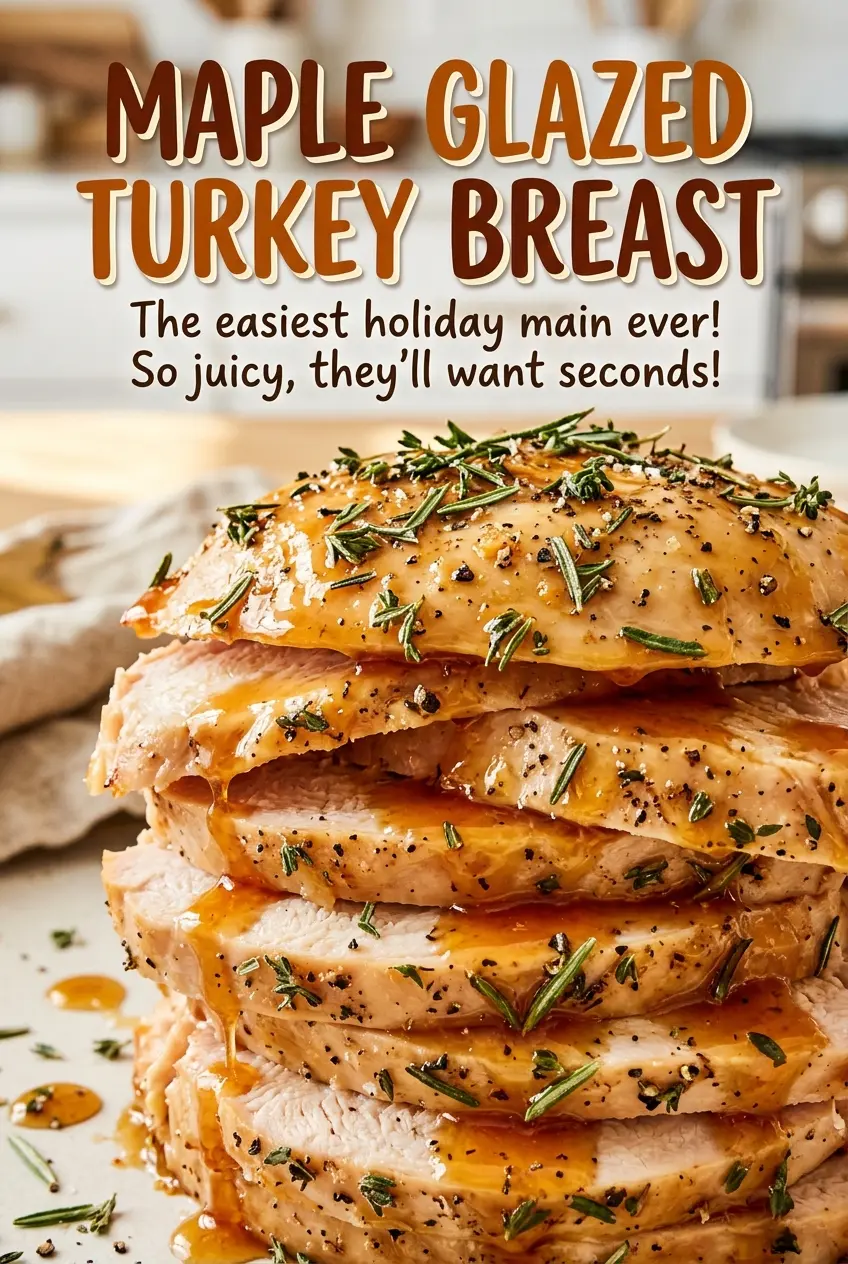
The skin is the part of a turkey breast that can go from pale to too dark while you’re still waiting for the center to cook. I handle that by roasting the breast uncovered first, then brushing on the maple glaze in two rounds. The result is turkey with a glossy, sweet-savory coating rather than a sugary layer that starts browning too early.
This bone-in, skin-on maple glazed turkey breast is a practical centerpiece for a smaller gathering, and the 9×13-inch roasting pan keeps the setup straightforward. I use a thermometer in the thickest part of the breast, away from the bone, so the roast comes out at the right temperature without guessing. After a short rest, the meat is ready to carve with the maple, Dijon, and cider vinegar glaze clinging to the skin.
Kitchen Note
Bake, Serve, Wear the Vibe 👕
Editor-picked tees our Oven To Fork readers love.



We may earn from qualifying purchases at no extra cost to you.
Keep the glaze at a gentle simmer, not a hard boil. Once the butter has melted and everything is combined, take the saucepan off the heat; a steady, brief simmer is all it needs.
Save this maple glazed turkey breast for a roast with crisp skin and a tangy-sweet maple finish.
Why the Maple Glaze Goes on After the First Roast
Pure maple syrup brings natural sugars that brown quickly in a hot oven. If it coats the turkey from the start, those sugars spend the entire roast exposed to heat and can darken before the thickest part of the breast is ready. Roasting the skin on its own first gives it time to dry and begin browning without the glaze on top.
The staged finish gives you more control. The first brush-on goes over skin that’s already hot, so the glaze adheres instead of running off a cool surface. A short return to the oven sets that first coat; the second application then adds another layer for a shiny finish. Watch the color during the final stretch. If the skin darkens too quickly, a loose foil tent slows the browning while the turkey finishes cooking.
This balance matters because a turkey breast is leaner than a whole bird with dark meat. The thermometer, not the color of the glaze or the clock alone, tells you when it’s ready. Roasting on a rack also lets hot air move around the breast rather than leaving the underside sitting against the pan.
What Each Part of the Maple Glaze Brings to the Turkey
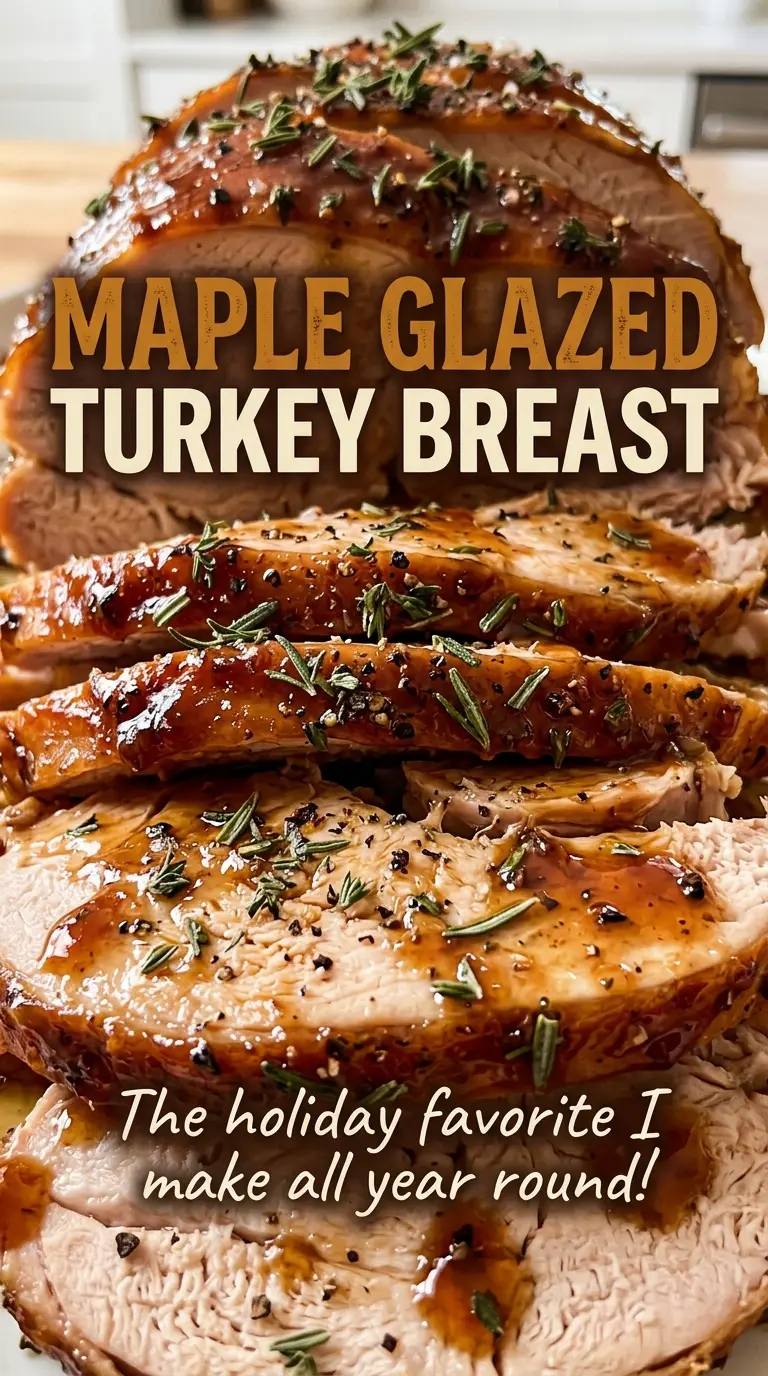
- Bone-in, skin-on turkey breast — The bone adds structure to the roast, while the skin gives the glaze a surface to cling to. Buy it fully thawed so it roasts evenly; a frozen or partly frozen center throws off the cooking time.
- Olive oil — A thin coating helps the salt and pepper stick and encourages the skin to brown. The amount is small, so a basic olive oil works well here; there’s no need to bring out a bottle you’d reserve for finishing a dish.
- Pure maple syrup — Use real maple syrup, not pancake syrup. It supplies the glaze’s maple flavor and sweetness, and a robust-tasting syrup will make that note more pronounced.
- Unsalted butter — Butter gives the glaze richness and rounds out the sharper ingredients. Unsalted butter keeps the seasoning easier to control alongside the kosher salt on the turkey.
- Dijon mustard and apple cider vinegar — Dijon adds a savory edge and helps the sweet glaze taste balanced; cider vinegar brings a clean tart note. Both are important to the glaze’s character, so leaving either out will make it taste noticeably sweeter and less lively.
Roasting the Turkey Breast in Stages
Prepare the Breast for an Even Roast
Heat the oven to 350°F and set a rack in the lower third. Pat the fully thawed turkey breast dry, then rub olive oil over the skin and season the breast all over with kosher salt and black pepper. Set it skin side up on a rack in a 9×13-inch roasting pan. Roast it uncovered for 1 hour; the skin should look dry and begin to take on color before the glaze goes on.
Simmer the Maple-Dijon Glaze
While the turkey roasts, combine the maple syrup, butter, Dijon mustard, and apple cider vinegar in a small saucepan. Bring the mixture to a gentle simmer over medium-low heat, stirring until the butter melts, about 2–3 minutes. It should look combined and fluid, not rapidly bubbling. Remove the pan from the heat rather than letting the glaze continue to cook while the turkey roasts.
Build the Glaze in Two Coats
After the first hour, brush half of the glaze over the turkey skin and return the pan to the oven for 15 minutes. Brush on the remaining glaze, then continue roasting for 15–45 minutes. The two applications create a layered coating, while the final roast gives the second layer time to set. Check the skin as it colors and loosely tent the breast with foil if it darkens too quickly.
Check the Center, Then Rest Before Carving
Insert a thermometer into the thickest part of the breast without touching bone; the turkey is ready when it reads 165°F. A reading against the bone won’t give you the same check of the meat itself, so reposition the thermometer if needed. Transfer the turkey to a cutting board and tent it loosely with foil. Rest it for 15 minutes before carving so the juices settle and the slices are easier to cut cleanly.
Two Ways to Adjust the Maple Glaze
Choose a darker maple flavor
Use a darker, more robust pure maple syrup while keeping the recipe’s amount and glaze method unchanged. The coating will have a deeper maple note against the Dijon and vinegar, without introducing another ingredient or changing the roast.
Make the glaze dairy-free
Replace the butter with the same amount of olive oil. The glaze won’t have quite the same buttery body, and the olive oil adds its own mild savory note, but the maple, mustard, and vinegar still make a balanced coating.
Storage and Reheating
- Refrigerator: Store carved turkey in a covered container for 3–4 days. The skin will soften as it sits, though the meat stays useful for leftovers.
- Freezer: Freeze carved portions in airtight packaging for up to 2–6 months for best quality. Thaw in the refrigerator before reheating.
- Reheating: Warm only the portions you plan to eat, covered, in the microwave or a low oven until hot throughout. Uncovered, prolonged reheating dries the lean breast meat; the skin won’t stay crisp after storage.
Questions That Come Up When Roasting Turkey Breast
Maple Glazed Turkey Breast
Ingredients
Equipment
Method
- Heat the oven to 350°F, with a rack in the lower third.
- Pat the turkey breast dry, then rub the skin with olive oil and season all over with the kosher salt and black pepper.
- Set the turkey skin side up on a rack in a 9x13-inch roasting pan and roast uncovered for 1 hour.
- While the turkey roasts, combine the maple syrup, butter, Dijon mustard, and apple cider vinegar in a small saucepan.
- Bring the mixture to a gentle simmer over medium-low heat, stirring until the butter melts, about 2-3 minutes.
- Remove the glaze from the heat.
- After the turkey has roasted for 1 hour, brush half the glaze over the skin.
- Return the turkey to the oven for 15 minutes.
- Brush the turkey with the remaining glaze.
- Continue roasting for 15-45 minutes, until a thermometer inserted into the thickest part of the breast without touching bone reads 165°F; loosely tent with foil if the skin darkens too quickly.
- Transfer the turkey to a cutting board, tent loosely with foil, and rest for 15 minutes before carving.