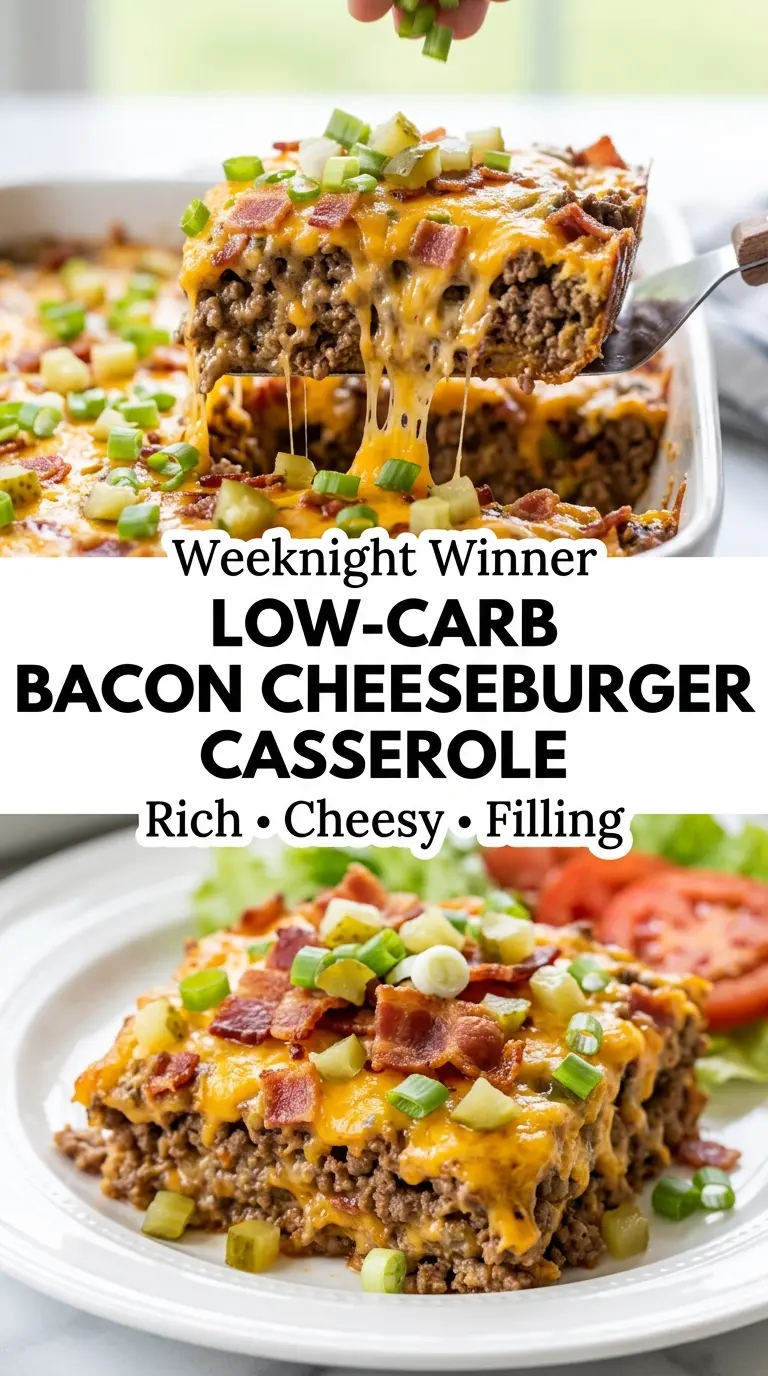
Bacon cheeseburger casserole lands on the table with all the familiar comfort of a drive-thru burger, minus the bun and the mess. The beef stays savory and juicy, the bacon adds crunch, and the melted cheddar pulls everything together into a sliceable bake that actually feels like dinner, not a diet workaround.
What makes this version work is the way the filling gets seasoned before it ever hits the oven. The cream cheese melts into the beef and gives the casserole body, while the egg and cream mixture sets into a soft custard around the meat instead of drying it out. A little Dijon and Worcestershire bring the burger flavor into focus without turning it into a cheesy scramble.
Below, I’ve included the technique details that keep the texture right, plus a few swaps that help if you want to change up the toppings or make it fit what’s already in your fridge.
Bake, Serve, Wear the Vibe 👕
Editor-picked tees our Oven To Fork readers love.


We may earn from qualifying purchases at no extra cost to you.
The beef stayed juicy and the egg layer set up like a real casserole, not rubbery at all. I added the pickles and mustard on top and it tasted just like a bacon cheeseburger in a forkable version.
Keep this bacon cheeseburger casserole handy for a low-carb dinner that still gives you melted cheddar, crispy bacon, and all the burger flavor.
The Trick to Keeping the Eggs Custardy, Not Rubbery
The biggest mistake with a casserole like this is treating it like a breakfast bake and blasting it until every bit of liquid disappears. That leaves the eggs tight and the beef dry. Here, the egg mixture is part binder, part sauce, so it only needs to set enough to hold a slice. Pull it when the center is just set and the cheese is melted and bubbling at the edges.
The other point that matters is the cream cheese. Stir it into the hot beef over low heat so it melts into the meat instead of sitting in little lumps. That step gives the filling a richer, almost smash-burger-like texture and keeps the casserole from tasting flat.
What Each Ingredient Is Actually Doing in This Casserole
- Lean ground beef — This gives you the burger base without too much grease pooling in the dish. If you use beef with a higher fat percentage, drain off the excess before adding the seasoning or the casserole can turn oily.
- Bacon — Cook it until crisp enough to crumble, not chewy, because it softens a little in the oven. Pre-cooked bacon works in a pinch, but fresh-cooked has better flavor and texture.
- Cream cheese — This is what makes the filling rich and cohesive. Softened cream cheese melts in smoothly; cold cream cheese takes longer and tends to leave little white pockets in the beef.
- Eggs, heavy cream, and cheddar — This combination creates the custard that holds the casserole together. The cream keeps the eggs tender, and the cheddar adds seasoning and body as it melts into the bake.
- Dijon mustard and Worcestershire sauce — These are the burger notes you’d miss if they weren’t here. Dijon adds sharpness; Worcestershire brings depth and a little savory tang that keeps the dish from tasting one-note.
- Pickles and green onions — Add these at the end for the fresh, sharp finish that makes each bite taste like a cheeseburger instead of just a meat-and-cheese casserole. Don’t bake them on top if you want that bright crunch.
Building the Burger Flavor Before the Oven Does the Rest
Cooking the Beef Until the Pan Stays Dry
Start by browning the beef in a hot skillet until the pink is gone and the meat starts to pick up some color. If the pan has a lot of liquid, keep cooking until it evaporates; watery beef dilutes the seasoning and makes the casserole soggy. Add the onion once the beef has some browning so it softens in the fat instead of steaming from the start.
Melting the Cream Cheese Into the Meat
Turn the heat down before adding the cream cheese. Low heat is the difference between a smooth, rich filling and a greasy mixture with stubborn lumps. Stir until the beef looks coated and glossy, with no visible white streaks left in the skillet.
Layering the Casserole for Even Slices
Spread the beef mixture into the baking dish, then scatter the bacon over the top so every slice gets some crunch. Pour the egg mixture evenly over everything, then finish with the remaining cheeses. If you dump the filling in unevenly, the edges set faster than the center and the casserole slices messy instead of clean.
Baking Until the Center Just Sets
Bake until the top is golden in spots, the cheese is melted, and the center no longer sloshes when you nudge the pan. The target is 160°F in the middle, but the visual cue matters too: the edges should be firm and the center should have only the slightest wobble. Let it rest before cutting, or the filling will spill out instead of holding its shape.
Three Ways to Make This Bacon Cheeseburger Casserole Work for Your Table
Dairy-Free Version With a Cleaner Finish
Use dairy-free cream cheese, unsweetened dairy-free cream, and a melty dairy-free cheddar-style shred. The texture stays close, but the flavor is a little less rich, so the pickles and mustard on top matter even more for brightness.
Make It Lower-Carb Without Losing the Burger Feel
Keep the recipe as written and serve it with shredded lettuce, diced tomatoes, extra pickles, and mustard on top. That gives you the burger experience without adding bread, and the cold toppings help cut through the richness of the casserole.
Swap the Beef for Ground Turkey
Ground turkey works if you want something lighter, but it needs the full amount of seasoning and a careful eye so it doesn’t dry out. Add a splash more Worcestershire and keep the baking time on the shorter side, since turkey firms up faster than beef.
How to Meal Prep This for Busy Nights
Bake it ahead, cool it completely, and portion it into containers with the toppings kept separate. The casserole reheats well because the egg layer protects the beef from drying out, but the pickles and lettuce should go on after warming so they stay crisp.
Storage and Reheating
- Refrigerator: Store in an airtight container for up to 4 days. The bacon softens a little, but the flavor holds up well.
- Freezer: It freezes well in portions. Wrap tightly once cooled, then freeze for up to 2 months. Thaw overnight in the fridge before reheating.
- Reheating: Warm individual slices in the oven at 325°F or in the microwave at medium power. High heat makes the eggs tough, so go low and slow until the center is hot.
Answers to the Questions Worth Asking
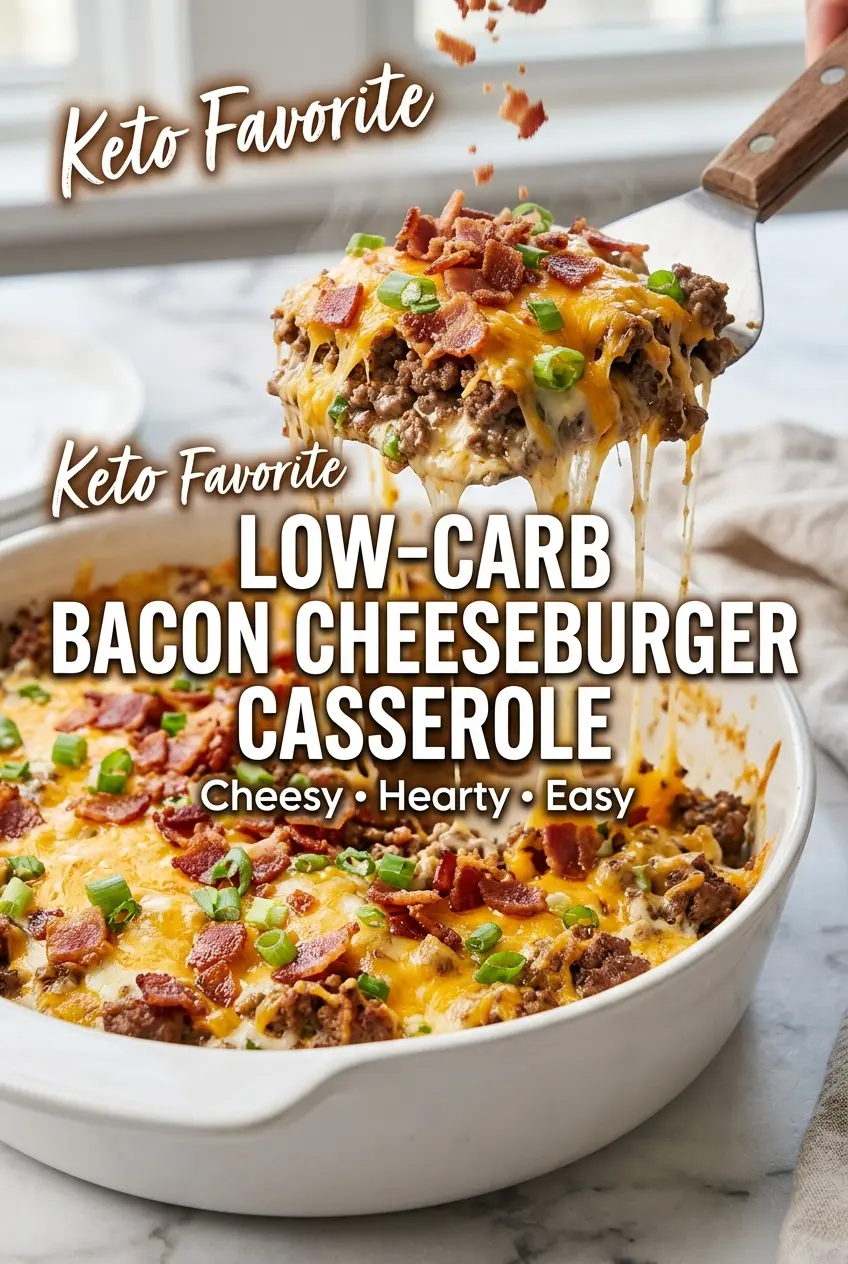
Low-Carb Bacon Cheeseburger Casserole
Ingredients
Equipment
Method
- Preheat the oven to 375°F and lightly grease a 9×13-inch baking dish.
- Heat the olive oil in a large skillet over medium-high heat, then add the lean ground beef and cook for 6–8 minutes, breaking it into crumbles until no pink remains.
- Add the diced yellow onion and cook for 4–5 minutes until softened.
- Stir in the garlic, kosher salt, black pepper, smoked paprika, onion powder, and Worcestershire sauce, cooking for 1 minute until fragrant.
- Reduce heat to low, then stir in the cream cheese until completely melted and evenly combined with the beef.
- Whisk together the eggs, heavy cream, Dijon mustard, and 1 cup of the shredded sharp cheddar cheese in a bowl until smooth.
- Transfer the beef mixture to the prepared baking dish, then sprinkle the bacon evenly over the top.
- Pour the egg mixture over the beef and top with the remaining shredded sharp cheddar cheese and the shredded mozzarella cheese.
- Bake for 25–30 minutes, until the casserole is set, the cheese is melted and golden, and the eggs reach an internal temperature of 160°F.
- Rest the casserole for 5–10 minutes before serving.
- Garnish with chopped dill pickles and chopped green onions, and add diced tomatoes, shredded lettuce, additional dill pickles, sugar-free ketchup, or yellow mustard if desired.