Honey teriyaki chicken gets its appeal from that glossy, sticky coating that clings to every piece of chicken and settles into the rice underneath. The sweet-savory balance lands in the middle instead of swinging too far in either direction, and the sauce thickens just enough to glaze without turning gluey. When it’s done right, the edges of the chicken pick up a little caramelization and the whole skillet smells like dinner is already winning.
This version works because the sauce is built from ingredients that each pull their weight: soy sauce for salt and depth, honey and brown sugar for shine and caramel notes, and a cornstarch slurry for that quick, nubby thickness that makes the sauce coat instead of pool. The chicken thighs stay juicy even if you take them a minute past perfect, which matters when the sauce needs a brief simmer to tighten up. Using fresh ginger and garlic keeps the flavor sharp enough to cut through the sweetness.
Below, you’ll find the small details that keep the sauce glossy instead of dull and the chicken browned instead of steamed. There’s also a few practical swaps and storage notes, because this is the kind of skillet dinner that should work on a weeknight without extra fuss.
Bake, Serve, Wear the Vibe 👕
Editor-picked tees our Oven To Fork readers love.



We may earn from qualifying purchases at no extra cost to you.
The sauce thickened up exactly how it should and coated every piece without turning sticky in a bad way. I used thighs like suggested and they stayed juicy even after simmering, which my husband noticed immediately.
Save this glossy honey teriyaki chicken for the nights when you want takeout-style flavor with one skillet and a sauce that actually clings.
The Reason the Sauce Turns Glossy Instead of Watery
The biggest mistake with teriyaki-style chicken is adding too much liquid too soon and expecting the pan to do all the work. The chicken needs enough heat to brown before the sauce goes in, because browning gives you the savory base that keeps the final dish from tasting flat. Once the sauce hits the skillet, it should simmer gently; a hard boil can make the honey taste sharper and can push the cornstarch into a dull, pasty texture.
The cornstarch slurry matters here because it thickens the sauce without needing a long reduction. That means the chicken stays juicy while the glaze tightens around it. If the sauce looks thin at first, give it another minute before adding more starch. It thickens as it heats, and too much cornstarch at the start is how you end up with a sauce that turns gummy once it cools.
What Each Ingredient Is Actually Doing in This Dish
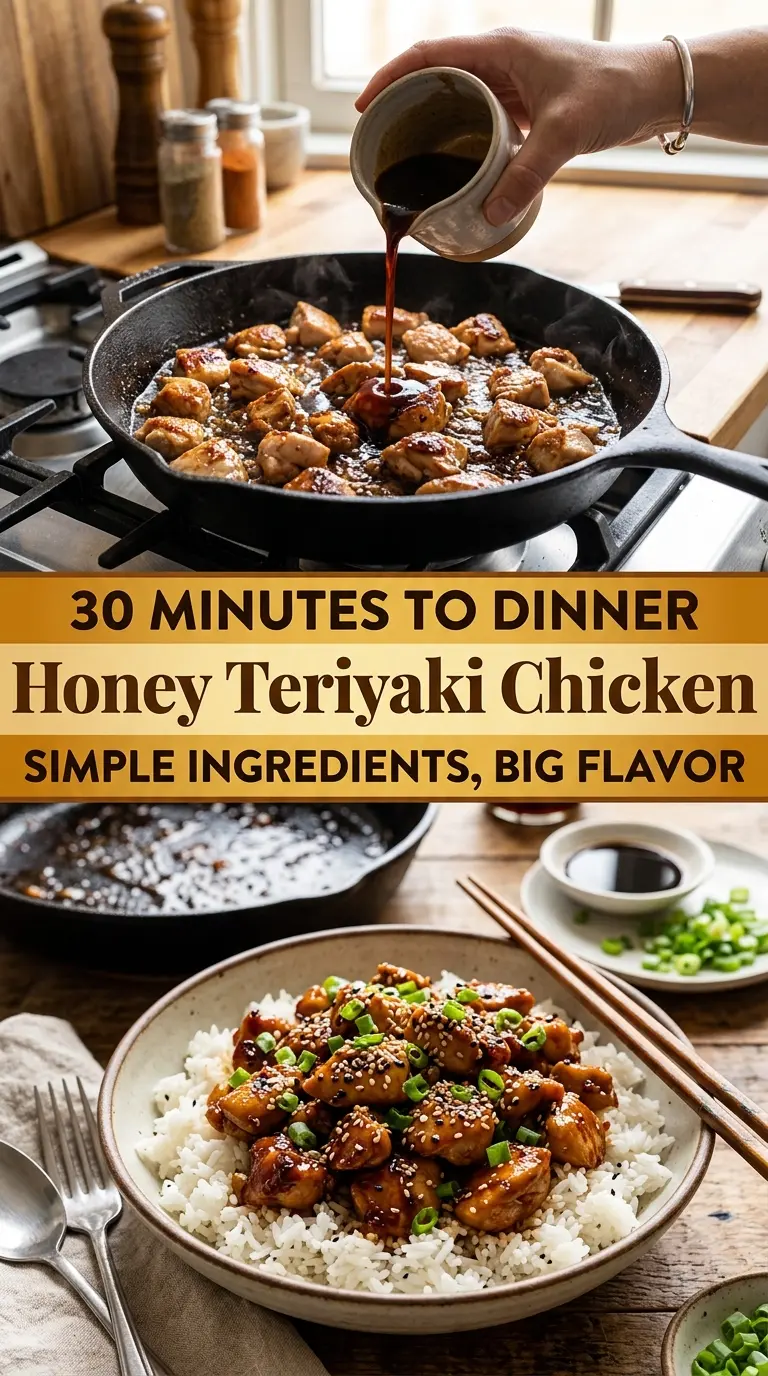
- Chicken thighs — These stay tender under high heat and a quick simmer, which is exactly what you want here. Chicken breast can work, but it dries out fast if you cook it past done, so cut the pieces a little larger if you use it.
- Low-sodium soy sauce — This gives you the salty backbone of the sauce without making it harsh. Regular soy sauce can push the glaze too far toward salty once the honey and brown sugar reduce.
- Honey and brown sugar — Honey gives the sauce shine and a smooth sweetness, while brown sugar adds a deeper caramel note. You need both if you want that takeout-style finish instead of a simple sweet glaze.
- Fresh garlic and ginger — These keep the sauce bright and stop it from tasting one-dimensional. Powdered versions work in a pinch, but they’ll taste flatter and less fresh.
- Cornstarch — This is what turns the sauce from thin and soupy into a glossy coating. Whisk it with cold water first, or it clumps and never fully smooths out in the pan.
- Rice vinegar — A small amount sharpens the sweetness and keeps the sauce from tasting heavy. If you don’t have it, apple cider vinegar works, but use a little less because it reads stronger.
The Short Sear That Makes the Whole Skillet Better
Brown the Chicken Before the Sauce Goes In
Heat the oil until it shimmers, then add the seasoned chicken in a single layer. If the pan is crowded, the chicken steams and you lose the browned edges that give the dish its savory depth. Let it sit long enough to pick up color before stirring, and don’t chase every piece around the pan. You want golden spots on the outside and no raw pink in the center, but the chicken should still be juicy because it will finish in the sauce.
Build the Sauce in the Same Pan
Pour in the sauce mixture and bring it to a gentle simmer so the browned bits dissolve into it. That fond at the bottom is what gives the sauce body, so don’t wipe the skillet clean. Stir in the cornstarch slurry and watch for the sauce to go from thin and cloudy to glossy and slightly thickened. If it turns lumpy, the slurry was added too fast or the heat was too high.
Let the Glaze Tighten on the Chicken
Toss the chicken until every piece is coated, then keep it moving for the last couple of minutes. The sauce should cling in a shiny layer and leave a trail for a second when you drag a spoon through it. If it gets too thick, splash in a tablespoon of water. If it still looks loose, give it another minute; cornstarch needs heat to finish its job.
Three Practical Ways to Change It Without Losing What Works
Make It Gluten-Free
Swap the soy sauce for tamari or a certified gluten-free soy sauce. The flavor stays close to the original, and the sauce still thickens the same way because the cornstarch is doing the work there, not the soy sauce.
Use Chicken Breast Instead
Chicken breast works if that’s what you have, but cut it into larger pieces and pull it from the heat as soon as it’s cooked through. Breast meat dries out faster than thighs, especially once it sits in a hot skillet with sauce for a few extra minutes.
Dial the Sweetness Down
If you like a darker, less sweet teriyaki, reduce the brown sugar by half and keep the honey. The sauce will still glaze well, but the finish will lean more savory and a little less sticky.
Add Vegetables to the Skillet
Snap peas, broccoli florets, or bell peppers can go in after the chicken browns. Cook them just until bright and crisp-tender, then add the sauce. If you add them too early, they soften too much and water down the glaze.
Storage and Reheating
- Refrigerator: Store leftovers in an airtight container for up to 4 days. The sauce will thicken as it chills, which is normal.
- Freezer: It freezes well for up to 2 months. Cool it completely, pack it tightly, and thaw overnight in the fridge before reheating.
- Reheating: Warm it gently in a skillet over low heat with a splash of water to loosen the sauce. Microwaving on high can make the chicken tough and can cause the glaze to separate at the edges.
Answers to the Questions Worth Asking
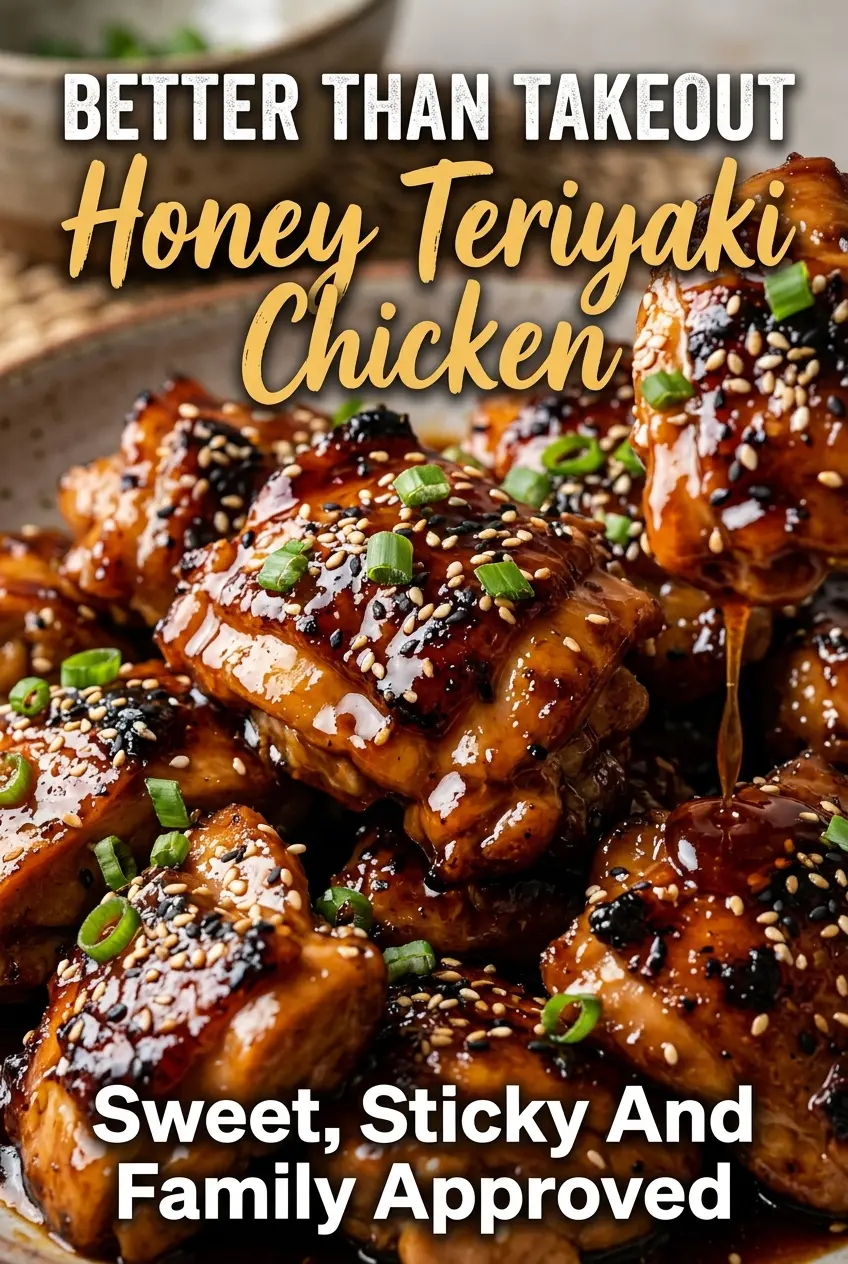
Honey Teriyaki Chicken
Ingredients
Equipment
Method
- In a small bowl, whisk together low-sodium soy sauce, honey, brown sugar, garlic cloves, fresh ginger, and rice vinegar until smooth.
- In a second small bowl, stir cornstarch and water into a slurry with no dry lumps.
- Heat olive oil in a large cast iron skillet over medium-high heat until shimmering.
- Season boneless skinless chicken thighs with salt and black pepper, then add them to the hot skillet and cook for 6–8 minutes until golden brown and cooked through.
- Pour in the honey teriyaki sauce and bring it to a gentle simmer for 1–2 minutes so the flavors meld.
- Stir in the cornstarch slurry and cook for 2–3 minutes until the sauce thickens and becomes glossy.
- Toss the chicken until fully coated in the honey teriyaki sauce, then turn off the heat and let it settle for 30 seconds.
- Garnish with sesame seeds and sliced green onions, then serve over rice or steamed vegetables.