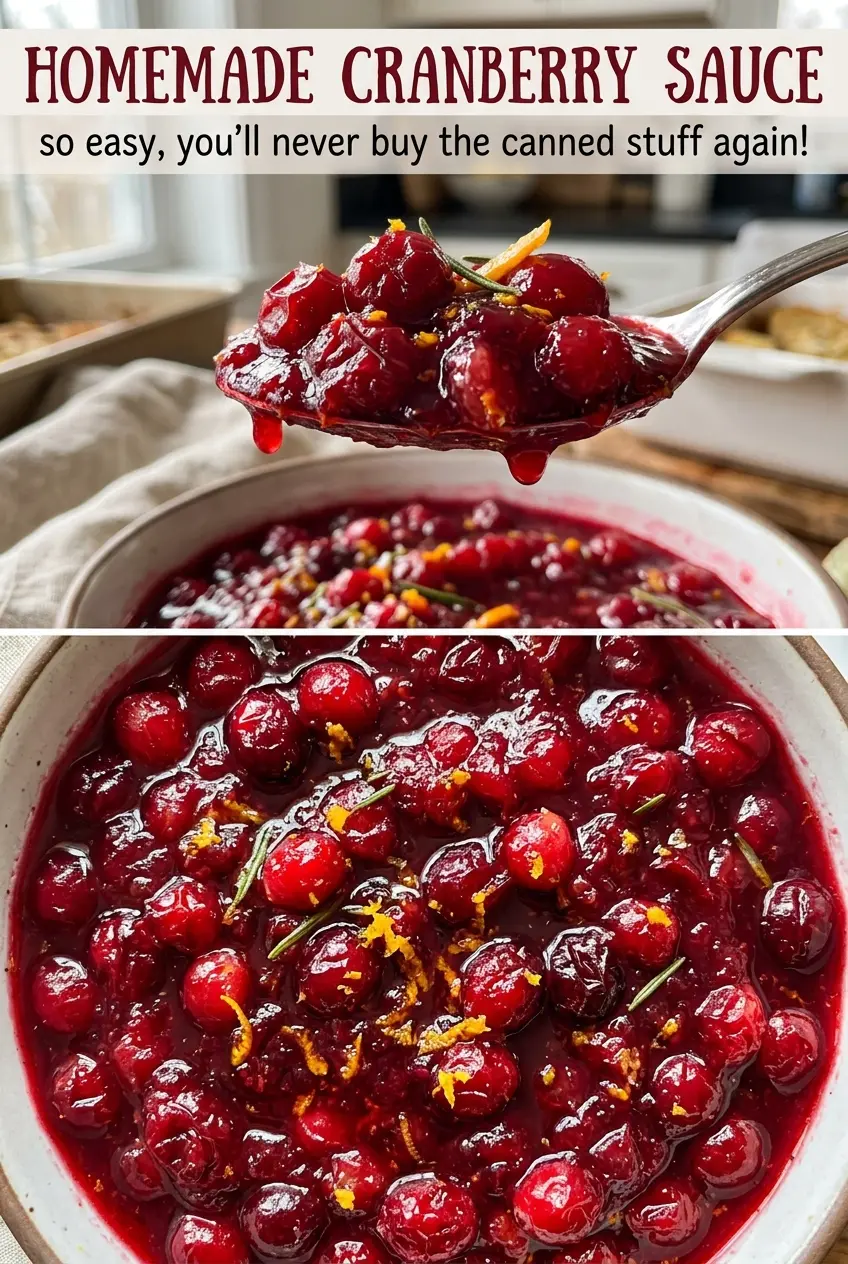
The first cranberries pop against the side of the saucepan with a little snap, then the whole pot turns ruby red as the berries soften. That’s the moment homemade cranberry sauce starts to look like itself: bright, tart, and glossy, with a few berries still holding their shape.
I make this with fresh cranberries, water, and granulated sugar. There’s no need to fuss with extra flavorings; the berries bring plenty of tang on their own. I let the sugar dissolve in the water before adding the fruit, so the berries cook in a smooth syrup instead of sitting on undissolved crystals.
As the sauce simmers, it thickens just enough to cling to a spoon. It’ll look looser while hot, then settle into a soft, spoonable texture as it cools. The finished sauce is tart-sweet, glossy, and full of cranberry flavor.
Kitchen Note
Bake, Serve, Wear the Vibe 👕
Editor-picked tees our Oven To Fork readers love.



We may earn from qualifying purchases at no extra cost to you.
Take a minute to pick through the cranberries before they go into the pan. A few soft or damaged berries are easy to miss in the bag, and removing them leaves the sauce tasting clean and bright.
Save this homemade cranberry sauce for a simple, bright finish made with fresh berries, sugar, and water.
Why the Sugar Goes Into the Water Before the Cranberries
It’s easier to dissolve the sugar before the berries are in the pan. Water heats evenly, and stirring the sugar into it gives you a clear syrup before the fruit starts releasing its juice. That makes the sweetness consistent through the sauce rather than leaving crystals at the bottom or pockets of syrup around the berries.
Use a 2-quart saucepan and give the sugar-water mixture a moment to come to a full boil while you stir. Don’t rush the berries into the pan while sugar crystals are still visible. Once the cranberries go in, they’ll release liquid as they heat, and the mixture will look more like a loose, bubbling sauce than a clear syrup. The two-part start keeps the process easy to read: first dissolve, then simmer the fruit.
This order also gives you a dependable starting point from batch to batch. Granulated sugar dissolves readily in hot water, and the cranberries can then cook at a lower simmer without needing to compensate for gritty patches or uneven sweetness.
What the Three Ingredients Bring to Cranberry Sauce

- Fresh cranberries — Fresh berries give this sauce its bold tartness and the burst-berry texture. Pick through them and rinse before cooking. Choose firm berries when you can; the bag doesn’t need to be fancy, but discard any that are soft, shriveled, or damaged.
- Granulated sugar — Plain white sugar sweetens the berries without adding another flavor or darkening the finished sauce. It also dissolves cleanly into the water at the beginning. I wouldn’t swap in a different sweetener here; a different type or amount changes the balance and texture.
- Water — Water gives the sugar a liquid base and helps the cranberries cook without scorching as they start to burst. There’s no need for broth or juice; either would change the clean, direct cranberry taste this version is built around.
Three Stages for Berries That Burst and Thicken
Dissolve the Sugar in the Water
Combine the water and granulated sugar in a 2-quart saucepan over medium-high heat. Stir as the mixture comes to a boil, watching for the liquid to turn clear with no visible sugar crystals. If crystals are still sitting on the bottom, keep stirring before moving on. Starting with dissolved sugar gives the cranberries an even syrup to cook in.
Simmer Until Most Berries Have Burst
Stir in the rinsed, picked-over cranberries and bring the mixture back to a boil. As soon as it boils again, reduce the heat to medium-low and simmer for 10 to 12 minutes, stirring occasionally. You’ll hear berries pop and see their skins split; the sauce should thicken slightly, with most berries burst and some still recognizable. If the pot is boiling hard, lower the heat so the berries simmer rather than splash and break down too quickly.
Let the Sauce Set as It Cools
Take the saucepan off the heat and leave the sauce to cool for at least 30 minutes. It may look thinner than you expect at first, but it thickens as it cools, so don’t keep cooking it in pursuit of a firm texture. Once cooled, refrigerate it until you’re ready to serve. The final consistency should be soft and spoonable, not stiff like a gel.
Small Adjustments That Change the Finished Sauce
A firmer, well-chilled sauce
For a sauce that holds its shape a little more neatly on the spoon, make it ahead and let it chill thoroughly before serving. The flavor stays the same, while the colder sauce feels firmer than it does shortly after cooking.
A naturally gluten-free, dairy-free option
This cranberry sauce already contains no wheat, dairy, eggs, or other common allergens from those groups, so there’s no replacement ingredient needed. Keeping the simple ingredient list also preserves its bright cranberry flavor and soft, berry-filled texture.
Storage and Reheating
- Refrigerator: Store covered in the refrigerator and use within 3 to 4 days. It will become firmer as it chills.
- Freezer: Freeze in an airtight, freezer-safe container for up to 2 to 3 months. Thaw in the refrigerator; the texture may be a little softer after thawing.
- Reheating: No reheating is needed; serve it chilled. Don’t heat it just to loosen it, since the sauce is meant to be spooned once cool.
Questions That Come Up When the Berries Hit the Pan
Homemade Cranberry Sauce
Ingredients
Equipment
Method
- Combine the water and sugar in a 2-quart saucepan.
- Bring to a boil over medium-high heat, stirring until the sugar dissolves.
- Stir in the cranberries and return the mixture to a boil.
- Reduce the heat to medium-low and simmer for 10 to 12 minutes, stirring occasionally, until most of the berries have burst and the sauce has thickened slightly.
- Remove the pan from the heat and let the sauce cool for at least 30 minutes; it will thicken as it cools.
- Refrigerate until ready to serve.