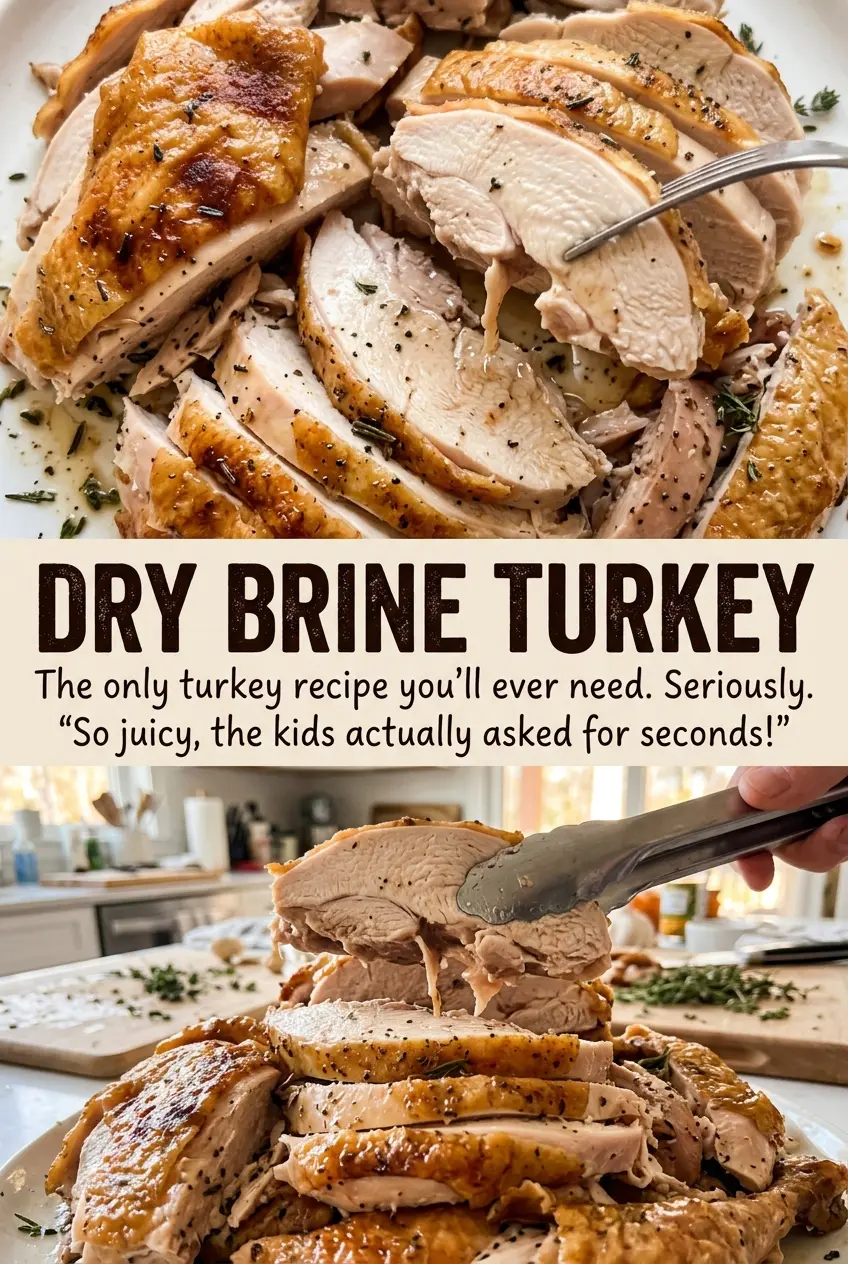
When turkey skin goes into the oven damp, it tends to steam before it browns. Letting the bird sit uncovered in the refrigerator is the small change that gives the skin time to dry, while the salt seasons the meat. That’s the difference I notice with this dry brine turkey: the skin roasts up deeply golden, and the meat is seasoned beyond just the surface.
I use a fully thawed, un-injected turkey and work the salt under the skin as well as over the outside. Then the refrigerator does the slow part for 24 to 48 hours. There’s no bucket of liquid to fit in the fridge, and the turkey is already on its roasting rack when it’s time to cook. The result is a well-seasoned bird with crisp-looking skin and tender slices ready for the carving board.
Kitchen Note
Bake, Serve, Wear the Vibe 👕
Editor-picked tees our Oven To Fork readers love.



We may earn from qualifying purchases at no extra cost to you.
I take the turkey out of the refrigerator when I turn on the oven, not hours ahead. That gives it the preheating window to lose some of its chill without leaving it sitting on the counter while I handle other things.
Save this dry brine turkey for a deeply seasoned bird with golden skin and a simple, make-ahead refrigerator rest.
Why the Uncovered Refrigerator Rest Changes the Skin
Dry brining does two jobs at once, and they happen in different places. Salt on the meat seasons it, while salt on the outside draws moisture to the surface before that moisture is reabsorbed. Leaving the turkey uncovered lets the skin dry as the salt works. That drier surface has a better chance of browning instead of steaming in the oven.
Covering the turkey tightly would hold moisture around the skin and undo part of that advantage. The rack also matters: it keeps the bird lifted above the bottom of the roasting pan rather than sitting in any moisture that collects there. Give the salt time to work, but don’t stretch the refrigerator rest beyond the 24-to-48-hour window here. You’re looking for skin that feels dry to the touch when roasting day arrives, not a wet surface that needs to be rescued at the last minute.
Why Diamond Crystal Salt and an Unbrined Turkey Matter

- Whole turkey — Start with a fully thawed bird with the giblets and neck removed. A turkey that’s injected or pre-brined already contains added salt, so it isn’t a good match for this dry brine. Choose an unseasoned bird so the salt level stays predictable.
- Diamond Crystal kosher salt — This is the salt used here, and its lighter crystal structure matters when measuring by volume. Other kosher salts can pack more densely, so don’t make a straight spoon-for-spoon swap; use a reliable brand-specific conversion if you need a different one. Work the salt beneath the skin so it seasons the meat directly.
- Neutral oil — A neutral-tasting oil helps the skin take on an even sheen before roasting without adding a strong flavor. There’s no need for a specialty oil; the useful quality is that it doesn’t taste assertive.
- Freshly ground black pepper — Fresh grinding gives the outside a more pronounced pepper aroma. Preground pepper can stand in if that’s what you have, though its flavor is usually less lively.
Four Stages for a Well-Browned, Evenly Cooked Turkey
Dry the Bird and Set It on the Rack
Use paper towels to pat the fully thawed turkey very dry, including around the legs and wings. Set it breast side up on a rack in a large roasting pan. A damp bird is harder to brown, so take a moment to blot any visible moisture rather than rushing to the salt. Keep the giblets and neck out of the turkey.
Get Salt Beneath the Skin
Use your fingers to loosen the skin over the breasts and thighs without tearing it. Rub the salt evenly over the meat under the skin, then spread it across the outside of the turkey. If the skin pulls away from the meat in one spot, ease your fingers back and work more gently; keeping the skin intact helps it protect the meat as it roasts.
Let the Refrigerator Do the Brining
Place the turkey uncovered in its roasting pan in the refrigerator for 24 to 48 hours. The exposed skin should feel dry rather than tacky when you’re ready to roast. Keep the pan level so the bird stays stable, and leave it uncovered for the full rest rather than wrapping it partway through.
Roast, Check Both Areas, and Rest
Heat the oven to 325°F with the oven rack in the lower third, and take the turkey out while the oven heats. Rub the oil and pepper over the skin, tuck the wing tips under the body, and tie the legs loosely together with kitchen twine. Roast breast side up for 2 3/4 to 3 1/2 hours; if the breast browns too quickly, tent it loosely with foil. Check the thickest part of the breast for 165°F and the innermost thigh for 175°F, keeping the thermometer away from bone, then rest the turkey on a carving board for 30 to 45 minutes before carving.
Two Simple Changes to the Finish
Pepper-free turkey
Leave out the black pepper and keep the salt, oil, and roasting method unchanged. The turkey will have a cleaner, less peppery finish, while the dry brine still seasons the meat.
A no-oil finish
Skip the oil before roasting and keep the pepper. The turkey will still roast, but the skin may brown less evenly and won’t have the same oiled sheen, so watch its color as it cooks.
Storage and Reheating
- Refrigerator: Carve the leftover meat and refrigerate it in a covered container within 2 hours. It keeps for 3 to 4 days; the skin softens once stored.
- Freezer: Freeze carved portions in airtight freezer-safe packaging for 2 to 6 months for best quality. Thaw them in the refrigerator before reheating.
- Reheating: Warm portions covered in the oven or microwave until steaming hot throughout. Reheat only what you plan to serve, since warming the whole batch repeatedly dries the meat.
Questions That Come Up While Dry Brining Turkey
Dry Brine Turkey
Ingredients
Equipment
Method
- Pat the turkey very dry with paper towels.
- Place it breast side up on a rack in a large roasting pan.
- Loosen the skin over the breasts and thighs with your fingers.
- Rub the salt evenly over the meat under the skin and over the outside of the turkey.
- Refrigerate the turkey uncovered in the roasting pan for 24 to 48 hours.
- Heat the oven to 325°F with a rack in the lower third.
- Take the turkey out of the refrigerator while the oven heats.
- Rub the oil and pepper over the turkey skin.
- Tuck the wing tips under the body.
- Tie the legs loosely together with kitchen twine.
- Roast breast side up for 2 3/4 to 3 1/2 hours, tenting the breast loosely with foil if it browns too quickly, until a thermometer reads 165°F in the thickest part of the breast and 175°F in the innermost thigh without touching bone.
- Transfer the turkey to a carving board.
- Rest for 30 to 45 minutes before carving.