Juicy chicken, silky Parmesan cream sauce, and pasta that catches every bit of garlic and sun-dried tomato make Creamy Tuscan Chicken Pasta the kind of dinner people ask for again before the skillet is even washed. The sauce clings instead of pooling at the bottom of the bowl, and the spinach gives the whole dish just enough freshness to keep it from tasting heavy.
The difference here is in the order of operations. The chicken gets a proper sear first, then the same pan is used for the sauce so every browned bit turns into flavor instead of getting wiped away. Parmesan goes in over a gentle simmer, not a hard boil, which keeps the sauce smooth instead of grainy. That little bit of reserved pasta water is worth keeping close, because it helps the sauce coat the penne instead of turning thick and gluey.
Below, I’ve laid out the small details that matter most: how to keep the cream sauce from splitting, which ingredients are doing the real work, and what to change if you need a dairy-free or gluten-free version.
Bake, Serve, Wear the Vibe 👕
Editor-picked tees our Oven To Fork readers love.



We may earn from qualifying purchases at no extra cost to you.
The sauce came out smooth and glossy, and the sun-dried tomatoes gave it such a good pop of flavor. I used the pasta water at the end and it coated everything perfectly without getting thick and pasty.
Save this Creamy Tuscan Chicken Pasta for the nights when you want a silky Parmesan sauce, golden chicken, and a dinner that tastes like it simmered longer than it did.
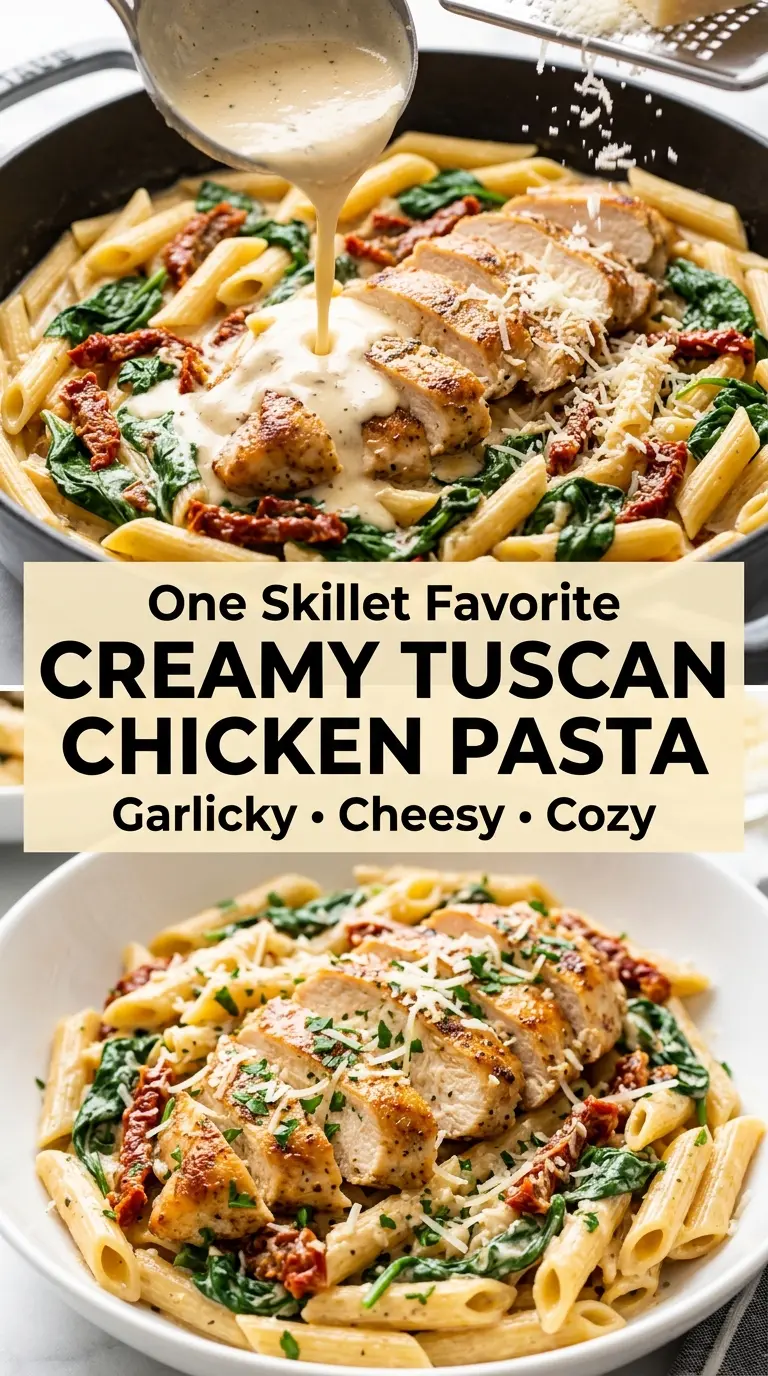
The Reason the Sauce Stays Smooth Instead of Turning Grainy
The most common place this dish goes sideways is when the Parmesan gets dumped into sauce that’s bubbling too hard. High heat pushes the dairy too far, and the cheese tightens into tiny clumps instead of melting into a clean, glossy sauce. Keep the flame at medium-low once the cream goes in, and pull the skillet off the burner for a moment when you whisk in the Parmesan if your stove runs hot.
The other thing that matters is using the pasta water the right way. You’re not trying to thin the sauce into soup. You’re using the starch in that water to help the cream and cheese cling to the pasta in a way plain cream can’t manage on its own. That’s what gives you that restaurant-style finish where every bite tastes coated, not just sauced.
- Parmesan — Freshly grated Parmesan melts far better than the shelf-stable stuff in a green can. Pre-shredded cheese often has anti-caking agents that can make the sauce feel sandy. If you need a swap, use another hard grating cheese like Pecorino Romano, but expect a saltier, sharper result.
- Heavy cream — This is what gives the sauce its body and makes it stable enough to coat the pasta. Half-and-half can work in a pinch, but the sauce will be thinner and a little less luxurious. Don’t substitute milk unless you’re also adding a thickener, because it can split more easily.
- Sun-dried tomatoes — These bring concentrated acidity and sweetness that cut through the cream. Oil-packed tomatoes are softer and more flavorful; dry-packed tomatoes work too, but they should be chopped finely and sometimes rehydrated briefly in hot water first. Skip them only if you’re replacing that bright note with something else, like roasted red peppers.
- Chicken breasts — Slicing them before cooking helps them cook quickly and stay tender. Thin cutlets work even better because they sear fast without drying out. If you prefer thighs, use boneless skinless thighs and cook them a little longer until they hit 165°F.
Building the Sauce in the Same Pan That Cooked the Chicken
Getting the Chicken Brown, Not Dry
Season the sliced chicken before it hits the skillet, then leave it alone long enough to form a crust. If you keep moving it around, you lose the browning that gives the sauce depth later. The chicken is ready to turn when it releases easily from the pan and the edges look opaque halfway up the side.
Using the Pan Drippings as the Base
After the chicken comes out, keep the skillet on the stove and lower the heat. Melt the butter and scrape up the browned bits as the garlic cooks for about 30 seconds. If the garlic starts to darken, the pan is too hot and it will taste bitter, so lower the heat before adding the tomatoes and liquid.
Finishing the Cream Sauce Without Breaking It
Pour in the broth and cream, then let the mixture simmer gently until it starts to look slightly thicker around the edges. Stir in the Parmesan a little at a time. If the sauce looks grainy, stop and pull it off the heat for a minute before whisking again. Add the spinach at the end so it just wilts; if it cooks too long, it turns dull and the sauce loses its fresh look.
Tossing the Pasta So It Stays Glossy
Add the drained penne and the cooked chicken back to the skillet and toss until everything is coated. If the sauce seems tight, loosen it with a splash of the reserved pasta water, one spoonful at a time. The right finish is glossy and clinging, not watery and not clumped at the bottom of the pan.
How to Adapt This for a Different Pantry or Diet
Gluten-Free Pasta Swap
Use a sturdy gluten-free penne or rotini and cook it just to al dente, then toss it with the sauce right away. Gluten-free pasta softens faster once it sits in sauce, so keep a little extra pasta water back and serve it immediately for the best texture.
Dairy-Light Version
You can swap the heavy cream for evaporated milk, but the sauce will be a little less rich and won’t cling as thickly. Use the Parmesan sparingly and let the sauce reduce a bit more before adding the cheese so it doesn’t turn thin.
Make It With Chicken Thighs
Boneless thighs bring a little more richness and stay juicy even if they sit in the pan a minute longer. They take a touch more time to brown, but the tradeoff is a deeper savory flavor that works beautifully with the cream sauce.
Make-Ahead and Leftovers
- Refrigerator: Store in an airtight container for up to 3 days. The sauce thickens as it chills, and the pasta absorbs some of the cream.
- Freezer: It can be frozen, but cream sauces usually separate a bit when thawed. If you freeze it, expect a softer texture and stir in a splash of cream or broth when reheating.
- Reheating: Warm it gently on the stove over low heat with a tablespoon or two of broth or cream. Microwaving on high tends to make the sauce oily and the chicken tough, so go slow and stir often.
Answers to the Questions Worth Asking
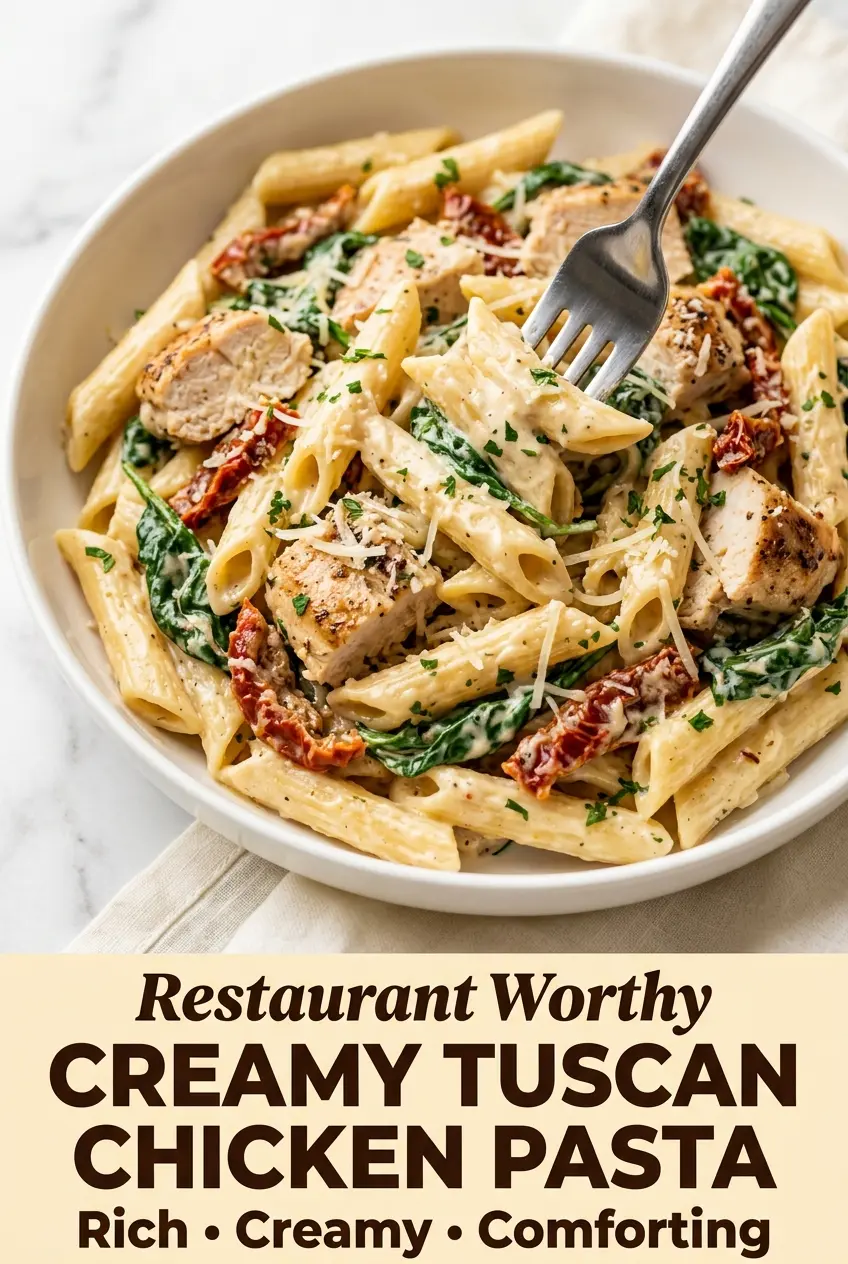
Creamy Tuscan Chicken Pasta
Ingredients
Equipment
Method
- Cook the penne pasta according to the package directions until al dente. Reserve 1/2 cup pasta water, then drain.
- Heat the olive oil in a large skillet over medium-high heat. Season the sliced chicken with salt, black pepper, Italian seasoning, and garlic powder.
- Cook the chicken for 4–5 minutes per side until golden and the internal temperature reaches 165°F. Transfer to a plate.
- Reduce the heat to medium and melt the butter in the same skillet. Sauté the minced garlic for 30 seconds until fragrant.
- Stir in the chopped sun-dried tomatoes and cook for 1 minute. Pour in the chicken broth and heavy cream.
- Simmer for 3–4 minutes, stirring occasionally, until slightly thickened. Whisk in the Parmesan cheese until the sauce becomes smooth and creamy.
- Add the baby spinach and cook for 1–2 minutes until just wilted. Return the chicken to the skillet along with the cooked pasta.
- Toss until everything is evenly coated, adding a splash of reserved pasta water if needed to loosen the sauce. Garnish with chopped parsley and extra Parmesan before serving hot.