The bread cubes should come out of the oven dry and pale, not toasted; that small distinction changes how the whole pan bakes. When I make Cranberry Apple Stuffing, I want the bread to drink in the broth and egg mixture without turning to mush, then hold its shape under a golden top. The apples soften among the onion and celery, while dried cranberries bring little tart-sweet bites through the savory herbs.
I use hearty white bread and dry it before mixing so it can take on the moisture gradually. The onion and celery get a head start in butter, and the apples join just long enough to begin softening; they continue cooking in the baking dish. The result is tender in the middle, crisp on top, and full of apple, cranberry, and fresh herb flavor.
Kitchen Note
Bake, Serve, Wear the Vibe 👕
Editor-picked tees our Oven To Fork readers love.



We may earn from qualifying purchases at no extra cost to you.
Give the baked stuffing its full 10-minute rest before serving. It settles during that short pause, so the center holds together better when you spoon it out.
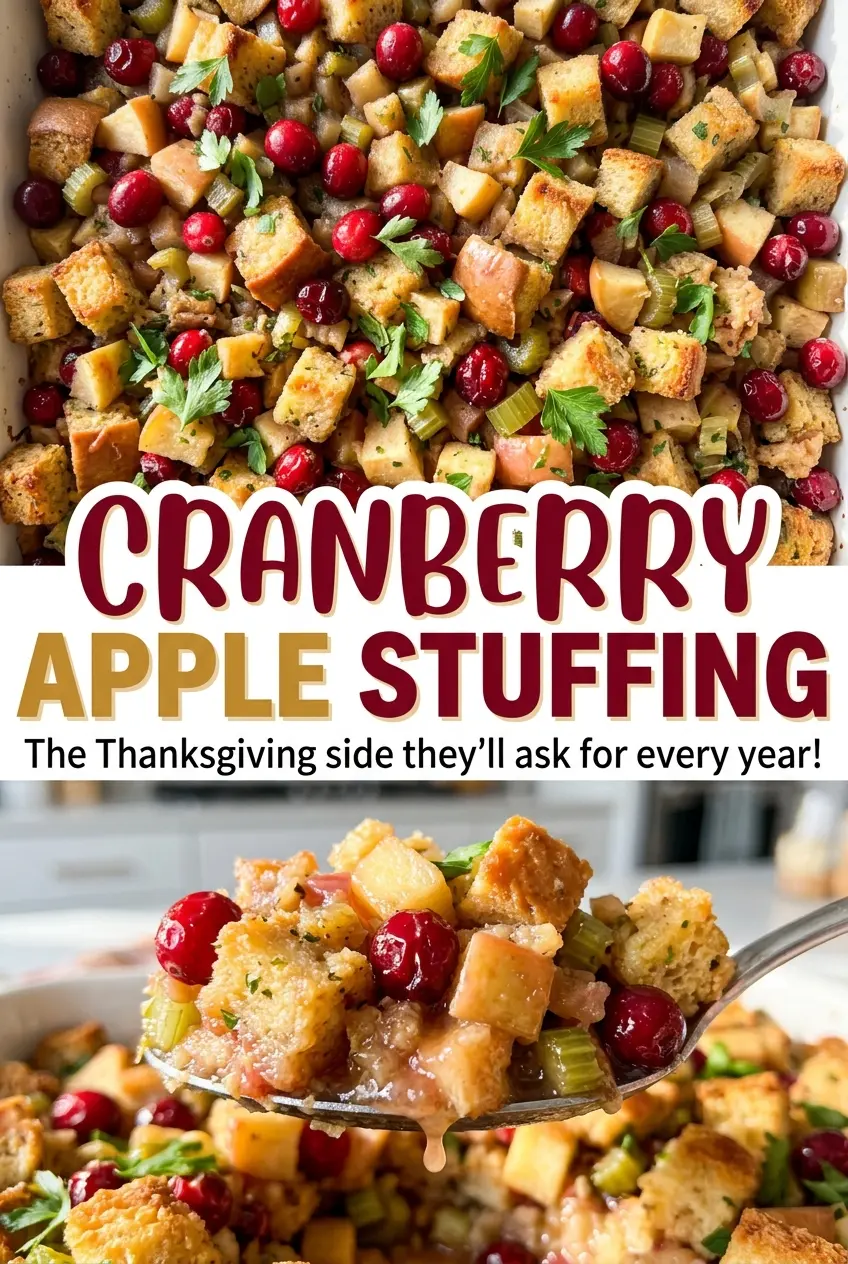
Save this Cranberry Apple Stuffing for a holiday table or Sunday supper: tender bread, soft apples, and tart cranberry tucked under a golden top.
Why Dry Bread Makes Better Stuffing Than Stale Bread Alone
Stuffing needs bread that can absorb seasoned liquid without collapsing. Bread that is simply a little old may still feel soft inside, and those cubes can turn heavy once the broth and eggs go in. Drying the cubes evenly gives them a more consistent texture from edge to center, which helps the finished dish stay tender rather than soggy.
There’s a useful difference between dry and browned here. Browning adds a toasted flavor and firms the outside, but the goal is to remove enough moisture for the bread to take up the broth. Stirring the cubes once as they dry helps expose more surfaces to the oven’s heat. If a few pieces are still noticeably soft when you lift them, give them a little more time; the batch should feel dry throughout, with no toasted color.
Once the bread is ready, the broth-and-egg mixture can coat the cubes instead of pooling around them. Toss gently but thoroughly so the liquid reaches the bread across the bowl. You’re aiming for evenly moistened cubes, not a puddle at the bottom.
What the Bread, Apples, and Herbs Each Bring to the Pan
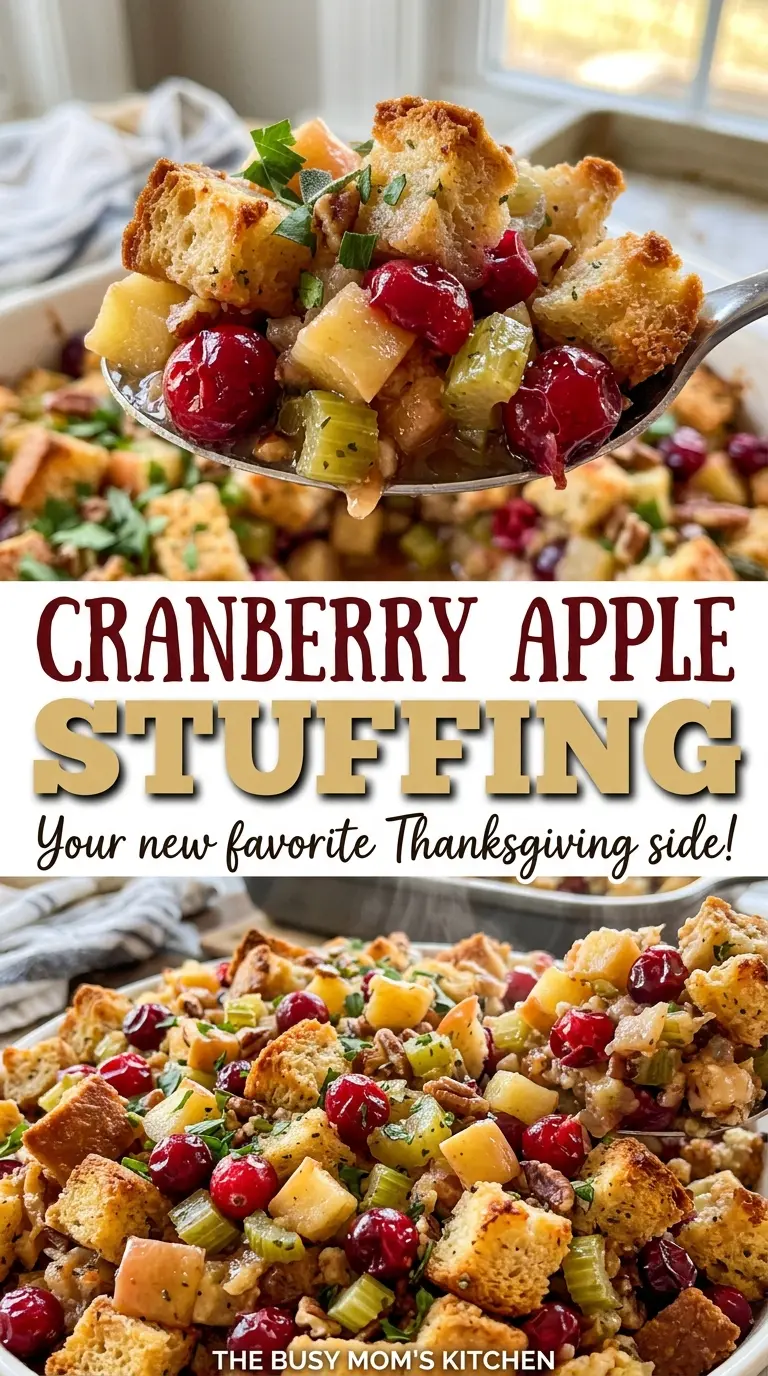
- Hearty white bread — Its sturdy crumb gives the stuffing structure and soaks up the broth without disappearing into it. Cut the cubes evenly so they dry at a similar rate; a soft, delicate loaf is more likely to break up when tossed.
- Firm apples — Firm fruit keeps recognizable pieces after cooking and brings gentle sweetness to balance the herbs. Core the apples and cut them into even pieces so they soften together. Very ripe apples tend to lose their shape sooner.
- Dried cranberries — They add concentrated tart-sweet flavor without bringing extra moisture to the bread mixture. Their chewy texture contrasts with the softened apples. Fresh cranberries aren’t a direct swap for dried ones in this mixture.
- Fresh sage, thyme, and parsley — Sage and thyme cook with the apples and vegetables, so their flavor spreads through the stuffing; parsley is tossed in afterward for a fresh herbal note. Fresh herbs are worth using here because each has a distinct character. Chop the sage and parsley and strip the thyme leaves before measuring.
- Low-sodium chicken broth and eggs — The broth seasons and moistens the cubes, while the eggs help the baked mixture hold together. Low-sodium broth gives you more control over the salt already added to the vegetables. Whisk the eggs thoroughly into the broth before pouring it over the bread.
How to Build the Stuffing Without Losing Its Texture
Dry the cubes without toasting them
Heat the oven to 300°F and spread the bread cubes in a single layer on a large rimmed baking sheet. Bake for 25 to 30 minutes, stirring once, until the cubes feel dry but haven’t browned. A crowded layer dries less evenly, so use a large sheet and spread the pieces out. Transfer the dried cubes to a large bowl.
Soften the vegetables before adding the apples
Raise the oven temperature to 350°F and grease a 9×13-inch baking dish with the softened butter. Melt the remaining butter in a 12-inch skillet over medium heat, then add the finely chopped onion and celery. Cook for 5 to 7 minutes, stirring occasionally, until both are softened; they should look tender, not browned. If the pan starts to color the vegetables quickly, lower the heat so they soften gently.
Season the apples and coat the bread evenly
Stir the apple pieces, sage, thyme, salt, and pepper into the skillet and cook for 3 to 4 minutes, until the apples begin to soften. Add that mixture to the bread along with the dried cranberries and chopped parsley, then toss to combine. Whisk the broth and eggs together in a medium bowl before pouring them over the bread. Toss until the cubes are evenly moistened, then move everything into the prepared baking dish.
Bake covered, then uncover for a golden top
Cover the baking dish tightly with foil and bake for 30 minutes. Remove the foil and continue baking for 15 to 20 minutes, until the top is golden and the center reaches 165°F. If the top is pale, let it finish uncovered; if the center hasn’t reached temperature yet, keep baking rather than serving it early. Let the pan rest before spooning out portions.
Simple Changes for a Different Cranberry Apple Stuffing
Leave out the cranberries for a savory apple stuffing
Omit the dried cranberries and keep the other listed ingredients and method the same. You’ll lose the sweet-tart chewy bites, leaving the apples, onion, celery, and herbs to lead the flavor.
Skip the parsley for a deeper herb flavor
Leave out the parsley if you prefer the warmer, cooked flavor of sage and thyme without the fresh finish. The stuffing will still have its apple and cranberry contrast, but the herbs will come through more softly.
Storage and Reheating
- Refrigerator: Refrigerate leftovers promptly in a covered container and use within 3 to 4 days. The bread softens as it sits, though the flavors stay savory and gently sweet.
- Freezer: Freeze cooled portions in an airtight container for up to 1 month for best quality. Thaw in the refrigerator before reheating; the top won’t be as crisp as it was fresh from the oven.
- Reheating: Warm a larger portion covered in a 350°F oven until hot throughout, or heat individual portions in the microwave. Keep it covered while reheating so the exposed bread doesn’t dry out.
Questions That Come Up While Making Cranberry Apple Stuffing
Cranberry Apple Stuffing
Ingredients
Equipment
Method
- Heat the oven to 300°F.
- Spread the bread cubes in a single layer on a large rimmed baking sheet.
- Bake for 25 to 30 minutes, stirring once, until dry but not browned.
- Transfer the bread cubes to a large bowl.
- Increase the oven temperature to 350°F.
- Grease a 9x13-inch baking dish with the softened butter.
- Melt the 6 tablespoons butter in a 12-inch skillet over medium heat.
- Add the onion and celery and cook for 5 to 7 minutes, stirring occasionally, until softened.
- Stir in the apples, sage, thyme, salt, and pepper and cook for 3 to 4 minutes, until the apples begin to soften.
- Add the skillet mixture, cranberries, and parsley to the bread and toss to combine.
- Whisk the broth and eggs in a medium bowl.
- Pour the broth mixture over the bread mixture and toss until evenly moistened.
- Transfer the mixture to the prepared baking dish and cover tightly with foil.
- Bake for 30 minutes.
- Remove the foil.
- Bake for 15 to 20 minutes, until the top is golden and the center reaches 165°F.
- Let the stuffing rest for 10 minutes before serving.