At 300°F, bread cubes slowly lose their softness without browning much, and that quiet drying step is what keeps stuffing from turning pasty once the broth goes in. I used to think a quick toast would do the same job, but the centers stayed damp and the finished dish came out heavier than I wanted. Now I spread the cubes across two baking sheets and give them time to dry all the way through.
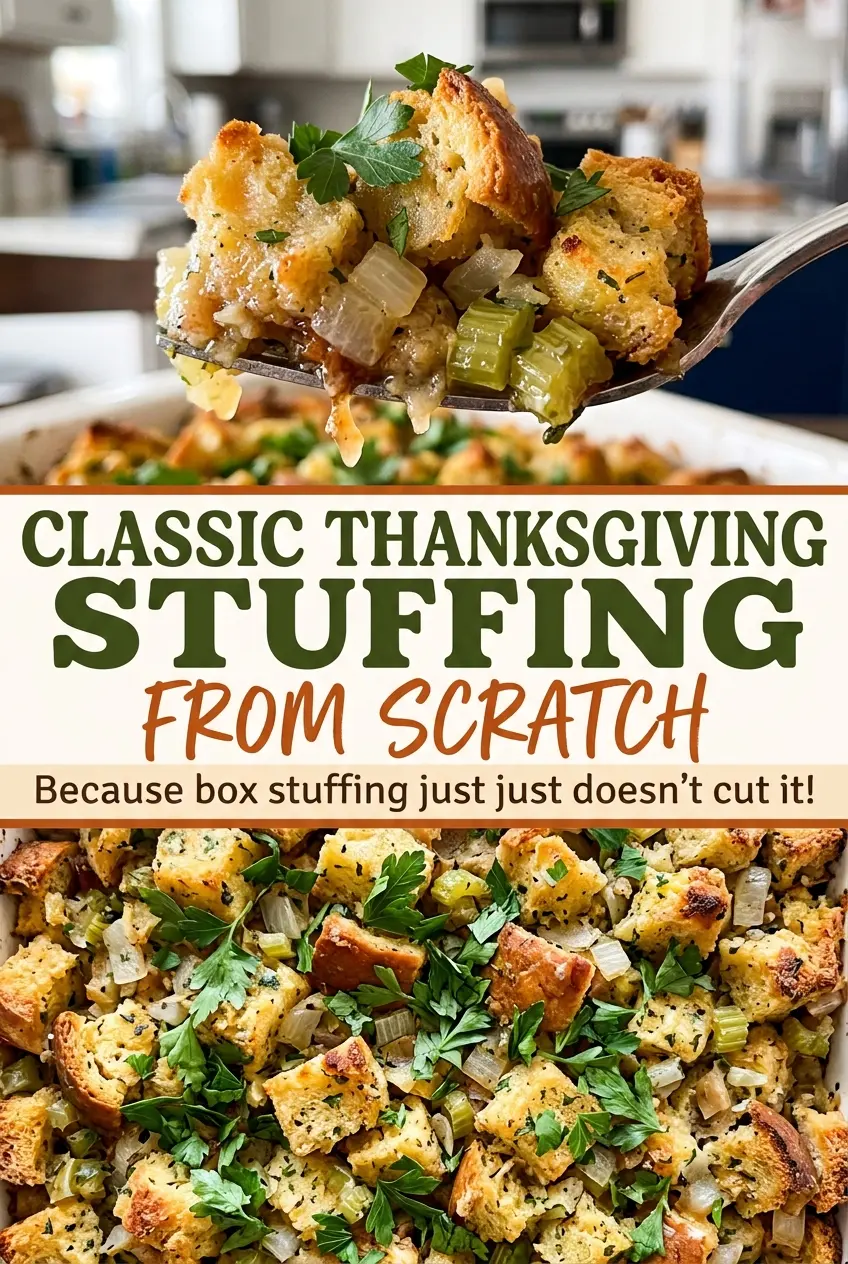
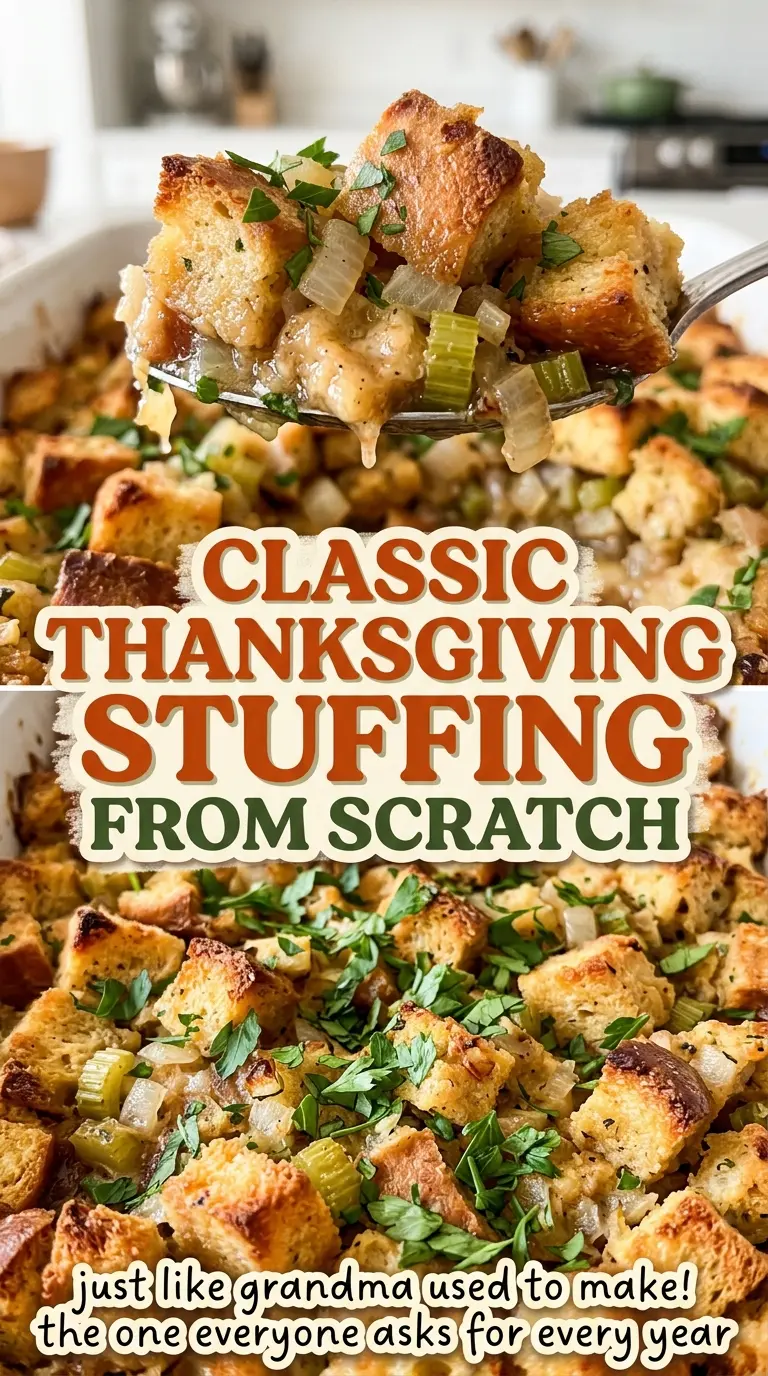
Classic Thanksgiving Stuffing from Scratch gets its familiar savory flavor from butter-softened onion and celery, rubbed sage, and thyme. The bread should be dry and lightly crisp before it meets the broth and eggs; then it can absorb the liquid without collapsing. Once it’s baked, the covered stage keeps the middle tender, while the final uncovered bake gives the top its golden color. The result is a pan of stuffing with a soft center and a top that has a little bite.
Kitchen Note
Bake, Serve, Wear the Vibe 👕
Editor-picked tees our Oven To Fork readers love.



We may earn from qualifying purchases at no extra cost to you.
The stuffing can look pale when it comes out from under the foil, and that’s exactly right. Let the uncovered bake bring the top to golden rather than trying to brown it during the covered stage.
Save this classic Thanksgiving stuffing for its tender center, golden top, and sage-and-thyme flavor.
Why Fresh Bread Turns This Stuffing Dense Instead of Tender
Fresh bread feels soft and ready to use, but that softness is exactly what makes it a poor starting point here. The cubes need to dry before they’re mixed with broth and eggs. Dry bread has room to take up that liquid; soft, moist bread starts out partly saturated and can lose its shape as you toss everything together. That’s when stuffing shifts from distinct, tender pieces to a dense, gummy mass.
The drying happens in a low oven, not in a hot skillet. A longer, gentle bake dries the cubes through without making the outside dark and brittle. Afterward, the broth and egg mixture moistens the bread, and the covered bake gives the center time to heat through while holding in steam. It’s a simple sequence, but each stage has a separate job: dry the bread first, hydrate it evenly, then bake it until the middle is cooked and the top is golden.
Sturdy white bread is a good fit because it holds its shape through tossing and baking. You’re not aiming for croutons that shatter; the cubes should be dry and lightly crisp at the edges, with enough structure to absorb the savory liquid without breaking apart.
What the Bread, Broth, and Eggs Each Contribute
- Sturdy white bread — Its mild flavor lets the herbs and vegetables come through, and sturdy slices hold up better than very soft sandwich bread. The loaf doesn’t need to be expensive or artisan; what matters is that the cubes dry thoroughly and keep their shape. Cut them evenly so they dry at a similar pace.
- Unsalted butter — Butter carries the aroma of the onion, celery, and herbs through the dish and gives the vegetables a soft, rounded base. Unsalted butter also leaves the seasoning easier to control alongside the low-sodium broth. It’s doing more than greasing the pan, so don’t leave out the butter used for cooking.
- Yellow onion and celery — These two make the savory foundation. Dice them evenly so they soften together; if the onion pieces are much smaller than the celery, they can soften sooner while larger celery pieces stay firm.
- Rubbed sage and dried thyme — Rubbed sage brings the familiar stuffing aroma, while thyme adds a quieter herbal note. Dried herbs are the right fit for this mixture because they’re stirred into the warm butter and vegetables, where their flavor spreads through the bread.
- Fresh parsley — Parsley brings a fresh, green note that balances the dried herbs. Chop it before it goes into the bowl so it distributes through the bread rather than landing in a few large clumps.
- Low-sodium chicken broth — Broth moistens the bread and adds savory depth. Low-sodium broth matters because the stuffing is seasoned separately; using a much saltier broth can push the finished dish past the intended balance. A low-sodium vegetable broth is a practical equal-amount swap for a vegetarian version, with a slightly different savory taste.
- Eggs — Whisked into the broth, eggs help the baked mixture hold together instead of serving as loose, separate cubes. They’re part of the structure as well as the moisture, so leaving them out changes the texture.
Dry the Bread, Soften the Vegetables, Then Bake in Two Stages
Dry the cubes slowly
Heat the oven to 300°F and grease a 9×13-inch baking dish with 1 tablespoon of butter. Spread the 1/2-inch bread cubes over two rimmed baking sheets, giving them room rather than piling them in the center. Bake for 45 to 60 minutes, tossing once halfway through, until the cubes feel dry and lightly crisp. If a few pieces still feel soft in the middle, give them more time within that range rather than moving ahead with damp bread.
Soften the onion and celery in butter
Melt the remaining 11 tablespoons of butter in a 12-inch skillet over medium heat. Add the diced onion and celery and cook for 8 to 10 minutes, stirring occasionally, until softened. Stir in the rubbed sage, thyme, kosher salt, and black pepper once the vegetables have softened, then take the skillet off the heat. The vegetables should be tender, not browned; browning them would give the stuffing a deeper, toastier base than this classic version needs.
Moisten the bread evenly
Combine the dry bread cubes, cooked vegetables, and chopped parsley in a large bowl. Whisk the broth and eggs together before pouring them over the bread so the eggs don’t land in one spot. Toss until the cubes are evenly moistened, then let the mixture stand for 5 minutes. If you rush the tossing, some cubes can stay dry while others take on too much liquid, so work through the bowl until the vegetables and moisture look evenly distributed.
Bake covered, then uncover for color
Transfer the mixture to the prepared baking dish and cover it tightly with foil. Bake at 350°F for 30 minutes, then remove the foil and bake for 15 to 20 minutes, until the top is golden and the center reaches 165°F. A loose foil cover lets steam escape during the first bake, so press it snugly around the dish. Rest the stuffing for 10 minutes before serving; the short rest helps it settle after baking.
Three Ways to Adjust the Herb-and-Bread Balance
Make a vegetarian version with vegetable broth
Replace the chicken broth with the same amount of low-sodium vegetable broth. The bread, eggs, herbs, and baking method stay the same, so the texture remains familiar; the broth gives the stuffing a slightly different savory base.
Let the parsley read more clearly
Use the same chopped parsley, but hold back a small portion and scatter it over the stuffing just before serving. The cooked parsley is mellow and blended into the bread; the fresh portion gives each serving a brighter herbal note without changing the overall ingredient balance.
Make the vegetables blend into the bread
Dice the onion and celery a little finer while keeping the same quantities. Smaller pieces soften into the buttery base and distribute more evenly through the cubes, giving you less distinct vegetable texture in each bite.
Storage and Reheating
- Refrigerator: Refrigerate leftovers promptly in a covered, airtight container for 3 to 4 days. The top will soften as it sits.
- Freezer: Freeze cooled portions in an airtight freezer-safe container for up to 1 month for the best texture. Thaw in the refrigerator before reheating.
- Reheating: Reheat covered in the oven or in the microwave until hot throughout. Keep it covered so the bread doesn’t dry out; reheating uncovered can leave the edges tough before the middle is warm.
Questions That Come Up While Making This Stuffing
Classic Thanksgiving Stuffing from Scratch
Ingredients
Equipment
Method
- Heat the oven to 300°F.
- Grease a 9x13-inch baking dish with 1 tablespoon of the butter.
- Spread the bread cubes across 2 rimmed baking sheets and bake for 45-60 minutes, tossing once halfway through, until dry and lightly crisp.
- Melt the remaining 11 tablespoons butter in a 12-inch skillet over medium heat.
- Add the onion and celery and cook for 8-10 minutes, stirring occasionally, until softened.
- Stir in the sage, thyme, salt, and pepper, then remove from the heat.
- In a large bowl, combine the bread cubes, cooked vegetables, and parsley.
- Whisk the broth and eggs together, pour over the bread, and toss until evenly moistened.
- Let stand for 5 minutes.
- Transfer the mixture to the prepared baking dish and cover tightly with foil.
- Bake at 350°F for 30 minutes.
- Uncover and bake for 15-20 minutes, until the top is golden and the center reaches 165°F.
- Let the stuffing rest for 10 minutes before serving.