When the turkey comes out of the brine, the skin feels slick and damp, not ready for the oven. I used to rush that part; giving the bird an uncovered rest in the refrigerator makes a noticeable difference when it roasts. This Apple Cider Brined Turkey takes a little planning, but the hands-on work is simple: dissolve the salt and sugar, chill the brine, and let the refrigerator do the rest.
The cider brings a gentle apple note, while Morton kosher salt seasons the bird throughout its long soak. I keep the brine cold before the turkey goes in, then dry the skin before buttering it. That sequence gives the turkey time to take on the brine’s seasoning without putting warm liquid in contact with raw poultry, and the finished bird has savory meat with a subtle cider aroma.
Kitchen Note
Bake, Serve, Wear the Vibe 👕
Editor-picked tees our Oven To Fork readers love.



We may earn from qualifying purchases at no extra cost to you.
Set the brining bag inside a roasting pan before you pour in the cider brine. The pan catches a leak and keeps raw poultry liquid contained in the refrigerator.
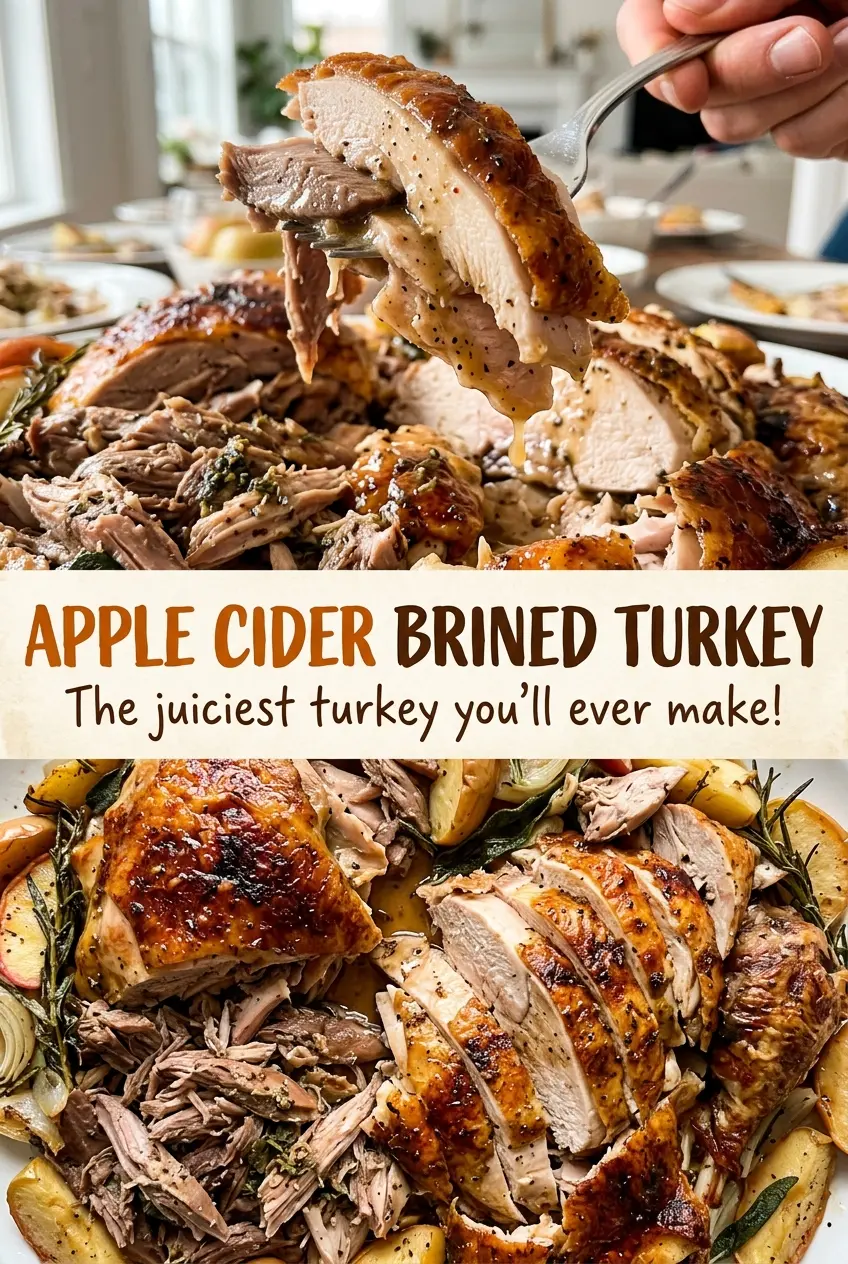
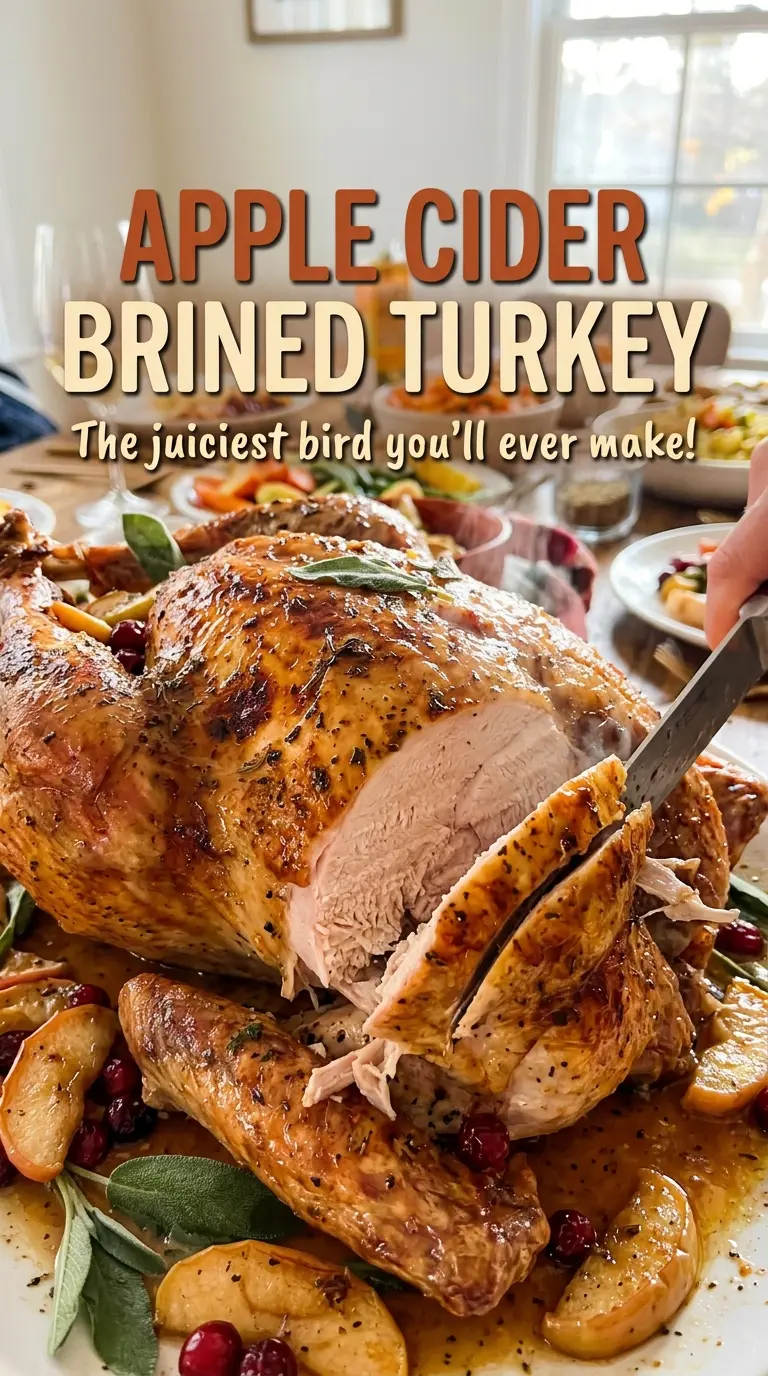
Save Apple Cider Brined Turkey for a holiday table centerpiece with tender, cider-seasoned meat and golden roasted skin.
Why the Brine Has to Be Cold Before the Turkey Goes In
The salt and brown sugar dissolve quickly in hot water, but that hot mixture needs to be cooled before it meets the turkey. I stir in the remaining water and chilled cider, then refrigerate the whole brine until it reaches 40°F or colder. Don’t judge by the pot feeling cool on the outside; check the liquid itself with a thermometer.
That temperature checkpoint matters because the turkey will sit submerged for 12 to 18 hours. Starting with a cold brine and keeping the bird refrigerated at 40°F or colder protects the food while the seasoning has time to work. If you pour warm brine into the bag, you’ve skipped the most important pause in the process. Let the brine chill completely first, even if that means making it well ahead of the turkey.
The water is divided for a reason: the first portion dissolves the salt and sugar, and the remaining portion, cider, peppercorns, and bay leaves help cool and finish the mixture. Once it’s cold, the brine should smell lightly of apple and spice, not like a hot syrup. The turkey goes into the bag only after that temperature check.
Why Morton Salt and Apple Cider Set This Brine’s Balance
- Morton kosher salt — Salt brands differ in crystal size and density, so use the named brand rather than assuming another kosher salt measures the same by volume. It dissolves into the brine and seasons the meat during the soak.
- Apple cider and light brown sugar — Cider gives the brine its apple character; brown sugar rounds out the salty taste with a mild sweetness. Choose fresh-tasting cider rather than apple cider vinegar, which is much sharper and isn’t a direct stand-in. Pack the brown sugar when measuring so the amount stays consistent.
- Peppercorns and bay leaves — These provide a quiet spice note without leaving ground pepper on the skin. Keep the peppercorns whole and the bay leaves intact so they’re easy to discard with the brine.
- A fully thawed turkey — Choose a plain, unseasoned bird weighing 12 to 14 pounds, with the neck and giblets removed. A turkey that has already been salted or injected can turn out too salty after a long soak.
- Unsalted butter and cavity aromatics — Softened butter spreads over the skin more evenly than cold butter. The onion, apple, and thyme go inside the cavity, where they lend a gentle aroma as the turkey roasts; quarter the onion and apple so they fit easily.
From Cold Brine to Carving Board: The Stages That Matter
Dissolve the Salt and Chill the Cider Brine
Bring 4 cups of water to a simmer in a large pot, then stir in the Morton kosher salt and packed light brown sugar until both dissolve. Take the pot off the heat and add the remaining 4 cups water, chilled apple cider, peppercorns, and bay leaves. Refrigerate until the brine is 40°F or colder. Don’t add the turkey while the liquid is still warm.
Give the Turkey a Cold, Even Soak
Set the completely thawed turkey in a large brining bag nestled inside a roasting pan, then pour in the cold brine and seal the bag. Refrigerate at 40°F or colder for 12 to 18 hours, turning the turkey once halfway through so the brine reaches the bird evenly. If the bag won’t seal securely, reposition it in the pan before chilling rather than risking a spill. Discard the brine when the turkey comes out.
Dry the Skin Before Adding Butter
Pat the turkey thoroughly dry with paper towels after removing it from the brine. Place it uncovered in the refrigerator for 8 to 12 hours; this gives moisture on the surface time to evaporate. Don’t wrap it for this rest, since the exposed skin is the point of the step. When you’re ready to roast, the surface should feel dry rather than slick.
Roast to Temperature, Then Let It Rest
Heat the oven to 325°F and set a rack in a large roasting pan. Rub softened unsalted butter over the skin, put the quartered onion and apple and the thyme sprigs in the cavity, then set the turkey breast-side up on the rack. Roast for 3 to 3¾ hours, tenting loosely with foil if the skin browns too quickly; check the thickest part of the breast and the innermost thigh with a thermometer, and wait until both read at least 165°F. Move the turkey to a cutting board and let it rest for 30 minutes before carving.
Small Changes That Shift the Cider Turkey’s Flavor
A dairy-free roast without the butter coating
For a dairy-free adaptation, leave off the butter and roast the turkey with the same oven temperature and doneness checks. The skin won’t have the buttery finish and may brown less evenly, but the cider brine and cavity aromatics still season the bird. Don’t replace the butter with an ingredient that changes the brine.
Let the cider note lead
Leave the onion and thyme out of the cavity and keep the quartered apple. The apple aroma will be more noticeable without the savory onion and herbal note competing with it; the brine itself stays unchanged.
Keep the cavity more savory
For a subtler fruit aroma, use the onion and thyme in the cavity and leave out the apple. The cider remains in the brine, so the turkey still gets its apple note, just without the extra fruit inside the bird.
Storage and Reheating
- Refrigerator: Store carved leftovers in a covered container for 3 to 4 days. The breast meat may firm up as it chills.
- Freezer: Freeze carved turkey in airtight packaging for 2 to 6 months for best quality. Thaw it in the refrigerator before reheating.
- Reheating: Warm portions covered in a 325°F oven until they reach 165°F, adding a little broth if you have it to keep the meat from drying out. Avoid leaving uncovered slices in the oven, where they lose moisture quickly.
Questions That Come Up Before the Turkey Goes in the Oven
Apple Cider Brined Turkey
Ingredients
Equipment
Method
- Bring 4 cups of the water to a simmer in a large pot.
- Stir in the kosher salt and brown sugar until dissolved.
- Remove the pot from the heat.
- Stir in the remaining 4 cups water, the apple cider, peppercorns, and bay leaves.
- Refrigerate until the brine is 40°F or colder.
- Put the turkey in a large brining bag set inside a roasting pan.
- Pour in the cold brine and seal the bag.
- Refrigerate at 40°F or colder for 12 to 18 hours, turning the turkey once halfway through.
- Remove the turkey from the brine and discard the brine.
- Pat the turkey thoroughly dry.
- Place it uncovered in the refrigerator for 8 to 12 hours to help dry the skin.
- Heat the oven to 325°F.
- Set a rack in a large roasting pan.
- Rub the softened butter over the turkey skin.
- Put the onion, apple, and thyme in the cavity.
- Set the turkey breast-side up on the rack.
- Roast for 3 to 3 3/4 hours, tenting loosely with foil if the skin browns too quickly, until a thermometer in the thickest part of the breast and the innermost thigh reads at least 165°F.
- Transfer the turkey to a cutting board.
- Let it rest for 30 minutes before carving.