The potatoes are the first thing I check in this pot. If they’re still firm when the seafood goes in, the fish and shrimp can finish cooking before the vegetables are ready. I let the broth simmer until a fork slips easily into a potato cube, then add the seafood in stages. That timing keeps the cod tender and gives the shrimp just enough time to turn opaque.
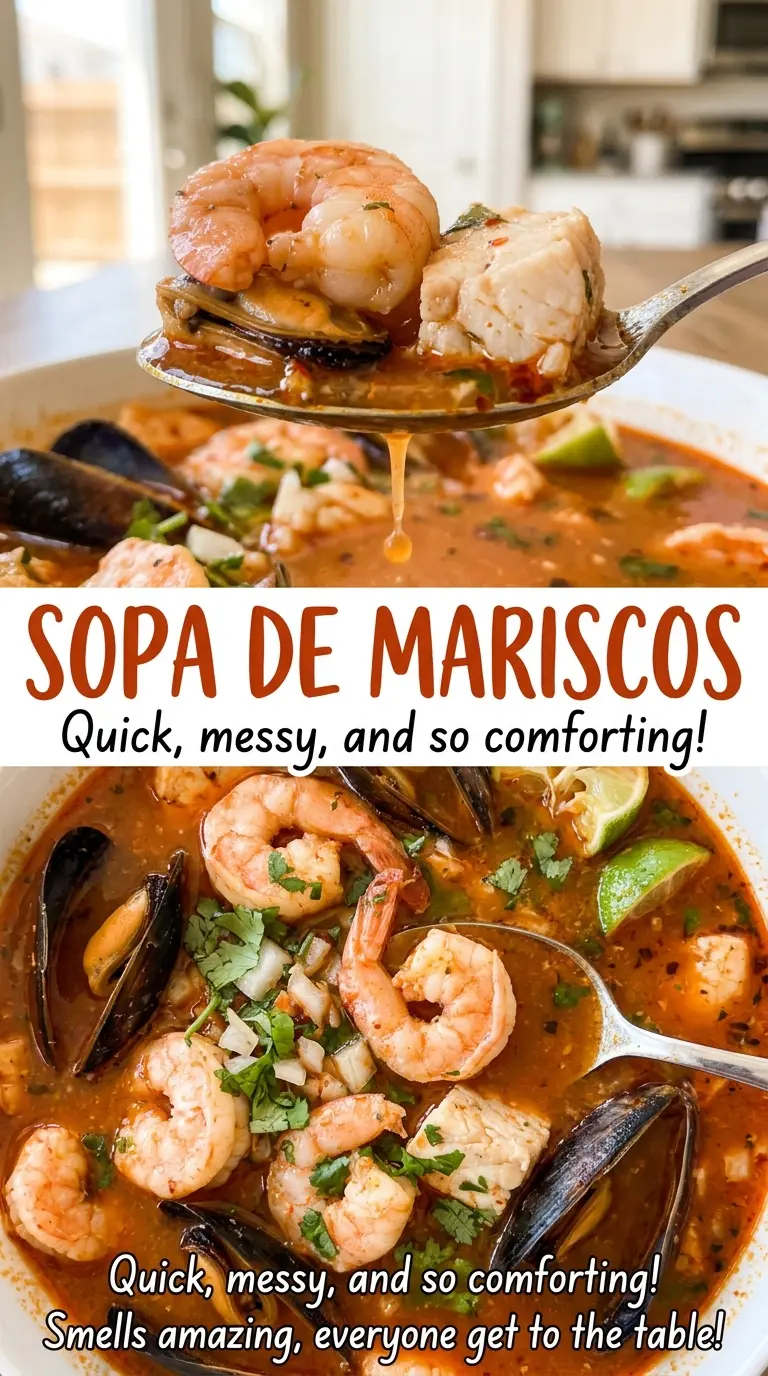
This Sopa de Mariscos builds its broth from softened onion and red bell pepper, garlic, oregano, smoked paprika, tomatoes, seafood stock, and clam juice. Yukon Gold potatoes make it hearty without turning it into a creamy chowder, and canned clams bring their own briny juice to the pot. I serve it hot with cilantro and lime wedges, so each bowl gets a fresh, bright finish alongside the savory broth.

Kitchen Note
Bake, Serve, Wear the Vibe 👕
Editor-picked tees our Oven To Fork readers love.



We may earn from qualifying purchases at no extra cost to you.
I leave the lime wedges for the table instead of squeezing all the juice into the Dutch oven. A little lime in each bowl brightens the tomato-and-seafood broth, and everyone can adjust the tang to taste.
Save this Sopa de Mariscos for a cozy seafood supper, with tender cod, shrimp, and clams in a tomato-rich broth.
Why the Broth Simmer Comes Before Any Seafood
The broth needs a little time to become more than stock with seafood dropped into it. Onion and red bell pepper soften first, then garlic and the dried spices briefly warm in the oil. Once the tomatoes, seafood stock, clam juice, and potatoes go in, the uncovered simmer gives those flavors time to mingle while the potatoes cook through.
That order also gives you a useful window to judge the broth before delicate fish is involved. The potatoes should be fork-tender before the cod goes in; once they reach that point, the seafood needs only a short, gentle cook. This is not a soup that benefits from simmering the fish for a long stretch. Build the savory base first, then let the cod, shrimp, and clams finish in it near the end. The result is a full-tasting broth with pieces of seafood that still hold their texture.
What Gives This Seafood Broth Its Depth
- Seafood stock and clam juice — Together, they give the soup its savory, briny base. Use a seafood stock you like the taste of, since it makes up much of the broth; if you don’t have bottled clam juice, replace its volume with more seafood stock for a milder, less briny result.
- Cod — Cod’s mild flavor and substantial flakes work well in a soup with assertive tomato and clam notes. Cut it into even chunks so the pieces cook at about the same pace, and handle them gently once they’re in the pot.
- Large shrimp — Peeled and deveined shrimp are convenient here because they can go straight into the soup near the end. Fresh or frozen shrimp both work; if starting with frozen, thaw and drain them first rather than adding icy shrimp to the pot.
- Canned chopped clams — The clams add a distinct briny bite, and their packing juice belongs in the soup too. A standard can is a practical choice here; there’s no need to seek out fresh clams for this version.
- Yukon Gold potatoes — Their creamy, waxy texture softens while keeping the cubes more intact than a floury potato would. Cut the cubes to the same size so they become tender together.
- Smoked paprika, oregano, and cilantro — Smoked paprika contributes a gentle smoky note, while dried oregano seasons the simmering broth. Add the fresh cilantro at the end to keep its leafy, fresh character rather than cooking it into the base.
Building the Soup Without Overcooking the Seafood
Soften the Onion and Pepper
Heat the olive oil in a 5-quart Dutch oven over medium heat. Add the diced onion and red bell pepper and cook for 5–7 minutes, stirring occasionally, until both have softened. They should look glossy and tender, not browned or crisp at the edges. If they start sticking before they soften, lower the heat slightly.
Wake Up the Garlic and Spices
Stir in the minced garlic, dried oregano, smoked paprika, and black pepper. Cook for about 30 seconds, just until fragrant. Keep the mixture moving so the garlic doesn’t scorch; browned garlic can turn bitter and muddy the broth. The short pause in the hot oil helps the spices release their aroma before the liquid goes in.
Simmer the Broth and Potatoes
Add the diced tomatoes with their juice, seafood stock, clam juice, potatoes, bay leaf, and kosher salt. Bring the pot to a boil, then reduce the heat and simmer uncovered for 12–18 minutes. Check the largest potato cube with a fork; it should be tender all the way through before you move on. If it resists, keep the broth at a gentle simmer until the potatoes are ready.
Poach the Seafood and Finish
Add the cod and simmer gently for 3 minutes, then add the shrimp and chopped clams with their juice. Continue simmering for 3–5 minutes, until the shrimp are opaque and the cod reaches 145°F. Avoid a hard boil or vigorous stirring, which can break up the cod before it reaches the bowls. Remove the bay leaf, stir in the cilantro, and serve hot with lime wedges.
Three Simple Ways to Change the Seafood Mix
Make a Cod-Forward Pot
Leave out the shrimp and canned clams, and replace the clam juice with the same volume of seafood stock. The soup will taste gentler and less briny, with the cod as the only seafood; keep the potato and broth stages the same, then simmer the cod gently until it reaches 145°F.
Leave Out the Cod for a Shellfish-Led Bowl
Skip the cod and keep the shrimp and clams. Add the shrimp and clams after the potatoes are tender, then simmer until the shrimp are opaque. Without the flaky fish, the broth feels lighter and the clam flavor comes through more clearly.
Make the Tomato Broth Less Prominent
Omit the canned diced tomatoes for a more straightforward seafood-stock broth. The soup will be less tangy and a little lighter in body, while the potatoes, clam juice, and seafood still make it hearty. No other change to the simmering method is needed.
Storage and Reheating
- Refrigerator: Store leftovers in a covered container for 3–4 days. The potatoes will soften further, and the seafood won’t be quite as delicate after reheating.
- Freezer: Freeze in airtight portions for up to 2 months. The soup is safe to freeze, but the potatoes may become softer and the seafood texture less tender after thawing.
- Reheating: Warm gently on the stovetop, stirring carefully, until the soup reaches 165°F throughout. Avoid a rolling boil, which can toughen the shrimp and break the cod into small flakes.
Questions That Come Up When Cooking Sopa de Mariscos
Sopa de Mariscos
Ingredients
Equipment
Method
- Heat the olive oil in a 5-quart Dutch oven over medium heat.
- Add the onion and bell pepper and cook for 5–7 minutes, stirring occasionally, until softened.
- Stir in the garlic, oregano, smoked paprika, and black pepper and cook for 30 seconds, until fragrant.
- Add the tomatoes, seafood stock, clam juice, potatoes, bay leaf, and salt, then bring to a boil.
- Reduce the heat and simmer uncovered for 12–18 minutes, until the potatoes are fork-tender.
- Add the cod and simmer gently for 3 minutes.
- Add the shrimp and clams with their juice and simmer for 3–5 minutes, until the shrimp are opaque and the cod reaches 145°F.
- Remove the bay leaf and stir in the cilantro.
- Serve hot with lime wedges.