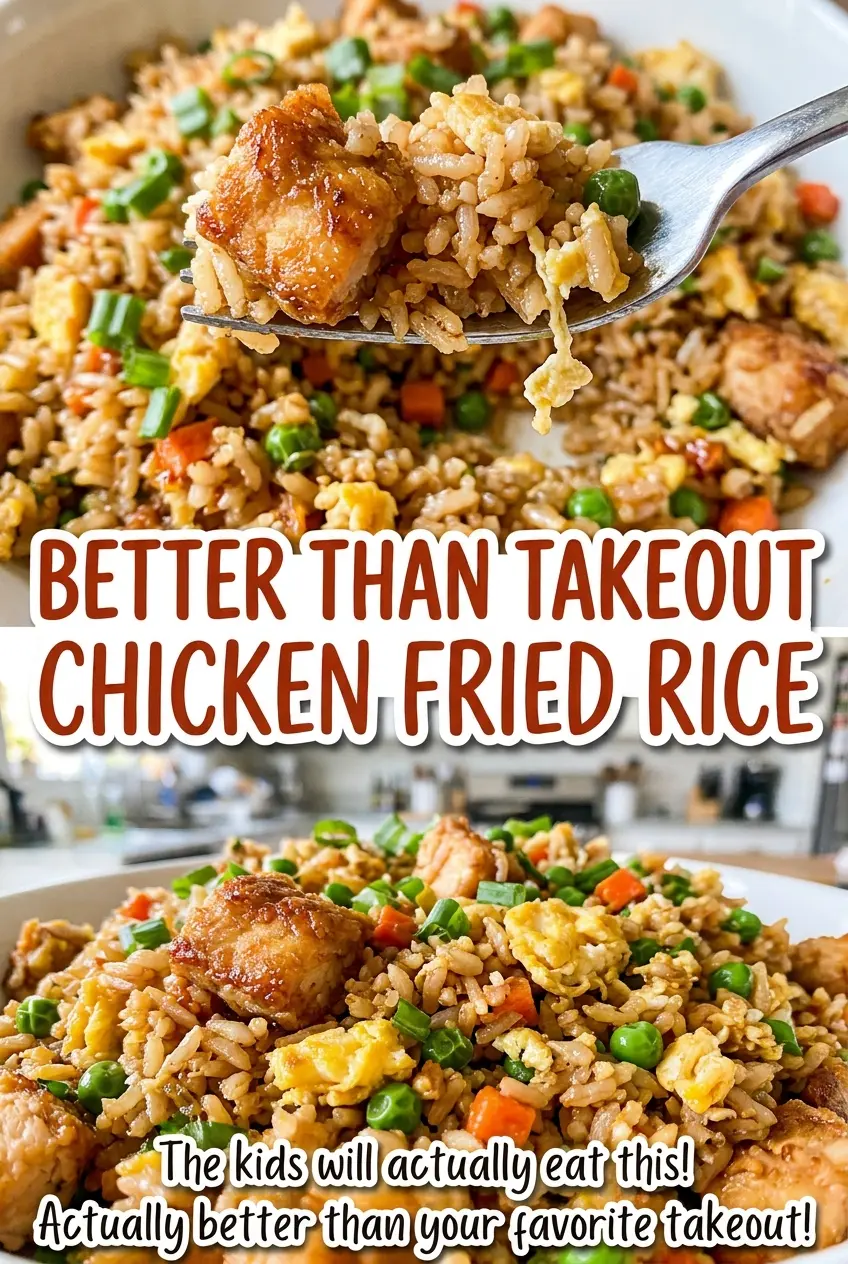
The rice starts to toast around the edges, and that’s when this stops looking like a bowl of leftovers and starts smelling like the fried rice I want from a takeout place. I learned to give the rice a few minutes in the skillet before adding the chicken and eggs back; otherwise, it’s easy to end up with warm rice that tastes more steamed than fried. These chicken fried rice portions cook in stages, so each ingredient gets its turn in the pan.
Chilled long-grain rice is a big part of the texture, but the order matters, too. Cooking the chicken and eggs first, then moving them to a plate, leaves room for the rice to heat and toast without burying it under everything else. Low-sodium soy sauce brings the savory seasoning, while toasted sesame oil goes in after the skillet comes off the heat, where its nutty aroma stays distinct. The result is a full skillet of tender chicken, softly scrambled eggs, vegetables, and rice with a little toastiness in every bite.
Kitchen Note
Bake, Serve, Wear the Vibe 👕
Editor-picked tees our Oven To Fork readers love.



We may earn from qualifying purchases at no extra cost to you.
Keep the vegetable oil divided into three portions instead of pouring it all into the skillet at once. That way, the eggs and vegetables each get a little oil when they go in, rather than competing with the chicken for what’s left.
Save this Better Than Takeout Chicken Fried Rice for its lightly toasted rice, tender chicken, and quick skillet method.
Why the Rice Gets Its Own Turn in the Skillet
Fried rice can turn soft and heavy when the pan is crowded. Chicken and eggs both release moisture as they cook, so leaving them in the skillet while the rice fries makes it harder for the grains to toast. Moving them to a plate is not just a holding step; it gives the rice room to heat against the skillet before everything comes together again.
The same order also protects the texture of the other ingredients. The chicken is browned before it’s set aside, and the eggs are cooked until fully set instead of spending the whole rice-cooking time in the pan. Once the rice is hot and lightly toasted, the chicken and eggs need only a short return to the skillet. That final toss warms everything together without asking any one ingredient to stay over the heat for the entire cook.
Why Long-Grain Rice, Low-Sodium Soy, and Sesame Oil Matter
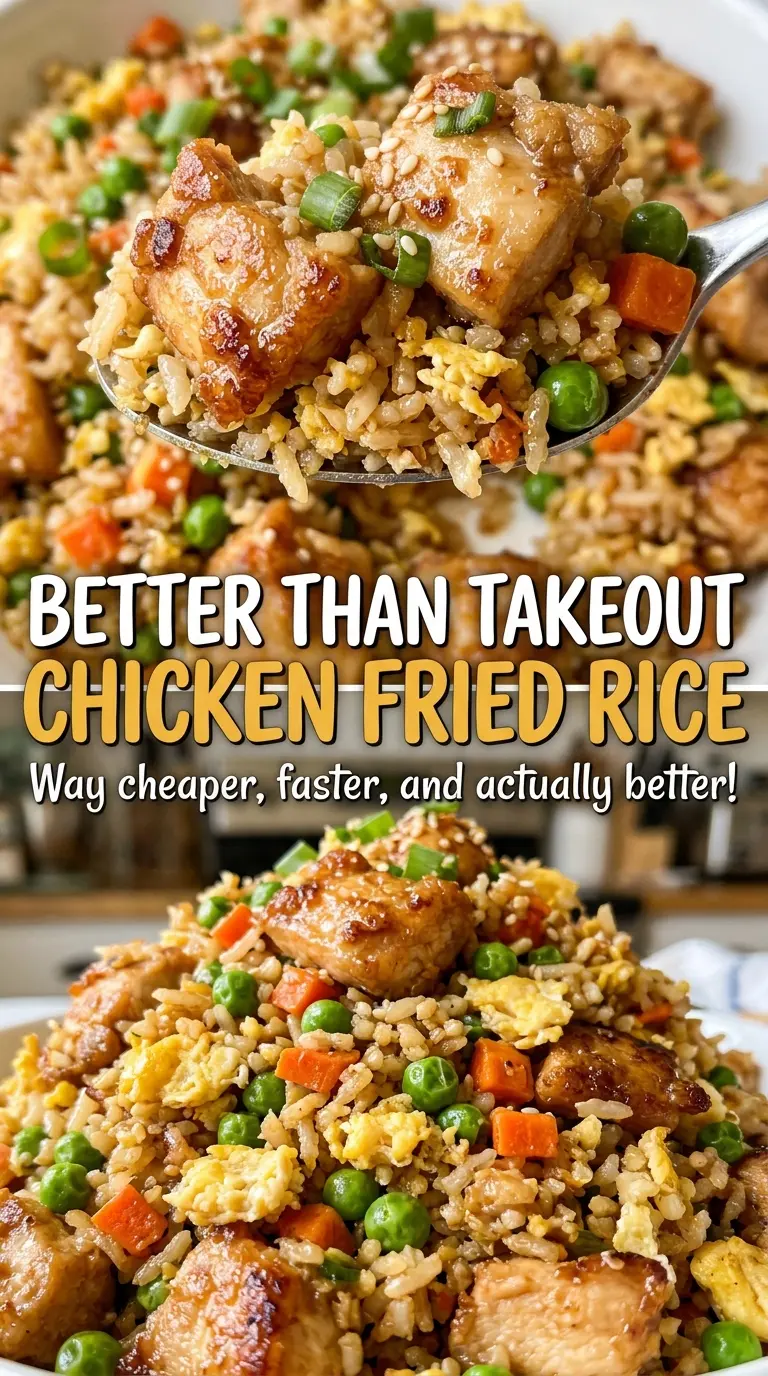
- Long-grain white rice — Its separate, firm grains are a good fit for tossing in a skillet. Cook and chill it before frying; rice that is already in clumps needs to be broken apart gently so it doesn’t turn pasty.
- Chicken breast — Cutting it into even 1/2-inch pieces helps the pieces cook at about the same pace. The inexpensive, boneless, skinless cut works well here because the pieces are small and get their browning directly in the skillet.
- Low-sodium soy sauce — It seasons the rice without making the whole pan as salty as regular soy sauce can. Keep it low-sodium if you want the balance of the other ingredients to come through.
- Toasted sesame oil — This is a finishing oil, not the oil for frying the chicken. Its toasted aroma is what it contributes, so add it after taking the skillet off the heat.
- Eggs and vegetables — The eggs add tender, savory bites, while diced onion, frozen peas and carrots, and garlic give the rice its familiar mix of sweet and aromatic notes. Mince the garlic before it goes into the pan; it cooks quickly once the vegetables have softened.
- Green onions — Thin slices are easy to toss through the rice at the end, so their fresh, mild onion flavor doesn’t disappear into the longer cooking stages.
How to Cook Each Component Without Crowding the Rice
Brown the Chicken First
Heat a 12-inch skillet over medium-high heat for about 2 minutes, until it’s hot. Add 1 tablespoon of vegetable oil and the chicken, then season with the kosher salt and black pepper. Cook for 5–7 minutes, stirring occasionally, until the pieces are browned and the thickest ones reach 165°F. Transfer the chicken to a clean plate; don’t leave it in the skillet while you cook the rest.
Scramble the Eggs Until Set
Add another tablespoon of vegetable oil to the skillet, followed by the beaten eggs. Scramble for 1–2 minutes, moving the eggs around the pan until they’re fully set in soft curds. Transfer them to the plate with the chicken. Leaving the eggs in the skillet through the rice stage would give them more time over the heat than they need.
Soften the Vegetables, Then Add Garlic
Pour in the last tablespoon of vegetable oil, then add the diced onion and frozen peas and carrots. Stir and cook for 3–4 minutes, until the onion has softened. Add the minced garlic only after that, and cook for 30 seconds. Garlic can scorch if it sits on the hot surface too long, so keep stirring through this short finish.
Give the Rice Time to Toast
Add the chilled rice and break up any clumps as it goes into the skillet. Stir often for 3–5 minutes, spreading the rice around the pan so it heats evenly. It should be hot, with a few grains lightly toasted, rather than simply warmed through. If you spot a large clump, separate it gently with your spatula instead of pressing down hard.
Toss Everything Together Off the Long Cook
Return the chicken and eggs to the skillet, then add the low-sodium soy sauce and sliced green onions. Toss for 1–2 minutes, until everything is heated through. Remove the skillet from the heat before tossing in the toasted sesame oil. That last addition gives the finished rice its nutty aroma without cooking it away.
Three Easy Ways to Adapt This Skillet of Fried Rice
Make It Vegetarian by Leaving Out the Chicken
Skip the chicken and use the first tablespoon of vegetable oil to scramble the eggs; use the next tablespoon for the onion and peas and carrots, and the last for the rice. The finished dish stays savory and filling, with the eggs and vegetables taking the lead instead of the chicken.
Make an Egg-Free Version
Leave out the eggs and use their tablespoon of vegetable oil for the onion and peas and carrots. Keep the chicken, rice, soy sauce, and remaining ingredients in the same sequence; the result has fewer soft, rich bites but keeps the browned chicken and toasted rice.
Turn Down the Soy Sauce
Use 1 tablespoon of low-sodium soy sauce instead of 3 for a milder, less salty skillet. The rice will taste less deeply seasoned, so toss thoroughly to spread the smaller amount across the grains.
Storage and Reheating
- Refrigerator: Cool and refrigerate leftovers within 2 hours, in a covered shallow container. Keep them for 3–4 days; the rice will lose some of its freshly toasted texture.
- Freezer: Freeze in airtight portions for up to 3 months for best quality. Thaw overnight in the refrigerator before reheating for more even warming.
- Reheating: Warm in a skillet over medium heat, stirring often, or microwave in a covered dish and stir partway through. Reheat leftovers to 165°F, and don’t leave them warming over low heat for a long stretch.
Questions That Come Up While Making Chicken Fried Rice
Better Than Takeout Chicken Fried Rice
Ingredients
Equipment
Method
- Heat a 12-inch skillet over medium-high heat until hot, about 2 minutes.
- Add 1 tablespoon of the vegetable oil and the chicken, then season with the salt and pepper.
- Cook for 5–7 minutes, stirring occasionally, until browned and the thickest pieces reach 165°F.
- Transfer the chicken to a clean plate.
- Add 1 tablespoon of the vegetable oil and the eggs to the skillet, and scramble for 1–2 minutes until fully set.
- Transfer the eggs to the plate with the chicken.
- Add the remaining 1 tablespoon of vegetable oil, the onion, and the peas and carrots; cook for 3–4 minutes, stirring, until the onion is softened.
- Add the garlic and cook for 30 seconds.
- Add the rice, breaking up any clumps, and cook for 3–5 minutes, stirring often, until hot and lightly toasted.
- Return the chicken and eggs to the skillet, add the soy sauce and green onions, and toss for 1–2 minutes until heated through.
- Remove from the heat and toss with the sesame oil.