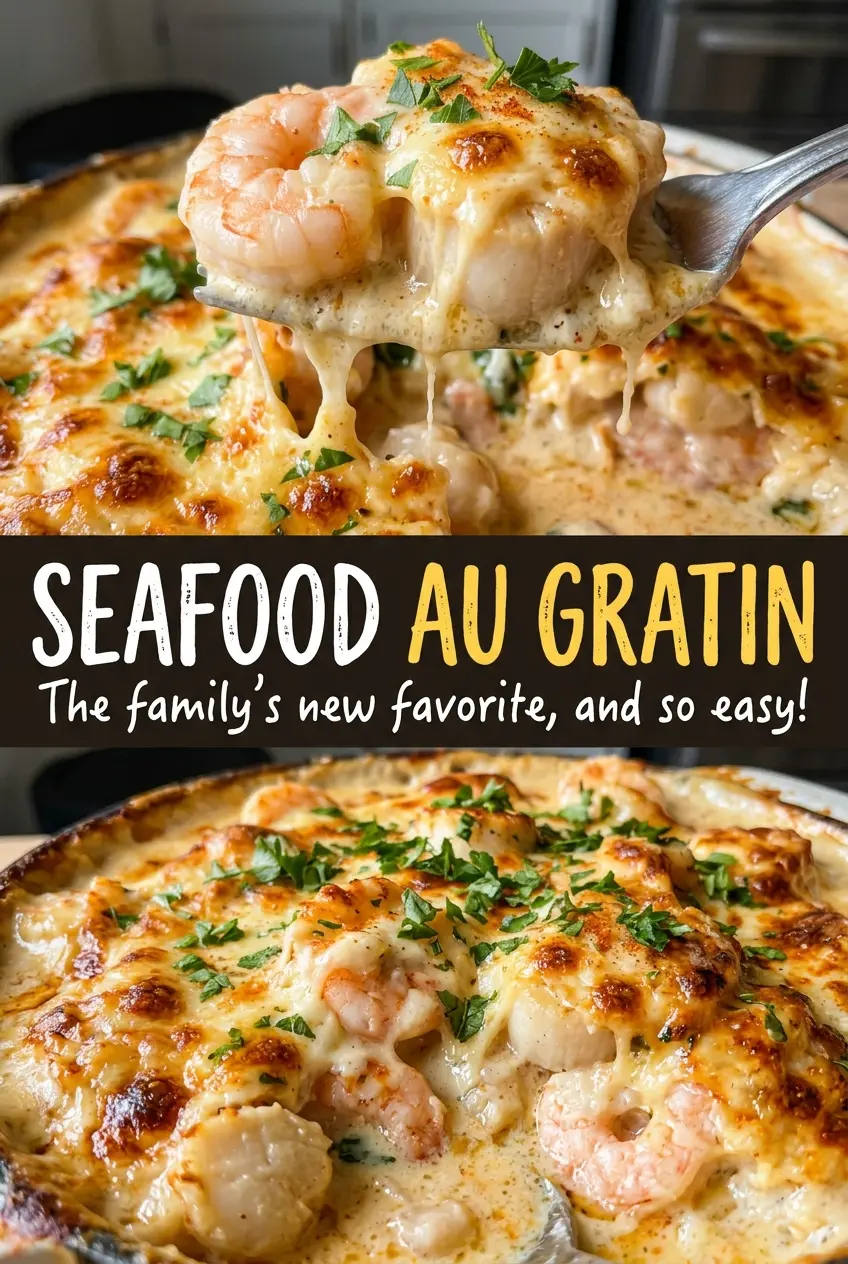
The first thing you notice is the sauce: it should settle around the seafood, not disappear beneath it. Once the dish is in the oven, the panko turns golden while little bubbles gather at the edges, and the kitchen starts to smell like warm butter and Gruyere. I like this Seafood au Gratin because it brings shrimp, scallops, and cod together under one creamy sauce without asking you to cook each kind of seafood separately.
The sauce gets its body on the stovetop before it ever reaches the baking dish. A quick roux thickens the milk and cream, and the Gruyere melts in after the pan comes off the heat. That order gives you a smooth, spoon-coating sauce that can surround the seafood and stay creamy through baking. A buttery Parmesan-panko topping adds a crisp layer over the tender fish and shellfish.
Serve it after a short rest, when the sauce has settled and the crumb topping still has its crunch. Each spoonful brings a little of everything: sweet scallop, mild cod, shrimp, and a savory blanket of cheese sauce.
Kitchen Note
Bake, Serve, Wear the Vibe 👕
Editor-picked tees our Oven To Fork readers love.



We may earn from qualifying purchases at no extra cost to you.
Pat the shrimp, scallops, and cod dry before they go into the dish. Surface moisture can thin the sauce as the seafood cooks, so take a moment with paper towels and get each piece dry to the touch.
Save this Seafood au Gratin for a cozy dinner with tender seafood, creamy Gruyere sauce, and a crisp Parmesan-panko top.
Why the Sauce Needs to Be Thick Before It Goes Over the Seafood
A gratin can look saucy going into the oven and come out loose if its sauce starts too thin. The seafood releases a little liquid as it cooks, and the milk-and-cream sauce needs enough body to absorb that moisture without turning watery. That’s why I finish the sauce on the stovetop instead of relying on the oven to thicken it.
The flour cooks briefly in butter before the dairy goes in, which helps the sauce thicken evenly. Whisk the milk and cream in gradually so the mixture stays smooth, then keep whisking while it reaches a gentle simmer. You’re looking for a sauce that clings to the back of a spoon; it shouldn’t pour like plain milk. The Gruyere goes in after the pan leaves the heat, so it melts into the thickened sauce rather than being boiled along with it.
That texture matters because the sauce has two jobs: coat the seafood and remain creamy under the topping. A sauce that’s too thin has less chance to cling, while a proper spoon-coating consistency gives each serving a little creamy sauce without flooding the plate.
What the Seafood, Gruyere, and Crumb Topping Each Bring
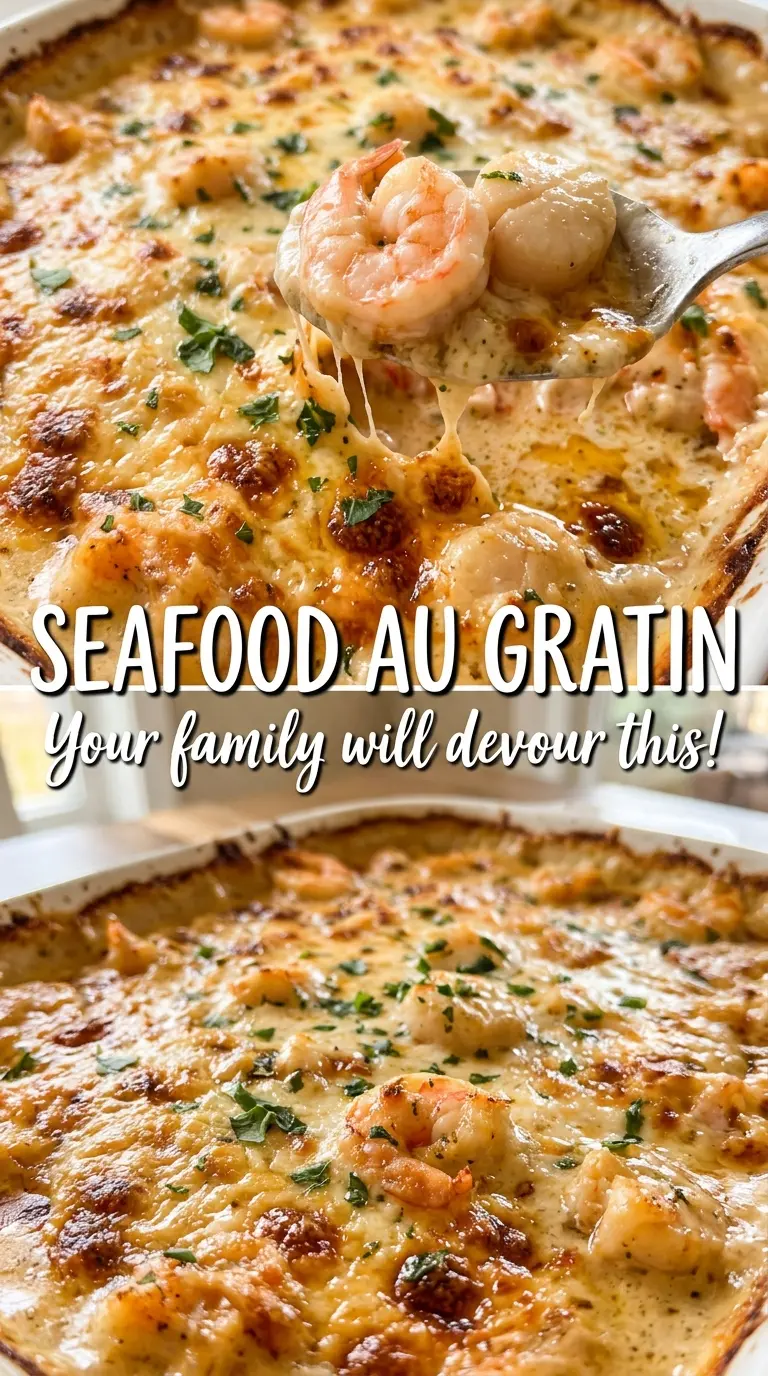
- Shrimp, bay scallops, and cod — The three seafoods give the gratin a mix of textures: shrimp stays pleasantly springy, bay scallops bring a mild sweetness, and cod breaks into tender, meaty pieces. Medium shrimp and one-inch cod pieces fit the bake well; larger chunks may need longer to cook through. Thaw frozen scallops before using them.
- Gruyere — Its nutty, savory taste gives the cream sauce more character than a very mild melting cheese. A block you grate yourself melts smoothly; pre-shredded cheese is convenient, though it may not melt quite as seamlessly. If Gruyere isn’t available, Swiss cheese is a practical stand-in with a milder, familiar flavor.
- Whole milk and heavy cream — The milk keeps the sauce from feeling too rich, while the cream adds body. Whole milk is worth using here; lower-fat milk makes a thinner sauce, and extra cream in place of the milk can leave the finished dish heavy.
- Panko and Parmesan — Panko makes a light, crisp cap, and finely grated Parmesan seasons the crumbs throughout. Regular fine breadcrumbs make a denser topping, so use gluten-free panko instead if you need to avoid wheat and want to keep a similar airy crunch.
- Shallot and nutmeg — Finely chopped shallot softens quickly in the butter and gives the sauce a gentle savory base. A small pinch of nutmeg adds warmth without making the gratin taste sweet; freshly grated or ground nutmeg both work.
Building the Sauce and Getting the Seafood Under Its Crumb Crust
Soften the Shallot in Butter
Heat the oven to 400°F while you start the sauce. Melt three tablespoons of butter in a medium saucepan over medium heat, then cook the finely chopped shallot until softened, about 2 to 3 minutes. Keep it moving now and then; it should turn tender without browning. If the shallot catches color, lower the heat before adding the flour so the sauce starts with a mellow, not toasted, flavor.
Whisk a Smooth, Spoon-Coating Sauce
Whisk the flour into the shallot and butter and cook it for 1 minute. Add the milk and cream gradually, whisking as you pour so no dry pockets of flour remain. Bring the sauce to a gentle simmer and keep whisking for 3 to 5 minutes, until it coats the back of a spoon. Take the pan off the heat before stirring in the salt, pepper, nutmeg, and Gruyere; the cheese should melt into the sauce without needing a hard boil.
Arrange the Seafood and Add the Sauce
Coat a 2-quart baking dish with nonstick cooking spray, then arrange the shrimp, scallops, and one-inch pieces of cod in it. Spread the seafood around so each serving can include a mix, rather than leaving one kind gathered in a corner. Pour the sauce evenly over the top, letting it flow between the pieces. Keep the sauce in an even layer; large bare patches can leave exposed seafood more prone to drying.
Scatter the Crumbs and Bake Until the Center Is Done
Mix the panko and finely grated Parmesan with the remaining two tablespoons of butter, then scatter the mixture evenly over the gratin. Bake for 15 to 20 minutes, until the topping is golden and the sauce bubbles around the edges. Check the center of the largest seafood pieces with an instant-read thermometer; it should reach 145°F. Rest the dish for 5 minutes before serving so the bubbling sauce can settle around the seafood.
Three Useful Ways to Adapt This Seafood Gratin
Make It Gluten-Free
Use rice flour in place of the all-purpose flour and gluten-free panko in place of regular panko. Keep the quantities the same, whisk the rice flour into the butter as you would the wheat flour, and cook until the sauce coats a spoon. The sauce may feel a touch less silky, but the Gruyere and Parmesan still give it a rich, savory finish.
Put More Shrimp in Every Serving
For a shrimp-forward version, use 3/4 pound of shrimp, 1/4 pound of bay scallops, and 1/2 pound of cod. The total amount of seafood stays the same, but you’ll get more shrimp in each scoop and a slightly less scallop-sweet balance.
Make It Cod-Only
Replace the shrimp and scallops with an additional pound of cod, keeping the total seafood at 1 1/2 pounds and cutting it into one-inch pieces. The result is milder and more uniform in texture, with tender flakes of fish throughout. Use the same visual cues and check the largest pieces at the center before serving.
Storage and Reheating
- Refrigerator: Refrigerate leftovers within 2 hours and use them within 3 to 4 days. The crumb topping softens once it sits against the sauce.
- Freezer: Freeze leftovers in an airtight container for up to 2 months. The cream sauce may separate a little after thawing, and the topping won’t stay crisp, but the gratin is still usable.
- Reheating: Reheat covered in a 325°F oven until the center reaches 165°F, uncovering near the end if you want to dry the topping slightly. Avoid high heat, which can make the seafood tough and the sauce oily.
Questions That Come Up When Making Seafood au Gratin
Seafood au Gratin
Ingredients
Equipment
Method
- Preheat the oven to 400°F.
- Melt 3 tablespoons of the butter in a medium saucepan over medium heat.
- Add the shallot and cook until softened, 2 to 3 minutes.
- Whisk in the flour and cook for 1 minute.
- Gradually whisk in the milk and heavy cream until smooth.
- Bring to a gentle simmer, whisking constantly, and cook until thick enough to coat the back of a spoon, 3 to 5 minutes.
- Remove from the heat.
- Stir in the salt, pepper, nutmeg, and Gruyere until the cheese melts.
- Coat a 2-quart baking dish with nonstick cooking spray.
- Arrange the shrimp, scallops, and cod in the dish.
- Pour the sauce evenly over the seafood.
- Mix the panko and Parmesan with the remaining 2 tablespoons butter.
- Scatter evenly over the gratin.
- Bake for 15 to 20 minutes, until the topping is golden, the sauce bubbles around the edges, and the center of the largest seafood pieces reaches 145°F.
- Rest the gratin for 5 minutes before serving.