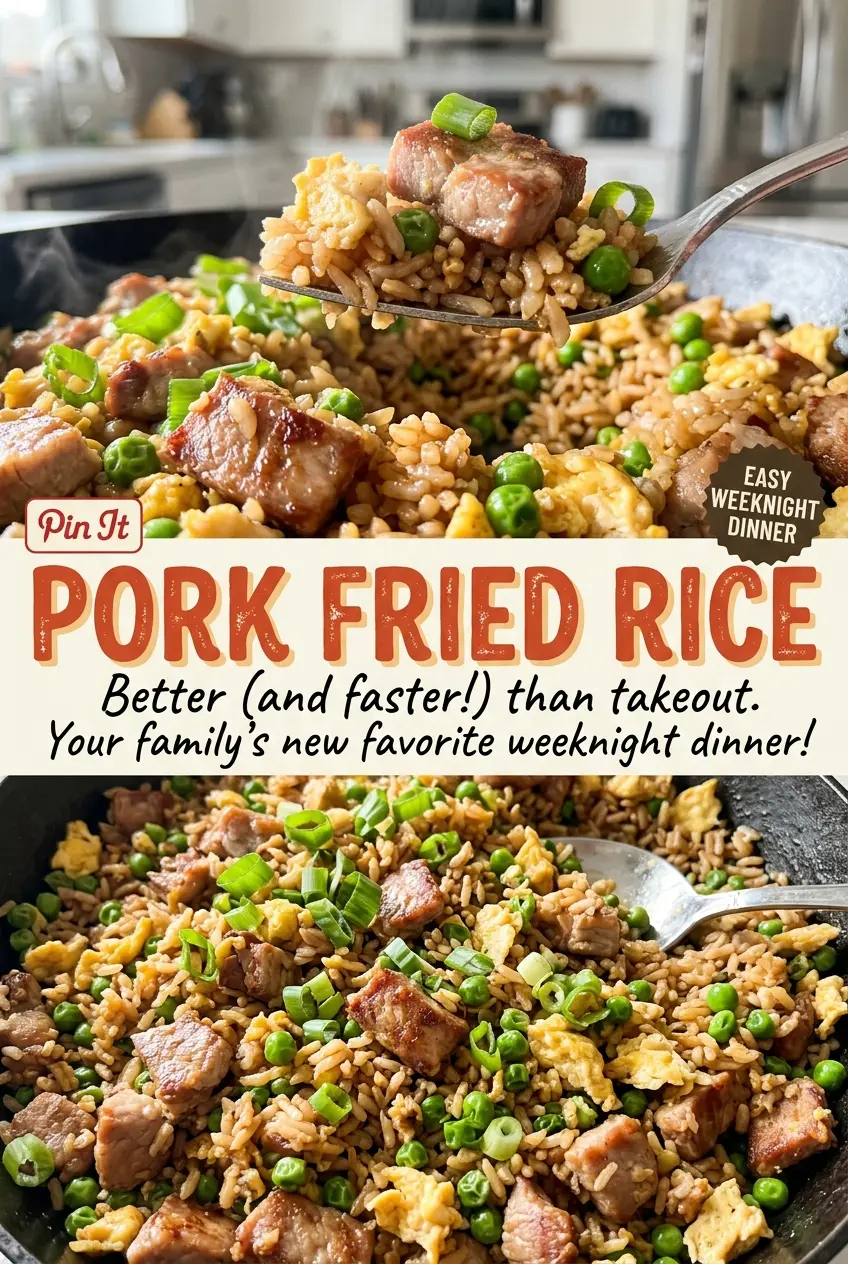
When the peas and carrots hit a hot skillet, their little pops are the first sign dinner is moving quickly. Cold cooked rice becomes pork fried rice with browned pork and soft egg curds, then scallion greens bring a fresh finish. I like that the rice is already cooked before the skillet gets hot; the cooking itself moves along without a pot of rice still bubbling on the stove.
I set the soy sauce, toasted sesame oil, and white pepper together in a small bowl before I start. That way, the seasoning is ready when the rice is hot and the grains are separate. The result is savory without feeling heavy, with the pork tucked through the rice instead of sitting in one big clump.
Kitchen Note
Bake, Serve, Wear the Vibe 👕
Editor-picked tees our Oven To Fork readers love.



We may earn from qualifying purchases at no extra cost to you.
I portion the neutral oil into its three additions before the skillet heats. Once the eggs are in the pan, you don’t want to stop and measure while the next ingredients are waiting.
Save this pork fried rice for a quick skillet dinner with separate grains, browned pork, and a toasted sesame finish.
Why the Eggs and Pork Leave the Pan Before the Rice Goes In
Fried rice gets crowded when every ingredient stays in the skillet from the start. The eggs need only a short cook, while the pork needs enough time on the hot surface to brown. If both remain in the pan while the vegetables and rice cook, the eggs keep firming up and the pork has less room to make contact with the skillet.
Cooking in turns gives each part the time it needs. The eggs come out as soon as they’re just set, and the browned pork waits on the plate while the vegetables soften. Once the rice goes in, the skillet has room for the grains to heat and separate instead of pressing into a dense layer.
This order also gives the soy mixture a better chance to coat the rice evenly. The pork and eggs go back only after the rice is hot, so they warm through without taking the full cooking time. It’s a small change in sequence, but it’s what keeps the finished skillet from tasting like a single, overcooked mixture.
What Gives This Fried Rice Its Savory Base and Clean Finish
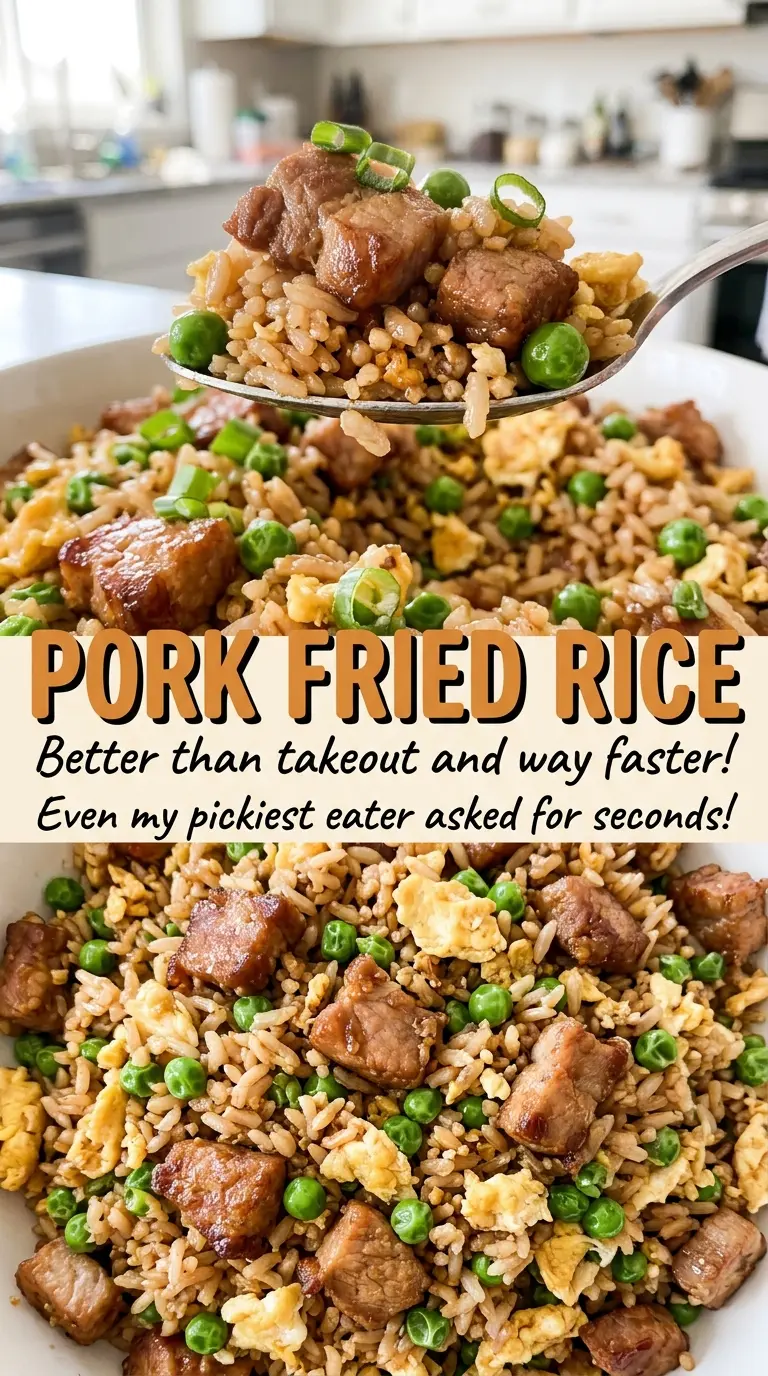
- Cold long-grain white rice — Long grains hold their shape as they’re tossed, and chilling helps them stay distinct in the skillet. Day-old rice is especially handy because it is less moist than freshly cooked rice. Break up any clumps with your fingers before cooking so you don’t drop a solid lump into the pan.
- Ground pork — It browns into small savory pieces and adds richness throughout the rice. Choose fresh ground pork from a package that’s within its use-by date; there’s no need for a specialty grind. Breaking it into small pieces as it cooks helps it distribute through the finished dish.
- Soy sauce, toasted sesame oil, and white pepper — Soy sauce seasons the rice, sesame oil contributes its distinct toasted aroma, and white pepper gives a gentle warmth without adding visible flecks. Stirring them together before cooking helps the seasoning go in as one mixture.
- Frozen peas and carrots — The frozen mix is convenient and brings a little sweetness and color without extra chopping. Cook it straight from frozen until hot; thawing it first isn’t necessary.
- Scallions, garlic, and fresh ginger — The scallion whites cook with the vegetables, while the greens go in at the finish for a fresher bite. Freshly minced garlic and grated ginger release their aroma quickly, so have both ready before they hit the hot skillet.
- Neutral oil and eggs — Neutral oil lets the other ingredients lead and handles the skillet’s medium-high heat. The eggs add tender curds; lightly beating them before they go in gives you an even mixture that sets quickly.
The Skillet Sequence That Keeps the Rice From Clumping
Break Up the Rice and Mix the Seasoning
Use your fingers to separate any clumps in the cold cooked rice. Stir the soy sauce, toasted sesame oil, and white pepper together in a small bowl so the seasoning is ready to pour. Keep the rice and sauce close to the stove; once the skillet is hot, each cooking stage moves quickly. A 12-inch skillet gives the ingredients room to move.
Set the Eggs, Then Brown the Pork
Heat the skillet over medium-high until hot, then add the oil for the eggs. Pour in the lightly beaten eggs and stir until they’re just set, about 1 minute, before transferring them to a plate. Add the next portion of oil and cook the ground pork, breaking it into small pieces, until browned and at 160°F, about 4–5 minutes. Transfer the pork to the plate with the eggs.
Soften the Vegetables Before Adding Aromatics
Add the final portion of oil, then stir in the frozen peas and carrots with the scallion whites. Cook for about 2–3 minutes, until the vegetables are hot. Stir in the garlic and ginger and cook until fragrant, about 30 seconds. Keep them moving so the garlic doesn’t sit against the hot pan for too long.
Heat the Rice, Then Bring Everything Together
Add the rice and toss it occasionally for about 3–4 minutes, until it’s hot and the grains are separated. Pour in the soy sauce mixture and keep tossing so the grains get coated rather than leaving a puddle of sauce in one spot. Return the pork and eggs to the skillet and toss for 1–2 minutes, until heated through. Stir in the scallion greens just before serving.
Three Useful Swaps for a Different Take on Pork Fried Rice
Make It Gluten-Free With Tamari
Replace the soy sauce with the same amount of gluten-free tamari. The savory, salty character stays close to the original, though tamari brands vary a little in intensity, so use one you already like.
Skip Sesame for a Milder Finish
Use neutral oil in place of the toasted sesame oil in the sauce mixture. The dish will still be seasoned and easy to toss, but it will lose the toasted, nutty aroma that makes the original taste distinctive.
Use Cold Long-Grain Brown Rice
Swap in cooked, chilled long-grain brown rice for the white rice. Its firmer, nuttier grains make the finished dish chewier, while still holding up well when tossed in the skillet.
Storage and Reheating
- Refrigerator: Refrigerate leftovers in a shallow, covered container within 2 hours and use within 3–4 days. The rice will firm up as it chills.
- Freezer: It freezes well for up to 2 months for best texture. Cool it, portion it into airtight freezer containers, and thaw overnight in the refrigerator before reheating.
- Reheating: Warm it in a skillet over medium heat, stirring often, or microwave it in a covered microwave-safe dish, stirring partway through. Reheat leftovers to 165°F; avoid heating the rice for a long time without stirring, which can leave hot and cold patches.
Questions That Come Up Before You Make This Fried Rice
Pork Fried Rice
Ingredients
Equipment
Method
- Break up any clumps in the cold rice with your fingers.
- In a small bowl, stir together the soy sauce, sesame oil, and white pepper.
- Heat a 12-inch skillet over medium-high heat until hot.
- Add 1 tablespoon of the neutral oil.
- Add the eggs and cook, stirring, until just set, about 1 minute.
- Transfer the eggs to a plate.
- Add 1 tablespoon of the oil to the skillet.
- Add the ground pork and cook, breaking it into small pieces, until browned and it reaches 160°F, about 4–5 minutes.
- Transfer the pork to the plate with the eggs.
- Add the remaining 1 tablespoon oil to the skillet.
- Add the peas and carrots and scallion whites, and cook, stirring, until the vegetables are hot, about 2–3 minutes.
- Stir in the garlic and ginger and cook until fragrant, about 30 seconds.
- Add the rice and cook, tossing occasionally, until hot and the grains are separated, about 3–4 minutes.
- Pour in the soy sauce mixture and toss to coat.
- Return the pork and eggs to the skillet and toss until heated through, about 1–2 minutes.
- Stir in the scallion greens.
- Serve.