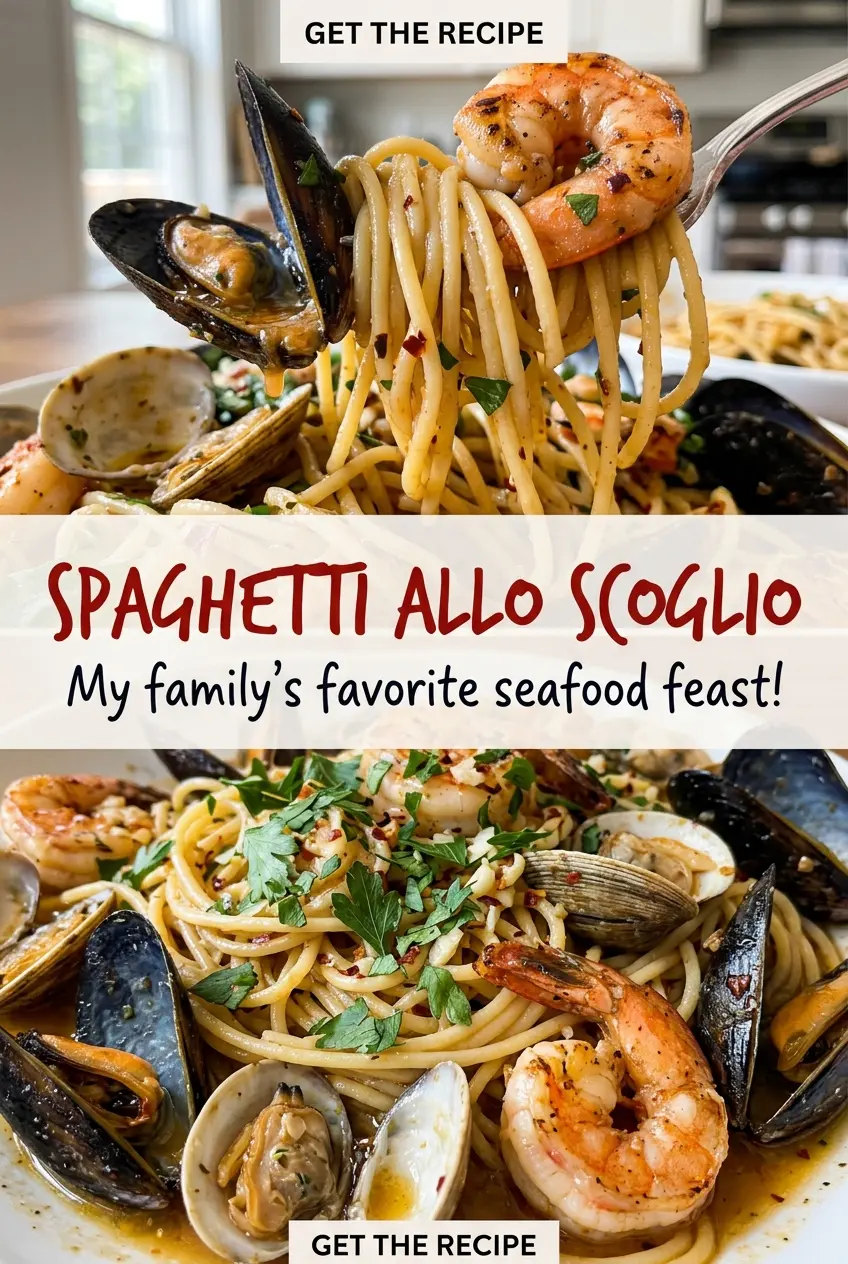
The first mussel opens with a little pop, and suddenly the skillet smells like garlic, wine, and the sea. That’s the moment I know the sauce is coming together for Spaghetti allo Scoglio. The trick is getting the seafood and pasta to finish at the same time without letting either turn tough or mushy.
I cook the spaghetti just shy of al dente, then let it finish in the skillet with the tomato-wine sauce and a little of its cooking water. That last minute or two helps the sauce cling to the noodles instead of pooling underneath. The clams and mussels bring their own briny juices, while shrimp and calamari cook quickly in the same pan. Each forkful gets a little pasta, sauce, and seafood, with fresh parsley to brighten the finish.
Kitchen Note
Bake, Serve, Wear the Vibe 👕
Editor-picked tees our Oven To Fork readers love.



We may earn from qualifying purchases at no extra cost to you.
The clams and mussels won’t all open at once, so give the late ones their extra minute or two instead of pulling the whole batch early. Discard any shells that stay closed after cooking.
Save Spaghetti allo Scoglio for a night when you want tender seafood, garlicky tomato sauce, and pasta that finishes right in the skillet.
Why Spaghetti allo Scoglio Needs an Underboiled Start
Spaghetti that tastes perfectly cooked straight from the pot is already too far along for this dish. It still has to spend another minute or two in the skillet, where it absorbs sauce and keeps cooking. Starting with pasta that’s two minutes short of al dente gives it room to finish without going soft.
The reserved pasta water has a job beyond thinning the sauce. Its starch helps the olive oil, tomato juices, and shellfish liquid cling to the spaghetti as you toss everything together. Add it with the pasta rather than pouring it into the sauce early; that way the liquid can combine with the noodles during the final toss. The finished sauce should coat the strands, not sit in a watery layer at the bottom of the pan.
This is also why draining the pasta completely and then plating it straight from the colander misses the best part. The skillet finish brings the sauce and noodles together, and you can see the change as the pasta turns glossy. Keep the heat at medium and toss until the spaghetti is al dente and coated.
The Seafood and Pasta Choices That Keep the Sauce in Balance
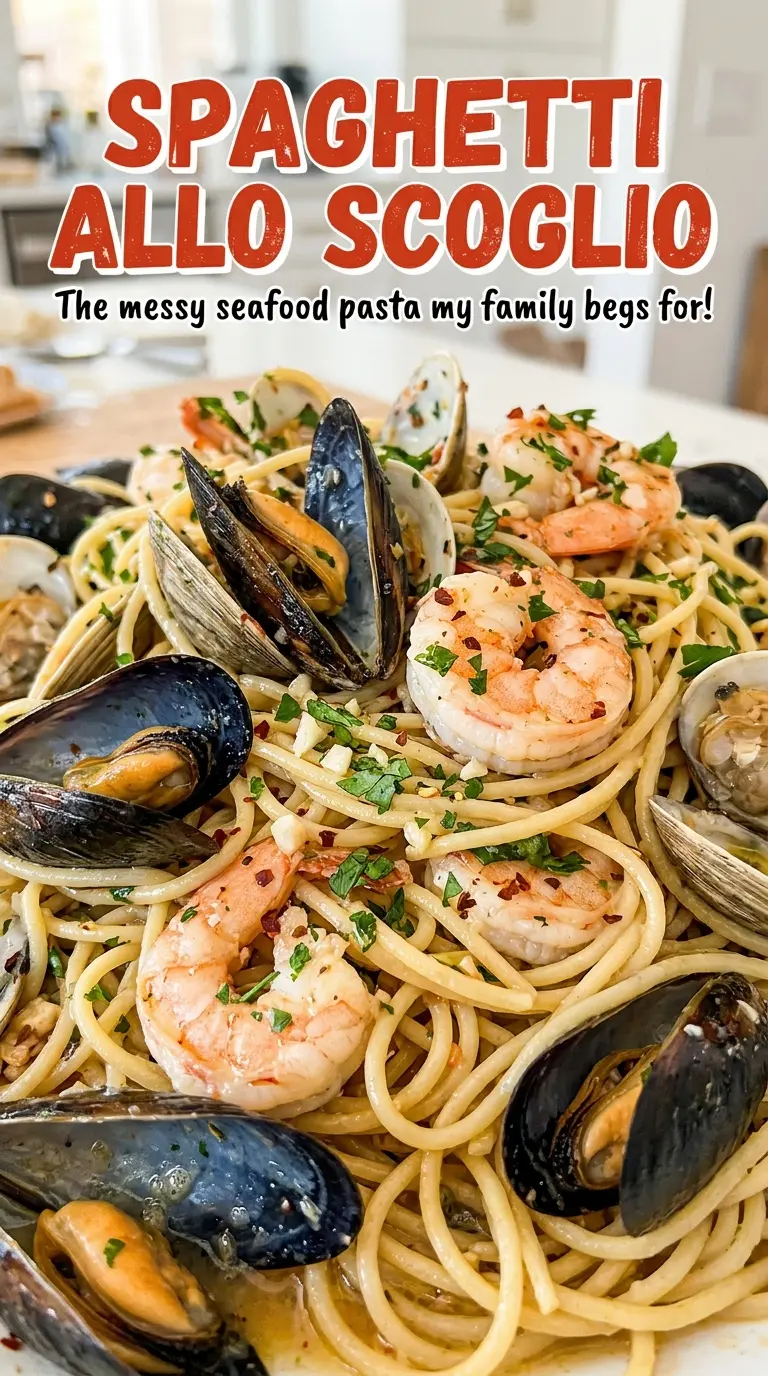
- Spaghetti — Long strands catch the light tomato and shellfish sauce in every twist. Cook it according to the package directions, stopping two minutes before al dente so it can finish in the skillet. Another long pasta such as linguine works in the same style, though the cooking time will follow its package.
- Littleneck clams and mussels — The shells contribute savory cooking juices as they open, giving the sauce its briny depth. Start with scrubbed, rinsed clams and mussels, and remove the mussels’ beards before cooking. If you don’t have both kinds, you can leave one out; the result will have less variety in its shellfish flavor, but the remaining seafood still works with the sauce.
- Shrimp and calamari — These cook quickly, so they go into the skillet after the clams and mussels have had their turn. Peeled, deveined shrimp and cleaned calamari rings keep prep straightforward. If calamari isn’t available, leave it out rather than cooking it for extra time; the shrimp still makes a satisfying seafood topping.
- Dry white wine and cherry tomatoes — The wine brings acidity to the sauce, while halved cherry tomatoes soften and some burst as they simmer. Ripe cherry tomatoes give the best balance of sweetness and tang. Grape tomatoes can stand in for cherry tomatoes if that’s what you have; halve them the same way.
- Garlic, red pepper flakes, and parsley — Thinly sliced garlic perfumes the olive oil quickly, and the pepper flakes add a gentle warmth. Fresh flat-leaf parsley gives the finished pasta a clean, green note. Freshly ground black pepper adds a different, sharper finish, so keep it for the final toss rather than cooking it with the garlic.
How to Finish the Pasta Without Overcooking the Seafood
Stop the Spaghetti Just Before Al Dente
Bring the water to a boil in a large pot, add the kosher salt, then cook the spaghetti according to its package directions until it’s two minutes shy of al dente. Before draining, reserve a quarter cup of the cooking water. Don’t rinse the pasta; it needs its surface starch for the skillet sauce.
Soften the Garlic and Tomatoes
While the pasta cooks, heat the olive oil in a 12-inch deep skillet over medium heat. Add the thinly sliced garlic and red pepper flakes, stirring for 30 seconds until fragrant; the garlic should smell mellow and aromatic, not browned. Pour in the wine and add the halved cherry tomatoes, then simmer for 4–5 minutes. Look for softened tomatoes, with some beginning to burst into the wine.
Steam the Clams and Mussels in Batches
Add the clams and mussels, cover the skillet, and cook for 4 minutes. Transfer opened shells to a bowl and cover the skillet again so the remaining shells keep steaming. Cook for another 1–3 minutes, moving each shell to the bowl as it opens. Resist leaving opened shells in the pan for the full cooking time; they don’t need those extra minutes.
Cook the Shrimp and Calamari Briefly
Add the shrimp and calamari to the skillet and cook over medium heat for 2–3 minutes, stirring once. The shrimp should turn opaque and reach 145°F. Keep an eye on the clock here: more cooking after the shrimp is opaque can make both the shrimp and calamari firm.
Toss Everything Together at the End
Add the spaghetti, reserved pasta water, and opened shellfish to the skillet. Toss over medium heat for 1–2 minutes, until the noodles are al dente and coated with sauce. Stir in the parsley and freshly ground black pepper, then serve while the pasta is hot and glossy.
Ways to Adapt the Seafood Mix and Pasta
A gluten-free version with the same skillet finish
Replace the wheat spaghetti with gluten-free spaghetti and use its package timing, still draining it two minutes shy of al dente. Gluten-free pasta can soften quickly, so watch its texture rather than relying only on the clock. The sauce and seafood stay the same, though the finished noodles may be less springy.
A shrimp-and-calamari skillet without the shells
Leave out the clams and mussels, keeping the shrimp and calamari in the skillet. You’ll lose the briny juices the shells add, so the sauce will taste lighter and less ocean-salty, but the wine and tomatoes still make a good base. Keep the shrimp and calamari cooking time brief, then toss them with the pasta at the end.
Storage and Reheating
- Refrigerator: Refrigerate leftovers promptly in a covered container and eat within 3 days. The spaghetti will absorb some sauce, and the seafood will firm up as it chills.
- Freezer: Freezing isn’t a good fit for this dish. The pasta softens after thawing, and the seafood tends to turn rubbery.
- Reheating: Warm a portion gently in a skillet with a splash of water, stirring just until hot throughout. Avoid a long, high-heat reheat; it will tighten the seafood and dry out the pasta.
Questions That Come Up While Cooking Spaghetti allo Scoglio
Spaghetti allo Scoglio
Ingredients
Equipment
Method
- Bring the water to a boil in a large pot, add the salt and spaghetti, and cook according to the package directions until 2 minutes shy of al dente.
- Reserve 1/4 cup of the cooking water, then drain the spaghetti.
- While the pasta cooks, heat the olive oil in a 12-inch deep skillet over medium heat; add the garlic and red pepper flakes and cook for 30 seconds, stirring, until fragrant.
- Add the wine and tomatoes and simmer for 4–5 minutes, until the tomatoes soften and some begin to burst.
- Add the clams and mussels, cover, and cook for 4 minutes.
- Transfer opened shells to a bowl, cover the skillet again, and cook for 1–3 minutes more, transferring shells as they open.
- Discard any shells that remain closed.
- Add the shrimp and calamari to the skillet and cook over medium heat for 2–3 minutes, stirring once, until the shrimp are opaque and reach 145°F.
- Add the spaghetti, reserved pasta water, and shellfish to the skillet; toss over medium heat for 1–2 minutes, until the pasta is al dente and coated with sauce.
- Stir in the parsley and black pepper and serve.