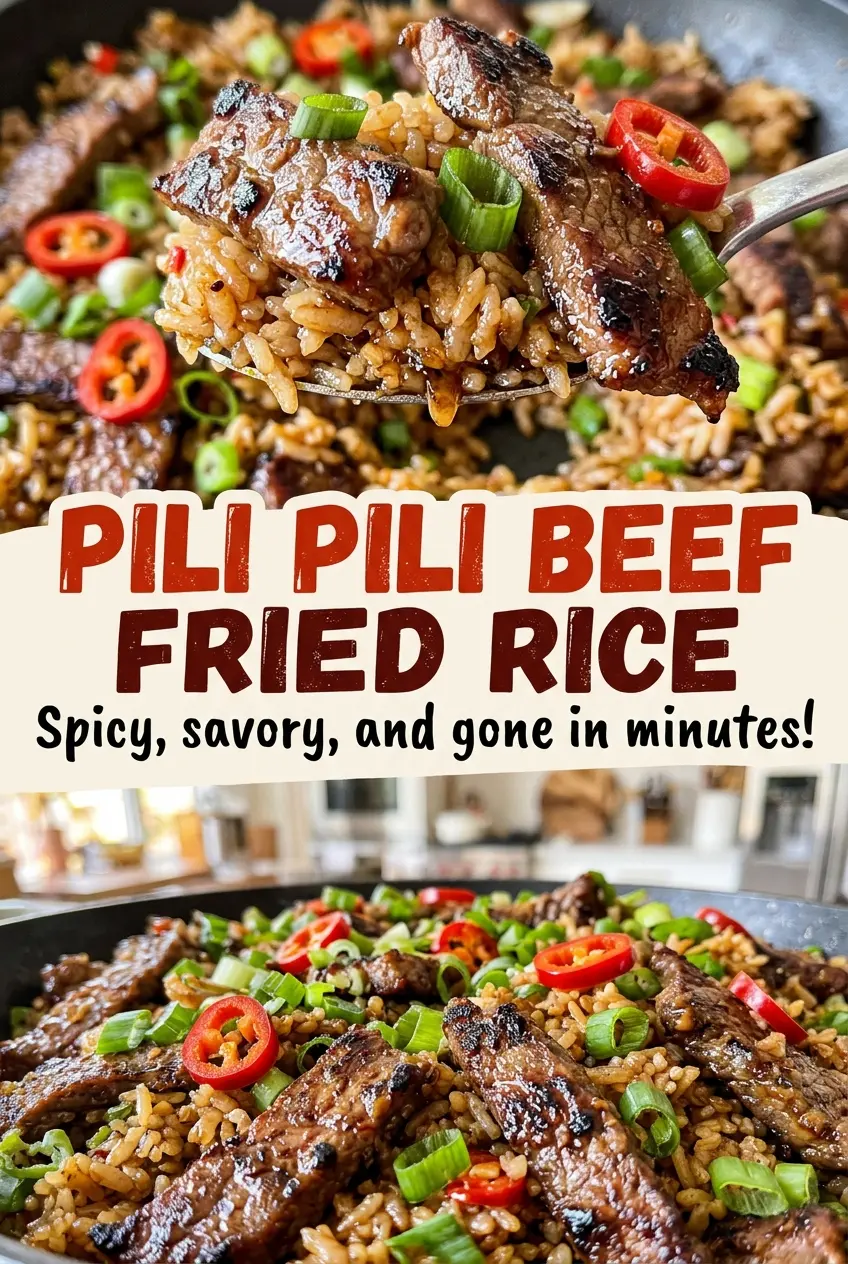
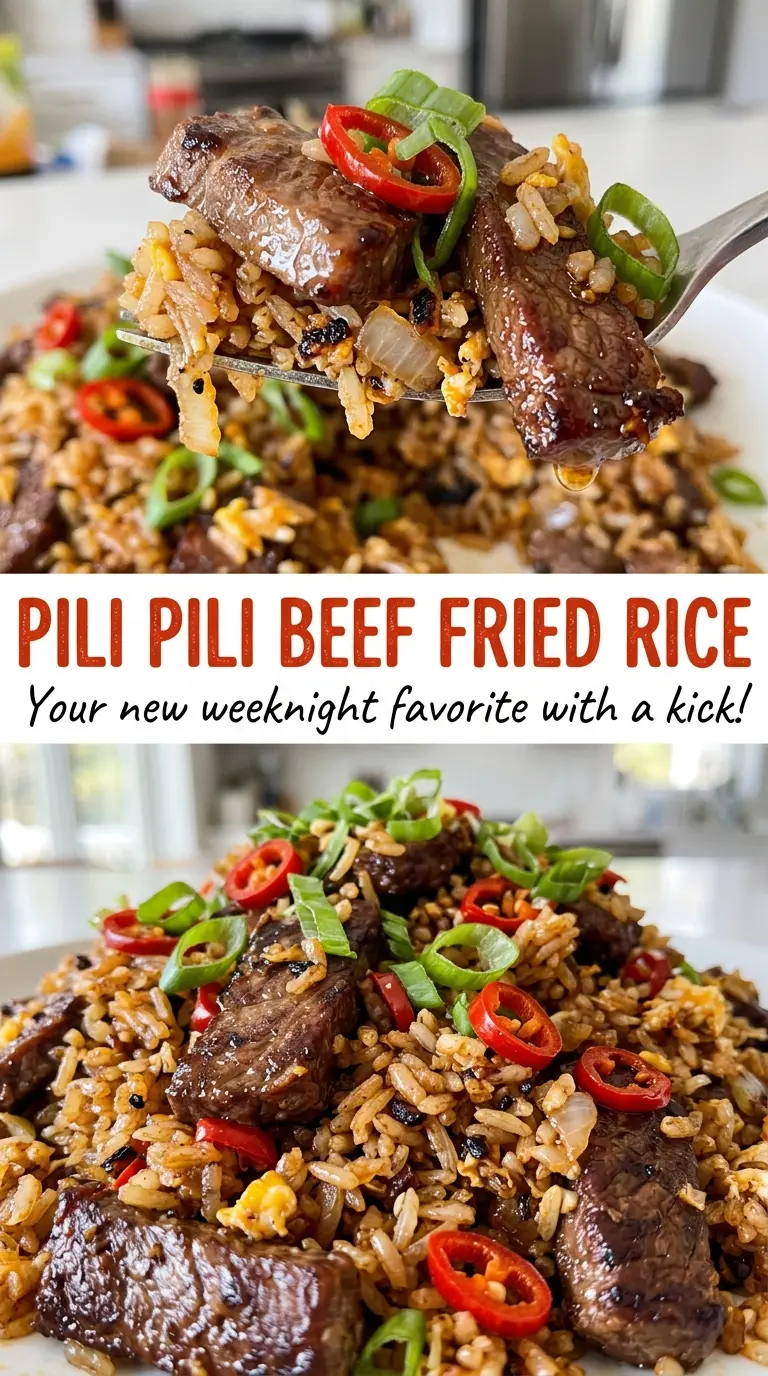
The rice gives a soft little rattle when it hits the hot skillet, and the beef should already be browned and resting nearby. That order matters in Pili Pili Beef Fried Rice: the rice gets room to fry, while the sirloin stays tender instead of simmering in the pan as everything else cooks. The finished dish has a lively chile-lime sauce, savory beef, and little bites of egg and vegetables in every scoop.
I keep the sauce simple and stir it in near the end, after the rice is hot. That way, the lime stays bright and the soy doesn’t have time to soak into the rice and make it heavy. Chilled long-grain rice is the other detail that gives this skillet dinner its distinct, separated grains. Each bite is warm and savory, with a clean flicker of habanero at the finish.
Kitchen Note
Bake, Serve, Wear the Vibe 👕
Editor-picked tees our Oven To Fork readers love.



We may earn from qualifying purchases at no extra cost to you.
Sear the sirloin in two batches instead of trying to fit it all in at once. A crowded skillet steams the strips before they can brown, and those browned edges are worth the extra minute.
Save Pili Pili Beef Fried Rice for a fast, punchy skillet dinner with tender beef and a bright habanero-lime finish.
Why Chilled Rice Fries Better Than Freshly Cooked Rice
Freshly cooked rice holds more surface moisture, so it tends to steam and stick together when it meets a hot skillet. Chilled rice has had time to firm up, which helps the grains stay distinct as you stir-fry them. That difference matters here because the rice shares the skillet with vegetables, eggs, beef, and a sauce added at the finish.
Break up any clumps before the rice goes into the pan. If you leave them intact, the outside of a clump may fry while the middle stays cool and compact. Stirring the rice for the full cooking time helps it heat evenly and gives the grains a chance to separate without crushing them.
The goal isn’t a hard, dry grain. It’s rice that’s chilled, loose, and able to move around the skillet. Keep the heat at medium while you work through the vegetables and rice, and stir often enough to bring the rice from the bottom of the pan back to the surface. By the time it’s steaming hot, the grains should look separate rather than packed into a layer.
How the Habanero-Lime Sauce Balances the Beef and Rice
- Sirloin — Its short sear suits this quick skillet meal. Look for clean-cut strips and slice across the grain so the finished bites aren’t stringy; a tougher cut won’t have time to soften during the brief cook.
- Long-grain rice — The longer grains stay more separate in the skillet than a stickier rice would. Using cooked rice that’s been chilled matters more here than seeking out a special brand.
- Low-sodium soy sauce and fresh lime — Soy brings the salty, savory base, while lime juice keeps the sauce lively. Fresh lime gives a brighter taste than bottled juice; I wouldn’t replace it with more soy, which would push the sauce saltier rather than tangier.
- Habanero, ginger, and garlic — The chile provides the heat, and freshly grated ginger and minced garlic give the sauce and vegetables their sharp, aromatic notes. The chile is already seeded and finely minced for the sauce, so take care to distribute it well when stirring the sauce together.
- Eggs, frozen peas and carrots, and scallions — These bring soft curds, sweet vegetable bites, and a fresh onion finish. Frozen peas and carrots are a practical choice here; separate the scallion whites from the greens so the whites cook with the vegetables and the greens go in at the end.
Brown the Beef First, Then Fry the Rice in the Same Skillet
Stir Together the Pili Pili Sauce
Stir the soy sauce, fresh lime juice, granulated sugar, and finely minced, seeded habanero together in a small bowl. Mixing it before the skillet gets busy means you can add it quickly at the end. The sugar should be stirred through rather than left in a lump at the bottom of the bowl.
Sear the Sirloin in Two Batches
Heat 1 tablespoon oil in a 12-inch skillet over medium-high heat until it shimmers. Sear the beef in two batches, using 1 tablespoon oil per batch, for 2–3 minutes per side, until browned and the thickest strips reach 145°F. Move the strips to a plate and let them rest for 3 minutes. If the skillet is crowded, the beef will release moisture and steam instead of browning.
Scramble the Eggs Until Just Set
Reduce the heat to medium and add the remaining 1 tablespoon oil. Scramble the beaten eggs for 1–2 minutes, stirring as they cook, until they’re set but still tender. Transfer them to the plate with the beef; leaving them in the skillet while the rice fries would make the curds overcook.
Give the Vegetables and Rice Room to Fry
Add the thawed peas and carrots, scallion whites, grated ginger, and minced garlic to the skillet. Stir for 1 minute, then add the chilled rice with any clumps broken up. Stir-fry for 4–5 minutes, moving the rice around the pan so it heats evenly and doesn’t sit in one spot. It should be steaming hot and reach 165°F before you add the sauce.
Toss Everything Together at the End
Stir the sauce into the hot rice and cook for 30 seconds. Add the rested beef and its juices, the scrambled eggs, and the scallion greens, then toss for about 30 seconds, just until warmed through. Don’t keep cooking after everything is hot; the beef has already reached its target temperature and needs only a quick return to the skillet.
Easy Ways to Adjust the Heat or Make It Vegetarian
Make the sauce gentler
Use half of the seeded habanero instead of the whole chile, or leave it out for a mild, lime-and-soy sauce. The smaller amount gives you the same basic tangy-salty balance with less lingering heat.
Turn it into a vegetarian egg-and-vegetable fried rice
Leave out the sirloin and skip the beef-searing stage, then cook the eggs and continue with the vegetables, rice, and sauce. The result is lighter and loses the browned, savory beef flavor, but the egg curds and vegetables still make a satisfying skillet of fried rice.
Storage and Reheating
- Refrigerator: Refrigerate leftovers in a shallow, airtight container within 2 hours and eat within 3–4 days. The rice will firm up as it chills.
- Freezer: Freeze cooled portions in airtight containers for up to 2 months for best quality. Thaw overnight in the refrigerator; the vegetables may soften a little.
- Reheating: Reheat in a skillet over medium heat, stirring until steaming hot throughout. Avoid leaving the rice sitting in the pan without stirring, which can make the bottom dry before the center warms.
Questions That Come Up When Making Pili Pili Beef Fried Rice
Pili Pili Beef Fried Rice
Ingredients
Equipment
Method
- Stir the soy sauce, lime juice, sugar, and habanero together in a small bowl.
- Heat 1 tablespoon oil in a 12-inch skillet over medium-high heat until shimmering.
- Sear the beef in two batches, using 1 tablespoon oil per batch, for 2–3 minutes per side until browned and the thickest strips reach 145°F.
- Transfer the beef to a plate.
- Let the beef rest for 3 minutes.
- Reduce the heat to medium.
- Add the remaining 1 tablespoon oil.
- Scramble the eggs for 1–2 minutes until set.
- Transfer the eggs to the plate with the beef.
- Add the peas and carrots, scallion whites, ginger, and garlic to the skillet.
- Cook for 1 minute, stirring.
- Add the rice and stir-fry for 4–5 minutes until steaming hot and it reaches 165°F.
- Stir in the sauce and cook for 30 seconds.
- Add the beef and its juices, eggs, and scallion greens.
- Toss for about 30 seconds, just until warmed through.
- Serve.