The eggs hit the hot oil and set in soft curds before the carrots even have a chance to soften. I pull them out while they’re still tender, then bring them back at the end so they don’t turn dry while the rice gets a few minutes in the skillet. This gochujang fried rice is what I make when a container of chilled rice is waiting in the fridge and dinner needs to come together in one pan.
Cold rice is the part that gives each grain room to toast instead of clumping into a soft mass. I break up any stubborn clumps before they go into the skillet, then keep the rice moving so it heats evenly. Gochujang brings a fermented, savory chile flavor, and the quick sauce gives every grain a glossy coating. The finished skillet is warm, lightly chewy, and balanced with tender eggs and fresh scallions.
Kitchen Note
Bake, Serve, Wear the Vibe 👕
Editor-picked tees our Oven To Fork readers love.



We may earn from qualifying purchases at no extra cost to you.
Take the eggs out when they’re just set, not browned. They’ll spend another minute in the skillet at the end, and that gentle finish keeps the curds soft.
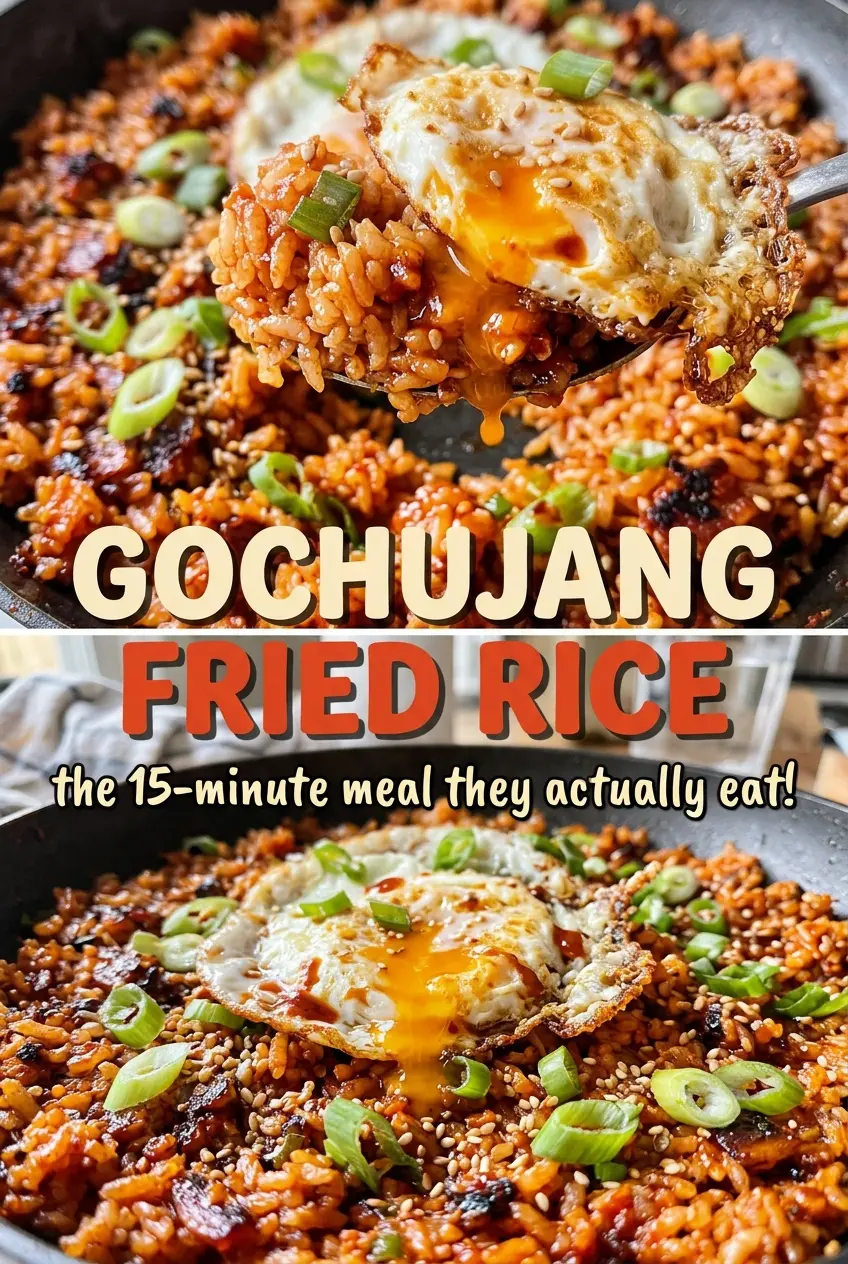
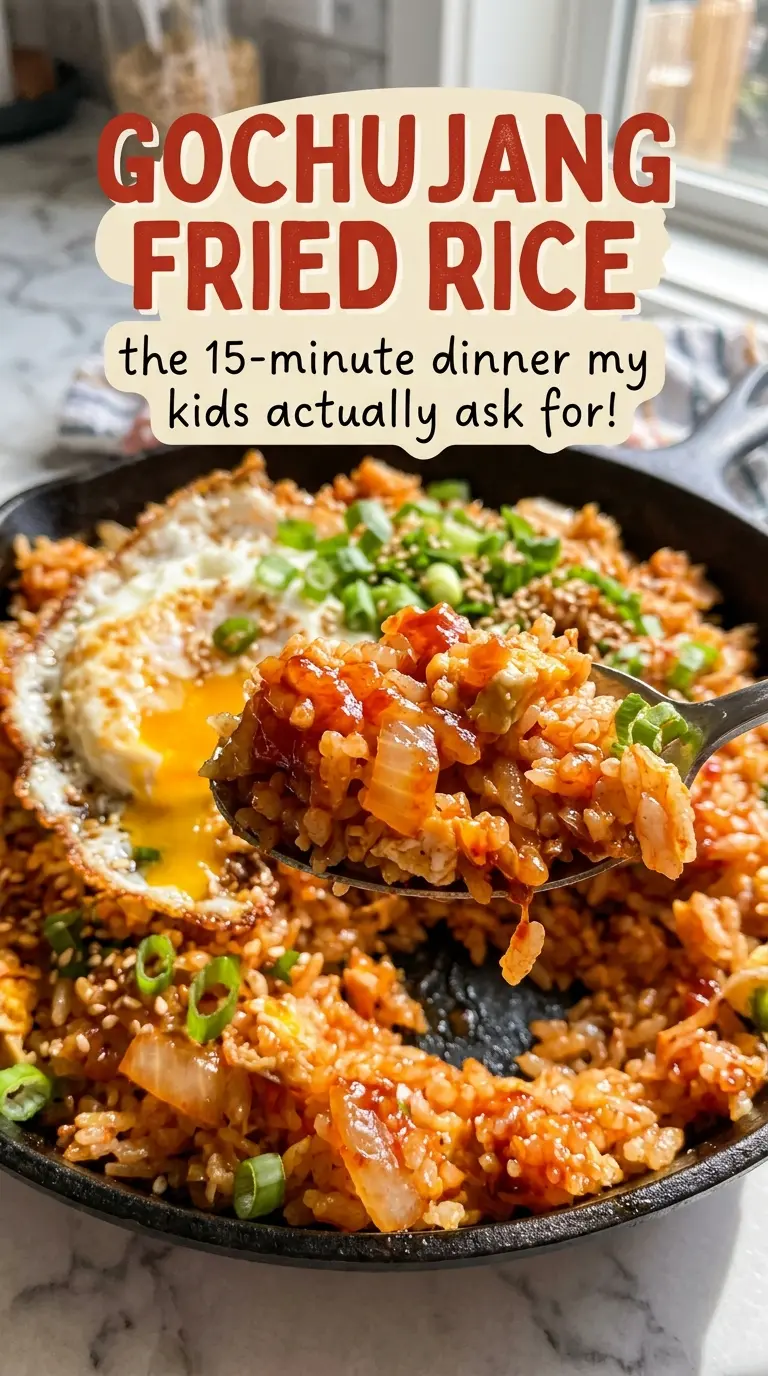
Save this gochujang fried rice for a fast skillet dinner with tender eggs and a glossy, savory chile coating.
Why the Gochujang Goes in the Center, Not Over the Rice
Gochujang is thick, and adding it straight onto a wide layer of rice makes it easy to get a few fiery clumps beside grains that barely taste seasoned. I push the rice toward the edges of the skillet and make a clear space in the middle. The gochujang, soy sauce, sugar, and water meet there, where I can stir them into a smooth sauce before they touch the rice.
That small pause does two jobs. The water loosens the paste so it blends with the soy sauce, and the sugar rounds out the chile’s savory, fermented edge. Once the mixture looks smooth, toss it through the rice until the color is even. If you see a dark streak or a thick patch of paste, keep tossing rather than adding more liquid; the sauce is designed to coat the grains, not pool at the bottom.
There’s also a practical reason to cook the rice before mixing the sauce: the grains get time to heat through and begin to toast. The sauce then clings to hot rice instead of turning the pan into a wet pile. Keep the skillet moving during that final toss, and the result is evenly seasoned without losing the distinct texture of the rice.
Gochujang and Chilled Rice: The Ingredients That Shape the Skillet
- Chilled cooked rice — Separate grains are easier to toss and toast than warm, freshly cooked rice. Break up clumps before cooking; a fork or clean fingers work well. Long-grain rice gives a distinct, fluffy result, while stickier rice will cook up more cohesive.
- Gochujang — This Korean fermented chile paste brings the dish’s defining savory heat and a little sweetness. Brands vary in heat and saltiness, so choose one you enjoy tasting on its own; there isn’t a direct swap that recreates its fermented character.
- Soy sauce — It adds salty depth to the quick sauce. Tamari can stand in for soy sauce, with a slightly different flavor; if you need a gluten-free dish, the gochujang must also be a gluten-free product.
- Eggs — Lightly beaten eggs cook quickly into soft curds and make the rice more substantial. There’s no close substitute for their tender, rich texture, but the skillet works without them if you want an egg-free version.
- Yellow onion and carrots — Finely dicing them helps them soften in the brief time they have in the pan. Keep the pieces close in size so the carrots aren’t still firm when the onion is ready.
- Garlic — Minced garlic gives the rice a fragrant savory base. It only needs a short turn in the hot skillet; larger pieces take longer to cook and can taste sharp.
- Toasted sesame oil and scallions — Sesame oil has a strong toasted aroma, so it works best as a finishing touch rather than a frying oil. Fresh scallions add a bright, mild onion flavor alongside the richer sauce.
Five Stages for Gochujang Fried Rice with Separate, Toasted Grains
Set the Eggs Gently
Heat 1 tablespoon of neutral oil in a 12-inch skillet over medium-high heat. Add the lightly beaten eggs and scramble for 1 to 2 minutes, just until set, then transfer them to a plate. They should look soft rather than browned. Leaving them in the skillet while the vegetables cook would push them past tender before the rice is ready.
Soften the Onion and Carrots
Add the remaining 2 tablespoons of neutral oil to the skillet, followed by the finely diced onion and carrots. Cook for 3 to 4 minutes, stirring often, until they’re beginning to soften. The vegetables should still hold their shape; they’ll continue cooking with the rice. Stir regularly so the onion doesn’t catch on the hot surface.
Toast the Rice Before Saucing
Stir in the minced garlic and cook for 30 seconds, just until fragrant. Add the chilled rice and toss it with the vegetables, breaking up any clumps as you go. Cook for 3 to 4 minutes, until the rice is hot and beginning to toast. Keep it moving across the skillet so the grains heat evenly instead of sitting in one layer and sticking.
Mix the Sauce in the Open Center
Push the rice out toward the sides of the skillet to leave a space in the middle. Add the gochujang, soy sauce, sugar, and water there, then stir for about 30 seconds until smooth. If the paste still looks lumpy, keep stirring in the center before mixing it through the rice. Toss until the grains are evenly coated.
Finish with Eggs, Sesame Oil, and Scallions
Return the eggs to the skillet and add the toasted sesame oil and sliced scallions. Toss for about 1 minute, until the eggs are heated through and no liquid egg remains. The scallions should soften slightly but keep some fresh color. Serve as soon as everything is hot and coated.
Three Practical Ways to Change This Gochujang Rice
Make the Heat Milder
Use 1 tablespoon of gochujang instead of 2, keeping the other sauce ingredients the same. The rice will have a gentler chile kick and a lighter coating, while the fermented savory flavor still comes through.
Leave Out the Eggs
For an egg-free skillet, skip scrambling the eggs and use all the neutral oil when you cook the vegetables and rice. The finished dish will be lighter and the grains will stand out more, but the gochujang sauce still coats them well.
Use Chilled Brown Rice
Cooked, chilled brown rice works in place of white rice and keeps the grains distinct, with a firmer, nuttier bite. Break up clumps before they go in and toss thoroughly so the sauce reaches the denser grains.
Storage and Reheating
- Refrigerator: Cool promptly, refrigerate within 2 hours, and use within 4 days. The rice firms up as it chills.
- Freezer: Freeze in airtight, meal-size containers for up to 2 months. Thaw overnight in the refrigerator for the most even reheating.
- Reheating: Reheat a portion in a covered skillet over medium heat with a small splash of water, stirring until it’s steaming hot throughout and reaches 165°F. Avoid reheating the whole batch more than once; repeated heating dries the rice.
Questions That Come Up When Making Gochujang Fried Rice
Gochujang Fried Rice
Ingredients
Equipment
Method
- Heat 1 tablespoon of the neutral oil in a 12-inch skillet over medium-high heat.
- Add the eggs and scramble until just set, 1 to 2 minutes.
- Transfer the eggs to a plate.
- Add the remaining 2 tablespoons neutral oil to the skillet.
- Add the onion and carrots and cook, stirring often, until beginning to soften, 3 to 4 minutes.
- Add the garlic and cook, stirring, for 30 seconds.
- Add the rice and cook, tossing and breaking up any remaining clumps, until hot and beginning to toast, 3 to 4 minutes.
- Push the rice to the sides of the skillet.
- Add the gochujang, soy sauce, sugar, and water to the center and stir until smooth, about 30 seconds.
- Toss the sauce with the rice until evenly coated.
- Return the eggs to the skillet and add the sesame oil and scallions.
- Toss until the eggs are heated through and no liquid egg remains, about 1 minute.
- Serve.