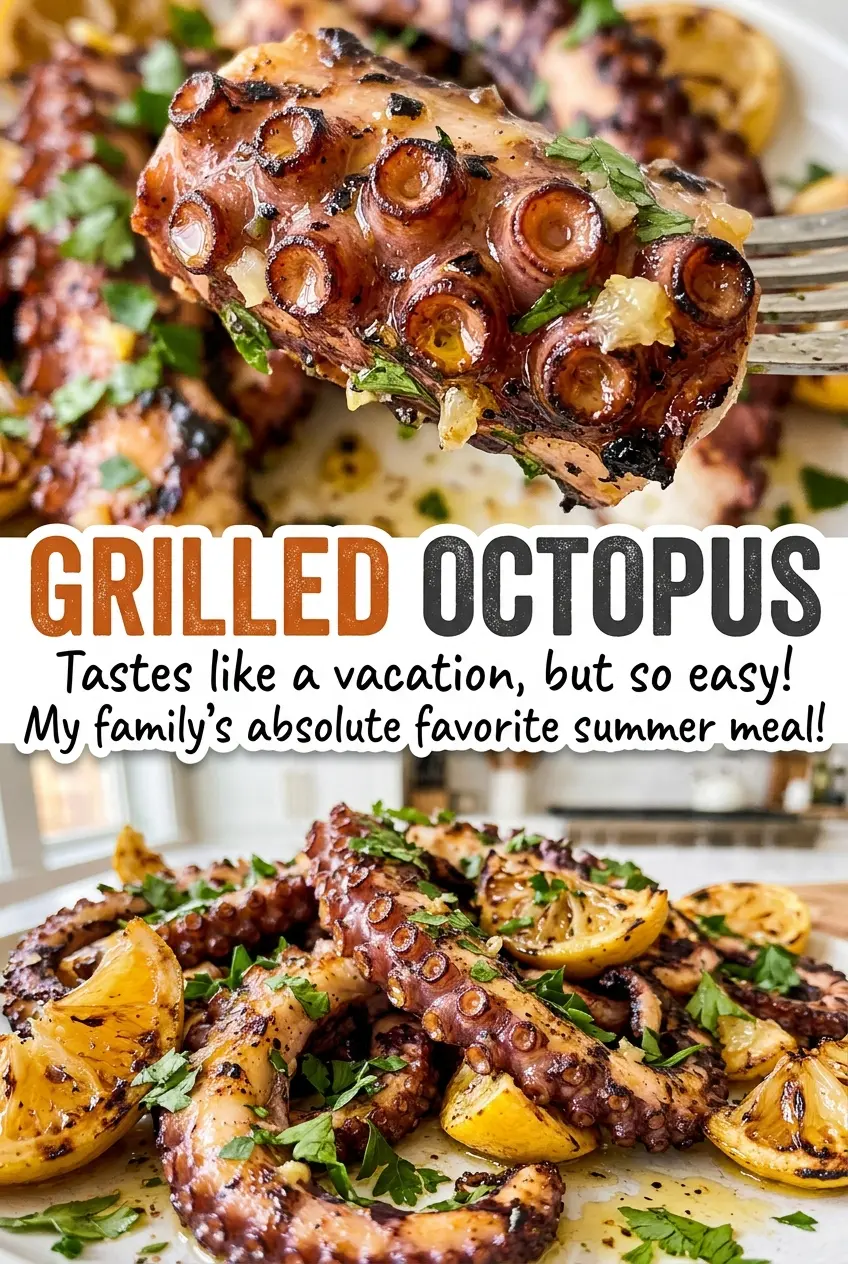
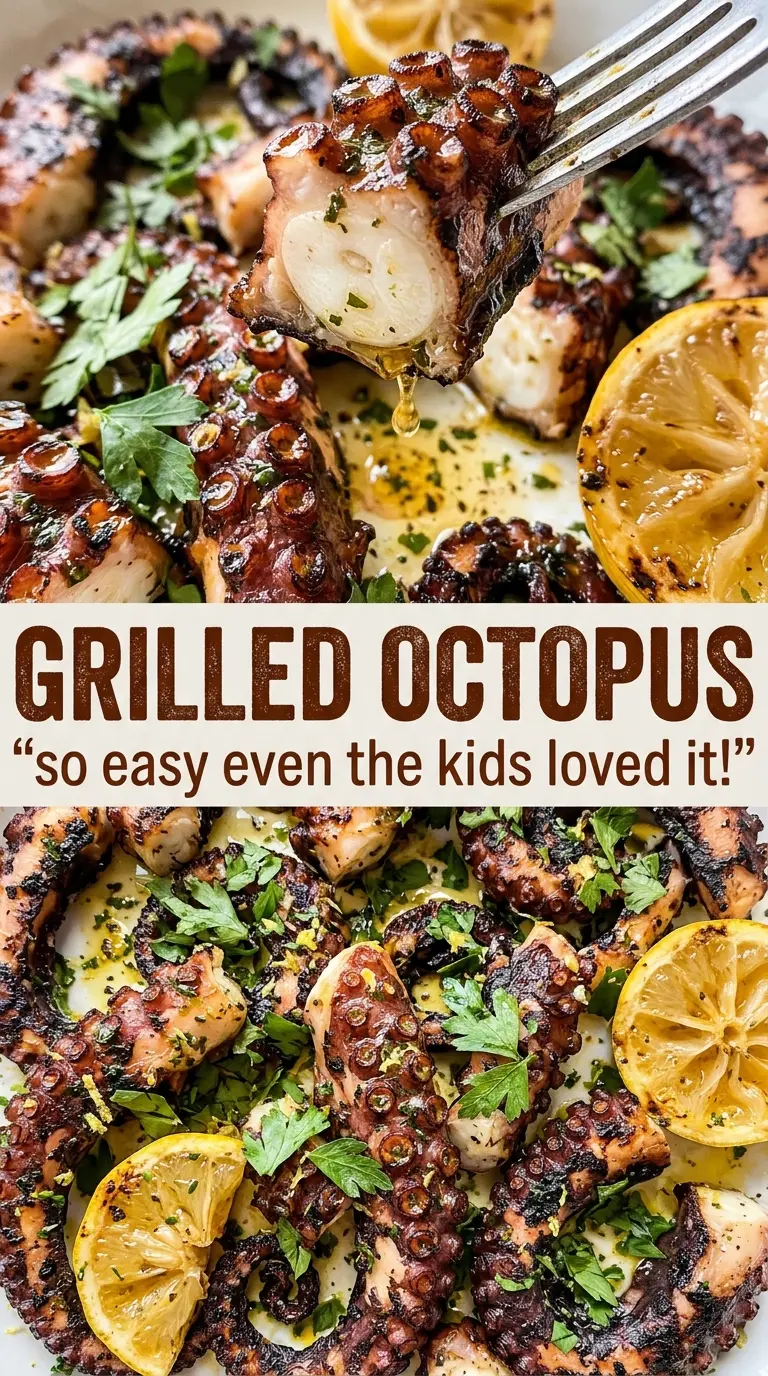
When I lift the tentacles from the stockpot, they look nothing like they will a few minutes later: the gentle simmer makes them tender, and the grill gives them those dark, smoky patches. Grilled octopus needs both stages. I don’t rush the pot or leave the tentacles over the fire long enough to dry out; the contrast between the soft center and lightly charred outside is what makes this dish worth making.
The octopus cooks whole first, then I separate the tentacles and grill them over direct heat. That order matters because the grill is there for color and char, not to soften a large piece of octopus from scratch. Bay leaves and peppercorns quietly scent the simmering water, while olive oil, black pepper, and lemon finish the tentacles at the end. Served hot with lemon wedges, they’re tender inside, pleasantly smoky at the edges, and bright with citrus.
Kitchen Note
Bake, Serve, Wear the Vibe 👕
Editor-picked tees our Oven To Fork readers love.



We may earn from qualifying purchases at no extra cost to you.
After the heat is off, let the octopus sit in the cooking liquid for the full 15 minutes. I used to think of that as waiting time, but it’s part of the method; don’t replace it with a rinse or a plunge into cold water.
Save this grilled octopus for tender tentacles with a quick char, pepper, and lemon at the table.
Why the Octopus Simmer Comes Before the Grill
A big octopus needs time in moist heat before it can benefit from a fast, hot grill. The simmer gives the thick tentacles time to turn tender throughout; the grill then adds char without asking the center to cook through. Putting raw octopus straight over high heat skips the part that makes it tender, and leaving already-tender tentacles on the grill for too long can undo that texture.
Think of the two parts as doing different jobs. The bay leaves and peppercorns flavor the cooking liquid while the octopus softens. Once the tentacles are tender, direct heat works quickly on the outside, creating char in spots while the inside stays yielding. That’s also why the knife test matters more than guessing from appearance: a large tentacle can look ready before its thickest part is tender. Take your time with the simmer, then keep the grilling brief.
What the Octopus and Its Simple Seasonings Bring to the Plate
- Cleaned octopus — This is the centerpiece, so start with cleaned octopus rather than trying to make an uncleaned one fit the method. Fresh or frozen works; frozen octopus needs to be thawed before it goes into the pot. Choose a piece that fits comfortably in the stockpot once the water is in place.
- Bay leaves and whole peppercorns — They gently perfume the simmering liquid without coating the octopus in loose seasoning. Ordinary dried bay leaves and standard whole peppercorns are fine here; this is a subtle background flavor, not a place where specialty spices make a noticeable difference.
- Olive oil — A regular, everyday olive oil is a good choice because it coats the tentacles before they meet the grill. There’s no need to use an expensive finishing oil for this job; the oil is brushed on before the high heat.
- Ground black pepper and kosher salt — These season the outside of the tentacles just before grilling. Use the ground black pepper you keep on hand; the whole peppercorns in the pot have a separate purpose and aren’t a replacement for this final seasoning.
- Lemon — The wedges give each person a fresh, tart finish against the smoky char. A lemon that feels heavy for its size tends to be juicy, which makes it easier to squeeze over the hot octopus at the table.
From Gentle Simmer to Charred Tentacles
Start the Aromatic Simmer
Bring the water, bay leaves, and whole peppercorns to a boil in an 8-quart stockpot. Add the cleaned octopus, then lower the heat until the water holds a gentle simmer and partially cover the pot. A steady, quiet simmer is what you want, not a hard rolling boil. Keep the lid partially open so the pot doesn’t boil vigorously.
Cook Until the Thickest Tentacle Is Tender
Simmer for 60 to 90 minutes, turning the octopus occasionally so it cooks evenly in the liquid. Start checking the thickest tentacle with a paring knife as it approaches the shorter end of that window. The octopus is ready when the knife slides in easily; if you meet resistance, keep simmering and test again. Don’t rely on the thinner tips to tell you whether the thickest section is done.
Rest, Drain, and Separate
Turn off the heat and leave the octopus in the cooking liquid for 15 minutes. Transfer it to a cutting board, drain it, and pat it dry before separating the tentacles. Use a steady hand as you work so each tentacle stays intact for grilling. The tentacles are now ready for the quick finishing cook.
Grill Quickly Over Direct Heat
Preheat the grill to high heat, about 450°F to 500°F. Brush the tentacles with olive oil, then season them with kosher salt and ground black pepper. Grill over direct heat for 2 to 3 minutes per side, watching for charred spots rather than waiting for the whole surface to blacken. Serve the tentacles hot with lemon wedges.
Small Changes for a Different Octopus Dinner
Make the lemon the finishing touch
Keep the lemon wedges at the table and squeeze them over the tentacles just before eating. That gives the char a bright, fresh contrast; adding the lemon at the table also lets each person choose how much citrus they want.
Give the black pepper a sharper edge
Use freshly ground black pepper for the seasoning on the tentacles instead of pepper that has been ground for a while. It keeps the same peppery character while giving the outside a more aromatic bite. Keep the whole peppercorns in the simmering liquid; they do a different job there.
Keep the plate dairy-free and gluten-free
The listed ingredients contain no dairy or gluten, so there’s no replacement ingredient needed for those dietary preferences. Olive oil already provides the coating before grilling, and the lemon keeps the finish bright without adding butter or a bread-based coating.
Storage and Reheating
- Refrigerator: Store leftover grilled octopus in a covered container and use it within 3 to 4 days. The tentacles will be less crisp after chilling.
- Freezer: It can be frozen in an airtight container for up to 2 to 3 months for the best quality. Thaw it in the refrigerator before reheating.
- Reheating: Warm the tentacles briefly on a hot grill until heated through. Avoid leaving them over the heat for an extended time, which can dry out the already-tender meat.
Questions That Come Up When Grilling Octopus
Grilled Octopus
Ingredients
Equipment
Method
- Bring the water, bay leaves, and whole black peppercorns to a boil in an 8-quart stockpot.
- Add the octopus, reduce the heat to maintain a gentle simmer, and cover partially.
- Simmer for 60 to 90 minutes, turning the octopus occasionally, until a paring knife slides easily into the thickest tentacle.
- Turn off the heat and let the octopus rest in the cooking liquid for 15 minutes.
- Transfer the octopus to a cutting board, drain, and pat dry.
- Separate the tentacles.
- Preheat a grill to high heat, about 450°F to 500°F.
- Brush the tentacles with the olive oil and season with the kosher salt and ground black pepper.
- Grill over direct heat for 2 to 3 minutes per side, until charred in spots.
- Serve hot with the lemon wedges.