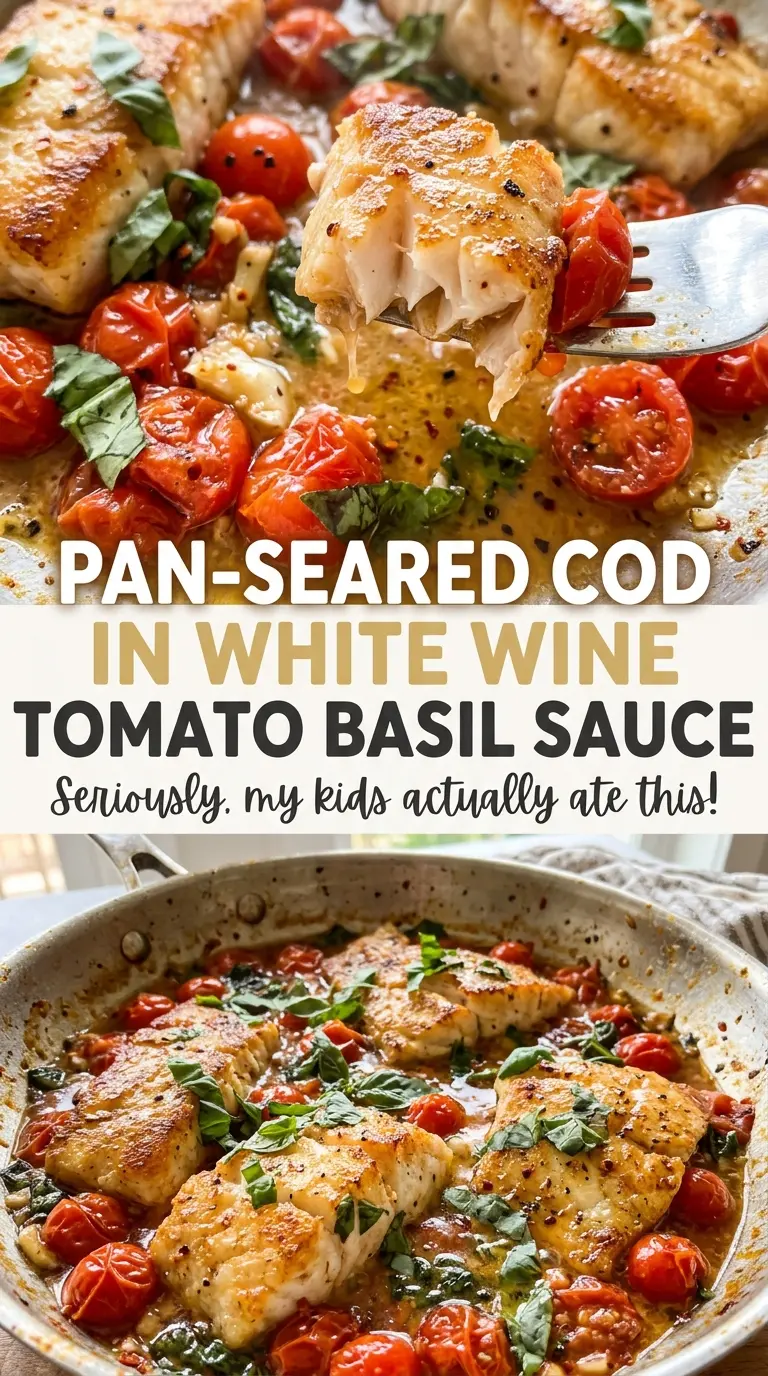
The moment the cod hits a hot skillet, the edges start turning opaque while the center stays tender. I used to try to finish the fillets right there, and the thin ends would dry out before the thick centers were ready. For this pan seared cod in white wine tomato basil sauce, I give the fish a quick sear, then let it finish gently in the sauce.
The sauce comes together in that same skillet, so the shallot, garlic, tomatoes, and wine pick up the savory bits left behind by the fish. Grape tomatoes soften into little bursts of sweetness, and butter rounds out the wine without weighing the sauce down. Fresh basil goes in at the end, giving each spoonful a clean, fragrant finish alongside flaky cod.

Kitchen Note
Bake, Serve, Wear the Vibe 👕
Editor-picked tees our Oven To Fork readers love.



We may earn from qualifying purchases at no extra cost to you.
I slice the basil while the tomatoes are softening, not at the start of cooking. Freshly cut leaves keep a brighter aroma, and they’re ready to fold in as soon as the butter melts.
Save this pan seared cod in white wine tomato basil sauce for a weeknight when you want tender fish and a skillet sauce with fresh tomato and basil.
Why the Sauce Starts in the Skillet the Cod Just Left
It’s easy to think of the sauce as a separate topping, but the first few minutes of flavor are already in the pan. After the cod comes out, the warm oil and any browned bits from searing stay behind. The shallot softens in that savory base, and the wine loosens the flavorful residue as it simmers.
The tomatoes bring their own juices, so the sauce gets body without needing a separate thickener. That matters with delicate fish: a heavy, flour-thickened sauce can cover the cod instead of letting its mild flavor come through. Butter gives the reduced wine a soft finish, while basil keeps the whole skillet tasting fresh. Keep the pan you seared the fish in; washing it out or starting over in a clean pan leaves useful flavor behind.
What Keeps the Tomato-Wine Sauce Bright Instead of Heavy
- Cod — Look for firm, moist fillets with a mild smell, cut close to the same thickness so they finish at a similar pace. Haddock is a practical stand-in; choose fillets of similar thickness and check the thickest part for doneness.
- Olive oil — It handles the hot sear and carries the shallot and garlic flavors into the sauce. A fresh, everyday olive oil is plenty; save a delicate, expensive finishing oil for another use. Avocado oil works in the same amount if that’s what you keep on hand.
- Shallot and garlic — The shallot gives the sauce a gentler, slightly sweet allium base than a large onion, while fresh garlic adds a sharper aroma. Choose a firm shallot and fresh garlic; jarred minced garlic has a duller taste and can brown faster, so watch it closely if you use it.
- Grape tomatoes — Their small size makes them easy to halve, and they soften quickly while releasing enough juice to mingle with the wine. Cherry tomatoes work too; halve them, or quarter any that are noticeably larger.
- Dry white wine — Use a dry wine you’d be happy to drink, such as Sauvignon Blanc or Pinot Grigio; sweetness can make the finished sauce taste cloying. If you’re avoiding wine, use an equal amount of low-sodium chicken broth, knowing the sauce will taste less bright.
- Butter and fresh basil — Butter softens the wine’s sharp edge, and basil contributes a sweet, peppery scent that dried herbs can’t quite match. For a dairy-free skillet, replace the butter with the same amount of olive oil; the sauce will be lighter and less rounded. Flat-leaf parsley can replace the basil in the same volume for a greener, less sweet finish.
How to Sear the Cod and Finish It Without Drying It Out
Dry the Fillets Before They Hit the Pan
Pat both sides of the cod thoroughly with paper towels, then season them with the kosher salt and black pepper. Heat the olive oil in a 12-inch skillet over medium-high heat until it shimmers. Lay in the fillets and leave them undisturbed for 3 minutes per side; moving them too soon makes it harder to get an even sear. Transfer the fish to a plate while the sauce comes together.
Soften the Shallot Before Adding Garlic
Lower the heat to medium and add the finely chopped shallot to the skillet. Stir for 2 minutes, until it softens and turns translucent at the edges rather than taking on dark color. Add the minced garlic and cook for 30 seconds, stirring so it doesn’t scorch. Garlic can turn bitter quickly, so have the tomatoes ready to go before it hits the pan.
Let the Tomatoes and Wine Reduce
Stir in the halved grape tomatoes and cook for 4 to 5 minutes. They’re ready when their skins begin to wrinkle, the flesh softens, and juices collect in the skillet. Pour in the dry white wine and simmer for 3 to 4 minutes, until it has reduced slightly; it should still look like a loose sauce, not a dry pan. Stir in the butter until it melts, then fold in the sliced basil.
Return the Cod for a Gentle Finish
Set the cod back into the skillet and add any juices left on the plate. Spoon the tomato sauce over the fillets, then cook gently for 2 to 4 minutes. Check the thickest part of each fillet with an instant-read thermometer; it should reach 145°F and flake easily. Lift the fish carefully with a wide spatula, since fully cooked cod can break into large flakes when handled roughly.
Three Simple Ways to Adapt This Skillet of Cod
Make the Sauce Dairy-Free
Use olive oil in place of the butter to keep the sauce dairy-free. It won’t have quite the same mellow, rounded finish, but it still coats the tomatoes and fish with a light sheen.
Use Haddock for a Slightly Firmer Bite
Swap in haddock fillets close to the same thickness as the cod. The flavor stays mild, while the flesh has a slightly firmer texture; use the same visual cues and check the thickest part rather than relying on the clock alone.
Swap in Parsley for a Less Sweet Finish
Use thinly sliced flat-leaf parsley instead of basil if you prefer a cleaner, more savory herb note. Fold it in at the same point; the sauce loses basil’s sweet fragrance but stays fresh-tasting.
Storage and Reheating
- Refrigerator: Store the cod and sauce in a covered container for 3 to 4 days. The fish will be softer after chilling and may break into flakes when you serve it.
- Freezer: Freezing isn’t the best choice here. The cod tends to lose its delicate texture, and the tomatoes can turn watery when thawed.
- Reheating: Warm the fish and sauce gently in a covered skillet over low heat, spooning sauce over the top. Avoid high heat or repeated stirring, which can dry the cod and break it apart.
Questions That Come Up When Cooking Cod in This Sauce
Pan Seared Cod in White Wine Tomato Basil Sauce
Ingredients
Equipment
Method
- Pat the cod dry with paper towels.
- Season both sides with the salt and pepper.
- Heat the olive oil in a 12-inch skillet over medium-high heat until shimmering, then add the cod and sear for 3 minutes per side.
- Transfer the cod to a plate while you make the sauce.
- Reduce the heat to medium, add the shallot to the skillet, and cook for 2 minutes, stirring, until softened.
- Add the garlic and cook for 30 seconds.
- Stir in the tomatoes and cook for 4 to 5 minutes, until they begin to soften and release their juices.
- Pour in the wine and simmer for 3 to 4 minutes, until reduced slightly.
- Stir in the butter until melted, then fold in the basil.
- Return the cod and any accumulated juices to the skillet and spoon sauce over the fillets.
- Cook gently for 2 to 4 minutes, until the thickest part of each fillet reaches 145°F and flakes easily.