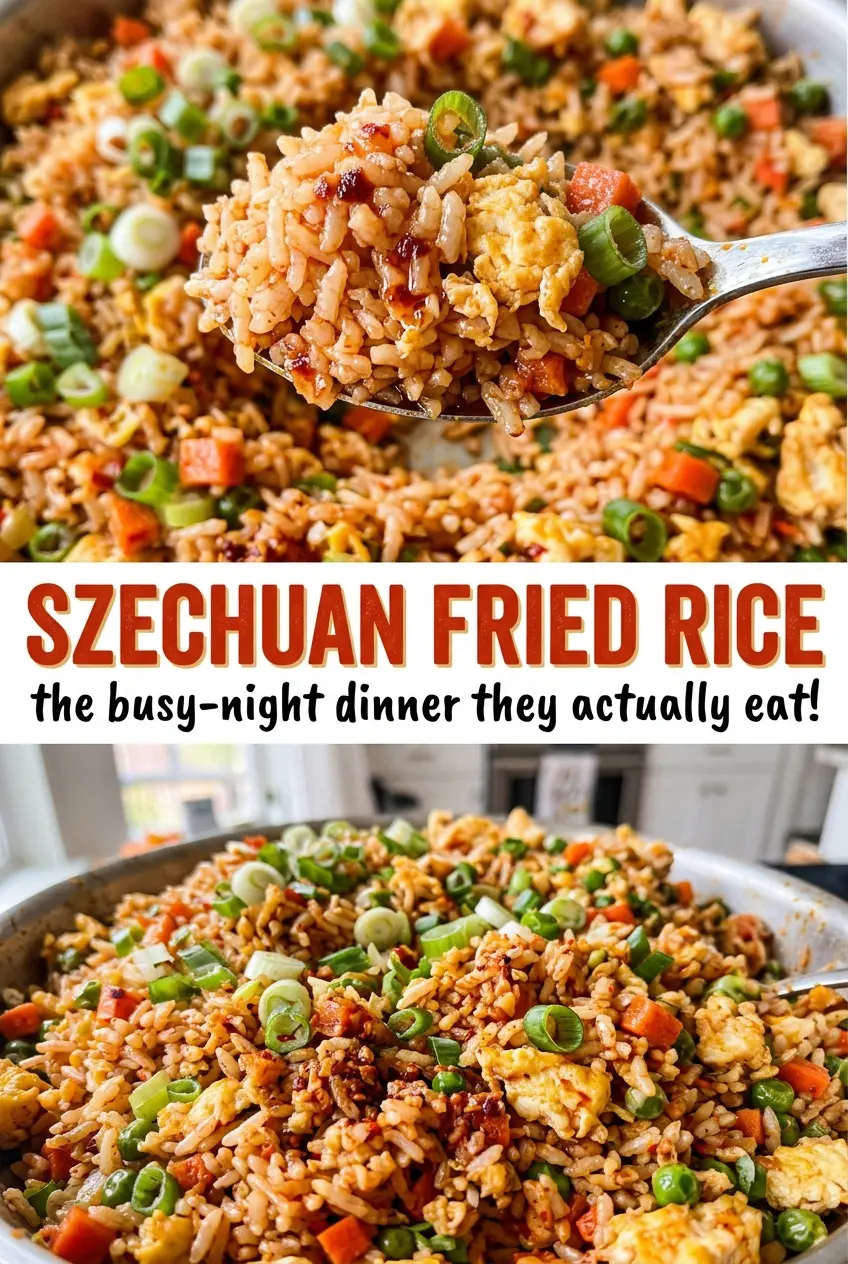
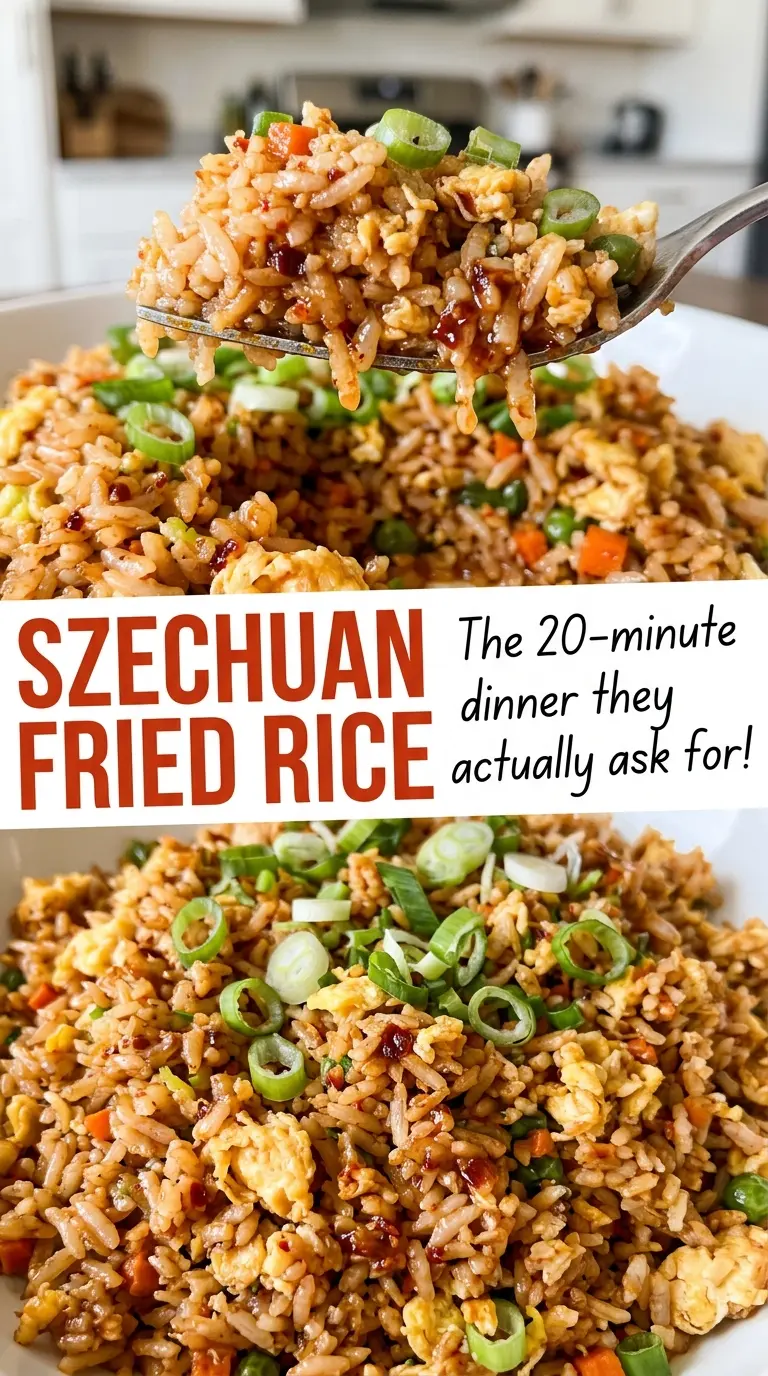
The garlic and ginger turn fragrant almost as soon as they hit the hot skillet, and the doubanjiang brings a deep, savory chile aroma right behind them. I keep everything close at hand because the cooking moves quickly once the pan is hot. In Szechuan Fried Rice, the egg is scrambled first, the vegetables soften in the same pan, and the rice gets tossed with a bold, savory seasoning that clings to every grain.
Cold cooked long-grain rice gives this skillet dinner its distinct, springy texture, while ground Sichuan peppercorns bring a tingly, citrusy note alongside the chile warmth. Soy sauce seasons the rice, rice vinegar brightens it, and the scallions and toasted sesame oil go in at the end, where their fresher aromas stay noticeable. It’s a lively bowl of fried rice with a satisfying mix of tender vegetables, soft egg, and well-seasoned grains.
Kitchen Note
Bake, Serve, Wear the Vibe 👕
Editor-picked tees our Oven To Fork readers love.



We may earn from qualifying purchases at no extra cost to you.
Break up the chilled rice clumps before you start cooking. The first few minutes go quickly, and separating the grains ahead of time makes it easier to toss them evenly without pausing over a hot pan.
Save this Szechuan Fried Rice for a quick skillet meal with savory chile flavor, tender vegetables, and a bright finish of scallion and sesame oil.
Why the 12-Inch Pan Gives Fried Rice Room to Move
A 12-inch skillet or wok isn’t just a convenient size for this amount of rice. It gives the grains and vegetables enough room to move when you toss them, so the sauce can spread instead of collecting in one spot. A crowded pan makes that tossing awkward, and the ingredients are more likely to sit in a heap rather than meet the hot cooking surface.
That room matters most after the rice goes in. Use a broad motion to lift and turn it, breaking up any remaining clumps as you go. The goal isn’t to press the rice flat or leave it undisturbed for a long stretch; keep it moving so the seasonings reach the full pan. A wok works well, and a 12-inch skillet is a practical alternative if that’s what you have. Either way, the pan should feel spacious enough to toss without rice spilling over the edge.
If your skillet is smaller, resist the urge to pack the whole batch into it. Working in a smaller pan can make the rice harder to toss evenly, which is the part that gives this dish its balanced seasoning and texture. The wide pan also makes it easier to add the eggs back and fold them through without crushing them.
How Rice, Doubanjiang, and Sichuan Peppercorns Shape the Bowl
- Long-grain rice — Its separate grains suit tossing in a skillet better than a sticky, compact rice. Use cooked rice that has been chilled, and loosen the clumps before cooking; freshly cooked, warm rice is more prone to turning soft as it moves around the pan.
- Doubanjiang — This Sichuan chili bean paste brings both chile heat and fermented savory depth, so it does more here than a plain hot sauce would. The paste is the defining flavor; leaving it out makes a much milder, less complex fried rice. Brands vary in salt and heat, so taste the finished dish before adding anything beyond the listed seasoning.
- Ground Sichuan peppercorns — These contribute a distinctive tingle and citrusy aroma rather than the straightforward heat of a typical black pepper. Ground peppercorns disperse through the rice more evenly than whole ones. Keep them in an airtight container so their fragrance doesn’t fade.
- Eggs and frozen peas and carrots — Large eggs make soft, substantial curds, while the thawed vegetables add color and a tender bite without requiring a separate cooking step. The frozen blend is a handy, inexpensive choice; thaw it before it reaches the skillet so the vegetables are ready to warm through as the onion softens.
- Soy sauce, rice vinegar, scallions, and toasted sesame oil — Soy sauce supplies the main salty seasoning, and rice vinegar keeps that savory base from tasting heavy. Scallions and toasted sesame oil finish the pan with fresh onion aroma and a nutty note. Toasted sesame oil is best added at the end rather than treated like the neutral oil used for cooking.
- Neutral oil — A basic neutral oil is all you need for the hot skillet; there’s no reason to use a specialty bottle for this part. Its job is to coat the pan and carry the eggs and vegetables through the initial cooking.
Four Stages for Fast, Evenly Seasoned Fried Rice
Set the eggs before the vegetables
Heat a 12-inch skillet or wok over medium-high until hot, then swirl in the first tablespoon of neutral oil. Add the lightly beaten eggs and scramble until just set, about 1 minute. They should look softly curdled, not browned or dried out. Transfer them to a plate so they can be folded back in near the finish.
Soften the onion with the thawed vegetables
Add the remaining tablespoon of neutral oil, followed by the finely diced onion and thawed peas and carrots. Stir as they cook for about 2 minutes, until the onion softens. Keep the vegetables moving across the cooking surface so the onion softens evenly. The pan should still be hot when you add the aromatics.
Stir the aromatics through the oil
Add the minced garlic and ginger, doubanjiang, and ground Sichuan peppercorns. Stir for 30 seconds to distribute the paste and spices through the vegetables. Keep stirring rather than letting the paste sit in one patch of the pan. The short cooking time gives the garlic and ginger a chance to turn fragrant before the rice goes in.
Toss the rice, then finish the pan
Add the chilled rice and toss it with the vegetables, breaking apart any clumps that remain. Cook for 3 to 5 minutes, then add the soy sauce and rice vinegar and toss until evenly distributed. Return the eggs, then stir in the sliced scallions and toasted sesame oil. Keep tossing until the fried rice is steaming hot throughout and reaches 165°F, about 1 minute, then serve.
Easy Changes That Keep the Rice’s Szechuan Character
Make it egg-free
Leave out the eggs and follow the same skillet sequence for the vegetables and rice. The finished dish will be lighter and won’t have the soft egg curds, but the seasoned rice, peas, and carrots still make a complete bowl. If you’re cooking for someone with an egg allergy, keep the utensils and pan free of egg residue as well.
Keep the chile, lose the numbing tingle
Omit the ground Sichuan peppercorns and keep the doubanjiang. You’ll still get the paste’s chile warmth and savory bean flavor, but the distinctive tingling sensation will be reduced. This is a useful adjustment for anyone who enjoys spicy food but doesn’t care for the numbing quality of Sichuan peppercorns.
Adapt it for a gluten-free meal
Replace the soy sauce with the same amount of gluten-free tamari, and use a gluten-free doubanjiang in place of the regular paste. The tamari keeps the salty, savory seasoning, though the finished taste may be a little different. Both replacements matter here; changing only the soy sauce doesn’t make the whole dish gluten-free.
Storage and Reheating
- Refrigerator: Store leftovers in a covered container for 3 to 4 days. The rice firms up as it chills, but it loosens as it reheats.
- Freezer: Fried rice freezes well for up to 2 months. Cool it promptly, portion it into airtight containers, and thaw a portion in the refrigerator before reheating.
- Reheating: Reheat a serving in a skillet, tossing until steaming hot throughout, or microwave it in a covered dish and stir partway through. Reheat only the portion you plan to eat; repeatedly warming and cooling the full batch can dry out the rice and is harder to handle safely.
Questions That Come Up When Making Szechuan Fried Rice
Szechuan Fried Rice
Ingredients
Equipment
Method
- Heat a 12-inch skillet or wok over medium-high heat until hot.
- Add 1 tablespoon of the neutral oil and swirl to coat.
- Add the eggs and scramble until just set, about 1 minute.
- Transfer the eggs to a plate.
- Add the remaining 1 tablespoon neutral oil, onion, and peas and carrots; cook, stirring, until the onion softens, about 2 minutes.
- Add the garlic, ginger, doubanjiang, and Sichuan peppercorns; stir for 30 seconds.
- Add the rice and cook, tossing and breaking up clumps, for 3 to 5 minutes.
- Add the soy sauce and rice vinegar and toss until evenly distributed.
- Return the eggs to the pan and stir in the scallions and sesame oil.
- Cook, tossing, until the fried rice is steaming hot throughout and reaches 165°F, about 1 minute.
- Serve.