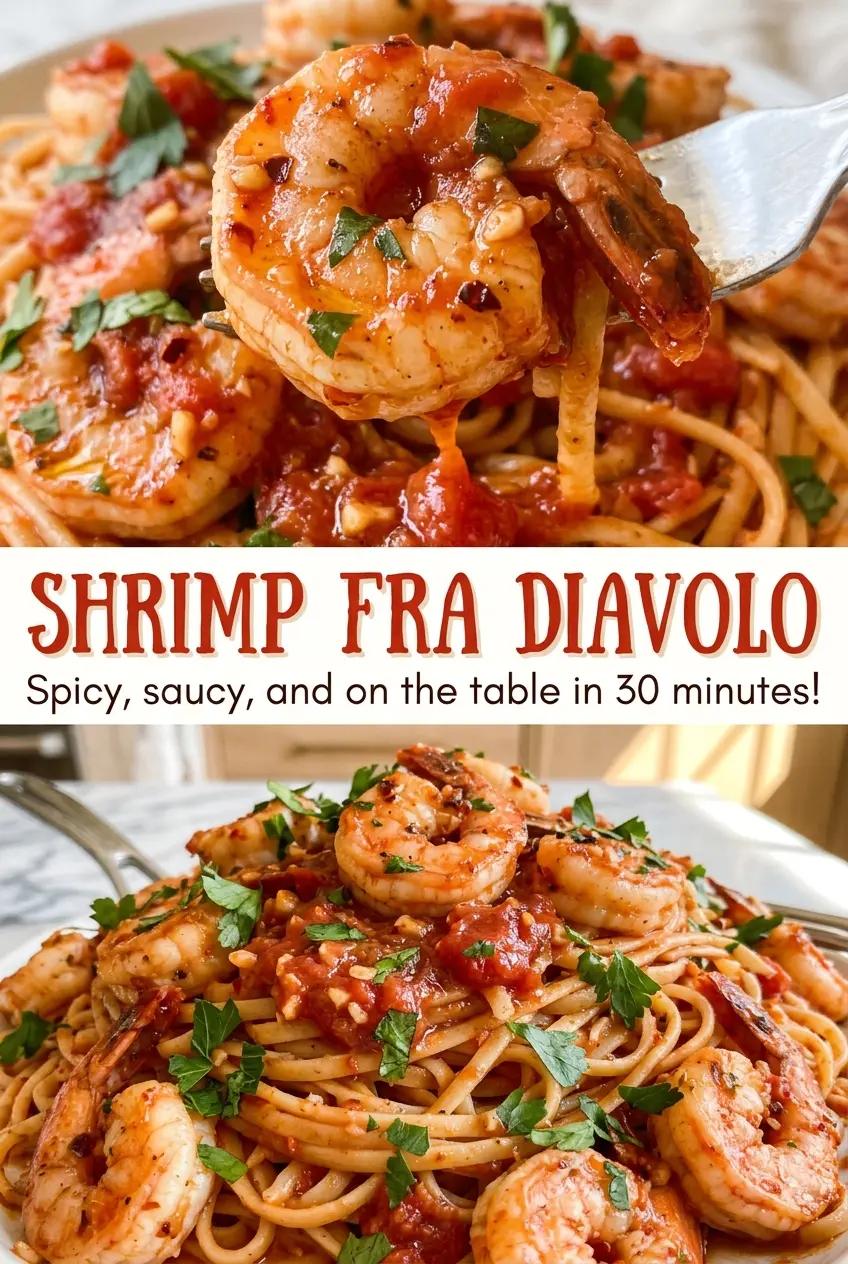
As soon as the shrimp hit the hot oil, their edges curl and turn pink, and little browned bits collect on the bottom of the skillet. Those bits aren’t a problem to scrub away; they become part of the sauce when the wine goes in. I make Shrimp Fra Diavolo this way so the shrimp stay tender while the tomatoes have time to simmer into a sauce with a clear, lively heat.
The order matters more than the ingredient list suggests. I sear the shrimp first, take them out of the pan, and build the sauce in the same skillet. That gives the tomatoes time to simmer without leaving the shrimp in the heat for the whole cook. A handful of parsley stirred in at the end keeps each forkful bright against the spicy tomato sauce and linguine.
Kitchen Note
Bake, Serve, Wear the Vibe 👕
Editor-picked tees our Oven To Fork readers love.



We may earn from qualifying purchases at no extra cost to you.
I keep the salt divided instead of measuring it all at once: a little for the shrimp, a little for the tomatoes, and the tablespoon for the pasta water. That way each part gets seasoned where it needs it, and the pasta water doesn’t accidentally take salt away from the sauce.
Save this Shrimp Fra Diavolo for a night when you want tender shrimp, a spicy crushed-tomato sauce, and linguine all on one plate.
Why the Shrimp Comes Out Before the Sauce Is Ready
Shrimp cook quickly, but a tomato sauce needs more than a minute to settle into itself. If the shrimp stay in the skillet while the crushed tomatoes simmer, they’ll keep cooking long after they’re opaque. The fix is to give each part its own stretch of time: sear the shrimp, move them to a plate, and let the sauce simmer without them.
The same skillet does the work for both. The browned bits left from searing loosen in the wine, carrying their savory flavor into the tomato base. Once the tomatoes have had their simmer, the shrimp go back in just long enough to heat through. You get sauce with more depth than a quick toss-together, but the shrimp still have a springy bite instead of a tight, rubbery texture.
What Gives This Spicy Tomato Sauce Its Character
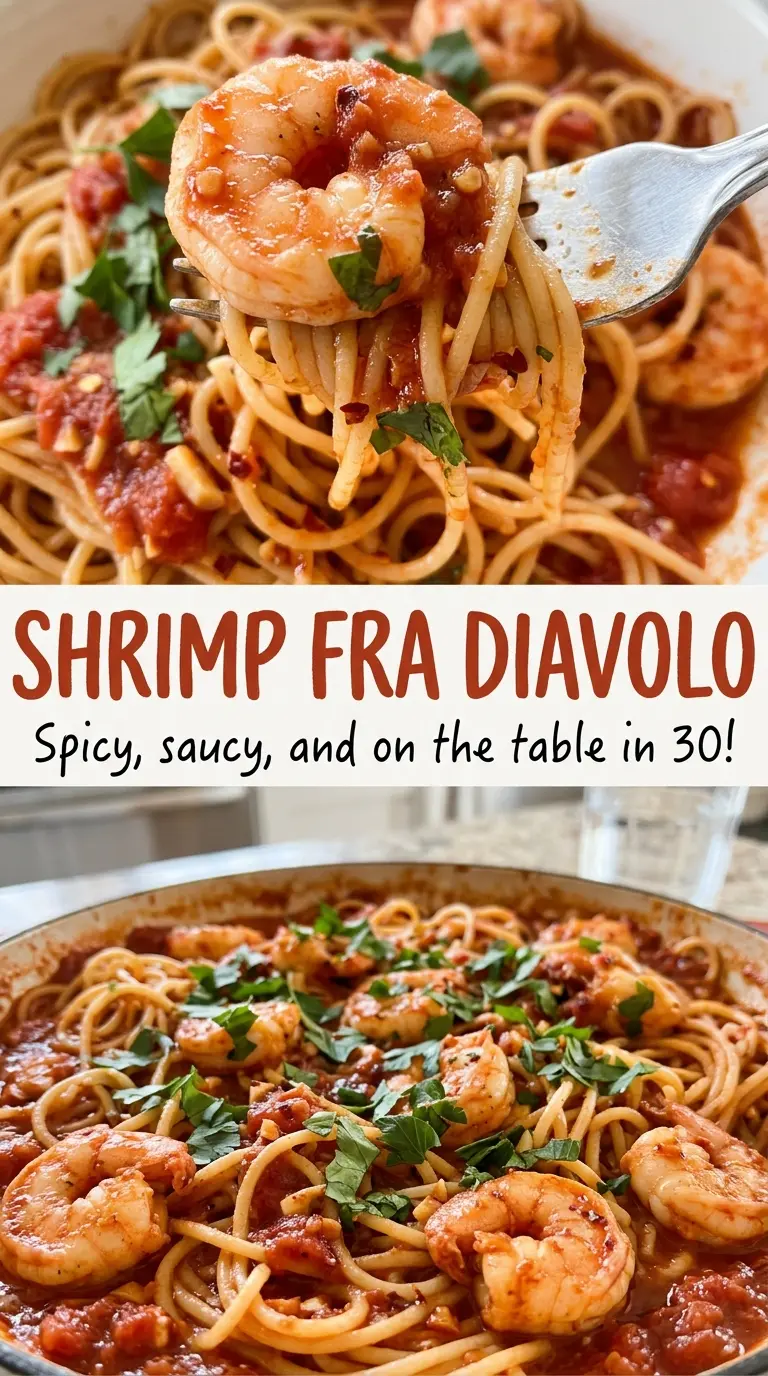
- Large shrimp — Large shrimp are easier to sear without overcooking while you work in batches. Fresh or frozen shrimp both work; what matters most is patting them dry before they go into the skillet so they sear rather than shed excess moisture.
- Crushed red pepper flakes — These bring the heat that defines fra diavolo. Their intensity varies by brand, so taste the sauce after it simmers before deciding whether you want a milder batch next time.
- Garlic and olive oil — The oil carries the garlic and pepper flakes through the sauce, while fresh minced garlic gives a more direct aroma than jarred garlic. Use a decent everyday olive oil; there’s no need to save a special finishing oil for this skillet.
- Dry white wine — The wine loosens the browned bits after the shrimp sear and gives the tomato sauce a little lift. A basic dry bottle is fine; an expensive one won’t improve the dish. If you need to leave it out, skip the deglazing liquid and go from the garlic and pepper flakes straight to the tomatoes; the sauce will have less brightness.
- Crushed tomatoes — Canned crushed tomatoes give the sauce a consistent, spoonable texture. Choose a can you enjoy the taste of on its own, since it makes up most of the sauce; there’s no need to buy a specialty brand.
- Linguine and parsley — Linguine holds the tomato sauce well, and fresh parsley adds a clean finish at the end. Chop the parsley shortly before adding it so it stays green and aromatic rather than sitting cut on the counter.
The Skillet-to-Plate Sequence That Keeps Shrimp Tender
Season and Sear the Shrimp
Pat the shrimp dry, then toss them with 1/2 teaspoon kosher salt and the black pepper. Heat 2 tablespoons olive oil in a 12-inch deep skillet over medium-high heat, and cook the shrimp in batches for 1 to 2 minutes per side. Look for opaque flesh and check that the thickest shrimp reaches 145°F. Transfer each batch to a plate rather than leaving it in the skillet.
Wake Up the Garlic and Pepper
Reduce the heat to medium and add the remaining 1 tablespoon olive oil, minced garlic, and crushed red pepper flakes. Stir constantly for 30 seconds, just until the garlic smells fragrant. Garlic can darken quickly in hot oil, so keep it moving and don’t wait for it to brown. Pour in the dry white wine as soon as that brief cook is over.
Loosen the Pan and Simmer the Tomatoes
Simmer the wine for 2 minutes, scraping the bottom of the skillet to lift the browned bits. Stir in the crushed tomatoes and the remaining 1/2 teaspoon kosher salt, then bring the sauce to a gentle simmer. Cook for 15 minutes, stirring occasionally. Keep the bubbling gentle; a hard boil can splatter tomato sauce across the stove.
Cook the Linguine Until Al Dente
Bring 4 quarts water to a boil in an 8-quart pot, add 1 tablespoon kosher salt, then add the linguine. Cook for 8 to 10 minutes, or follow the package directions, until the pasta is al dente. Drain it once it has a little bite left in the center. It will be served with the sauce rather than cooked through in the skillet.
Warm the Shrimp and Finish the Plate
Stir the shrimp and any juices on the plate into the tomato sauce. Simmer gently for 1 to 2 minutes, just until the shrimp are hot; a vigorous boil isn’t needed. Stir in the chopped parsley, then spoon the shrimp and sauce over the linguine. Serve while the pasta is warm and the parsley still looks fresh.
Three Ways to Change the Dish Without Losing Its Shape
Make a Milder Fra Diavolo
Use half the crushed red pepper flakes for a gentler warmth, or leave them out for a straightforward garlic-tomato sauce. The tomatoes and seared shrimp still make a full-flavored dish, but you lose the signature lingering heat.
Make It Vegetarian
Leave out the shrimp and make the garlic, pepper, wine, and tomato sauce in the skillet, then serve it over the linguine. You’ll lose the seafood flavor and the shrimp’s seared notes, but the spicy tomato pasta still makes a satisfying meat-free meal with the ingredients already in the sauce.
Skip the Linguine
Serve the shrimp and sauce on their own when you want the skillet portion without pasta. The sauce will still be the same tomato-rich, peppery base, but the meal won’t have the extra pasta to catch it, so spoon plenty over each serving.
Storage and Reheating
- Refrigerator: Store the shrimp and sauce, and the linguine if already combined, in an airtight container for up to 3 days. The pasta will soften as it sits in the sauce.
- Freezer: Freeze the shrimp and sauce in an airtight container for up to 2 months, separate from the linguine for the best texture. Thawed shrimp may be a little softer than freshly cooked.
- Reheating: Warm the shrimp and sauce gently in a covered skillet over low heat, stirring until hot; reheat the linguine separately if you can. Avoid a hard boil or a long stint over heat, which can make the shrimp tough.
Questions That Come Up While Making Shrimp Fra Diavolo
Shrimp Fra Diavolo
Ingredients
Equipment
Method
- Pat the shrimp dry, then toss with 1/2 teaspoon of the kosher salt and the black pepper.
- Heat 2 tablespoons olive oil in a 12-inch deep skillet over medium-high heat.
- Cook the shrimp in batches for 1 to 2 minutes per side, until opaque and 145°F, then transfer to a plate.
- Reduce the heat to medium and add the remaining 1 tablespoon olive oil, garlic, and red pepper flakes; cook for 30 seconds, stirring constantly.
- Pour in the wine and simmer for 2 minutes, scraping up browned bits.
- Stir in the crushed tomatoes and remaining 1/2 teaspoon salt, bring to a gentle simmer, and cook for 15 minutes, stirring occasionally.
- Bring the water to a boil in an 8-quart pot, add 1 tablespoon kosher salt and the linguine, and cook for 8 to 10 minutes, or according to package directions, until al dente; drain.
- Stir the shrimp and any plate juices into the tomato sauce and simmer gently for 1 to 2 minutes, until hot.
- Stir the parsley into the sauce, then spoon the shrimp and sauce over the linguine.