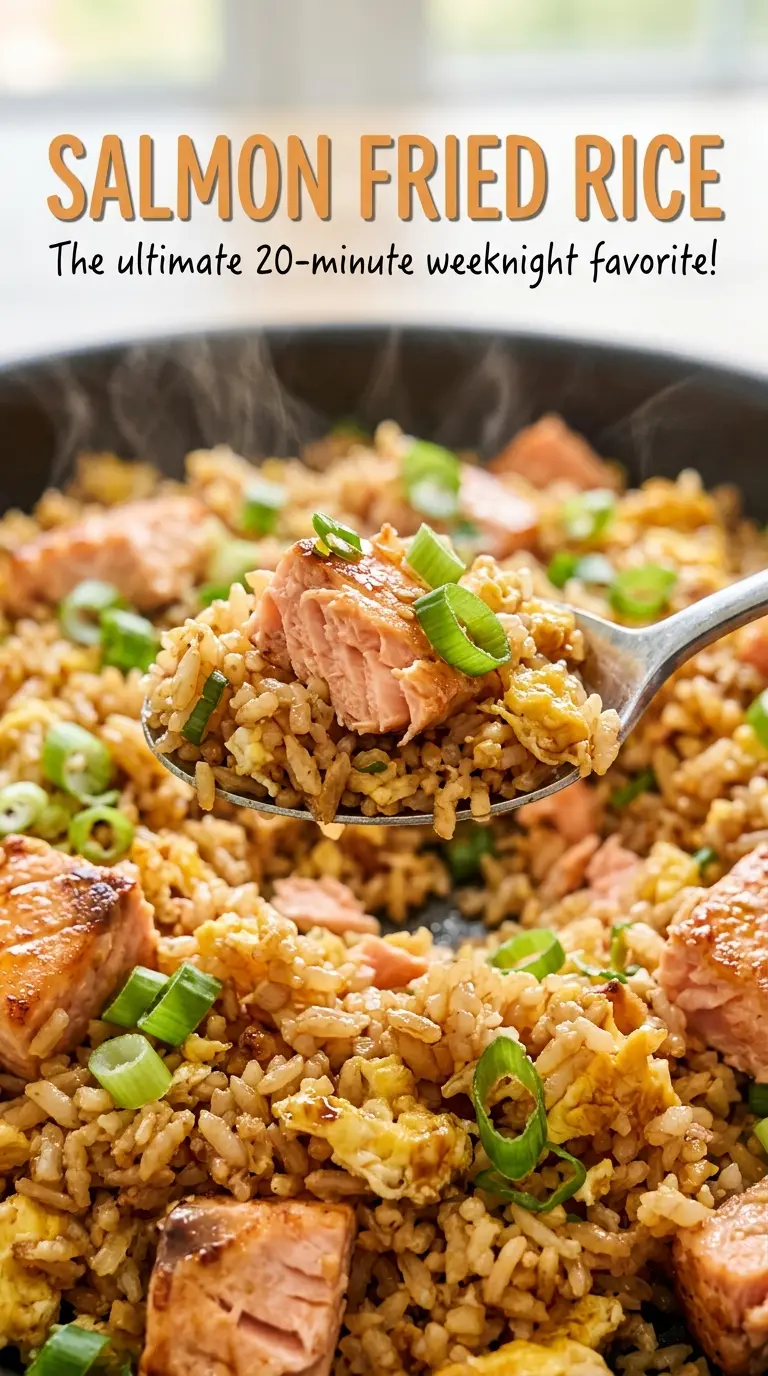
Cold rice hits a hot skillet with a quick hiss, and that sound is what I listen for before I start tossing. If the pan is crowded, the grains steam instead of picking up the savory seasoning evenly. A 12-inch skillet gives this salmon fried rice room to move while the salmon, eggs, and vegetables each get their moment in the pan.
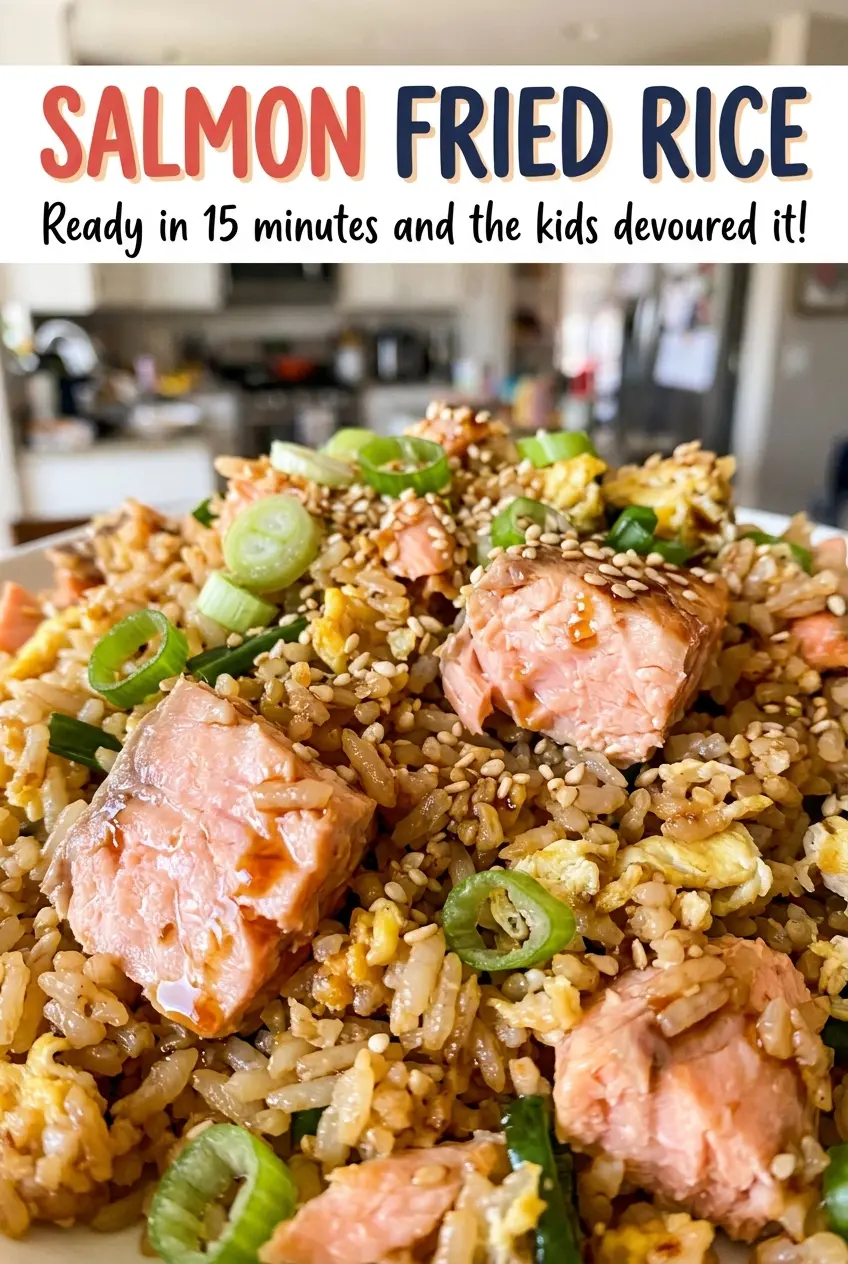
I cook the salmon first and set it aside, then bring it back at the end with the eggs and scallions. That order keeps the salmon in generous flakes rather than letting it get lost in the rice. Cold, preferably day-old rice is another small choice that pays off: the grains stay distinct as they warm, and the finished skillet has tender salmon folded through rather than a soft, clumped mass.
Kitchen Note
Bake, Serve, Wear the Vibe 👕
Editor-picked tees our Oven To Fork readers love.



We may earn from qualifying purchases at no extra cost to you.
Break the cooked salmon into large flakes, not little crumbs. It only needs a gentle toss at the end, which keeps those tender pieces easy to spot in every serving.
Save this Salmon Fried Rice for a quick skillet dinner with flaky salmon, tender eggs, and savory rice that stays in separate grains.
Why a 12-Inch Skillet Matters More Than a Hotter Burner
Fried rice needs room to tumble. With the rice spread across a wide cooking surface, tossing brings different grains into contact with the hot pan, and the soy sauce can coat the rice instead of pooling beneath it. A narrow or crowded pan makes that harder: the ingredients pile up, release moisture, and warm unevenly. Turning the heat higher won’t fix a pan that’s too full.
The 12-inch skillet also lets you cook the components in a sensible order without transferring everything to a second pan. Salmon and eggs wait on a plate while the vegetables and rice use the same skillet, picking up the flavor left behind. Keep the tossing frequent once the rice goes in, but don’t mash or press it down. The goal is warm, separate grains with vegetables distributed throughout, not a compact layer that sits and steams.
Why Cold Rice, Fresh Ginger, and Toasted Sesame Oil Earn Their Place
- Cold cooked rice — Day-old rice is especially handy because its grains are firm and easy to separate. Break up the clumps before they go into the skillet; large compacted pieces won’t heat as evenly. Another cooked rice works, but the grain shape and chew will affect the final texture.
- Skinless salmon — A fillet about an inch thick cooks evenly in the skillet and flakes into substantial pieces. Choose a fresh-looking fillet, but there’s no need to seek out a specialty cut. A different fish won’t give quite the same rich, tender flakes, so salmon is the defining protein here.
- Neutral oil — Its mild taste lets the salmon sear without competing with the ginger or sesame. A basic neutral cooking oil is the right choice for the hot skillet; toasted sesame oil has a much stronger aroma and serves a different purpose.
- Eggs — Lightly beaten eggs add soft, savory pieces throughout the rice. They need only a brief scramble before being set aside, so there’s no advantage to using a premium variety for this dish.
- Frozen peas and carrots — The frozen mix makes a convenient, colorful addition, and it goes straight into the skillet. There’s no need to thaw it first. Cook until the vegetables are hot before stirring in the garlic and ginger.
- Garlic and fresh ginger — Minced garlic and finely grated ginger spread their flavor through the vegetables and rice. Fresh ginger gives the brightest, cleanest taste; grate it finely so you don’t end up with noticeable fibrous pieces.
- Soy sauce and toasted sesame oil — Soy sauce brings the salty, savory seasoning, while toasted sesame oil adds a fragrant finish. Neither does the other’s job, so extra sesame oil isn’t a good stand-in for soy sauce. Keep both ready to add after the rice has had time in the pan.
- Scallions — Thin slices add a mild onion note at the finish. Slice them before you start cooking so they’re ready to toss in with the salmon and eggs.
Cook the Salmon First, Then Give the Rice the Hot Pan
Cook the salmon until opaque
Heat a tablespoon of neutral oil in a 12-inch skillet over medium-high heat. Season the salmon with kosher salt and cook it for 3–5 minutes per side, until it’s opaque and reaches 145°F in the thickest part. Transfer it to a plate rather than leaving it in the skillet while the other ingredients cook. That pause keeps the fish from spending the entire cooking time in the pan.
Scramble the eggs just until set
Add a teaspoon of neutral oil to the same skillet, then pour in the lightly beaten eggs. Scramble for 1–2 minutes, stopping when they’re just set rather than browned or dry. Move them to the plate with the salmon. They’ll go back into the skillet at the end, so soft curds are exactly what you want.
Warm the vegetables before adding aromatics
Pour the remaining two teaspoons of neutral oil into the skillet and add the frozen peas and carrots. Cook for 2–3 minutes, until hot, stirring so they warm evenly. Add the minced garlic and finely grated ginger only after the vegetables are hot, then cook for 30 seconds. That brief time is enough to release their aroma without letting the garlic darken.
Toss the rice, season, and finish gently
Add the cold cooked rice, breaking apart any remaining clumps as you toss it often for 3–4 minutes. Stir in the soy sauce and toasted sesame oil, then cook for 1 minute so the seasoning coats the grains. Flake the salmon into large pieces and return it to the skillet with the eggs and sliced scallions. Toss gently for 1–2 minutes, just until everything is heated through, then serve.
Two Ingredient Changes That Keep the Salmon-Rice Base
Make it egg-free
Leave out the eggs for an egg-free skillet. The rice will have fewer soft, rich bites, but the salmon, vegetables, and scallions still make a complete dish. Skip the egg-scrambling stage and continue with the vegetables.
Leave out the peas and carrots
Omit the frozen vegetables when you want a simpler salmon-and-rice skillet. The finished dish will have fewer sweet, tender bites and a more direct ginger-and-soy flavor. Add the garlic and ginger to the oiled skillet and continue with the rice.
Storage and Reheating
- Refrigerator: Store leftovers in an airtight container for 3–4 days. The rice firms up as it chills, but loosens as it reheats.
- Freezer: Freeze in an airtight container for up to 2 months for best quality. Thaw overnight in the refrigerator; the rice and vegetables may be a little softer after freezing.
- Reheating: Reheat in a skillet over medium heat, stirring often until the leftovers reach 165°F. Avoid leaving the rice in one undisturbed layer, which can dry the bottom before the center is hot.
Questions That Come Up While the Skillet Is Hot
Salmon Fried Rice
Ingredients
Equipment
Method
- Heat 1 tablespoon of the neutral oil in a 12-inch skillet over medium-high heat.
- Season the salmon with the salt and cook for 3–5 minutes per side, until opaque and 145°F in the thickest part; transfer to a plate.
- Add 1 teaspoon of the neutral oil to the skillet and pour in the eggs.
- Scramble for 1–2 minutes, until just set, then transfer to the plate with the salmon.
- Add the remaining 2 teaspoons of neutral oil and the peas and carrots to the skillet.
- Cook for 2–3 minutes, until hot, then stir in the garlic and ginger and cook for 30 seconds.
- Add the rice and cook, tossing often, for 3–4 minutes.
- Stir in the soy sauce and sesame oil and cook for 1 minute.
- Flake the salmon into large pieces and return it to the skillet with the eggs and scallions.
- Toss gently for 1–2 minutes, until heated through, and serve.