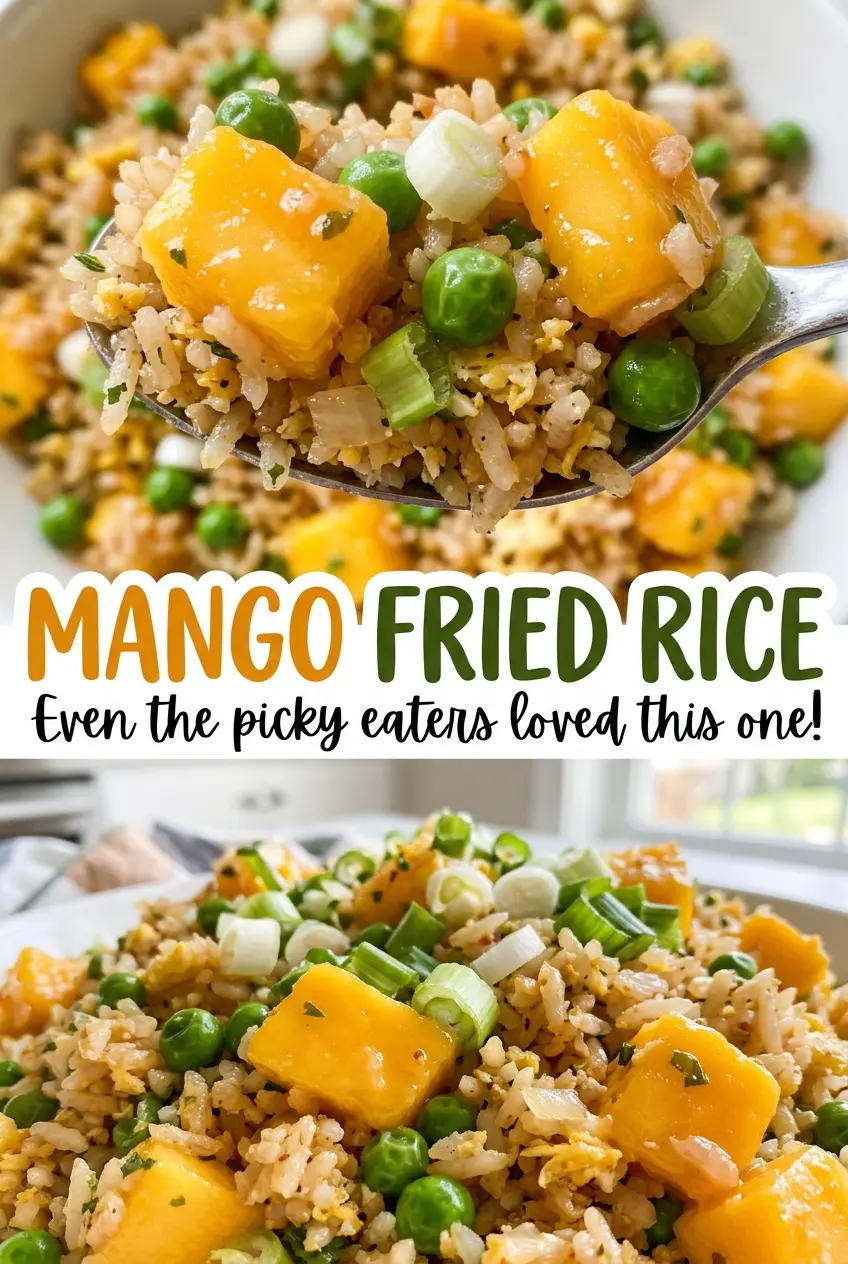
Cold rice hits a hot skillet with a dry little hiss, and the grains start to separate instead of clumping into a soft, steamy pile. That’s the starting point for this mango fried rice: savory jasmine rice with just enough curry warmth to make the ripe fruit feel at home. I like the contrast of tender-crisp pepper, softly set egg, and cashews that stay crunchy against the warm mango.
The order matters more than it might seem. I cook the rice with the seasoning sauce first, then fold in the mango near the end so the pieces warm without losing their shape. Ripe but firm fruit holds up better than very soft mango, and a squeeze of lime brightens the whole skillet after it comes off the heat. It makes four generous servings, with sweet, salty, and tangy notes in every forkful.
Kitchen Note
Bake, Serve, Wear the Vibe 👕
Editor-picked tees our Oven To Fork readers love.



We may earn from qualifying purchases at no extra cost to you.
Break up the cold rice before it goes into the skillet. Loose grains heat more evenly, while compact clumps can stay cool in the middle as the outside fries.
Save this mango fried rice for a night when you want savory curry-seasoned rice with warm mango, cashews, and a bright finish of lime.
Why the Mango Goes In After the Rice Is Seasoned
Mango brings sweetness and plenty of moisture, so it needs a gentler finish than the rice and vegetables. If it cooks hard in the skillet from the beginning, its edges can break down before the rice is hot, leaving soft fruit scattered through the pan instead of distinct, juicy pieces. Adding it after the sauce has coated the rice gives the grains time to take on the salty, savory seasoning before the fruit joins in.
That balance is what keeps this from eating like sweet rice. Soy sauce and fish sauce bring salt and depth, while a little curry powder adds a warm background note rather than turning the dish into a heavily spiced curry. The sugar in the sauce rounds off the salt; it isn’t there to make the rice taste sugary. Lime goes in after the skillet leaves the heat, where its fresh acidity can cut through the richness of the egg and cashews without getting muted by prolonged cooking.
The Ingredients That Keep Mango Fried Rice Savory, Not Sugary
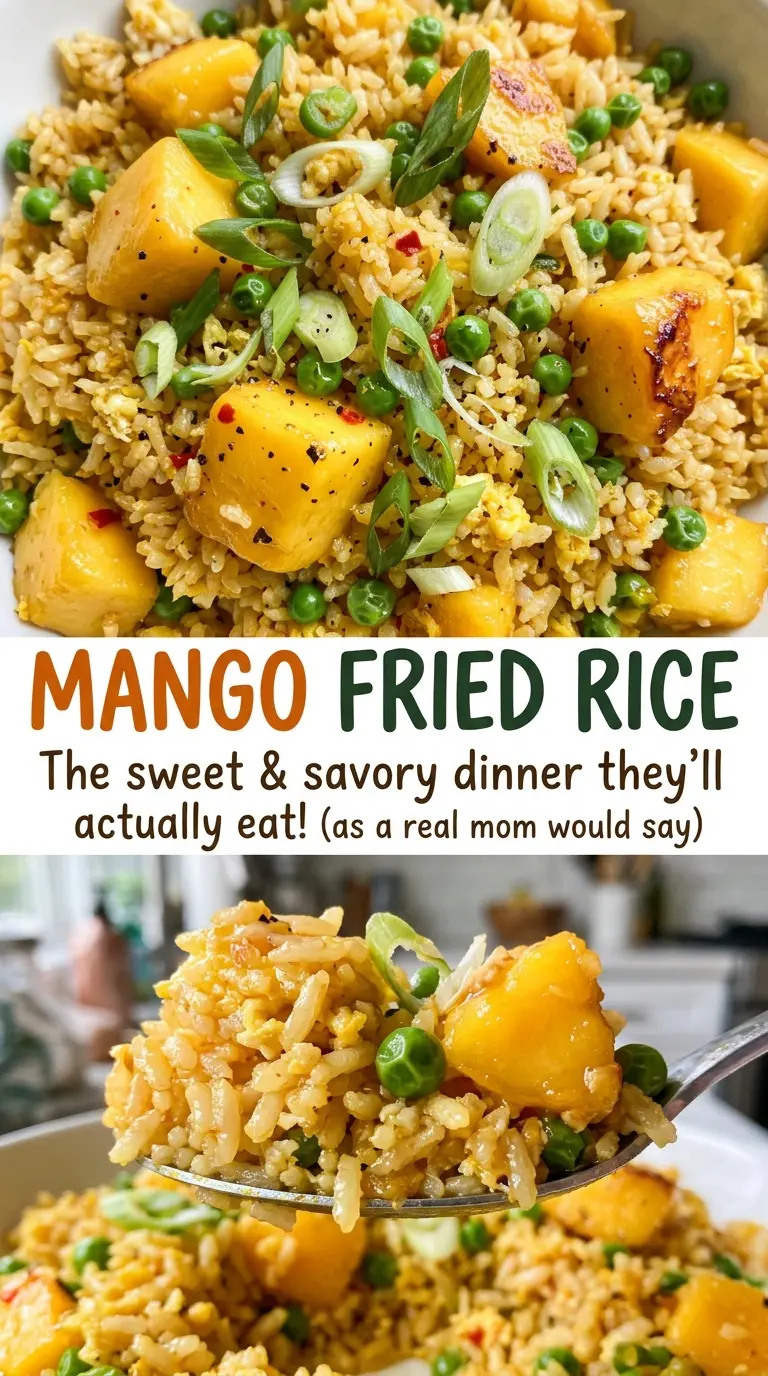
- Cold jasmine rice — Jasmine gives the dish a soft, fragrant base, and chilled cooked grains are less prone to clumping than warm, steamy rice. If jasmine isn’t available, cold cooked long-grain white rice works; the aroma will be a little less floral. Break up the grains before frying so the sauce can coat them evenly.
- Ripe but firm mango — Choose fruit that smells sweet but still holds its shape when diced. Very soft mango can collapse as it warms, so don’t wait until the flesh is nearly mushy. Fresh mango is the right choice here; syrup-packed fruit would make the skillet too sweet and wet.
- Soy sauce and fish sauce — Together they give the rice its salty, savory backbone. A standard grocery-store soy sauce and fish sauce work well; you don’t need specialty bottles. For a gluten-free adaptation, replace the soy sauce with the same amount of gluten-free tamari, as noted below.
- Curry powder, ginger, and garlic — Curry powder gives the seasoning a gentle warmth, while fresh ginger and garlic make the skillet smell fragrant as soon as they hit the oil. A fresh jar of curry powder matters more than an expensive brand. Mince the ginger and garlic finely so neither leaves a sharp, oversized bite.
- Roasted unsalted cashews — Their crunch gives the soft rice and fruit a welcome contrast, and the unsalted kind lets you control the seasoning. A basic grocery-store bag is fine; use them as they are, without chopping them so small that they disappear into the rice.
Building Mango Fried Rice in a Hot 12-Inch Skillet
Whisk the Seasoning Before the Pan Gets Busy
Stir the soy sauce, fish sauce, curry powder, and sugar together in a small bowl before you start cooking. The sugar should be distributed through the liquid, and the curry powder should no longer sit in a dry mound. Having the mixture ready means you can pour it over the rice while the skillet is hot instead of pausing to measure. Set the bowl beside the stove.
Cook the Eggs Until They’re Just Set
Heat 1 tablespoon of the oil in a 12-inch skillet over medium-high heat, then add the lightly beaten eggs. Stir for about 1 to 2 minutes, stopping when the eggs look softly set rather than dry and browned. They’ll warm again when they return to the skillet, so there’s no need to cook them firm now. Transfer them to a plate.
Keep the Vegetables Tender-Crisp
Add the remaining 2 tablespoons of oil to the skillet, followed by the diced onion and red bell pepper. Stir for about 3 to 4 minutes, until the vegetables are tender-crisp and the onion has started to soften. Stir in the minced ginger and garlic and cook for about 30 seconds, just until fragrant. If the garlic begins to darken, move on to the rice rather than letting it scorch.
Coat the Rice, Then Fold in the Finish
Add the broken-up rice and stir-fry it for about 3 to 4 minutes, until it’s hot throughout. Pour in the seasoning sauce and toss for about 1 minute, turning the rice so the grains get evenly coated. Return the eggs, then gently fold in the mango and cashews for about 1 to 2 minutes, just until warmed through. Take the skillet off the heat before folding in the green onions, cilantro, and lime juice.
Simple Swaps for Mango Fried Rice Without Losing Its Balance
Make It Gluten-Free With Tamari
Replace the soy sauce with an equal amount of gluten-free tamari. The savory balance stays close, though tamari can taste a little richer; check that the fish sauce and curry powder you use are also suitable for your needs.
Leave Out the Egg
For an egg-free skillet, omit the eggs and cook the rice, vegetables, sauce, mango, and cashews as usual. The rice will be a little less rich, but the fruit and cashews still give each bite plenty of contrast.
Skip the Cashews for a Nut-Free Bowl
Leave out the cashews if you’re avoiding tree nuts. You’ll lose their crisp, buttery crunch, but the rice will still have tender egg, crisp-tender vegetables, and juicy mango.
Storage and Reheating
- Refrigerator: Cool leftovers promptly and refrigerate them within 2 hours. They keep for 3 to 4 days; the mango and vegetables soften as they sit.
- Freezer: Freeze cooled portions in airtight containers for up to 1 to 2 months for best quality. The rice freezes well, but the mango will be softer after thawing.
- Reheating: Reheat in a skillet over medium heat, stirring until hot throughout, or microwave in a covered dish and stir partway through. Reheat leftovers to 165°F; prolonged heating can dry out the rice.
Questions That Come Up When the Mango Hits the Skillet
Mango Fried Rice
Ingredients
Equipment
Method
- In a small bowl, whisk together the soy sauce, fish sauce, curry powder, and sugar.
- Heat 1 tablespoon of the oil in a 12-inch skillet over medium-high heat, add the eggs, and cook, stirring, until softly set, about 1 to 2 minutes.
- Transfer the eggs to a plate.
- Add the remaining 2 tablespoons oil to the skillet, then add the onion and bell pepper and cook, stirring, until tender-crisp, about 3 to 4 minutes.
- Stir in the ginger and garlic and cook until fragrant, about 30 seconds.
- Add the rice and stir-fry until hot, about 3 to 4 minutes.
- Pour in the seasoning sauce and toss until the rice is evenly coated, about 1 minute.
- Return the eggs to the skillet and gently fold in the mango and cashews until warmed through, about 1 to 2 minutes.
- Remove the skillet from the heat and fold in the green onions, cilantro, and lime juice.