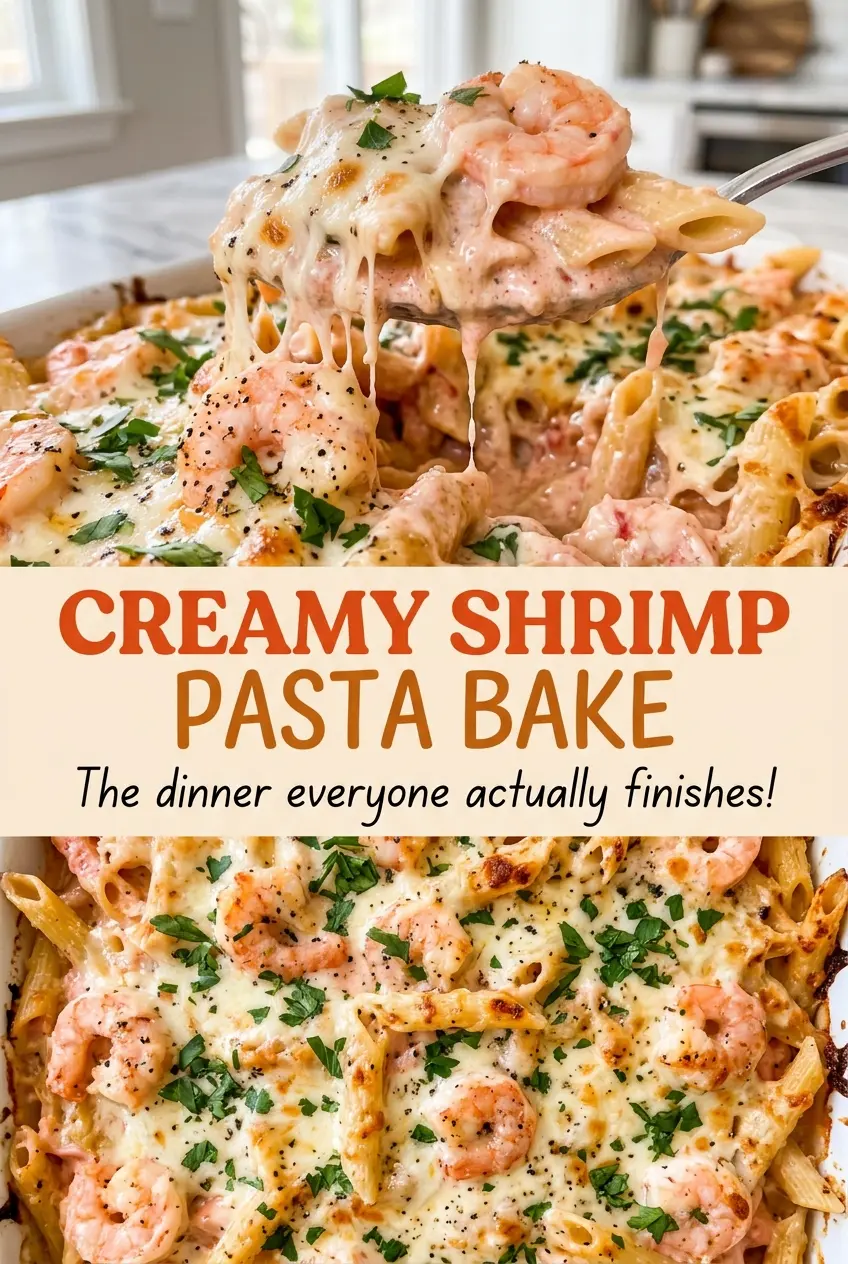
When the foil comes off, the pasta should still look creamy rather than baked dry, and the shrimp should be just cooked through. That balance is what makes this Creamy Shrimp Pasta Bake different from tossing cooked shrimp into a casserole and hoping it stays tender. The shrimp goes into the dish raw, so it cooks gently under the foil before the cheese and panko get their turn in the oven.
I also stop the penne short of done before it goes into the sauce. It keeps cooking as the bake heats, and starting with fully cooked pasta can leave you with soft, swollen noodles by the time the topping turns golden. The cheddar sauce coats each tube, the mozzarella melts over the top, and the panko brings a crisp finish to a creamy, generous pan of pasta.
Kitchen Note
Bake, Serve, Wear the Vibe 👕
Editor-picked tees our Oven To Fork readers love.



We may earn from qualifying purchases at no extra cost to you.
Stop the penne two minutes before the package says it’s done. It should still have a firm bite when you drain it, because the pasta keeps cooking in the oven.
Save this Creamy Shrimp Pasta Bake for its tender shrimp, cheddar sauce, and crunchy golden panko topping.
Why This Bake Covers the Shrimp Before It Browns the Top
The two-part bake has a job beyond melting cheese. Covered tightly with foil, the dish heats through without exposing the shrimp and pasta to direct oven heat for the entire cooking time. That gentler first stretch gives the raw shrimp a chance to cook in the creamy sauce while the pasta absorbs some of it. Then the foil comes off, and the topping gets a short, hotter exposure to turn golden.
Adding the topping at the beginning works against that timing. The panko can darken before the center is hot, and the mozzarella and Parmesan would spend longer in the oven than they need. Keeping the crumbs separate until the uncovered stage gives them a crisp surface instead of a damp layer tucked under foil. The result should be creamy underneath, with a distinct crunch on top rather than a casserole that’s uniformly soft.
Shrimp size matters here, too. Large shrimp give you a little more room between cooked-through and overcooked than small shrimp do. I check the largest one near the end of baking so the timing is guided by the shrimp, not just by the color of the topping.
Why Low-Moisture Mozzarella Belongs on Top
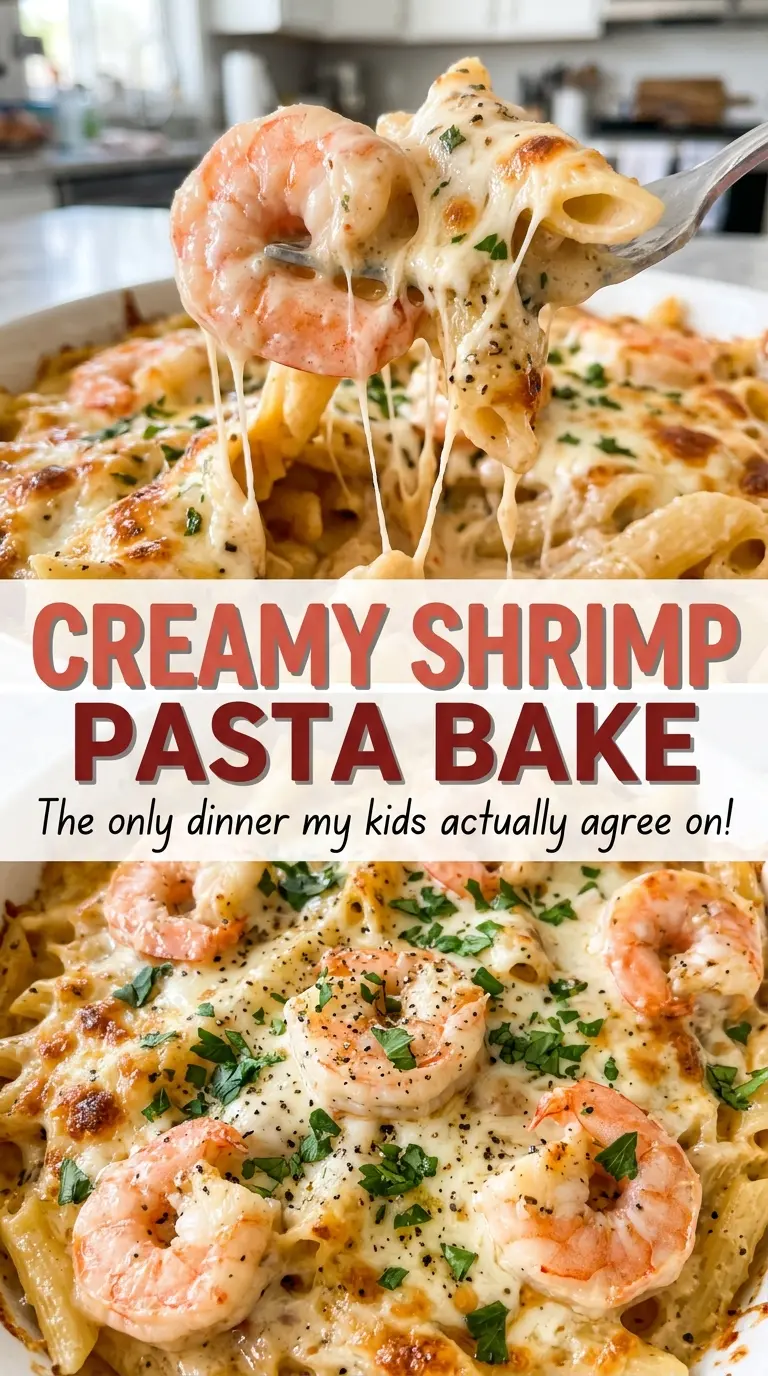
- Large raw shrimp give the bake its tender, substantial bites. Thaw them fully and pat them dry before seasoning; excess surface water can thin the sauce. Buying peeled and deveined shrimp saves prep time, but check that the tails are removed so the pasta is easy to serve.
- Sharp cheddar and Dijon give the sauce its savory tang. Sharp cheddar brings more character than mild cheddar, while Dijon adds a little sharpness without making the sauce taste strongly of mustard. Shredding cheddar from a block helps it melt smoothly into the warm sauce.
- Whole milk and heavy cream make a sauce rich enough to coat the pasta before baking. Whole milk alone would make a less rich sauce, while keeping the cream in the mix gives the finished bake a fuller texture.
- Low-moisture mozzarella melts over the top without adding as much water as a fresh, high-moisture cheese would. Parmesan brings a saltier, more savory note alongside it; finely grated cheese spreads evenly across the surface.
- Panko breadcrumbs stay craggy and crisp when tossed with olive oil before they go on the bake. Regular fine breadcrumbs won’t give quite the same light, crunchy finish, so panko is worth choosing when texture on top matters.
How to Keep the Penne Firm Through Two Trips to the Oven
Prepare the dish and stop the pasta early
Heat the oven to 375°F and grease a 9×13-inch baking dish with softened butter. Bring a large pot of water to a boil, add the penne and 2 teaspoons of the kosher salt, and cook it for 2 minutes less than the package directions. Drain it well; water clinging to the pasta can loosen the sauce. The penne should be firm in the center, not crunchy.
Cook the flour into a smooth cream sauce
Melt the butter in a 3-quart saucepan over medium heat, then cook the minced garlic for 30 seconds. Whisk in the flour and cook for 1 minute, stirring so no dry pockets remain. Gradually whisk in the whole milk and heavy cream, then bring the mixture to a gentle simmer and cook for 4–6 minutes, stirring until it coats a spoon. Take the pan off the heat before stirring in the Dijon, remaining 1 teaspoon of salt, and cheddar; the cheese should melt into the sauce rather than clump.
Coat the pasta before folding in the shrimp
Toss the thawed, patted-dry shrimp with the black pepper. Return the drained pasta to the 6-quart pot, pour in the sauce, and toss until the penne is coated; then fold in the shrimp. Spread everything evenly in the prepared dish so the shrimp aren’t piled in one spot. Uneven clusters can cook at different rates, so distribute them throughout the pasta.
Cover first, then crisp the cheese and panko
Cover the dish tightly with foil and bake for 15–20 minutes. Remove the foil, scatter the mozzarella and Parmesan over the pasta, and toss the panko with olive oil before spreading it across the top. Bake uncovered for 8–12 minutes, until the topping is golden and the largest shrimp reaches 145°F on an instant-read thermometer. Rest the bake for 5 minutes before serving so the sauce can settle around the pasta.
Three Ways to Change the Cheese or Make This Bake Gluten-Free
Make the whole bake gluten-free
Use gluten-free penne, a cup-for-cup gluten-free flour blend in place of the all-purpose flour, and gluten-free panko. Keep the amounts and method the same. The sauce may thicken a little differently depending on the flour blend, so cook it until it coats a spoon before you take it off the heat.
Give the topping a sharper cheddar finish
Use sharp cheddar in place of the mozzarella on top, keeping the same amount of cheese. You’ll get a more pronounced cheddar flavor and a less stretchy topping, while the Parmesan and panko still add savory crunch.
Lighten the sauce without changing its base
Replace the heavy cream with the same amount of whole milk. The flour still thickens the sauce, but the finished pasta will taste less rich and have a lighter, thinner coating.
Storage and Reheating
- Refrigerator: Keep leftovers covered for 3–4 days. The pasta will continue to absorb sauce and soften as it sits.
- Freezer: Freeze cooled portions in airtight containers for up to 2 months. The creamy sauce may separate slightly and the pasta will soften after thawing, but the bake is still good to eat.
- Reheating: Warm a covered portion in a 325°F oven until hot throughout, or microwave it covered in short intervals. Reheat leftovers to 165°F; uncovered reheating can dry out the shrimp and pasta.
Questions That Come Up Before This Shrimp Pasta Goes in the Oven
Creamy Shrimp Pasta Bake
Ingredients
Equipment
Method
- Heat the oven to 375°F.
- Grease a 9x13-inch baking dish with the softened butter.
- Bring a large pot of water to a boil.
- Add the penne and 2 teaspoons of the salt, and cook for 2 minutes less than the package directions.
- Drain the pasta.
- Melt the butter in a 3-quart saucepan over medium heat.
- Add the garlic and cook for 30 seconds.
- Whisk in the flour and cook for 1 minute.
- Gradually whisk in the milk and heavy cream, bring to a gentle simmer, and cook for 4–6 minutes, stirring, until thick enough to coat a spoon.
- Remove the sauce from the heat and stir in the Dijon, remaining 1 teaspoon salt, and cheddar until melted.
- Toss the shrimp with the black pepper.
- Return the drained pasta to the 6-quart pot, pour in the sauce, and toss to coat.
- Fold in the shrimp.
- Transfer the pasta mixture to the baking dish and spread evenly.
- Cover tightly with foil and bake for 15–20 minutes.
- Remove the foil and sprinkle the mozzarella and Parmesan over the pasta.
- Toss the panko with the olive oil and scatter it on top.
- Bake uncovered for 8–12 minutes, until the topping is golden and the largest shrimp reaches 145°F on an instant-read thermometer.
- Rest the bake for 5 minutes before serving.