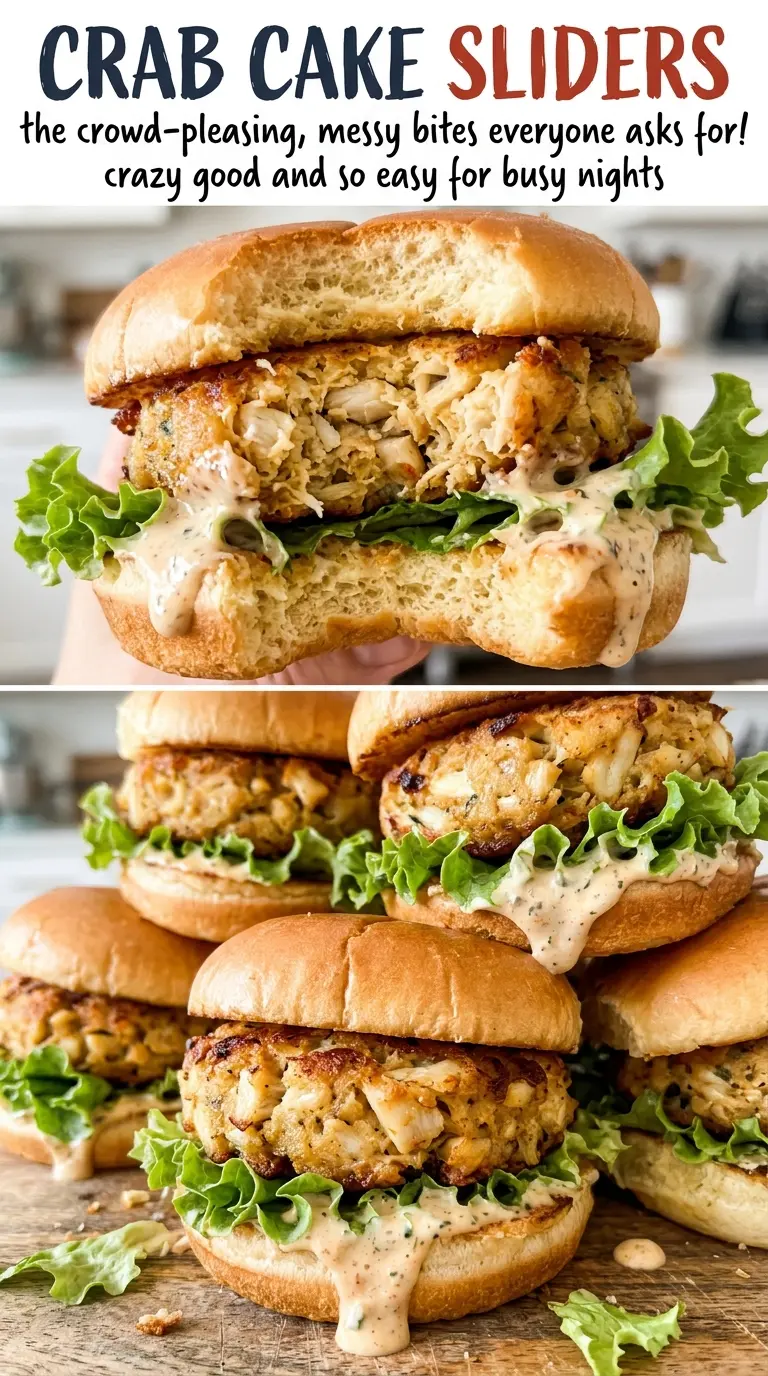
When a crab cake hits the skillet, its bottom starts to turn golden while the top still looks soft and delicate. I want the crab to stay in distinct, tender pieces, not disappear into a packed, bready patty. These crab cake sliders have crisp edges, cool lettuce, and a tangy remoulade tucked into toasted buns.
The sauce has a little sweetness from pickle relish, a briny lift from capers, and just enough heat to cut through the creamy mayonnaise. In the cakes, panko and egg help hold the mixture together without weighing down the lump crab. That balance keeps each bite focused on crab, with a light crunch around the edges.

Kitchen Note
Bake, Serve, Wear the Vibe 👕
Editor-picked tees our Oven To Fork readers love.



We may earn from qualifying purchases at no extra cost to you.
I stir the remoulade together before I start shaping the cakes and keep it covered in the refrigerator until serving. That gets the sauce out of the way while I handle the crab, so the final assembly stays quick.
Save these crab cake sliders for a seafood dinner with crisp-edged crab cakes and a tangy caper remoulade.
Why These Crab Cakes Hold Together Without Turning Dense
Crab cakes can go wrong in opposite directions: they fall apart in the pan, or they stay together because they’ve been packed into a heavy, tight patty. Here, the egg and panko make a light binder, while Dijon and lemon juice help season the mixture without burying the crab. The amount of binder is there to support the seafood, not take over the bite.
That approach only works if the crab stays in recognizable pieces. Fold it in gently rather than stirring hard, and shape the cakes without pressing them firm. Refrigerating the formed cakes gives the binder time to settle and the patties time to firm up before they meet the hot skillet. It’s a small pause that makes the delicate cakes easier to handle, without changing their tender texture.
The size matters, too. At about 2 1/2 inches across and 1/2 inch thick, each cake fits a slider bun and has a short path for heat to reach its center. You get a browned outside and a warm middle, rather than a thick patty that needs extra time in the pan.
How the Crab, Panko, and Remoulade Each Earn Their Place
- Lump crabmeat — This is the heart of the sliders, so take a minute to pick through it for shell before mixing. Keep the larger pieces intact for the best texture. Claw meat is a workable, less costly swap, but it has smaller pieces and a stronger, less delicate crab flavor.
- Panko breadcrumbs — Panko binds the mixture while keeping it lighter than fine, dense breadcrumbs. Gluten-free panko works in its place; regular fine breadcrumbs will make a tighter, more compact cake.
- Egg, Dijon, and lemon — The egg gives the cakes structure, Dijon adds a savory tang, and lemon juice brightens the crab. Fresh lemon juice has a cleaner flavor than bottled, though bottled juice is fine when that’s what you have.
- Old Bay and Worcestershire — These season the crab mixture with a familiar savory, spiced depth. Measure the Old Bay carefully: it is already a bold seasoning, and extra can crowd out the flavor of the crab.
- Mayonnaise, relish, and capers — Mayonnaise gives the remoulade its creamy base, while sweet relish and chopped capers bring contrasting sweet and briny notes. Drain the capers before chopping so their packing liquid doesn’t thin the sauce.
- Slider buns, butter, and lettuce — Soft slider buns are the right scale for the small cakes, and butter helps the cut sides toast to a golden finish. Small lettuce leaves add a crisp layer; tender leaves are easier to fit neatly than large, floppy ones.
Frying the Cakes Without Losing the Lumps
Stir the Remoulade and Build the Binder
Stir the mayonnaise, sweet pickle relish, drained chopped capers, hot sauce, and paprika together in a small bowl. Cover it and refrigerate until you’re ready to assemble. In a separate bowl, whisk the egg with Dijon, Worcestershire sauce, Old Bay, and black pepper, then stir in the panko, green onion, and lemon juice. The mixture should look evenly combined before the crab goes in.
Fold in the Crab and Chill the Cakes
Add the picked-over lump crabmeat and fold gently, stopping as soon as the binder is distributed. If you keep stirring until the crab breaks down, you’ll lose the large, tender pieces that make these cakes special. Shape 12 cakes about 2 1/2 inches wide and 1/2 inch thick, then arrange them on a parchment-lined baking sheet. Refrigerate for 30 minutes before frying so the cakes are firmer to move.
Fry in Batches Until Golden
Heat 1 tablespoon of canola oil in a 12-inch skillet over medium heat. Fry 4 crab cakes at a time for 3–4 minutes per side, until golden brown and 160°F in the center. Add 1 tablespoon of oil for each remaining batch. Give the cakes enough room to sit flat; crowding them makes it harder to turn each one cleanly.
Toast the Buns and Assemble
Once the crab cakes are cooked, wipe the skillet clean. Spread softened butter on the cut sides of the slider buns, then toast them cut-side down over medium heat for 1–2 minutes, until golden. Spread remoulade on the buns, add a lettuce leaf and a crab cake to each bottom half, and set the tops in place. The recipe makes 12 sliders, enough for 6 servings.
Three Swaps That Change These Sliders Without Losing Their Shape
Make the sliders gluten-free
Use gluten-free panko in place of the regular panko and gluten-free slider buns. The cakes keep their light crumb, though gluten-free panko can vary in size, so fold gently and keep the cakes chilled before frying.
Choose a less-sweet remoulade
Swap the sweet pickle relish for finely chopped dill pickle. The sauce will taste sharper and less sweet, which gives the capers more room to come through alongside the creamy mayonnaise.
Make the bun topping dairy-free
Replace the unsalted butter with a stick-style plant-based butter for toasting the buns. The cut sides will still toast, though the flavor may be a little less rich than with dairy butter.
Storage and Reheating
- Refrigerator: Store cooked crab cakes in an airtight container for up to 3 days. Keep the remoulade covered and store buns and lettuce separately; assembled sliders soften as they sit.
- Freezer: Cool cooked crab cakes, freeze them in a single layer, then transfer to an airtight container for up to 2 months. Thaw overnight in the refrigerator for more even reheating.
- Reheating: Warm the cakes in a covered skillet over low heat, turning once, until the centers reach 165°F. High heat can brown the outside before the centers are hot.
The Crab Cake Slider Questions That Come Up at the Stove
Crab Cake Sliders
Ingredients
Equipment
Method
- Stir the mayonnaise, relish, capers, hot sauce, and paprika together in a small bowl.
- Cover and refrigerate the remoulade until serving.
- In a medium bowl, whisk the egg, Dijon, Worcestershire sauce, Old Bay, and black pepper.
- Stir in the panko, green onion, and lemon juice.
- Gently fold in the crabmeat, keeping the lumps as intact as possible.
- Shape into 12 cakes about 2 1/2 inches wide and 1/2 inch thick, then arrange on a parchment-lined baking sheet.
- Refrigerate the crab cakes for 30 minutes.
- Heat 1 tablespoon oil in a 12-inch skillet over medium heat.
- Fry 4 crab cakes at a time for 3–4 minutes per side, adding 1 tablespoon oil for each remaining batch, until golden brown and 160°F in the center.
- Wipe the skillet clean and spread the butter on the cut sides of the buns.
- Toast the buns cut-side down in batches over medium heat for 1–2 minutes, until golden.
- Spread remoulade on the buns, add a lettuce leaf and crab cake to each bottom half, and cover with the bun tops.